


You have four cities, three currencies, two immigration systems, and one high-speed rail corridor to figure out. That is the reality of planning a 5-day Macau–Zhuhai–Guangzhou–Shenzhen circuit from the Philippines. The good news: once you understand the border sequence and the right stations, the Pearl River Delta becomes one of the most compact multi-city routes in Asia. This guide is built for Filipino travelers who want the logistics solved first and the sightseeing second.
We will cover the exact visa situation for Philippine passport holders, the smartest city order, how to move between each destination by ferry, rail, and bus, one unmissable stop per city, and the practical details—currency, SIM cards, and language—that keep the trip smooth. If you would rather have Mesho handle the permits and routing, see our 5D4N Macau–Zhuhai–Guangzhou–Shenzhen package.
Entry Requirements: Macau vs. Mainland China
The most important distinction on this circuit is that Macau and mainland China have separate immigration systems. Your entry rules change the moment you cross from Macau into Zhuhai.
Macau: 30 days visa-free
Philippine ordinary passport holders can enter Macau visa-free for up to 30 days for tourism. The stay counts from the day after arrival. At immigration, be ready to show:
- A passport valid for at least six months beyond arrival.
- A confirmed return or onward ticket leaving Macau within the 30-day window.
- Proof of accommodation for at least your first night.
- Evidence of sufficient funds—roughly MOP 5,000–10,000 per week (about PHP 35,000–70,000).
Keep the departure portion of your arrival card safe; you will surrender it when you exit Macau. For a deeper breakdown, read our Macau visa requirements guide.
Mainland China: a tourist visa is required
Once you enter Zhuhai, Guangzhou, or Shenzhen, you are in mainland China. Ordinary Philippine passport holders are not on China’s 240-hour visa-free transit list, and the 24-hour transit exception is too short for this circuit. For a 5-day trip, you need a regular Chinese tourist visa (L-visa).
The basics for Filipino applicants in 2026:
- Apply through the China Visa Application Service Center (CVASC) in Makati with a pre-booked appointment.
- Standard processing takes four working days; allow at least three weeks before departure.
- Budget roughly PHP 2,500–4,500 per person for a single-entry visa, depending on processing speed.
- A group visa arranged by a tour operator may be an option for organized circuits; Mesho can advise if your booking qualifies.
See our full China visa requirements guide for the document checklist and application steps.
Recommended City Sequence and Border Crossings
The classic direction is Macau → Zhuhai → Guangzhou → Shenzhen. It follows a natural eastward flow, lets you start with the easiest visa-free entry, and finishes in Shenzhen, where you can either fly home or take a ferry back to Macau if your itinerary is round-trip.
Macau → Zhuhai
The Gongbei Port is the most straightforward crossing. From Macau’s city center, take a hotel shuttle or bus to the border, clear Macau exit immigration, walk through the covered corridor, and clear China entry immigration into Zhuhai. The process is usually under an hour on weekdays, but budget up to two hours on weekends or holidays.
Pro tip: Zhuhai Railway Station is right next to Gongbei Port, so you can drop your bags and continue by train the same afternoon.
Zhuhai → Guangzhou → Shenzhen
Both legs are covered by high-speed rail. Guangzhou sits between Zhuhai and Shenzhen, making it a logical middle stop. If you prefer to finish in Macau, you can run the route in reverse: Shenzhen → Guangzhou → Zhuhai → Macau. Either direction works, but starting in Macau reduces the pressure of applying for a China visa before you even board your first flight.
Getting Around: Ferries, High-Speed Rail, and Buses
The Pearl River Delta has some of the best intercity transport in Asia. Here is how each segment works in practice.
| Route | Recommended Mode | Key Station / Terminal | Approximate Time |
|---|---|---|---|
| Macau → Zhuhai | Walk-through border crossing | Gongbei Port / Barrier Gate | 30–90 minutes |
| Zhuhai → Guangzhou | High-speed rail | Zhuhai Railway Station → Guangzhou South | About 1 hour |
| Guangzhou → Shenzhen | High-speed rail | Guangzhou South → Shenzhen North | 30–50 minutes |
| Shenzhen → Macau | Ferry | Shekou Cruise Center → Macau Outer Harbour / Taipa | About 1 hour |
Booking tips
- For mainland China high-speed rail, book through 12306 or a travel agent. Have your passport details ready; names must match exactly.
- Guangzhou East is closer to the city center and also runs trains to Shenzhen North and Luohu, which is useful if your hotel is in Tianhe.
- The ferry from Shekou Cruise Center to Macau clears both Chinese exit and Macau entry immigration at the terminal, saving time at the land border.
- If you are returning to Manila from Shenzhen, Shenzhen Bao’an International Airport (SZX) has direct flights to the Philippines.
Planning this multi-city route? Mesho can lock in your train seats, ferry tickets, and border transfers as part of our 5D4N Pearl River Delta package.
One Must-See Highlight Per City
With only five days, resist the urge to over-schedule. Each city deserves one anchor experience, with the rest of the day left for food, walking, and unexpected discoveries.
Macau: Senado Square to the Ruins of St. Paul
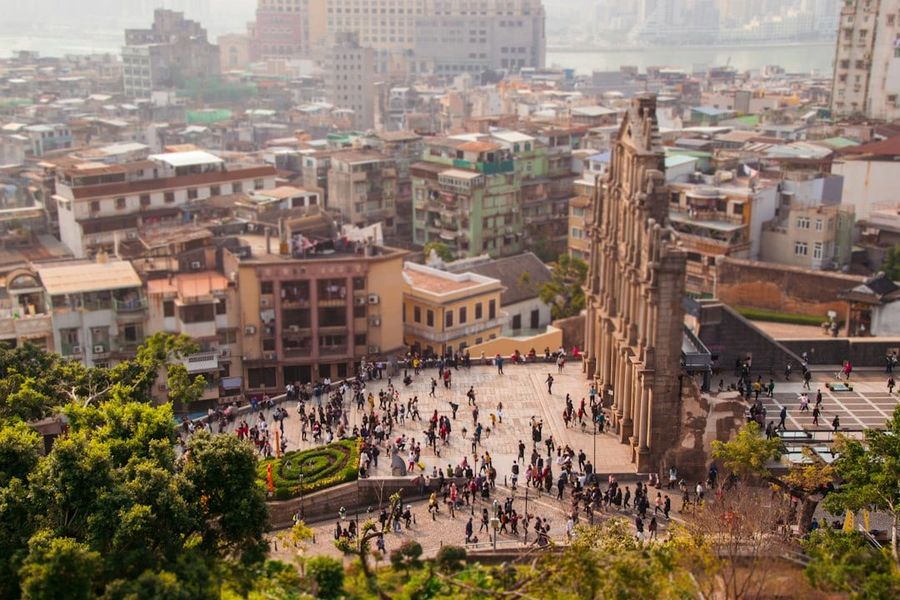
Allocate a half day to Macau’s UNESCO-listed historic center. Start at Senado Square, follow the tiled pedestrian streets past bakeries selling Portuguese egg tarts, and climb to the Ruins of St. Paul. It is compact, walkable, and gives you Macau’s unique Portuguese-Chinese identity in a single morning.
Zhuhai: Lover’s Road and the Fisher Girl
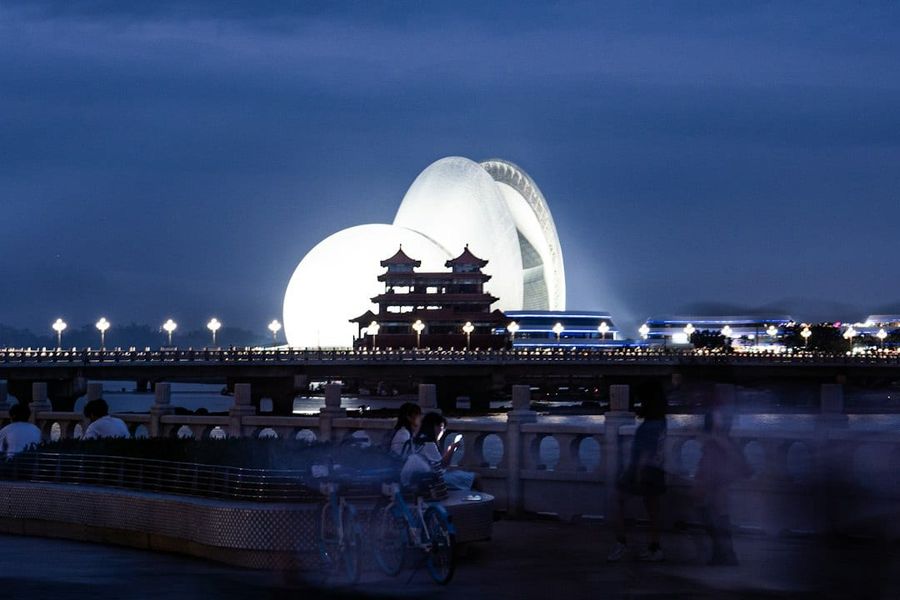
Zhuhai is the relaxed counterpoint to Macau’s casinos and Guangzhou’s density. Spend 2–3 hours walking or cycling Lover’s Road along the coast, with views across to Macau, and stop at the Fisher Girl statue. It is a low-key way to reset between border crossings.
Guangzhou: Chen Clan Ancestral Hall or Canton Tower
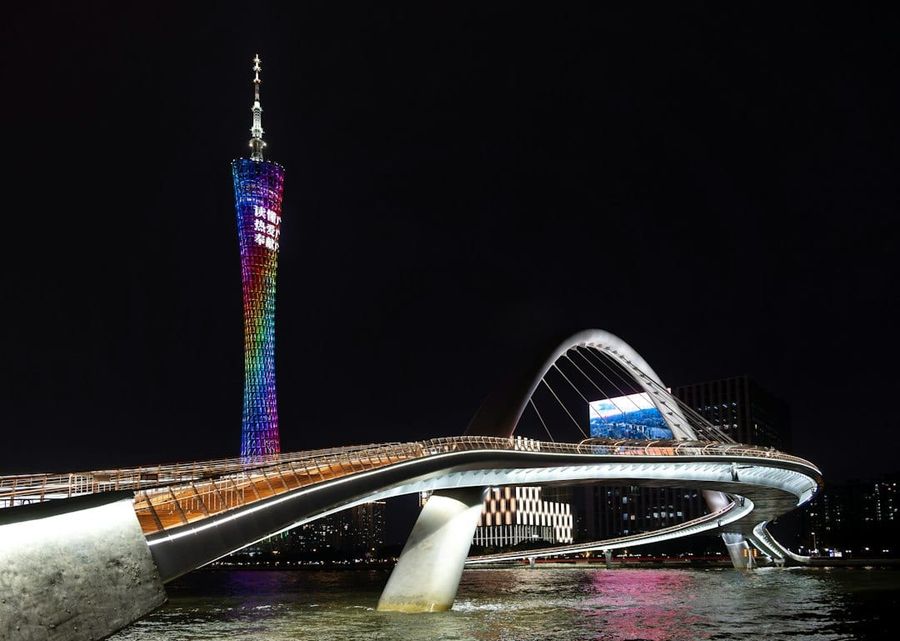
Choose based on your mood. The Chen Clan Ancestral Hall delivers intricate Lingnan architecture and folk art in a manageable half-day visit. If you prefer modern icons, head to Canton Tower for the city view, especially at dusk. Either option pairs well with a Cantonese dim sum meal.
Shenzhen: Window of the World or OCT Loft
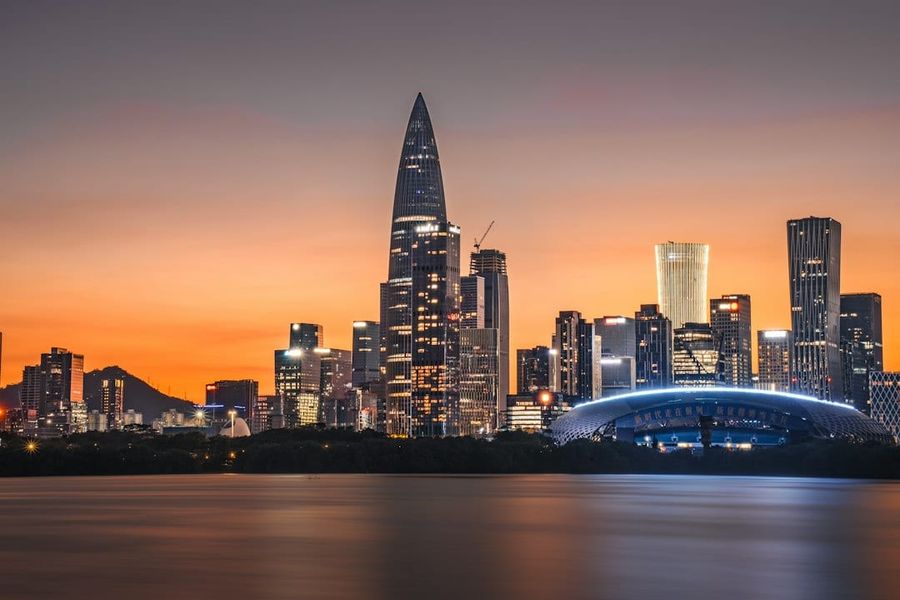
For a light, photo-friendly afternoon, Window of the World packs global landmarks into one park. For a more local vibe, OCT Loft offers galleries, cafés, and design shops in a repurposed factory zone. Either fits a half-day before your evening flight or ferry.
Currency, SIM Card, and Language Tips
Moving between four cities means switching practical systems more often than you might expect. Here is how to stay ahead of it.
Currency
- Macau: Macanese Pataca (MOP). Hong Kong Dollars (HKD) are widely accepted at 1:1, and many ATMs dispense both. Philippine pesos are not.
- Zhuhai, Guangzhou, Shenzhen: Chinese Yuan / Renminbi (CNY). Cashless payment dominates, but carry small bills for taxis, street food, and older shops.
- Tip: Exchange a small amount of MOP and CNY before leaving Manila, or withdraw from ATMs using a card with low foreign-transaction fees.
SIM card and connectivity
- A roaming plan from a Philippine provider is the simplest option if you only need maps and messaging.
- For mainland China, a local China Mobile, China Unicom, or China Telecom SIM gives better access to local services and ride-hailing apps.
- Macau has its own carriers; if your mainland SIM does not include Macau roaming, connectivity may drop at the border until you connect to Wi-Fi or a Macau SIM.
- WeChat and Alipay are essential for cashless payments in mainland China. Set them up before departure if possible.
Language
- Macau: Cantonese and Portuguese are official; English is common in hotels and casinos. Mandarin is increasingly understood.
- Mainland cities: Mandarin is standard. English is limited outside major hotels, tourist sites, and some metro stations.
- Download Google Translate or Pleco with offline Chinese packs. Screenshot hotel addresses and station names in Chinese characters to show taxi drivers.
Sample 5D4N Itinerary at a Glance
This skeleton assumes you fly into Macau and out of Shenzhen. Adjust nights based on your flight schedule.
- Day 1: Arrive in Macau. Afternoon walk through Senado Square and the Ruins of St. Paul. Overnight in Macau.
- Day 2: Morning border crossing to Zhuhai via Gongbei Port. Afternoon along Lover’s Road and the Fisher Girl. Evening high-speed rail to Guangzhou. Overnight in Guangzhou.
- Day 3: Full day in Guangzhou. Morning at Chen Clan Ancestral Hall, evening around Canton Tower or Beijing Road. Overnight in Guangzhou.
- Day 4: Morning high-speed rail to Shenzhen. Afternoon at Window of the World or OCT Loft. Overnight in Shenzhen.
- Day 5: Last-minute shopping or coffee in Shenzhen, then depart from Shenzhen Bao’an Airport (SZX) or take the ferry back to Macau for a round-trip flight.
Quick Summary
- Macau is visa-free for Philippine passport holders for 30 days; mainland China requires a tourist L-visa for a 5-day circuit.
- The most efficient sequence is Macau → Zhuhai → Guangzhou → Shenzhen, crossing at Gongbei Port.
- Use high-speed rail for Zhuhai–Guangzhou and Guangzhou–Shenzhen; use the ferry for Shenzhen–Macau returns.
- Carry MOP/HKD for Macau and CNY for mainland China; load WeChat or Alipay before arrival.
- Book China visa appointments at least three weeks before departure through CVASC Makati.
Related Reading
- Is Macau Visa Free for Filipino? 2026 Requirements & Rules
- China Visa Requirements for Philippine Passport Holders in 2026
- Pearl River Delta Culture: A Filipino Traveler's Guide to Macau, Zhuhai, and Guangzhou
- Guangzhou's Cantonese Food Culture: A Filipino Food Lover's Guide
- Macau's Senado Square and Ruins of St. Paul: A Filipino Heritage Walker's Guide
Ready to Cross the Pearl River Delta?
Let Mesho Travel And Tours handle the visas, train seats, ferry tickets, and hotel handovers for your Macau–Zhuhai–Guangzhou–Shenzhen journey.
View the 5D4N PackageAuthor’s Note
Grace Villareal is Mesho’s Taipei-based Northeast Asia travel editor. She has spent years tracking border rules, rail networks, and entry procedures across China, Hong Kong, Macau, Taiwan, Japan, and Korea. Her advice for this circuit: sort the visa and border sequence before you book anything else. The rest of the trip falls into place once those two pieces are locked.


