


You round a corner in what you thought was a Chinese city, and suddenly you are standing on black-and-white wave-patterned cobblestones, surrounded by butter-yellow Baroque facades, arched doorways, and wrought-iron balconies painted in Mediterranean blues and ochres. The air smells of cinnamon and baked custard. A street sign reads Rua de S. Domingos. For a moment, you could be in Lisbon—but you are in Macau, at the mouth of the Pearl River Delta, where four and a half centuries of Portuguese presence have layered themselves over southern Chinese soil.
This is the Pearl River Delta: a corridor of cities where European colonial memory, Cantonese tradition, and modern Chinese ambition coexist in remarkable density. For Filipino travelers, the region offers something rare—the chance to experience a multi-city circuit where every border crossing reveals a shift in language, architecture, cuisine, and social rhythm. This guide moves beyond casino headlines and shopping malls to explore the cultural identity of Macau, Zhuhai, and Guangzhou—what locals value, how they worship, what they eat, and how they welcome curious visitors.
You will learn why Macanese egg tarts are a political history lesson in pastry form, why Zhuhai families treat the Lovers' Road promenade as a Sunday ritual, and why Guangzhou teahouses refuse to rush your meal. You will also learn how to cross from Macau into mainland China without losing phone signal—or your patience.
Macanese Culture: Where Portugal Meets the Pearl River
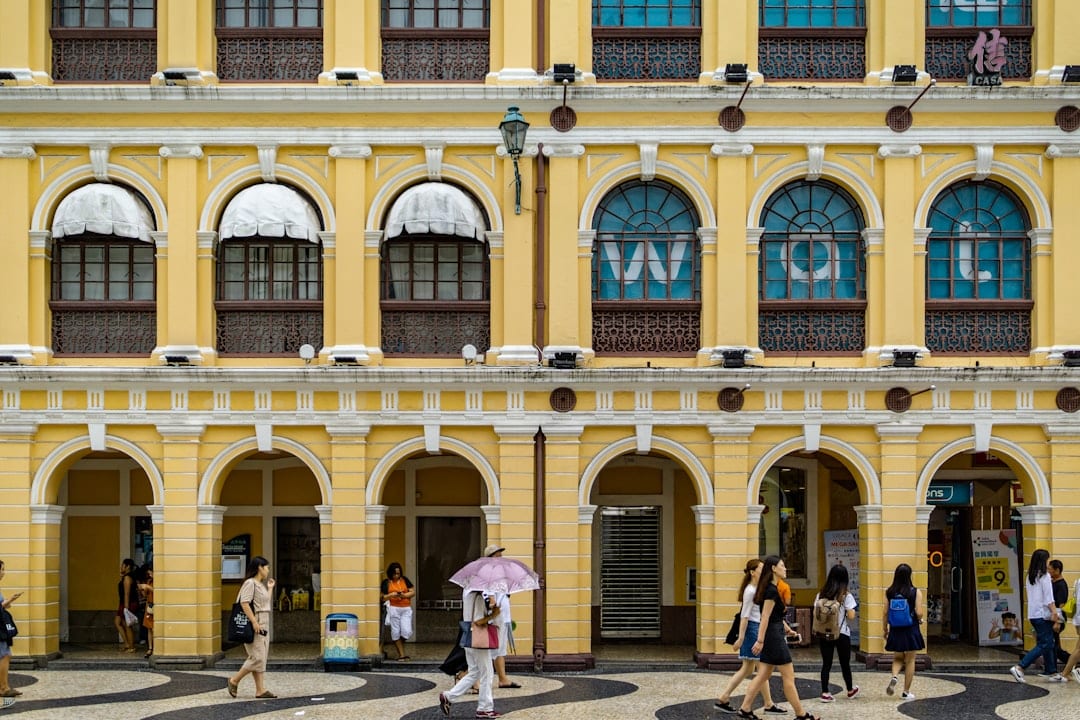
Senado Square, Macau — the heart of the city's UNESCO-listed historic center, where Portuguese pavement patterns frame pastel neoclassical facades.
Walking Through Living History
Macau's historic center is not a museum. It is a working neighborhood where elderly Macanese residents still hang laundry from shuttered windows above bakeries selling pasteis de nata. The Senado Square to Ruins of St. Paul's corridor is the obvious starting point, but the deeper story lies in the side alleys.
Walk Rua da Felicidade—once the red-light district of colonial Macau, now a preserved street of traditional Chinese shophouses with distinct green wooden doors and balconies. Then cut across to Lilau Square, where a natural spring once supplied Portuguese ships, and where the architecture shifts to pastel villas with terracotta roofs and bougainvillea spilling over garden walls. Notice how the street signs are bilingual, but the Chinese characters often predate the Portuguese romanization, reflecting who was really naming these streets.
The Mandarins House on Travessa de António da Silva offers a quieter counterpoint: a traditional Chinese literati residence built in 1869 by the Zheng family, restored to show how wealthy Chinese merchants lived parallel to—but rarely intersecting with—Portuguese colonial society.
The Egg Tart as Cultural Artifact
The pastel de nata you eat in Macau is not exactly Portuguese, nor is it Chinese. It is Macanese—a product of adaptation. The original recipe arrived with Jesuit monks at the St. Andrew's Church and St. Joseph's Seminary in the late 16th century. Local bakers adjusted the custard sweetness to suit Cantonese palates, and the result is a tart with a flakier, more brittle crust than its Lisbon cousin and a custard that leans toward eggy richness rather than cinnamon spice.
Lord Stow's Bakery in Coloane Village—founded by an Englishman who learned the recipe from Portuguese friends—popularized the Macanese version globally. But locals also respect Margaret's Café e Nata near the Grand Lisboa for a slightly denser, caramelized top. Try both. The debate over which is "authentic" misses the point: Macau's tart is a continuously evolving symbol of cultural negotiation.
Casino Etiquette and Social Norms
Even if you do not gamble, understanding casino culture is essential to reading modern Macau. The gaming floors are temples of superstition. You will see players tapping the glass of slot machines, blowing on dice, and refusing to count money at the table—beliefs rooted in Cantonese folk tradition rather than Portuguese rationalism.
Dress is smart casual at minimum. Shorts, flip-flops, and tank tops will get you turned away from the higher-end properties like Wynn Palace and The Venetian Macao. Photography on gaming floors is strictly prohibited. If you are there to observe rather than play, stick to the public atriums and performance spaces—the House of Dancing Water at City of Dreams, or the free cable car ride around Wynn Palace's Performance Lake, offer spectacle without requiring a bet.
Zhuhai's Coastal Rhythm: Seafood, Breezes, and Social Life
Crossing from Macau into Zhuhai through the Gongbei Port or the Hong Kong–Zhuhai–Macau Bridge feels like stepping through a membrane. The Portuguese signage disappears. The currency switches from patacas to renminbi. And the pace slows.
Zhuhai is often dismissed as Macau's utilitarian neighbor, but that misses its distinct identity. Billed as one of China's most livable cities, Zhuhai trades Macau's vertical density for a horizontal relationship with the South China Sea.
The Promenade as Social Stage
Lovers' Road—Qinglü Zhonglu—is Zhuhai's defining public space. This 28-kilometer coastal promenade runs from Xiangzhou to the Macau border, passing fishing harbors, shell-shaped opera houses, and open-air exercise parks where retirees practice tai chi at dawn. On weekends, families fly kites, couples pose for wedding photos against the Macau skyline across the water, and street vendors sell sugarcane juice and grilled squid.
Join the rhythm. Rent a public bicycle through the WeChat mini-program. Stop at Haibin Park to watch the fishing boats return. The promenade is not an attraction to check off a list; it is a space to observe how coastal Chinese families spend their leisure time—collectively, outdoors, and with a strong preference for walking over sitting.
Seafood Dining Culture
Zhuhai's proximity to the Pearl River estuary gives it access to some of the freshest seafood in Guangdong Province. The local dining model is participatory: you select live creatures from tanks, the restaurant weighs them in front of you, and you specify the cooking method—steamed with ginger and scallion, clay-pot roasted, or simply blanched and dipped in soy sauce with grated daikon.
Wanzai Seafood Street, near the Macau border, is the most accessible cluster for visitors, though prices run higher due to tourist traffic. For a more local experience, head to Chatou or Shiwan districts, where restaurants like De Ji Seafood Restaurant serve heshangyu (monkfish), fresh oysters, and river shrimp in enormous communal dining halls. Expect noise, shared tables, and plastic tablecloths. A generous seafood meal for four runs roughly ¥300–500 (about ₱2,400–4,000), depending on your selections.
Guangzhou and the Cantonese Way: Teahouses, Timing, and Tongue
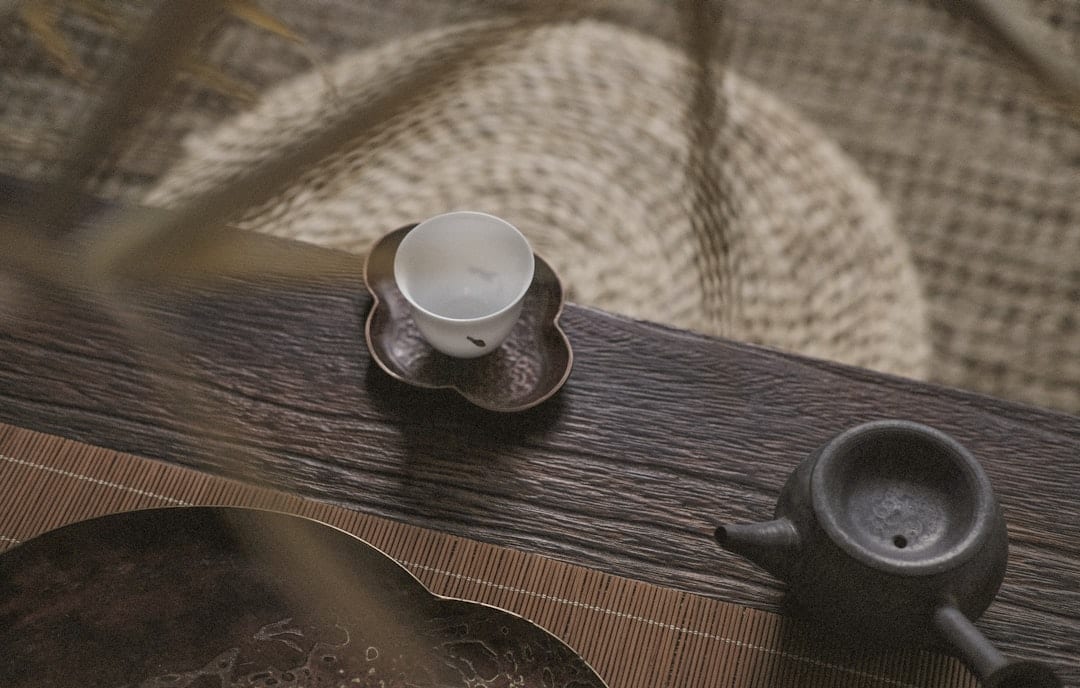
Cantonese teahouse culture in Guangzhou — where dim sum is eaten slowly, loudly, and socially across hours of conversation.
Teahouse Rituals and Dim Sum Timing
In Guangzhou, yum cha—drinking tea—is not a meal. It is a social institution. The classic teahouse experience happens between 7:00 AM and 2:00 PM, though the most atmospheric hours are early morning, when retirees claim their tables and unfold newspapers while waitresses push aluminum carts stacked with bamboo steamers.
At legendary institutions like Panxi Restaurant on Liwan Lake or Datong Restaurant along the Pearl River, the protocol matters. You do not rush. You order tea first—pu'er for digestion, tieguanyin for fragrance, or chrysanthemum for cooling. The tea is your cover charge and your pacing mechanism. When your pot runs low, leave the lid ajar or balanced on the handle; servers interpret this as a silent request for a refill.
Tap two fingers on the table when someone pours tea for you—this gesture, said to originate from a Qing-dynasty emperor who tapped his fingers to represent a bow, is still understood across Guangdong as a polite "thank you." Order har gao (shrimp dumplings), siu mai, char siu bao, and cheung fun (rice noodle rolls). Eat them in rounds. Talk between bites. The meal is expected to last two hours minimum.
The Importance of Language
Here is something guidebooks understate: Cantonese identity in Guangzhou is defensive. Mandarin is the official language of education and government, but Cantonese remains the language of home, humor, and local pride. Younger people speak both, but older residents may respond to Mandarin with visible discomfort.
For Filipino travelers, this creates an unexpected opening. English is not widely spoken outside hotels and major tourist venues. But many older Cantonese remember the pre-handover British presence in Hong Kong, and the city has historical trade connections with Southeast Asia. A few phrases of Cantonese—m̀h'gōi (thank you), gói saat (check, please), sik fan (eat rice/meal)—will earn more warmth than Mandarin equivalents. If you speak Hokkien, you may find surprising cognates in Cantonese vocabulary, a legacy of shared Minnan trading roots.
Temples, Churches, and Sacred Syncretism
The Pearl River Delta has never demanded that its residents choose one god. Buddhism, Taoism, folk religion, and Catholicism have layered themselves here for centuries, often sharing neighborhoods and occasionally sharing devotees.
A-Ma Temple and Buddhist Shrines
The A-Ma Temple in Macau, perched on Barra Hill facing the Inner Harbour, is the city's oldest structure and the source of its name. According to legend, a poor girl named A-Ma—later deified as Mazu, the goddess of seafarers—saved a trading ship from storm and walked to this hill, where she ascended to heaven in a glow of fragrance. Portuguese sailors who landed nearby heard the name and transcribed it as "Macau."
The temple complex itself is a masterclass in Chinese religious architecture, with pavilions dedicated to Mazu, the Buddhist Guanyin, and the Taoist Kun Iam. Incense coils the size of tractor tires hang from the ceilings, burning for weeks. When you visit, enter through the correct gate (main gate for first visits, side gates for return visits), and never point at statues with your index finger—use an open palm instead.
In Guangzhou, the Temple of the Five Immortals and Flowery Pagoda at Six Banyan Temple offer quieter Buddhist spaces. The latter, built in 537 AD, still rings its ancient bell on New Year's Eve.
Catholic Landmarks
Macau's Catholic heritage is more than the Ruins of St. Paul's. The St. Lawrence's Church—known to the Portuguese as the "Church of the Wealthy" because trading ships would pray there before voyages—retains its original 16th-century bones beneath later renovations. St. Dominic's Church on Senado Square houses a museum of sacred art with vestments and missals that trace the Jesuit mission to Japan and China.
What surprises many Filipino Catholic visitors is the difference in devotional style. Macau's Catholicism is Iberian—reserved, architectural, tied to processions rather than charismatic expression. Mass times are limited outside of major feasts. If you are looking for a Sunday service in English or Tagalog, your best option is the St. Joseph the Worker Church or contacting the Macau Diocese Pastoral Center in advance.
Crossing Borders: Practical Realities Between Macau and Mainland China
The cultural shifts between Macau, Zhuhai, and Guangzhou are thrilling. The bureaucratic shifts require preparation. Here is what Filipino travelers need to know.
Customs and Entry
Philippine passport holders can enter Macau visa-free for 30 days. Mainland China requires a visa, which must be obtained in advance from the Chinese Embassy in Manila or the Consulate in Cebu. A standard single-entry tourist visa (L visa) typically allows 30 days and costs approximately ₱2,800–3,500 depending on processing speed.
When crossing from Macau into Zhuhai at Gongbei Port, you will pass through Macau exit immigration, walk across a covered pedestrian bridge, and then enter Chinese immigration. The process usually takes 30–60 minutes during peak hours. Keep your hotel bookings and return flight itinerary ready; Chinese immigration officers occasionally ask for proof of onward travel.
Currency, Phones, and Payments
Macau uses the Macanese pataca (MOP), pegged to the Hong Kong dollar. Zhuhai and Guangzhou use the Chinese yuan (CNY/RMB). HKD is widely accepted in Macau casinos and larger shops, but yuan is not. Once you cross into Zhuhai, yuan is essential.
- ATMs: Available on both sides of the border. Inform your Philippine bank before travel to avoid card blocks.
- Mobile data: Macau and mainland China operate separate mobile networks. A Philippine roaming plan may not cover both. Consider buying a dual-region SIM at Macau International Airport or relying on hotel Wi-Fi and offline maps for the border crossing.
- Payments: WeChat Pay and Alipay dominate mainland China. Foreigners can now link some international credit cards to these apps, but the setup is inconsistent. Carry cash yuan for smaller restaurants and taxis in Zhuhai and Guangzhou.
Transport Between Cities
The Hong Kong–Zhuhai–Macau Bridge offers shuttle bus service between Macau and Hong Kong, but for Macau-to-Zhuhai, the Gongbei border crossing remains the most practical route. From Zhuhai to Guangzhou, the Guangzhu Intercity Railway covers the distance in roughly one hour, with trains departing from Zhuhai Railway Station near Gongbei Port.
High-speed rail from Guangzhou South Station to other Chinese cities is world-class, but book tickets in advance through Trip.com or at station counters. English support is limited.
Planning Your Pearl River Delta Circuit?
Navigating visas, border crossings, and multi-city logistics across Macau and mainland China can feel overwhelming. Mesho Travel And Tours handles the paperwork, ground transport, and bilingual guides so you can focus on the culture, not the customs queue.
View Our 5D4N Pearl River Delta PackageQuick Takeaways
- Macau is not just casinos. Its Portuguese-Chinese fusion architecture, Macanese cuisine, and A-Ma Temple tell a 450-year story of cultural negotiation that predates the gaming industry by centuries.
- Zhuhai rewards slow travel. The Lovers' Road promenade and local seafood halls reveal a coastal Chinese lifestyle that values outdoor socializing and fresh-caught meals over high-rise glamour.
- Guangzhou's teahouses operate on their own clock. Arrive early, order tea first, and plan to stay for hours. Dim sum is as much about conversation as consumption.
- Language matters. Cantonese carries local pride in Guangzhou. A few phrases go further than Mandarin in earning warmth from older residents.
- Border logistics are manageable with preparation. Secure your China visa in Manila, carry both patacas and yuan, and expect to switch mobile networks when crossing from Macau to Zhuhai.
Related Reading
- 5D4N Macau, Zhuhai, Guangzhou & Shenzhen Package — Mesho's curated multi-city circuit with guided border crossings and bilingual support.
- Hong Kong Culture and Etiquette for Filipino Travelers — Understanding the third pole of the Pearl River Delta.
- Cantonese Food Beyond Dim Sum: A Guide to Guangzhou's Regional Cuisine — Deep dive into the flavors of Lingnan cooking.
Author's Note
I have crossed the Gongbei border more times than I can count—sometimes for work, sometimes chasing a specific teahouse's char siu bao. The Pearl River Delta is one of the few places in Asia where you can eat a Portuguese custard tart for breakfast, slurp fresh oysters in Zhuhai for lunch, and argue over tea etiquette in Guangzhou by dinner. The transitions are sharp, but the underlying culture—Cantonese pragmatism, southern Chinese warmth, and a long history of looking outward across water—holds the region together.
If you are planning your first circuit through these cities, do not let the visa paperwork or border logistics deter you. That friction is part of the experience—and with the right guidance, it becomes background noise to the main event. Safe travels. — Grace Villareal, Northeast Asia Travel Editor
Ready to Walk the Pearl River Delta?
Let Mesho curate your multi-city journey through Macau's colonial alleys, Zhuhai's seafood halls, and Guangzhou's teahouses—with visas, transport, and expert guides handled from Meycauayan to the Pearl River.
Explore the 5D4N Package


