


If there is one language that needs no translation between Manila and Guangzhou, it is the language of food. Filipinos understand the communion of a shared table, the pride of a family recipe, and the unspoken rule that the last piece of crispy pata should be offered to the elder before anyone claims it. Guangzhou feels familiar because it lives by the same code. Here, meals are not transactions—they are relationships built one bamboo steamer at a time.
This guide goes beyond the siomai you already know. It is an invitation to understand why Cantonese cooks obsess over wok hei, why a teahouse operates like a theater, and why the freshest fish in Guangzhou is still swimming at six in the morning. Whether you are visiting Guangzhou as part of a Pearl River Delta circuit or making it your sole destination, prepare to eat with both your hands and your curiosity.
The Soul of Guangzhou: Yum Cha and Teahouse Culture
Yum cha (飲茶) literally means "drink tea," yet the phrase encompasses an entire social institution. Born in the teahouses of Guangzhou during the Qing Dynasty, yum cha began as a rest stop for Silk Road merchants and laborers along the Pearl River. Over centuries, it evolved into the dim sum tradition we recognize today—small, shareable dishes designed to accompany endless rounds of tea. For Guangzhou locals, yum cha is Sunday mass. Families gather at round tables, grandparents read newspapers between bites, and children learn patience by waiting for the cart to wheel around again.
Timing Your Visit
Teahouses in Guangzhou observe a rhythm as precise as a kitchen clock. The first seating begins around 7:00 AM, when retirees and early-rising aunties claim the best tables. This is the time to find the freshest har gow (蝦餃, shrimp dumplings) and the quietest atmosphere. By 9:00 AM, the room fills with families, and the cart traffic becomes a choreography of clattering steamers. The midday lull settles in around 2:00 PM, though many traditional houses close their kitchens by 3:00 PM to prep for dinner service. Unlike Hong Kong, where dim sum can stretch into late afternoon, Guangzhou remains stubbornly morning-centric—proof that the city treats yum cha as a ritual, not a convenience.
Practical tip: Arrive before 8:30 AM on weekends, or expect a queue numbered ticket in hand. Most establishments charge a per-person tea fee (茶位費, cha wei fei) of CNY 3–8 per person (PHP 24–64), which covers your chosen tea leaves—typically pu-erh, chrysanthemum, jasmine, or tieguanyin oolong.
Navigating the Cart System
In traditional Guangzhou teahouses, food arrives on trolleys pushed by servers who announce their cargo in rapid Cantonese. Each cart carries a category: steamed items in stacked bamboo, fried parcels under glass lids, or dessert tong sui in bubbling pots. When a cart passes your table, simply raise a hand and point. The server stamps your bill card according to dish size—small, medium, large, or special—with each tier carrying a set price.
What to expect on your card:
- Small (小點): CNY 8–12 (PHP 64–96) — simple steamed buns, rice rolls
- Medium (中點): CNY 15–22 (PHP 120–176) — siu mai, chicken feet
- Large (大點): CNY 25–35 (PHP 200–280) — har gow, beef ribs
- Special (特點): CNY 38–55 (PHP 304–440) — abalone siu mai, lobster dumplings
Modern teahouses may use order slips instead, but the older establishments on Shangxiajiu Pedestrian Street and inside Panxi Restaurant still honor the cart tradition. Do not be shy about flagging a cart down—quiet politeness will leave you hungry.
Sharing Etiquette at the Lazy Susan
The round table with a rotating lazy Susan is not merely furniture; it is a social contract. Dishes land in the center and belong to everyone. When taking food, use the serving chopsticks or the reverse end of your own pair—never the tips that touched your mouth. Pour tea for others before yourself, and tap two fingers on the table as a silent thank-you when someone refills your cup. This gesture, legend says, dates back to a Qing emperor who traveled incognito and poured tea for his servant; the servant could not bow without revealing the emperor's identity, so he tapped his fingers instead.
"In Guangzhou, the teapot lid left ajar tells the server you need a refill. A full lid says you are finished. These small signals keep the rhythm flowing without a word."
Signature Dishes That Speak to the Filipino Palate
Filipino food lovers will find Cantonese cuisine approachable yet sophisticated. The flavor profile leans on soy, sugar, and sesame rather than the aggressive chilies of Sichuan or the fermented funk of Hunan. It is food that rewards attention to texture—the snap of a dumpling skin, the chew of alkaline noodles, the caramelized crust at the bottom of a claypot.
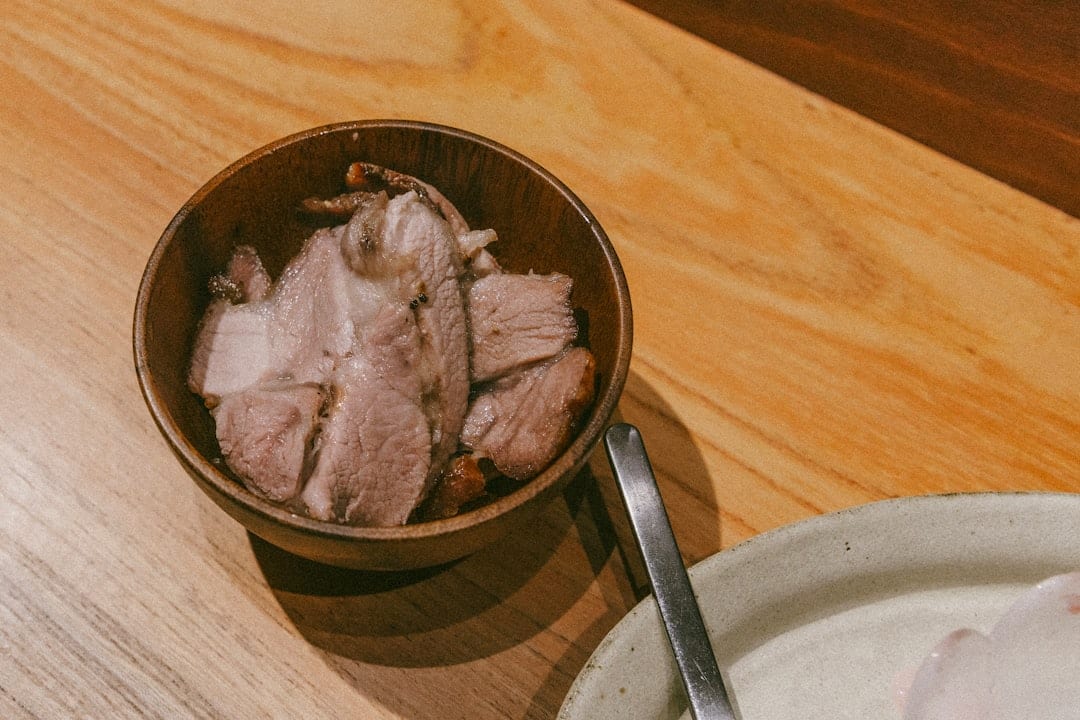
Char Siu (叉燒) – The Sweet-Savory Icon
Char siu is Cantonese barbecue pork, marinated in maltose, hoisin, and fermented bean curd, then roasted in a cylindrical oven until the edges char and the center blushes pink. The result is a mirror-like glaze that Filipinos will recognize as a distant cousin to our own tocino—but with a deeper, smokier complexity. In Guangzhou, char siu is judged by its bian (邊), the slightly burnt caramelized border that separates a master from a novice.
Where to try it: Look for roast meat shops (燒臘店, siu laap dim) in the Liwan District near Chen Clan Ancestral Hall. A plate of char siu over rice costs roughly CNY 25–40 (PHP 200–320). For the premium experience, ask for char siu made from pork neck (mei tou), which carries more fat and flavor.
Wonton Noodles (雲吞麵) – Comfort in a Bowl
A proper bowl of wonton min is an exercise in restraint. The broth is a clear consommé of dried flounder, pork bones, and rock sugar—never cloudy, never oily. The wontons must contain whole shrimp plus a whisper of minced pork, wrapped in a skin so thin it turns translucent when cooked. The noodles are egg-based, kneaded with alkaline water (kan sui) to create a signature springy bite that Filipinos might compare to pancit canton, though the texture is finer and more delicate.
Where to try it: Mak's Noodle and local favorites along Ji Chang Road serve bowls for CNY 18–30 (PHP 144–240). Order it with chiu chow style chili oil on the side if you want heat without disrupting the broth.
Claypot Rice (煲仔飯) – Crispy Perfection
Bou zai faan is cooked over charcoal in a lidded clay pot, allowing the rice at the bottom to form a golden crust called faan jiu (飯焦). Toppings range from lap cheong (臘腸, Chinese sausage) and cured duck to spare ribs and salted fish. When the pot arrives at your table, still hissing, the server drizzles dark soy sauce and oil over the top and mixes everything tableside. The first spoonful is soft and fragrant; the last is a battle for the crispy scrapings at the bottom—similar to the Filipino fight over tutong, but intentional and revered.
Where to try it: Claypot rice stalls flourish in Beijing Road night markets and the backstreets of Haizhu District. Expect to pay CNY 30–55 (PHP 240–440) depending on toppings. Cooking time is 15–20 minutes; this is not fast food, and locals do not rush it.
Morning Rituals at the Wet Market
To understand why Guangzhou food tastes different, wake up at 6:00 AM and follow a local auntie to the wet market. These open-air bazaars—Qingping Market and Huangsha Aquatic Product Market are among the most famous—operate on a simple principle: if it is not moving, it is not worth buying. Fish are kept alive in aerated tanks until the moment of purchase. Chickens are slaughtered on request. Vegetables are still dewy from the Pearl River Delta farms that surround the city.
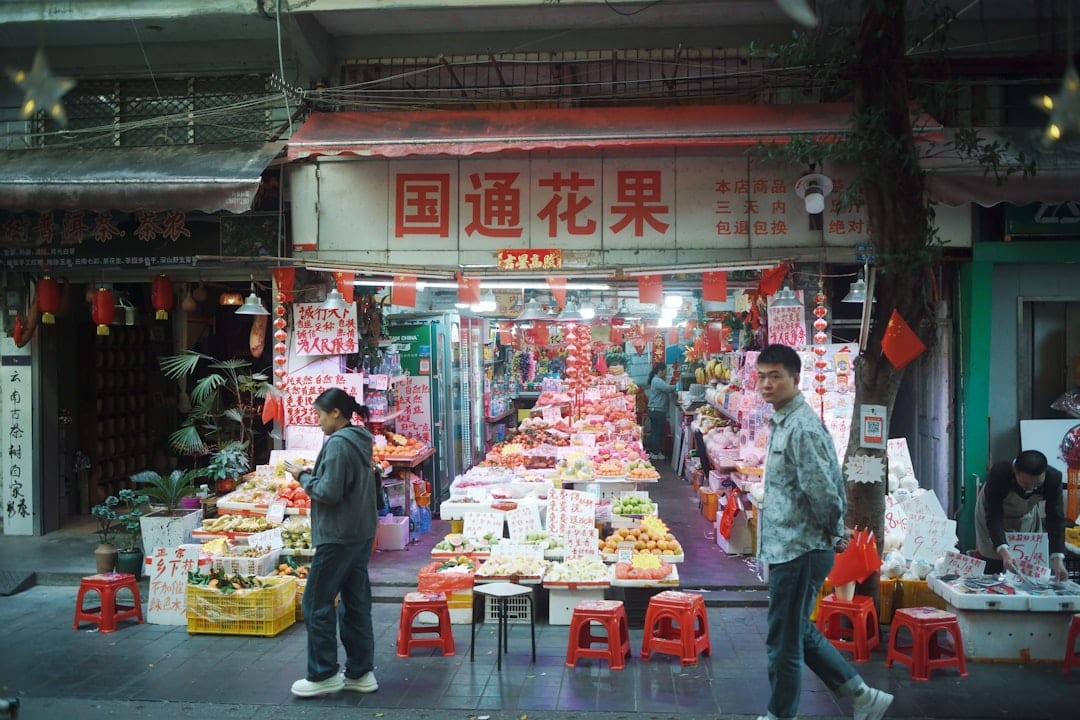
Restaurant owners shop here before dawn, selecting ingredients with the rigor of a judge at a beauty pageant. A fish is assessed by the clarity of its eyes and the firmness of its flesh. Pork belly is judged by the evenness of its fat layers. This obsession with freshness—seng seng (新鮮)—explains why Guangzhou chefs use minimal seasoning. When your grouper was swimming an hour ago, heavy sauce would be an insult.
Practical tip for Filipino travelers: Wet markets are safe to visit but intense. Wear closed shoes, expect wet floors, and carry small bills. Do not photograph vendors without asking—many are camera-shy. The best time to visit is 6:30–8:00 AM, when the selection is widest and the energy is electric. Even if you are not cooking, observing how locals select produce will change how you evaluate every Cantonese meal afterward.
Dining Taboos Every Filipino Should Know
Filipinos are already attuned to Asian table manners, but Cantonese customs carry specific symbolism that can turn an innocent gesture into a social misstep. Here are the rules that matter most:
- Never stick chopsticks upright in rice. This mirrors the incense sticks burned for the dead and is considered deeply inauspicious. When not in use, rest them horizontally across your bowl or on the provided chopstick rest.
- Do not tap your bowl with chopsticks. In Guangzhou, this is associated with beggars. Tapping your fingers on the table while someone pours tea, however, is the polite thank-you mentioned earlier.
- Splitting the bill is uncommon. The host pays, or the eldest diner does. If you wish to treat someone, pay discreetly at the counter before anyone else can. Fighting over the bill is a performance of affection, but foreigners are rarely expected to participate.
- Finish what you take. Leaving food on your plate suggests the host did not feed you well. Take small portions from shared dishes and return for more—it shows the meal is satisfying.
- Do not flip a fish. When eating a whole steamed fish, remove the flesh from the top side and then lift the skeleton to access the bottom. Flipping the fish over symbolizes a capsized boat—bad luck for a river city.
"A Guangzhou host will notice if you handle the lazy Susan without consideration. Turn it slowly, pause when someone is serving themselves, and never spin an empty dish back to the person who just placed it. These small courtesies earn you more respect than fluent Cantonese ever could."
Guangdong vs. Hong Kong vs. Macau: One Region, Many Tables
Cantonese cuisine stretches across the Pearl River Delta, yet each city interprets the tradition differently. Understanding these distinctions will sharpen your palate and help you order with confidence as you move between Guangzhou, Hong Kong, and Macau.
| Dish / Element | Guangzhou | Hong Kong | Macau |
|---|---|---|---|
| Dim Sum Style | Traditional cart service; heavier, heartier portions | Modern order sheets; delicate, refined presentation | Portuguese-Cantonese fusion; egg tarts and shrimp roe noodles |
| Roast Meat | Maltose-heavy char siu; focus on pork | Crispier skin on duck and goose; leaner cuts | African chicken and porco bafassá alongside roast duck |
| Wonton Noodles | Balanced broth; equal pork and shrimp in wonton | Shrimp-dominant wontons; firmer "al dente" noodles | Less common; shrimp roe noodles (hae joe min) preferred |
| Price Range | CNY 40–80 per person (PHP 320–640) | HKD 80–150 per person (PHP 580–1,090) | MOP 60–120 per person (PHP 420–840) |
| Dining Vibe | Family-style; multi-generational tables | Fast-paced; business lunch culture | Leisurely; colonial-era tea houses |
Guangzhou remains the purist. Without Hong Kong's rent pressure or Macau's colonial layers, the city preserves Cantonese cooking in its most unapologetic form. The portions are larger, the tea is stronger, and the conversations at neighboring tables are louder. This is the source code of the cuisine—the place to learn the rules before you watch other cities reinterpret them.
Planning your Pearl River Delta food journey? Our 5D4N Macau-Zhuhai-Guangzhou-Shenzhen package is designed for travelers who want to taste all three cities without worrying about cross-border logistics, language barriers, or missing the restaurants only locals know.
Quick Takeaways
- Arrive for yum cha before 8:30 AM on weekends; expect a tea fee of CNY 3–8 per person.
- Use serving chopsticks or the back of your own pair when taking food from shared plates.
- Never stick chopsticks upright in rice or flip a whole fish at the table.
- Guangzhou preserves the heartiest, most traditional Cantonese flavors compared to Hong Kong and Macau.
- Visit a wet market at dawn to understand why freshness is the true religion of Cantonese cooking.
Related Reading
- → Pearl River Delta Culture: A Filipino Traveler's Guide to Macau, Zhuhai, and Guangzhou
- → Hong Kong and Macau Etiquette: Essential Customs for Filipino Travelers
- → Hong Kong on a Budget: A 3-Day Spending Breakdown for Filipino Travelers
About the Author
Grace Villareal is a Taipei-based travel editor who has spent years documenting Northeast Asia's border crossings, dining halls, and unspoken social codes. She believes the best way to understand a culture is to sit at its table—and preferably arrive early enough to get the freshest har gow.
Ready to Taste Guangzhou?
Let Mesho curate your Cantonese food journey across the Pearl River Delta. From teahouse reservations to wet market tours, we handle the logistics so you can focus on the flavors.
Explore Our China Multi-City Food Tours


