


You have probably saved dozens of reels of Gyeongbokgung Palace wrapped in crimson maples, Nami Island’s golden metasequoia lane, and Jeju’s oreums brushed with copper. But one worry keeps resurfacing: Will a Korea autumn trip turn into a rushed checklist of five cities in six days?
This guide is built for the opposite pace. We focus on a manageable 5–6 day route through Seoul, Nami Island, and either Jeju or Busan, timed around the 2026 fall foliage window. You will get exact train lines, transit passes, weather notes, and dishes worth seeking out, all written from a Filipino traveler’s perspective. If you want a broader overview of what Mesho offers in Korea, start with our South Korea destination page.
Ready? Let’s map out a leaf-peeping journey you can actually enjoy.
When to Go: 2026 Autumn Foliage Forecast
Typical timing across the route
Korea’s autumn color moves from the northern mountains downward. That means Seoul peaks before Jeju, so the trick is lining up your nights with the right week. The table below uses long-term patterns rather than a single fixed date, because foliage shifts slightly every year with temperature and rainfall.
| Destination | Foliage begins | Peak color window |
|---|---|---|
| Seoul & Nami Island | Early October | Mid- to late October |
| Seoraksan (optional day trip) | Late September | Early to mid-October |
| Busan | Mid-October | Late October to early November |
| Jeju Island | Late October | Early to mid-November |
2026 outlook
Based on historical trends, Seoul’s peak is likely to fall around 17–24 October 2026, with Nami Island trailing only a few days later. Jeju’s best color usually arrives in early November, especially on the slopes of Hallasan. The Korea Meteorological Administration typically releases its formal autumn foliage forecast in September, so book your refundable hotels and flights around the windows above, then confirm the exact peak before finalizing day-by-day plans.
If you can only travel once, mid- to late October is the safest bet for Seoul and Nami. Add Jeju only if your dates extend into the first half of November, otherwise swap it for Busan.
A Relaxed 5–6 Day Seoul–Nami–Jeju Itinerary
This itinerary keeps early mornings optional and limits one major move per day. It is designed for Philippine passport holders flying into Incheon International Airport (ICN) and out of either Jeju (CJU) or back through Seoul.
Day 1 — Arrival & slow entry into Seoul
- Land at ICN, take the Airport Railroad Express (AREX) to Seoul Station or Hongik University Station.
- Check into a hotel in Myeongdong or Hongdae for easy subway access.
- Evening stroll along Cheonggyecheon Stream and a casual dinner of Korean fried chicken or tteokbokki.
Day 2 — Seoul’s palace foliage
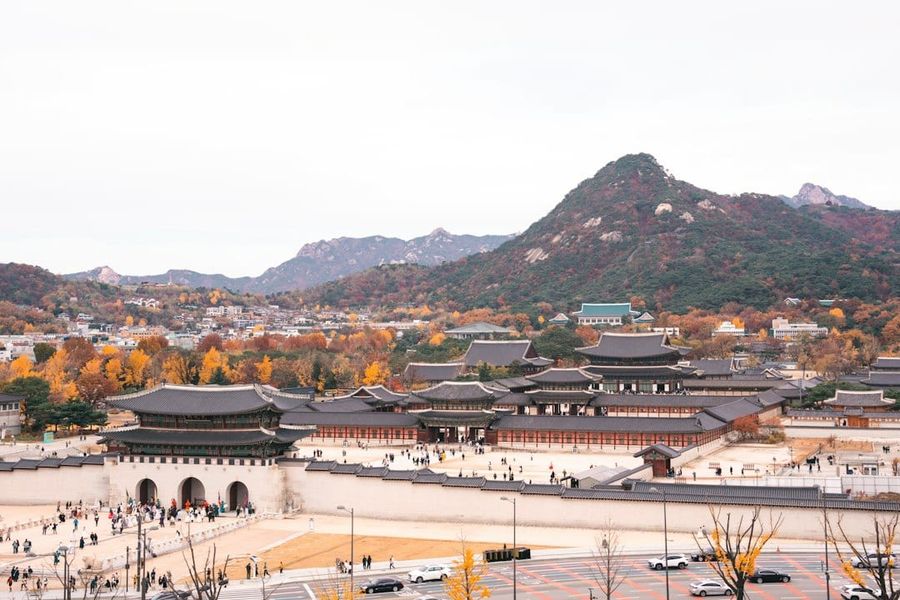
- Morning: Gyeongbokgung Palace (Line 3, Gyeongbokgung Station). Walk the gingko-lined path toward National Folk Museum.
- Lunch in Insadong — try hanjeongsik (Korean set meal) or a bowl of bibimbap.
- Afternoon: wander Bukchon Hanok Village for hillside alleys with maple canopies.
- Sunset: take the cable car or hike up to Namsan Seoul Tower for city views through the trees.
Day 3 — Cafés, culture & a hanok afternoon
- Morning: Jogyesa Temple in Jongno, then coffee in a converted hanok café in Ikseon-dong.
- Lunch: samgyetang (ginseng chicken soup) — a classic autumn warm-up.
- Afternoon: explore Dongdaemun Design Plaza or catch a K-pop stage at a local venue if that is your style.
- Evening: prep for Nami Island — buy snacks and load your T-money card.
Day 4 — Nami Island day trip
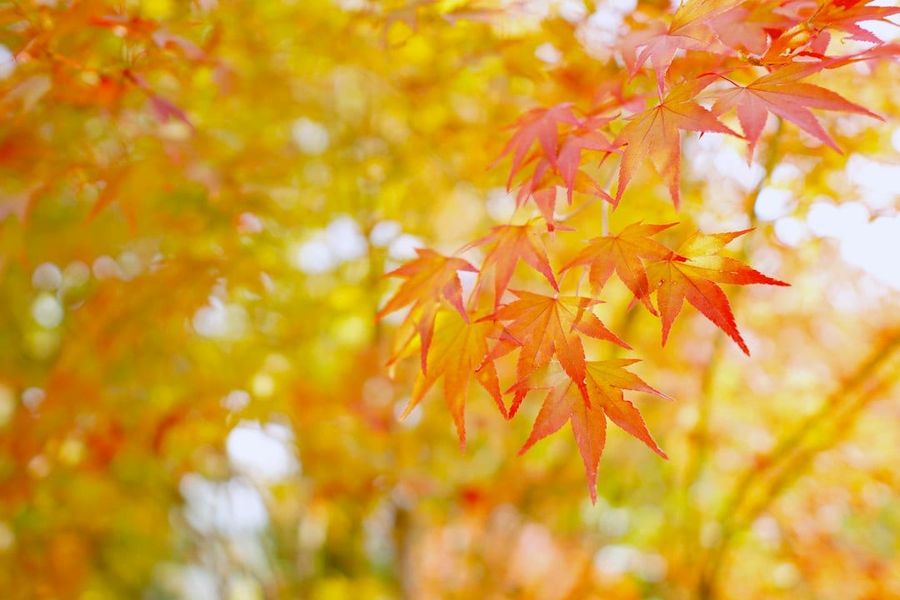
- Take the ITX-Cheongchun from Yongsan or Cheongnyangni to Gapyeong Station.
- Walk or taxi to the ferry pier, then ride the short ferry to Nami Island.
- Follow the central metasequoia lane, rent a bicycle, and have lunch at one of the island’s restaurants.
- Return to Seoul by early evening.
Day 5 — Fly to Jeju: waterfalls & coastal trails
- Morning flight from Gimpo Airport (GMP) to Jeju Airport (CJU) — about one hour.
- Pick up a rental car (recommended) or use Jeju intercity buses.
- Drive south to Seogwipo: visit Jeongbang Waterfall and walk a section of Olle Trail Route 7.
- Dinner: Jeju black pork barbecue in Seogwipo city.
Day 6 — Hallasan or sunrise, then departure
- Option A: early hike on Hallasan National Park’s Eorimok or Yeongsil trail for autumn shrubs and crisp air.
- Option B: sunrise at Seongsan Ilchulbong and a walk through Seongeup Folk Village.
- Stop at the Osulloc Tea Museum for Jeju green tea before your evening flight.
Busan alternative (swap Days 5–6)
If Jeju does not fit your budget or dates, Busan is an excellent autumn swap. Take the KTX Gyeongbu Line from Seoul Station to Busan Station in roughly 2.5 hours. Spend the afternoon in Gamcheon Culture Village, evening at Haeundae Beach, and the next morning at Beomeosa Temple surrounded by mountain maples.
Transit Passes, KTX & Domestic Flights
Getting around Korea is straightforward once you choose the right card or ticket for each leg. Here is exactly what to book.
- T-money card: Buy and top up at any convenience store (CU, GS25, 7-Eleven). Tap it on subways, buses, and even taxis. One week in Seoul usually costs around ₩30,000–50,000 (roughly PHP 1,250–2,100).
- Korail Pass: A foreigner-only flex pass for KTX and conventional trains. Useful if you add Busan or plan side trips. Book online before arrival.
- Seoul to Busan KTX: Take the Gyeongbu Line from Seoul Station to Busan Station. The fastest trains take about 2 hours 15 minutes.
- Gimpo to Jeju flights: Carriers include Jeju Air, T’way Air, Jin Air, Korean Air, and Asiana. The route is one of the world’s busiest, so book at least 6–8 weeks ahead for autumn weekends.
- Nami Island transit: ITX-Cheongchun to Gapyeong Station, then a 5-minute taxi or 15-minute walk to the ferry. The ferry itself is a short, scenic ride.
Planning your Korea autumn escape? Mesho’s Korea packages can handle visa assistance, airport transfers, hotel selection, and domestic flight bookings so you can focus on the leaves.
Korean Autumn Foods & Cafés to Try
Cooler weather changes the menu in Korea. Skip the diet and lean into the season.
- Samgyetang — ginseng chicken soup, often eaten on hot summer days but equally restorative after a chilly palace walk.
- Hobakjuk — sweet pumpkin porridge, a comforting breakfast or snack found in traditional markets.
- Pajeon & makgeolli — savory scallion pancake paired with rice wine is the classic rainy-day combo, perfect for an overcast autumn afternoon.
- Roasted chestnuts & sweet potatoes — street vendors set up near palaces and subway exits as temperatures drop.
- Hotteok — warm, filled pancake from street stalls, best eaten with gloves on.
- Jeju black pork & hallabong — on Jeju, order the island’s namesake barbecue and finish with citrus desserts or green tea at the Osulloc Tea Museum.
For café culture, head to Ikseon-dong or Anguk for hanok-style coffee shops. Café Onion Anguk and the quieter tea houses near Bukchon let you warm up between foliage walks.
Packing & Weather Notes
October in Seoul is crisp and dry; November starts to bite. Jeju stays milder but windier. Pack layers, not one heavy coat.
| Item | Why it matters |
|---|---|
| Layered clothing | Mornings can be 6–10°C; afternoons often reach 15–19°C. |
| Compact down jacket | Essential for late October evenings and any mountain hikes. |
| Comfortable walking shoes | Seoul palaces and Bukchon involve stone paths and hills. |
| Scarf & light gloves | Wind along the Han River and Jeju coast can be sharp. |
| Umbrella | Autumn rain is occasional but cold when it arrives. |
| Type C/F plug adapter | Korea uses 220V, round two-pin sockets. |
| Pocket Wi-Fi or eSIM | KakaoMap and Papago are much easier with data. |
Visa, Money & Practical Reminders
- Visa: Philippine passport holders need a Korean C-3 tourist visa, applied in advance through the embassy in Manila or an accredited agency. We cover the current requirements in our South Korea visa guide for Filipinos.
- Cash & cards: Major credit cards work in Seoul and Jeju City, but smaller restaurants and buses prefer cash. Withdraw won from ATMs with a Visa or Mastercard, or bring USD to exchange.
- Budget ballpark: Excluding shopping, plan roughly PHP 70,000–110,000 per person for 5–6 days, covering mid-range hotels, meals, local transport, one domestic flight or KTX ride, and entry fees. Airfare from Manila to Seoul is usually PHP 15,000–30,000 roundtrip depending on how early you book.
- Avoid Chuseok: Korea’s harvest holiday can fall in late September or early October. Many shops close and transport sells out. Check the 2026 calendar before locking dates.
Insider Tips for a Smooth Journey
- Do not try to do everything. Seoul alone has enough palaces, markets, and cafés to fill a week. The itinerary above deliberately leaves room for spontaneous discovery.
- Book domestic flights early. The Gimpo–Jeju route is heavily traveled on autumn weekends; last-minute seats jump in price quickly.
- Download these apps: KakaoMap for navigation, Papago for translation, and Subway Korea for offline train routes.
- Wear slip-on shoes for temple visits and hanok cafés where you may need to remove footwear.
- Wake up for one sunrise. Whether it is at Seongsan Ilchulbong in Jeju or Namsan in Seoul, the crisp autumn air makes the early alarm worthwhile.
Quick Summary
- ✦ Best window: mid- to late October for Seoul and Nami; early November for Jeju.
- ✦ Route: 2–3 nights Seoul, 1 day Nami Island, 2 nights Jeju or Busan.
- ✦ Key transit: T-money card, AREX, ITX-Cheongchun, KTX Gyeongbu Line, Gimpo–Jeju flight.
- ✦ Must-try flavors: samgyetang, pajeon with makgeolli, hotteok, Jeju black pork.
- ✦ Visa: Philippine passport holders need a C-3 Korean tourist visa in advance.
Related Reading
- South Korea Visa Requirements for Philippine Passport Holders in 2026
- Seoul to Busan by KTX: A Filipino Traveler’s Step-by-Step Guide
- Seoul Subway and T-Money Card: A Filipino First-Timer’s Guide
- Korea Visa-Free Travel for Filipinos: Navigating Jeju Island Entry Rules and Beyond
Ready to experience South Korea in autumn?
Let Mesho curate your Seoul, Nami Island, and Jeju itinerary. Explore our South Korea packages and speak with a specialist today.
— Grace Villareal, Northeast Asia Travel Editor


