


You have already saved the Klook deals, watched the vlogs, and mentally framed the shot of crimson maples against a Kyoto temple wall. But the moment you open a spreadsheet, the questions pile up: Will mid-November be too late for Kansai? Is a JR Pass worth it if you are only visiting Kyoto, Osaka, and Nara? And which temples actually reward that 6:00 AM alarm?
This guide removes the guesswork. Built specifically for Filipino travelers departing from Manila or Clark, it pairs koyo forecasting with a runnable 6–7 day Kansai route, exact train lines, temple timing, autumn dishes, and a realistic packing list. By the end, you will know when to book, where to go, and how to move between cities without wasting yen or daylight.
2026 Kansai Autumn Forecast & Best Viewing Dates
Koyo season in Japan's Kansai region typically arrives in stages. Higher elevations and northern prefectures turn first; cities like Kyoto and Osaka follow from mid-November into early December. For 2026, early indicators point to a fairly standard autumn, with the first color appearing in mountain areas by late October and urban temples reaching peak between November 15 and November 30.
If you can only choose one window, plan to arrive in Kyoto between November 17 and November 23. This window usually captures peak color at lower-elevation temples while still avoiding the heaviest domestic holiday crowds around Labor Thanksgiving Day (November 23). Book flights by early August for the best rates from Manila to Kansai International Airport (KIX).
A 6–7 Day Kyoto-Osaka-Nara Route for 2026
This route keeps Kyoto as your base for the first half, moves to Osaka, and folds Nara in as a day trip. It minimizes hotel changes while maximizing golden-hour temple visits.
Days 1–3: Kyoto, the Koyo Capital
Day 1: Land at KIX and take the JR Haruka limited express to Kyoto Station (about 75 minutes, covered by JR Pass). Check into a hotel near Kyoto Station or Kawaramachi for easy bus and subway access. Spend the evening walking Pontocho Alley or along the Kamogawa River to adjust to the cool air.
Day 2: Start early at Tofuku-ji Temple for the Tsutenkyo Bridge maple corridor, then walk to Eikando Zenrin-ji for its famous pond reflections. In the afternoon, follow the Philosopher's Path from Nanzen-ji toward Ginkaku-ji. Return to Gion for yudofu dinner.
Day 3: Head west to Arashiyama. Visit Tenryu-ji Temple and the bamboo grove before crossing the Togetsukyo Bridge. In the late afternoon, take the Keifuku Randen tram or JR Sagano Line back toward central Kyoto. End at Kiyomizu-dera during its autumn evening illumination (usually 17:30–21:00).
Day 4: Nara Day Trip
Take the JR Nara Line or Kintetsu Nara Line from Kyoto to Nara (35–45 minutes). Walk through Nara Park, feed the sika deer with senbei, and enter Todai-ji to see the Great Buddha. Continue through the lantern-lined path of Kasuga Taisha before returning to Osaka Namba on the Kintetsu Line or to Osaka Station on the JR Yamatoji Rapid.
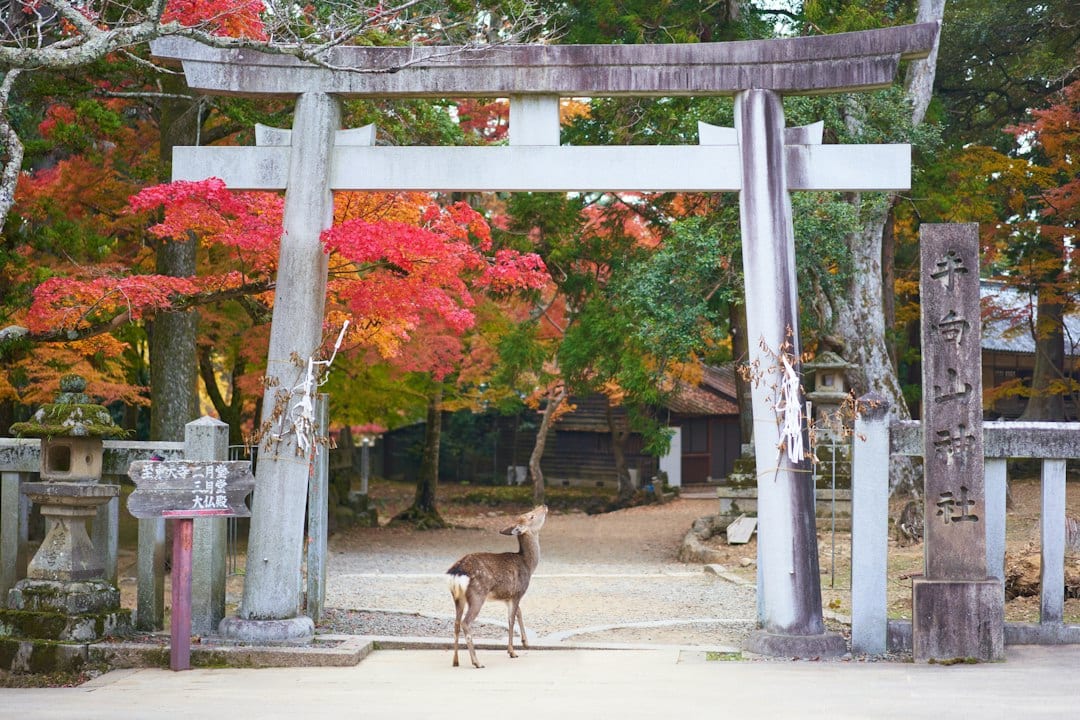
Nara Park in late November, where deer wander beneath turning maples on the way to Todai-ji.
Days 5–6: Osaka, Urban Contrast
Day 5: Begin at Osaka Castle Park for ginkgo-lined paths, then take the Hankyu Takarazuka Line to Minoo Park for the 45-minute riverside walk to Minoo Waterfall. Return to the city for dinner in Dotonbori.
Day 6: Explore Kuromon Market for grilled scallops and seasonal fruit, then Shinsekai for kushikatsu. If weather is clear, catch sunset from the Umeda Sky Building Floating Garden Observatory. Cap the night with takoyaki along Dotonbori Canal.
Day 7: Departure
From Osaka Station, board the JR Haruka to KIX. Allow at least three hours before your flight for airport queues and last-minute Royce' or matcha kitkat shopping at the departure gates.
JR Pass & Local Transit Tips
For this Kansai-only loop, a 7-day Ordinary Car JR Pass is usually worth it if you also use it for the KIX–Kyoto and Osaka–KIX airport transfers. Within the cities, however, you will still need an IC card for subways, buses, and non-JR lines.
- JR Haruka: Connects KIX to Kyoto Station and Tennoji/Osaka Station. Reserved seats are free with the JR Pass.
- JR Kyoto Line: Runs between Kyoto Station and Osaka Station in under 30 minutes, useful on Days 3–5.
- JR Nara Line / Yamatoji Rapid: Covers Kyoto–Nara and Nara–Osaka on your Nara day trip.
- ICOCA card: Kansai's rechargeable transit card. Use it for Kyoto city buses, the Osaka Metro, Hankyu/Kintetsu private lines, and convenience store purchases.
- Kyoto city buses: Routes 100 and 205 loop major temples. They get crowded in autumn; aim before 09:00 or after 16:00.
"The JR Pass pays for itself on airport transfers alone, but the ICOCA card is what saves you at temple gates and subway turnstiles. Carry both."
If you want a deeper cost comparison, see our full guide on the Japan Rail Pass vs. individual tickets.
Planning your trip?
Mesho Travel can lock in your flights, JR Pass, and hotel blocks for peak koyo dates. View our Japan packages or speak with a specialist to reserve early-bird November slots.
Temples & Gardens to Prioritize for Fall Colors
Not every famous temple is at its best in autumn. These are the ones where the architecture, garden design, and maple canopy align into something worth the queue.
Kyoto
- Tofuku-ji Temple: The Tsutenkyo Bridge crossing a valley of maples is the signature Kansai koyo image. Arrive at opening (08:30) to avoid foot traffic.
- Eikando Zenrin-ji: Famous for its Hojo Pond and night illuminations from early November to early December. The temple stays open until 21:00 during the light-up period.
- Kiyomizu-dera: The wooden stage overlooks a bowl of autumn hills. Evening illuminations add drama, though the daytime view shows more color detail.
- Kodai-ji Temple: Smaller crowds than Kiyomizu, with a bamboo grove, tea house, and solid night illumination program.
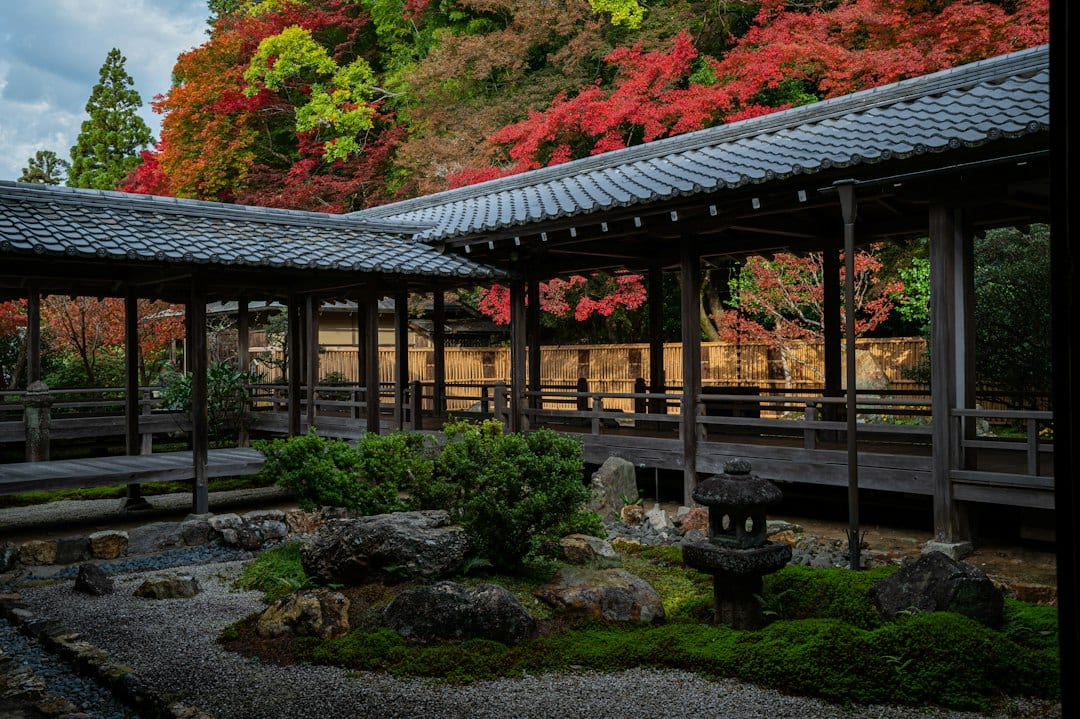
A classic Kyoto temple walkway framed by peak-season maples.
Nara & Osaka
- Kasuga Taisha: Three thousand stone lanterns and ancient cedar paths. Maples near the shrine entrance turn later in the season.
- Todai-ji Nigatsu-do: Free to enter, with a balcony view over Nara Park that glows orange in late afternoon.
- Minoo Park: An easy half-day hike from Osaka. The trail to Minoo Waterfall is lined with momiji and dotted with stalls selling momiji tempura (maple leaves fried in sesame oil).
Autumn Food Specialties & Packing List
Autumn in Japan is not only a visual season; it is a flavor one. The cooler weather brings roasted sweet potatoes on street corners, chestnuts in sweets, and warming oden at convenience stores.
What to Eat
- Yakiimo: Roasted satsumaimo sweet potatoes, often sold from trucks or stalls. Perfect hand-warmer and snack.
- Kuri gohan: Chestnut rice, a home-style autumn staple you will find at traditional ryokan and teishoku restaurants.
- Matsutake dobin mushi: Clear soup steamed in a teapot with matsutake mushrooms, a signature Kyoto autumn dish.
- Oden: A simmered pot of daikon, eggs, konnyaku, and fish cakes. Convenience store oden is underrated on cold evenings.
- Momiji wagashi: Maple-leaf-shaped sweets filled with red bean paste, widely available in Kyoto confectioners from October onward.
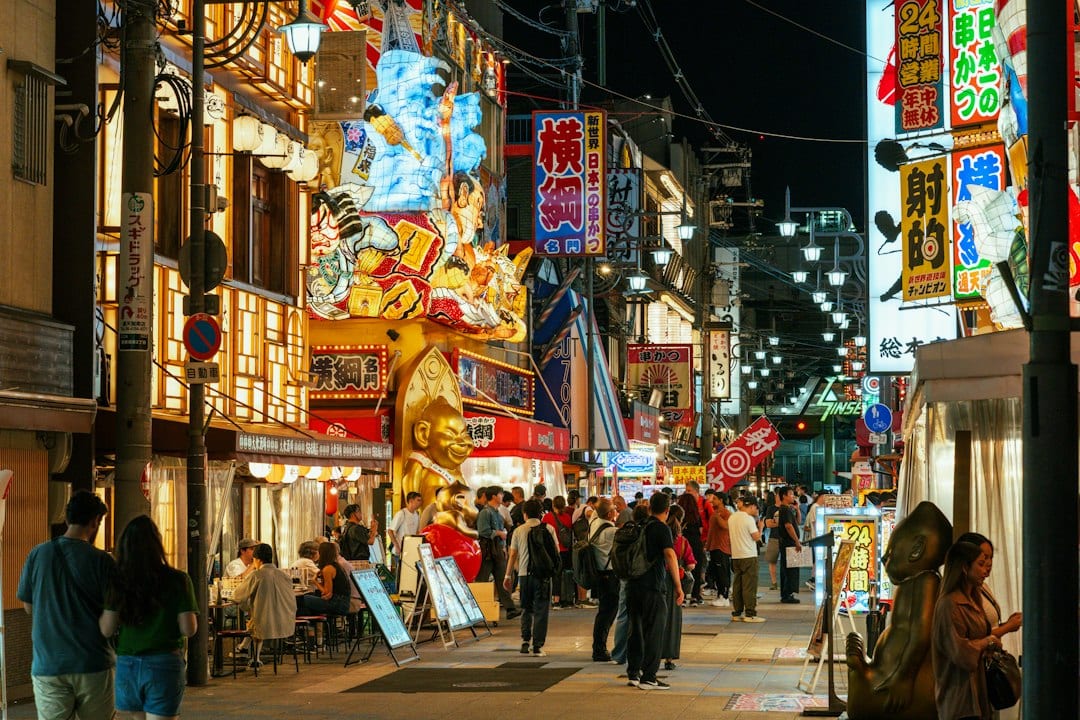
Osaka's Dotonbori after dark: the ideal place to balance temple-hopping with takoyaki and neon.
What to Pack
- Layering system: Base layer, fleece or light down, and a windproof shell. Expect 8–18°C in late November.
- Comfortable slip-on shoes: You will remove them frequently at temple interiors and traditional restaurants.
- Portable umbrella: November rain is light but frequent. A compact umbrella fits in a daypack.
- Power bank & pocket WiFi/eSIM: Essential for offline maps, transit apps, and translating menus.
- Cash pouch: Many temples, small eateries, and rural stalls are cash-only. Carry ¥10,000–20,000 per day.
Quick Summary
- Target November 17–23 for peak color in Kyoto, Osaka, and Nara with manageable crowds.
- Use a 7-day JR Pass for airport transfers and intercity hops; pair it with an ICOCA card for city buses and subways.
- Prioritize Tofuku-ji, Eikando, Kiyomizu-dera, and Minoo Park for the best autumn photography.
- Balance temple visits with Osaka's street food scene and Nara's calmer deer-park afternoons.
- Pack layers, slip-on shoes, and cash; book flights by August for November dates.
Related Reading
- Japan Visa Application for Filipinos 2026: Complete Step-by-Step Guide
- Japan Rail Pass vs. Individual Tickets: A Cost Breakdown for Filipino Travelers
- Japan in Autumn: A Cultural Guide to Festivals, Foliage, and Traditions
Ready to chase the 2026 koyo?
Let Mesho Travel curate your Kyoto, Osaka, and Nara autumn itinerary—flights, JR Pass, hotels, and day-by-day routing included.
Explore Japan PackagesAuthor Note
Grace Villareal is a Taipei-based travel editor who has covered Northeast Asia for years, with a focus on border details, seasonal timing, and the small etiquette choices that make a Japan trip smoother. For Mesho Travel, she helps Filipino travelers plan confident, culturally grounded journeys across Japan, Korea, Taiwan, and Greater China.


