


Imagine standing on a terraced hillside in Busan as the sun dips toward the East Sea, the city’s lights flickering on one by one below. You have already walked the stone courtyards of Gyeongbokgung and tasted Seoul’s late-night tteokbokki. Now you want the rest of Korea—the coastal rhythm of the south, the temple valleys of an ancient capital, and an island born from a volcano where women divers have harvested the sea for centuries.
For Filipino travelers who have seen Seoul or simply want a fuller Korean picture, the Busan–Gyeongju–Jeju triangle delivers exactly that. This route moves from Korea’s maritime second city to the Silla Kingdom’s open-air museum, then to Jeju’s UNESCO-listed nature and living haenyeo heritage. In this guide, you will find a logical Seoul-based routing, specific site recommendations, local food picks, and practical notes on KTX passes, domestic flights, weather, and PHP budgets.
Why Go Beyond Seoul?
Seoul is a brilliant introduction to Korea, but it is only one chapter. The country’s regional identities are distinct, and the south feels noticeably different—warmer in temperature, slower in pace, and shaped by the sea. Busan carries the swagger of a port city. Gyeongju preserves the spiritual and political heart of the Silla dynasty. Jeju, often called the “Hawaii of Korea,” is actually far more interesting than that label suggests: it is a place of volcanic geology, matrilineal fishing culture, and a dialect and cuisine all its own.
This itinerary is ideal if you:
- Have already visited Seoul and want a second, deeper Korea trip.
- Prefer a mix of nature, history, and local culture over shopping and city nightlife.
- Want to understand Korea beyond K-drama backdrops and palace gates.
- Are comfortable with a short domestic flight and a couple of KTX rides.
The Route: Seoul → Busan → Gyeongju → Jeju
The most efficient way to string these three destinations together is to start from Seoul, travel south by train, and then fly to Jeju. Trying to do it in reverse is possible, but the Seoul–Busan KTX connection is the easiest high-speed rail entry point from the capital.
Seoul to Busan by KTX
Board the KTX at Seoul Station or Yongsan Station and arrive at Busan Station in roughly two and a half hours. The route cuts through rolling farmland and mountain tunnels before opening onto the southern coast. If you want more flexibility, the Korail Pass allows foreign tourists to ride most Korail trains for a set number of days—useful if you also plan side trips. For just Seoul–Busan, a single ticket is often simpler. Book seats in advance on the Korail website or app, especially during Korean public holidays.
Busan to Gyeongju
Gyeongju sits inland from Busan, about an hour away. The fastest option is the KTX from Busan Station to Singyeongju Station, then a short bus or taxi ride into the old town. Alternatively, the express bus from Busan Central Bus Terminal drops you closer to central Gyeongju with fewer transfers. If you are traveling light, the bus is often more convenient.
Gyeongju to Jeju
There is no bridge or train to Jeju, so you will need to fly. The most common routing is to return from Gyeongju to Gimhae International Airport in Busan by bus or taxi and take a domestic flight to Jeju. Another option is to travel from Gyeongju to Pohang Gyeongju Airport, which has seasonal flights to Jeju. In either case, domestic carriers such as Korean Air, Asiana, Jeju Air, Jin Air, and T’way operate the route frequently, but seats fill fast on weekends and holidays.
Returning to Manila
From Jeju, fly back to Gimpo Airport in Seoul and connect to your international flight home. A few international carriers also operate seasonal Jeju–Manila or Jeju–Cebu services, though schedules are limited. Most travelers will find it more reliable to route through Seoul.
Busan: Korea’s Coastal Soul
Busan feels different from Seoul the moment you step out of the station. The air is saltier, the hills steeper, and the pace more relaxed. It is a city of beaches, bridges, and working harbors, with a growing reputation for art and design.
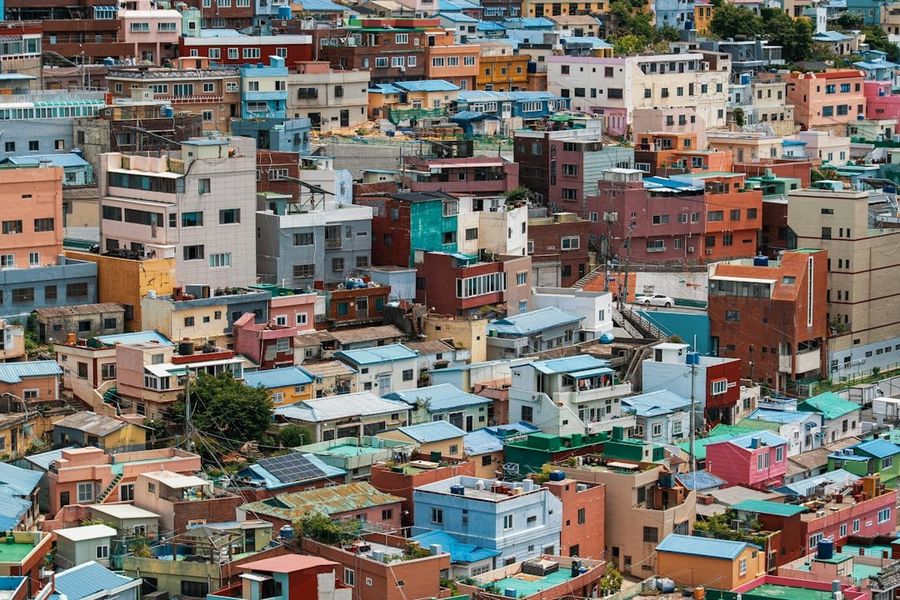
Haeundae Beach & Dongbaek Island
Start with an early morning walk along Haeundae Beach. In summer, it is one of Korea’s most popular beaches; in autumn and winter, it is surprisingly peaceful, with clean light and fewer crowds. Walk east toward Dongbaek Island, a small coastal promontory with trails, camellia trees, and the Nurimaru APEC House, which offers a modern architectural counterpoint to the natural coastline.
Gamcheon Culture Village
Gamcheon began as a refugee settlement after the Korean War and has become one of Korea’s most distinctive cultural neighborhoods. Wander the steep alleys, follow the painted fish signs, and pause at the Little Prince viewpoint. The village is as much about community resilience as it is about Instagram backdrops, so take time to visit the small art galleries and cafés run by local residents.
Jagalchi Market & Local Food
No visit to Busan is complete without Jagalchi Market, Korea’s largest seafood market. The ground floor stalls display live octopus, abalone, and seasonal catch; upstairs, simple restaurants turn your selection into a meal. Try hoe (Korean sashimi), eomuk (fish cake skewers in broth), and dwaeji gukbap (pork-and-rice soup), a Busan specialty. For a sit-down version, Halmae Dwaeji Gukbap near Seomyeon is a reliable local favorite.
Gyeongju: Walking Through the Silla Kingdom
If Busan is Korea’s modern port, Gyeongju is its ancient heart. For nearly a thousand years, this was the capital of the Silla Kingdom, and the landscape is still dotted with royal tombs, temple ruins, and pagodas. The entire city feels like an open-air museum.
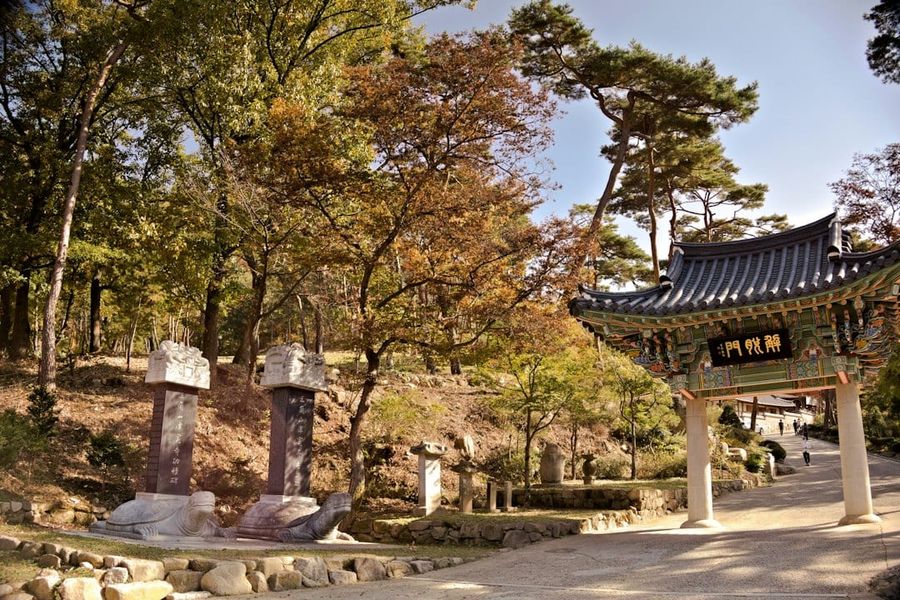
Bulguksa & Seokguram
Bulguksa Temple is the spiritual centerpiece of Gyeongju. Founded in the 8th century, its stone terraces, wooden halls, and two original stone pagodas are recognized as UNESCO World Heritage sites. Arrive early to hear morning chanting and to photograph the complex before tour buses arrive. A short bus ride uphill takes you to Seokguram Grotto, a man-made granite cave housing a serene Buddha statue overlooking the sea. The combination of mountain, stone, and quiet makes it one of Korea’s most moving sites.
Daereungwon Tomb Park
In the center of town, Daereungwon Tomb Park holds dozens of large, grass-covered burial mounds from the Silla period. The most famous is Cheonmachong, the “Heavenly Horse Tomb,” where you can enter the burial chamber and see the original gold crown and ornaments excavated from the site. The park is particularly atmospheric at dusk, when the mounds glow in the last light.
Woljeonggyo Bridge & Gyeongju Hanok Village
End the day at Woljeonggyo Bridge, a reconstructed wooden covered bridge that lights up beautifully after sunset. Nearby, the Gyeongju Hanok Village offers a chance to sleep in a traditional Korean house, eat Silla-themed set meals, and wake up to the sight of mist rising from the tombs.
Jeju: Island of Volcanoes, Folk Culture & Haenyeo
Jeju is Korea’s only autonomous province and its only island province. It carries UNESCO designations for natural heritage, geology, and intangible culture—a rare triple recognition. For Filipino travelers, the island’s scale is manageable: you can base yourself in Seogwipo or Jeju City and take day trips by rental car, taxi, or guided tour.
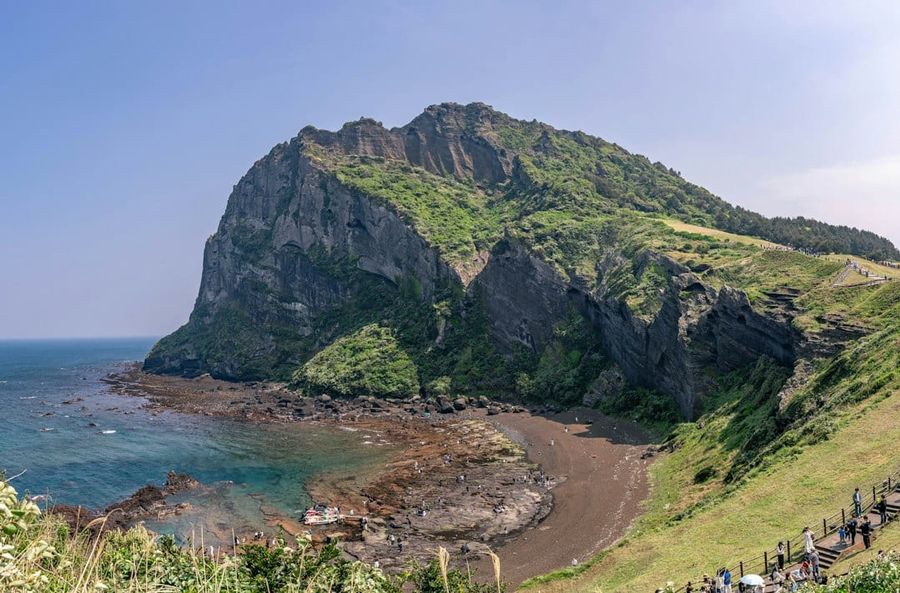
Seongsan Ilchulbong
Seongsan Ilchulbong, or “Sunrise Peak,” is a tuff cone that rises straight from the sea on the island’s eastern coast. The hike to the crater rim is short but steep, and the early-morning views are worth the alarm. Below the peak, the harbor area offers fresh seafood and, on certain days, demonstrations by haenyeo—the island’s famous women free-divers.
Jeju Folk Village
To understand Jeju’s traditional life, visit the Jeju Folk Village near Pyoseon. The site preserves thatched-roof houses, stone walls, and jeongnang gates—three wooden poles that told visitors whether the household was home. It is a practical introduction to the island’s agricultural past and the hardscrabble culture that produced the haenyeo tradition.
Haenyeo Heritage
The haenyeo are perhaps Jeju’s most remarkable cultural asset: women who free-dive to depths of up to 10 meters without breathing equipment, gathering abalone, sea urchin, and octopus. Their practice is recognized by UNESCO as intangible cultural heritage. You can learn about their history at the Haenyeo Museum in Gujwa-eup and watch live diving demonstrations at Seongsan or other coastal villages. It is a powerful reminder that Jeju’s culture is as deep as its volcanic landscape.
Practical Travel Notes for Filipinos
This itinerary is rewarding, but it does require a little coordination. Here is what you need to know before booking.
KTX Passes & Domestic Flights
For foreign passport holders, the Korail Pass offers flexible travel on most Korail trains for 2, 3, 4, or 5 consecutive or flexible days. It is worth comparing against the cost of individual tickets for your exact dates. Regular KTX tickets can be booked online with international cards through the Korail website or at station counters. For domestic flights to Jeju, book as early as possible; the Seoul–Jeju and Busan–Jeju routes are among the busiest in the world, and weekend seats sell out.
Weather & Best Time to Go
The most comfortable windows are spring (April to May) and autumn (September to November), when temperatures are mild, skies are clear, and the countryside is at its most photogenic. Summer brings beach weather but also humidity, monsoon rains in June and July, and a typhoon risk from July to September. Winter is cold and windy, especially on Jeju, but crowds are thin and accommodation prices drop. If you are considering a summer departure, our Heartfelt Korea Summer 2026 package is built around this season.
PHP Budget Estimate
The figures below are indicative for one traveler on a mid-range trip, excluding international flights from Manila. Actual costs depend on season, exchange rates, and how far in advance you book.
| Item | Estimated PHP Range | Notes |
|---|---|---|
| KTX Seoul–Busan | ₱3,000 – ₱4,500 | Varies by seat class and booking window |
| Bus–Gyeongju transfers | ₱500 – ₱1,500 | KTX + local bus, or direct express bus |
| Domestic flight to Jeju | ₱2,500 – ₱6,000 | Book early; prices spike on weekends |
| Mid-range hotel per night | ₱3,500 – ₱6,500 | Lower in winter, higher in spring/autumn |
| Meals per day | ₱1,000 – ₱2,500 | Local markets and casual restaurants |
| Site entrances & activities | ₱1,500 – ₱3,000 | Temples, parks, museums, haenyeo shows |
| Total per person (7–9 days) | ₱55,000 – ₱95,000 | Excluding international flights & shopping |
Planning your trip? Mesho Travel And Tours can tailor this Busan–Gyeongju–Jeju routing to your dates, handle KTX and domestic flight bookings, and arrange local guides in each city. Explore our Heartfelt Korea Summer 2026 package or message us for a custom quote.
Quick Summary
- Route: Fly into Seoul → KTX to Busan → overland to Gyeongju → fly to Jeju → return via Seoul/Gimpo.
- Busan highlights: Haeundae Beach, Gamcheon Culture Village, Jagalchi Market, dwaeji gukbap.
- Gyeongju highlights: Bulguksa, Seokguram Grotto, Daereungwon Tomb Park, Woljeonggyo Bridge.
- Jeju highlights: Seongsan Ilchulbong, Jeju Folk Village, haenyeo heritage and museums.
- Best seasons: Spring (April–May) and autumn (September–November); summer is viable but watch for monsoons and typhoons.
Related Reading
- Seoul to Busan by KTX: A Filipino Traveler's Step-by-Step Booking and Boarding Guide
- Busan Coastal Walk and Seafood Markets: A 2-Day Itinerary for Filipino Travelers
- South Korea Visa for Filipinos 2026: Requirements, Process & Timeline
- Seoul, Busan & Jeju: The Perfect 10-Day South Korea Itinerary for Filipino Travelers
Author Note
Grace Villareal is a Taipei-based travel editor who has spent years covering Northeast Asia. She writes frequently on border logistics, local etiquette, and the cultural currents that connect Korea, Japan, Taiwan, and Greater China.
Ready to Experience Korea Beyond Seoul?
Let Mesho Travel And Tours curate your Busan, Gyeongju, and Jeju journey. From KTX reservations and domestic flights to local guides and handpicked stays, we handle the logistics so you can focus on the experience.
Explore Heartfelt Korea Summer 2026


