


Holy Land Pilgrimage
Holy Land Pilgrimage from the Philippines: Israel & Jordan Travel Guide
You have prayed over this journey for years. You have imagined standing inside the Church of the Holy Sepulchre, sailing across the Sea of Galilee, and tracing the Via Dolorosa where Jesus carried the cross. But as soon as you start planning, the questions pile up: Do I need a visa for Israel? What should I wear at the Western Wall? How do we cross into Jordan? Which tour operator can actually be trusted with my faith, my money, and my safety?
This guide is written for Catholic and Christian pilgrims from Bulacan and nearby provinces who are joining—or thinking of joining—a guided Holy Land group tour. By the end, you will know what biblical sites to expect, how a typical 10-day itinerary flows, what to pack, what documents to prepare, and how to choose an operator that treats your pilgrimage with the care it deserves. If you are ready to walk where your faith began, explore Mesho’s Holy Land pilgrimage packages here.
Why a Guided Pilgrimage Changes Everything
A Holy Land pilgrimage is not a vacation. It is a spiritual retreat that happens to take place across two countries, three major religions, and thousands of years of history. Going with a guided group removes the friction that can distract you from prayer: haggling with taxi drivers at Ben Gurion Airport (TLV), figuring out border paperwork at the Allenby Bridge, or missing a site because a local bus schedule changed.
For pilgrims leaving from Bulacan, a group departure also means convenience. You meet your co-pilgrims at Ninoy Aquino International Airport (MNL), travel together on the same flight routing, and return with shared stories instead of scattered logistics. A good operator handles airport assistance, hotel check-ins, kosher and halal meal coordination, and—most importantly—connects you with a licensed biblical guide who can open the Scriptures on the very ground where they were written.
“The moment our bus rounded the Mount of Olives and the golden Dome of the Rock came into view, half the group was already in tears. That is the moment you realize this trip is not about sightseeing—it is about coming home to your faith.”
Key Biblical Sites and Their Significance
Most Israel-and-Jordan pilgrimages follow the footsteps of Jesus from Nazareth to Jerusalem, then extend into Jordan to visit Old Testament sites and the rose city of Petra. Knowing the significance of each stop before you arrive deepens the experience.
In Israel
- Church of the Holy Sepulchre, Jerusalem — Traditionally held to contain both Golgotha (Calvary) and the empty tomb of the Resurrection. This is the spiritual climax of the pilgrimage for most Catholics.
- Via Dolorosa — The sorrowful way Jesus walked to His crucifixion. Many groups pray the Stations of the Cross here, especially on Fridays when the Franciscans lead the public procession.
- Western Wall — The holiest site in Judaism and a remnant of the Second Temple. It is also a place where Christian pilgrims often pause to pray.
- Mount of Olives and Garden of Gethsemane — The place of Jesus’ agony and ascension. The view over the Old City at sunrise is unforgettable.
- Bethlehem — The Church of the Nativity marks the traditional birthplace of Jesus. It sits in the West Bank, so your operator will coordinate Palestinian Authority entry permits.
- Nazareth — The Basilica of the Annunciation stands over the site where the Angel Gabriel greeted Mary.
- Sea of Galilee (Lake Tiberias) — A short boat ride here evokes the Gospels: the calling of the disciples, the calming of the storm, and the multiplication of loaves and fishes.
- Cana — The site of Jesus’ first miracle at the wedding feast, where married couples often renew their vows.
- Mount Tabor — Traditionally identified as the Mount of Transfiguration.
- Dead Sea — The lowest point on earth, often visited for a brief float before continuing to Jordan or returning to Tel Aviv.
In Jordan
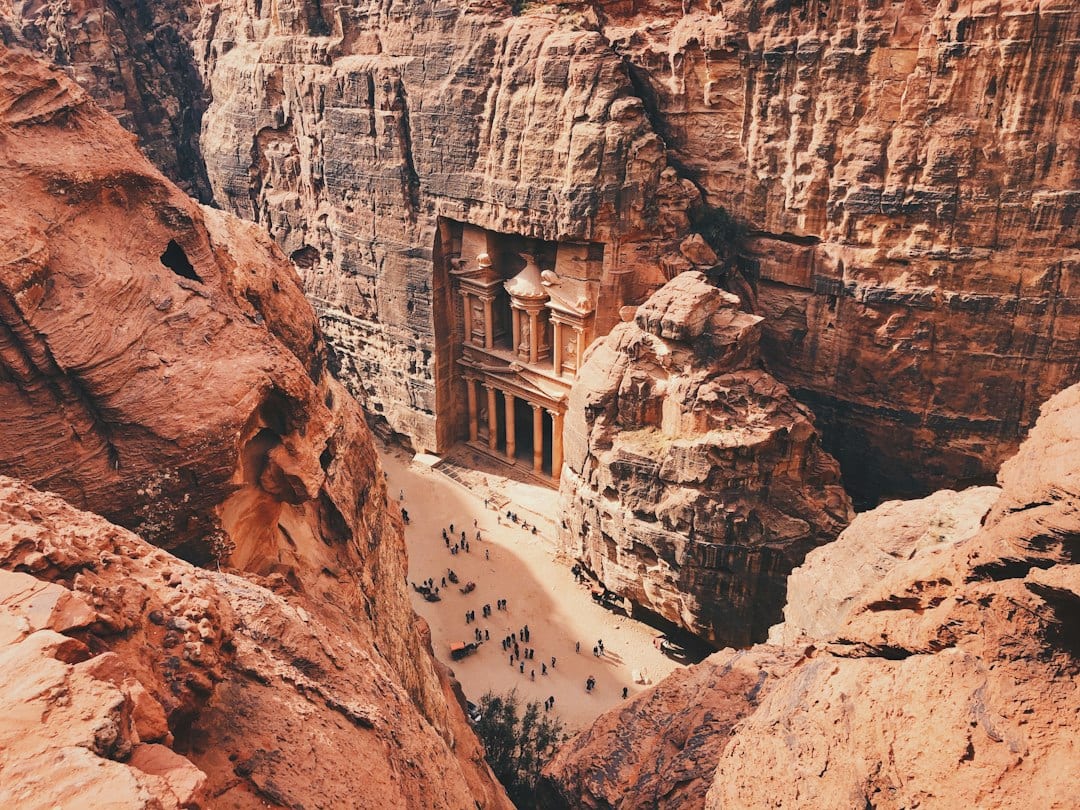
- Petra — The ancient Nabatean city carved into rose-red sandstone. While not a biblical site, it is one of the New Seven Wonders of the World and a powerful reminder of ancient civilizations that shaped the region.
- Mount Nebo — Where Moses looked out over the Promised Land before he died. On a clear day you can see across the Jordan Valley to Jerusalem.
- Madaba — Home to the famous 6th-century mosaic map of the Holy Land inside St. George’s Greek Orthodox Church.
- Jerash — One of the best-preserved Roman cities outside Italy, giving context to the world of the early Church.
- Wadi Rum — A desert valley of sandstone and granite, often associated with the wilderness wanderings of the Israelites.
A Typical 10-Day Israel & Jordan Itinerary Flow
Most guided Holy Land tours from Manila follow a north-to-south arc through Israel, then cross into Jordan near the Dead Sea. This flow minimizes backtracking and lets the group acclimatize gradually. Below is a realistic 10-day structure; actual days may shift depending on flight schedules and liturgical calendars.
| Day | Region | Highlights |
|---|---|---|
| 1 | Tel Aviv / Coast | Arrive at Ben Gurion Airport (TLV); transfer to Netanya or Jaffa hotel for rest |
| 2 | Galilee | Caesarea Maritima, Mount Carmel, Megiddo, Nazareth (Basilica of the Annunciation) |
| 3 | Galilee | Sea of Galilee boat ride, Capernaum, Mount of Beatitudes, Cana |
| 4 | Jordan Valley | Mount Tabor, Jordan River baptismal site (Yardenit or Qasr al-Yahud), Jericho, Dead Sea float |
| 5 | Bethlehem / Jerusalem | Church of the Nativity, Shepherds’ Field, Old City orientation |
| 6 | Jerusalem | Via Dolorosa, Church of the Holy Sepulchre, Western Wall, Mount of Olives |
| 7 | Israel → Jordan | Ein Karem, Allenby Bridge border crossing, continue to Amman |
| 8 | Jordan | Jerash, Mount Nebo, Madaba mosaic map |
| 9 | Jordan | Petra (Siq to Treasury), optional Wadi Rum jeep tour |
| 10 | Jordan / Departure | Dead Sea resort morning, transfer to Queen Alia International Airport (AMM) |
Flight routing note: From Manila, common routings include Philippine Airlines or EL AL via Bangkok or Hong Kong, or Gulf carriers such as Emirates (via Dubai), Etihad (via Abu Dhabi), and Turkish Airlines (via Istanbul). Many Filipino pilgrims prefer Gulf routings for shorter layovers and newer aircraft. If your package begins in Tel Aviv and ends in Amman, you will need an open-jaw ticket—a detail your operator should arrange.
What to Wear and Pack for Religious Sites
Modesty is not just a courtesy in the Holy Land—it is a requirement at most churches, mosques, and Jewish holy sites. Dress codes are strictly enforced, especially at the Western Wall, the Church of the Holy Sepulchre, and the Dome of the Rock precinct.
Clothing Guidelines
- Shoulders and knees must be covered. For women, this means tops with sleeves and skirts or long pants. Men should wear long pants and shirts with sleeves.
- Bring a scarf or shawl. Women may need to cover their heads inside certain churches and at the Western Wall. A lightweight pashmina works for sun protection too.
- Choose breathable fabrics. Israel and Jordan can be hot and dry, especially from May to October. Linen, cotton, and moisture-wicking blends are ideal.
- Wear sturdy, broken-in walking shoes. Jerusalem’s Old City streets are uneven cobblestone. Petra’s Siq and the Mount of Olives require solid grip and ankle support.
- Pack a sun hat and sunglasses. There is little shade at Petra, Masada, and the Dead Sea.
Suggested Packing List
- Modest daytime outfits (4–5 sets) plus one dressier outfit for special Masses
- Light jacket or cardigan for cool desert evenings and air-conditioned buses
- Comfortable walking sandals and closed-toe walking shoes
- Personal rosary, Bible or devotional booklet, small notebook
- Reusable water bottle and electrolyte packets
- Sunscreen (SPF 50+), lip balm, basic first-aid kit
- Universal adapter (Type C/H for Israel; Type C/G for Jordan)
- Copies of passport, visa, travel insurance, and emergency contacts
Leave tight clothing, shorts, sleeveless tops, and revealing dresses at home. When in doubt, err on the side of modesty. The goal is to blend in respectfully while keeping your focus on prayer.
Travel Documents, Health, and Money Matters
This is the section that causes the most anxiety, but it does not have to. With the right documents and a small health kit, you can travel with confidence.
Documents and Visas
- Philippine passport must be valid for at least six months beyond your departure date from Jordan.
- Israel visa is required for Philippine passport holders. Your operator usually assists with the application, but you will need a completed form, passport photos, bank documents, and a certificate of employment or retirement proof.
- Jordan visa is typically arranged as part of a group package, either through visa-on-arrival protocols or the Jordan Pass (which bundles visa fees with entry to Petra, Jerash, and other sites).
- Travel insurance covering medical emergencies, trip cancellation, and evacuation is strongly recommended. Some operators include it; others require you to purchase it separately.
- Pilgrim devotional items such as holy water bottles and religious articles can usually be carried, but pack them securely in checked luggage to avoid security questions.
Health Precautions
- Hydration is non-negotiable. Carry water everywhere. Dehydration sneaks up quickly in the Judean Desert and at Petra.
- Bring prescription medications in original packaging, plus a copy of your doctor’s prescription. Pharmacies in Israel and Jordan are modern, but specific brands may differ.
- Protect your feet. Blisters are the most common complaint. Pack blister pads and change socks midday.
- The Dead Sea is not a swimming pool. Do not shave the day before floating, keep water out of your eyes, and rinse off thoroughly after.
- Stay with the group. Your guide knows which areas are best avoided and how to navigate checkpoints smoothly.
Currency and Payments
- Israel uses the New Israeli Shekel (ILS). Jordan uses the Jordanian Dinar (JOD).
- US Dollars are widely accepted for tips and large purchases, and are the easiest currency to exchange.
- Credit cards work in most hotels and souvenir shops, but carry small denominations of ILS and JOD for restrooms, tips, and street snacks.
- Tipping is expected for drivers, guides, and hotel staff. Your operator will usually suggest a fair daily amount per person.
How to Choose a Reputable Pilgrimage Operator
Not all tour operators are equal. Some are travel agencies that add a religious label; others are faith-based organizations with decades of experience. Here is how to tell the difference.
| What to Check | Why It Matters | Red Flags |
|---|---|---|
| DOT accreditation and Israeli/Jordanian partner registration | Legal protection and properly licensed local guides | No license number, vague “partner offices” |
| Fixed departure dates from Manila with airport assistance | Easier coordination for Bulacan groups | Constant last-minute schedule changes |
| Licensed biblical guide (not just a driver) | Deep context at each sacred site | Driver doubles as guide |
| Transparent inclusions and single-package pricing | No surprise costs for meals, tips, or border fees | “Too cheap” base price with many paid add-ons |
| Group size of 20–35 pilgrims | Manageable bus movement and hotel allocation | Overcrowded buses, delayed departures |
| Travel insurance included or clearly recommended | Health and cancellation coverage | No mention of insurance at all |
A reputable operator will also send you a pre-departure briefing, a packing checklist, and a WhatsApp group for updates. They will answer your questions about visas, Mass schedules, and dietary needs without making you feel like a burden.
Planning your pilgrimage?
Mesho Travel And Tours organizes guided Holy Land departures from Manila for Catholic and Christian groups from Bulacan and beyond. Let us handle the visas, flights, border crossings, and sacred-site logistics so you can focus on prayer.
View Holy Land Tour PackagesQuick Summary: What to Remember
- ✓ Start your passport and Israel visa application at least 6–8 weeks before departure.
- ✓ Pack modest clothing, a scarf, broken-in walking shoes, and a reusable water bottle.
- ✓ Expect a north-to-south Israel route, then cross into Jordan at Allenby Bridge.
- ✓ Bring US Dollars for tips and exchange; keep small amounts of ILS and JOD for daily purchases.
- ✓ Choose a DOT-accredited operator with a licensed biblical guide, transparent pricing, and travel insurance support.
Related Reading
- PATHWAYS 2026 Holy Land Tour: A Day-by-Day Spiritual Itinerary for Filipino Catholics
A detailed daily breakdown of an upcoming guided departure. - Holy Land Pilgrimage: What to Wear and Prepare for Sacred Sites
A focused guide on modest dress, packing lists, and devotional preparation. - Jordan’s Petra and the Dead Sea: Extending Your Holy Land Pilgrimage from Israel
Why many Filipino pilgrims add Jordan to their Israel itinerary.
Author’s Note
I have walked the Via Dolorosa with Filipino pilgrims from all walks of life—teachers, farmers, mothers, retirees from Meycauayan and Bocaue, engineers from Malolos. Each time, I see the same transformation: the Bible stops being a book and becomes a landscape you can touch, smell, and pray through.
The Holy Land asks something of you. It asks for sturdy shoes, an open heart, and a little patience at border checkpoints. But it gives back far more: a deeper Mass, a quieter rosary, and a faith that feels less like inheritance and more like arrival. If you are called to go, do not let logistics hold you back. Let a trusted team carry the details so you can carry your cross—literally and spiritually—to the place where everything began.
Ready to walk where your faith began?
Mesho Travel And Tours curates guided Holy Land pilgrimages from Manila for Catholic and Christian groups across Bulacan. From visa assistance to sacred-site logistics, we handle the journey so you can focus on the prayer.
Explore Holy Land Pilgrimage Packages


