


India Golden Triangle Itinerary for Filipino Travelers: Delhi, Agra & Jaipur
The first thing most Filipino travelers ask me about India is not what to see—it is how to survive the chaos without losing their composure. The honking, the crowds, the spicy food, the dress-code uncertainty at temples: it can feel like too much before the plane even lands. But the Golden Triangle—Delhi, Agra, and Jaipur—was designed for exactly this hesitation. It is India’s most compact cultural sampler, a route that lets you absorb Mughal grandeur, Rajput color, and modern Indian energy in just one week without straying far from dependable transport and comfortable hotels.
This itinerary balances wonder with logistics. You will get a sunrise at the Taj Mahal, wander Old Delhi’s spice lanes, and stand on Amber Fort’s ramparts. You will also know which train to book, what to wear at a gurudwara, and how to avoid the stomach troubles every first-timer fears. Let’s walk through the route step by step.
Why the Golden Triangle is the perfect first taste of India
Draw a line on the map between Delhi, Agra, and Jaipur and you get a neat triangle covering roughly 720 kilometers. Within that small footprint sits three distinct Indias: the capital’s layered history, Agra’s marble romance, and Rajasthan’s rose-hued royal swagger. Each city is only a few hours apart by train or expressway, so you spend less time in transit and more time inside monuments.
For Filipino travelers, the route is especially forgiving. English signage is common, the tourist infrastructure is mature, and the circuit can be done at a mid-range budget without sacrificing safety. More importantly, the Golden Triangle teaches you how to read India—its rhythms, its etiquette, its sensory generosity—so future trips feel far less intimidating.
Your 7-day Delhi, Agra & Jaipur route
Days 1–2: Delhi — two cities in one capital
Most flights from Manila connect through Singapore, Kuala Lumpur, Bangkok, or Dubai before arriving at Indira Gandhi International Airport (DEL). From the airport, the Airport Express Metro reaches New Delhi Railway Station in about 20 minutes, or you can book a prepaid taxi or Uber to your hotel in Central Delhi.
Delhi is best understood as two cities. Spend your first day in Old Delhi: start at Jama Masjid, India’s largest mosque, then dive into the narrow lanes of Chandni Chowk by cycle-rickshaw. Stop at the Red Fort (Lal Qila) and end at Gurudwara Bangla Sahib, where volunteers serve free community meals in a profoundly moving display of Sikh hospitality.
Day two belongs to New Delhi: the imperial sweep of Rajpath, the solemn arch of India Gate, the garden-tomb of Humayun’s Tomb (a direct architectural ancestor of the Taj Mahal), the soaring Qutub Minar, and the lotus-shaped Bahá’í House of Worship. If time allows, add the National Museum or a quiet hour at Gandhi Smriti.
Day 3: Agra — the Taj Mahal and beyond
Leave Delhi early on the Gatimaan Express, departing Hazrat Nizamuddin Railway Station at 08:10 and reaching Agra Cantt in roughly 100 minutes. Alternatively, a private car via the Yamuna Expressway takes about three hours door-to-door.
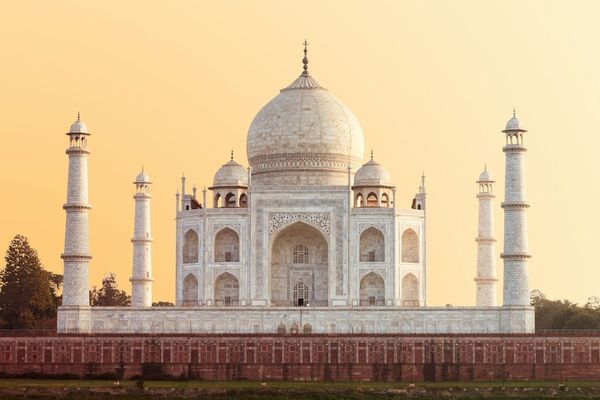
Agra revolves around the Taj Mahal, but the smart move is to pace yourself. Visit the Taj at sunrise—the east gate opens at 06:00—when the marble shifts from cool grey to rose gold and the crowds are thinner. Note that the monument is closed every Friday. Afterward, explore the red-sandstone palaces of Agra Fort, the delicate Itimad-ud-Daulah (often called the Baby Taj), and Mehtab Bagh across the river for sunset reflections.
Days 4–6: Jaipur — the Pink City and Amber Fort
From Agra, take a morning train to Jaipur (AC chair-car options take around four hours) or hire a private car and break the journey at Fatehpur Sikri, the abandoned Mughal capital, and the staggeringly geometric Chand Baori stepwell at Abhaneri. The road approach is longer but far more rewarding.
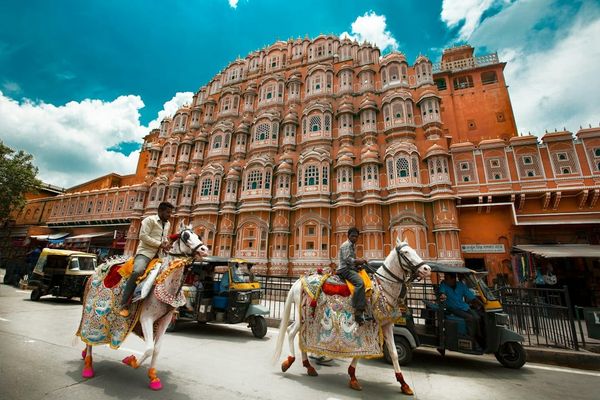
Jaipur’s old city is painted in terracotta pink, a color traditionally associated with hospitality. Spend your first afternoon at the City Palace, the adjacent Jantar Mantar observatory, and a photo stop at the honeycombed Hawa Mahal (Palace of Winds). Wander the bazaars along Johari Bazaar and Bapu Bazaar for textiles, jewelry, and hand-block prints.
Reserve a full day for Amber Fort, the hilltop fortress just north of the city. Arrive by 08:00 to beat both heat and crowds; take a jeep or walk up rather than riding elephants, which many conservation groups discourage. On the way back, stop at Jal Mahal, the water palace, and catch sunset from Nahargarh Fort overlooking the city. On your final Jaipur day, visit the Albert Hall Museum, the white-marble Birla Mandir, and consider a hands-on cooking class or block-printing workshop.
Day 7: Return to Delhi
Return to Delhi on the daytime Shatabdi Express (about four and a half hours from Jaipur to New Delhi) or fly from Jaipur International Airport (JAI) to Delhi in just over an hour. Either option gives you a final afternoon for last-minute shopping at Dilli Haat or a quiet dinner before your international departure.
Planning your first India trip? Mesho’s India tour packages handle train bookings, airport transfers, English-speaking guides, and hotel selections so you can focus on the experience instead of the paperwork. Explore our India tours →
Dress codes, etiquette, and temple behavior
India’s religious sites are living places of worship, not museums, and dressing modestly is the fastest way to show respect. For both men and women, this generally means clothing that covers your shoulders and knees. A light scarf or sarong is invaluable: you can drape it over your head when required, wrap it around your waist before entering a mosque, or use it to shield your shoulders.
- Remove your shoes before entering temples, mosques, gurudwaras, Jain shrines, and some homes and heritage rooms. Slip-on shoes make this far easier.
- Cover your head in gurudwaras and some mosques; carry a scarf or borrow a provided covering.
- Ask before photographing people, especially sadhus, women, and children. Some monuments prohibit tripods and interior photography.
- Use your right hand for giving or receiving money, food, and business cards. The left hand is considered unclean in many South Asian customs.
- Avoid public displays of affection and loud confrontations; patience is read as strength.
- Bargain with a smile in bazaars. Start at roughly 40–50% of the quoted price and meet in the middle.
“India rewards the traveler who moves slowly, observes first, and greets the day with curiosity rather than impatience.”
Getting around: trains, roads, and city transfers
Indian Railways is the soul of long-distance travel here, and the Golden Triangle is served by some of the country’s best trains. Tickets can be booked through the IRCTC website or a trusted travel agent; during peak season, reserve as early as possible.
| Route | Option | Duration | Cost estimate | Notes |
|---|---|---|---|---|
| Delhi → Agra | Gatimaan Express (Chair Car) | ~1h 40m | ₱400–700 | Book early; clean and punctual |
| Delhi → Agra | Private car via Yamuna Expressway | ~3h | ₱3,500–5,500 | Door-to-door; flexible timing |
| Agra → Jaipur | Train (AC Chair / AC2) | ~4h | ₱500–1,500 | Morning departures available |
| Agra → Jaipur | Private car with sightseeing stops | ~5–6h | ₱5,000–8,000 | Visit Fatehpur Sikri & Abhaneri |
| Jaipur → Delhi | Shatabdi Express (Chair Car) | ~4h 30m | ₱600–1,200 | Reliable daytime option |
| Jaipur → Delhi | Flight JAI–DEL | ~1h 15m | ₱2,500–6,000 | Faster, less scenic |
- Within Delhi, the Metro is efficient and affordable; the Violet Line serves Qutub Minar, while the Airport Express connects directly to the city center.
- Uber and Ola operate in Delhi, Agra, and Jaipur; Ola Auto is often the easiest way to hail a tuk-tuk at a fair price.
- At airports, use prepaid taxi counters or app-based cabs; ignore drivers who approach you inside the terminal.
Food safety, health, and arrival practicalities
The biggest health concern for first-timers is usually not serious illness—it is a few days of traveler’s diarrhea that can derail an itinerary. The rule is simple: eat hot, freshly cooked food from busy places, and avoid anything that may have been washed in tap water.
- Drink sealed bottled water or use a Steripen/UV bottle. Skip ice unless you are certain it was made from filtered water.
- Avoid raw salads, unpeeled fruit, and chutneys that have been sitting out; choose fruit you can peel yourself.
- Street food can be safe if you choose vendors with high turnover and food cooked in front of you. Start slowly.
- Pack oral rehydration salts, loperamide, hand sanitizer, and sunscreen. A basic first-aid kit goes a long way.
- Consult a travel clinic at least four weeks before departure for hepatitis A/B, typhoid, and routine vaccinations. Malaria prophylaxis is generally unnecessary for Delhi, Agra, and Jaipur, but confirm with your doctor.
On arrival at Indira Gandhi International Airport, e-Visa holders should follow the “e-Visa” signage to a dedicated immigration counter. Queues can range from 30 to 90 minutes depending on the time of day. Have your printed e-Visa, passport, return ticket, and hotel booking ready. After customs, buy a local SIM card from Airtel or Jio (you’ll need your passport and a passport-size photo), exchange a small amount of pesos or dollars to Indian rupees, and book an airport taxi or Uber to your hotel.
Finally, prepare your senses. Delhi’s air quality can be hazy from October through January; carry an N95 mask if you are sensitive. Traffic noise, horn concerts, and the sheer density of people are part of the experience. Lean into it with patience, and you will find that India moves from overwhelming to intoxicating faster than you expect.
Visa requirements and best time to visit
Philippine passport holders need a visa before traveling to India. The easiest route for tourists is the Indian e-Visa, applied for online through the official portal. Tourist e-Visas are typically issued for 30 days, one year, or five years. You must apply at least four days before your arrival date, and your passport must be valid for at least six months beyond your entry.
- Required documents: passport bio page scan, recent passport-size photo, return flight ticket, proof of accommodation, and sufficient funds.
- Processing time: often 3–5 business days, but apply at least two weeks in advance during peak season.
- Important: visa rules and fees change. Always verify current requirements on the official Indian e-Visa website before applying.
The best window to visit the Golden Triangle is October to March, when daytime temperatures are mild, skies are clearer, and outdoor sightseeing is comfortable. Taj Mahal sunrises are crisp and crowd levels manageable on weekdays. April to June brings scorching heat often exceeding 45°C, while July to September is humid and rainy.
Festivals add another layer. Diwali (usually October or November) lights up cities with lamps and fireworks but also crowds and higher hotel rates. Holi in March is joyful and chaotic; if you attend, wear old clothes and protect your camera gear.
Ready to walk the Golden Triangle?
The Golden Triangle is not a checklist—it is an initiation. By the end of seven days, you will know how to read a railway platform, how to greet a stranger with namaste, and why the Taj Mahal still silences a room 400 years after it was built. The logistics are manageable, the memories are extraordinary, and the right guidance makes all the difference.
Explore Mesho’s India tour packagesQuick Summary
- The Golden Triangle—Delhi, Agra, Jaipur—is India’s most manageable first-time circuit.
- Apply for an Indian e-Visa online at least two weeks before departure; Philippine passport holders cannot get visa on arrival.
- Visit October through March; book Taj Mahal sunrise tickets early and remember it is closed Fridays.
- Dress modestly, remove shoes at religious sites, and use your right hand when giving or receiving items.
- Use the Gatimaan Express, Shatabdi Express, or a private car with driver for intercity transfers.
- Stick to freshly cooked food, sealed bottled water, and a small medical kit to keep your stomach steady.
Related Reading
- India Train Travel for First-Timers: A Survival Guide for Filipino Travelers
- Little India and Kampong Glam: A Cultural Neighborhood Walk for Filipino Travelers
- Mesho India Tour Packages
Author’s note: As someone with roots in both Manila and South India, I still remember my first sunrise at the Taj Mahal—the hush that falls over the crowd when the marble turns pink. The Golden Triangle can feel intense, but with the right pacing and a local guide it becomes one of the most rewarding introductions to the subcontinent. If you are ready to navigate India with confidence, Mesho’s specialists are here to design every detail.
— Priya Aquino-Menon, India & South Asia Travel Editor


