


You've wandered Hoi An's lantern-lit alleys and slurped pho on Hanoi's sidewalk stools. You've checked Vietnam's greatest hits off your list—but now a different kind of itch needs scratching. Somewhere between Danang and the Lao border lies a landscape so riddled with underground passages that satellite imagery barely captures its true scale. Phong Nha-Ke Bang National Park isn't just another stop on the tourist trail. It's where Vietnam trades its postcard charm for raw, subterranean spectacle.
For Filipino travelers holding a Philippine passport, access is refreshingly simple: visa-free entry for up to 21 days. No embassy queues, no paperwork anxiety. The real challenge isn't getting into Vietnam—it's figuring out how to navigate a national park where cell signal vanishes inside limestone chambers and where "book in advance" actually means something.
This 3-day adventure itinerary cuts through the noise. You'll find exact transport costs in Philippine pesos, honest comparisons between the park's headline caves, gear lists tested on muddy river crossings, and accommodation picks that match your budget. Whether you're chasing your first serious caving experience or preparing for the ultimate Son Doong expedition, here's how to do Phong Nha without the logistical headaches.
Getting to Phong Nha-Ke Bang: Routes from Dong Hoi and Danang
Most travelers reach Phong Nha town via either Danang (further, more connections) or Dong Hoi (closer, fewer flights). Here's what each route costs and how long it actually takes.
From Danang
The overland journey from Danang to Phong Nha spans roughly 300 kilometers. An overnight sleeper bus remains the budget default—companies like Camel Travel and Queen Cafe operate 9- to 10-hour services departing Danang's central bus station around 7:00 PM and arriving near Phong Nha town by 5:00 AM. Expect to pay 250,000–350,000 VND (approximately PHP 575–800) for a reclining sleeper seat. Book a day ahead through your Hoi An hostel or via the bus operator's Facebook page.
If you value time over money, a private car with driver runs 3,500,000–4,500,000 VND (PHP 8,000–10,300) and slices the journey to roughly 6 hours. Split among three or four travelers, this becomes competitive with the bus. The route crosses the Hai Van Pass—spectacular coastal scenery that justifies the daylight hours.
From Dong Hoi
Dong Hoi Airport (VDH) receives domestic flights from Ho Chi Minh City and Hanoi via Vietnam Airlines and VietJet Air. From Manila, you'll typically connect through one of those hubs. Once on the ground, Phong Nha town sits 45 kilometers west.
A local public bus departs Dong Hoi's North Bus Station every couple of hours and costs around 50,000 VND (PHP 115). The ride takes 70–90 minutes. Most travelers, however, opt for a private transfer arranged through their accommodation—400,000–600,000 VND (PHP 920–1,380) for a 4-seater car, door-to-door in under an hour. If you're comfortable on two wheels, motorbike rental in Dong Hoi starts at 150,000 VND (PHP 345) daily, letting you ride Highway 16 directly into the park at your own pace.
Choosing Your Underground Worlds: Paradise Cave, Phong Nha Cave, and Son Doong
Phong Nha-Ke Bang holds over 300 caves, but three names dominate every conversation. Here's how they actually differ in access, experience, and cost.
Phong Nha Cave: The Classic River Journey
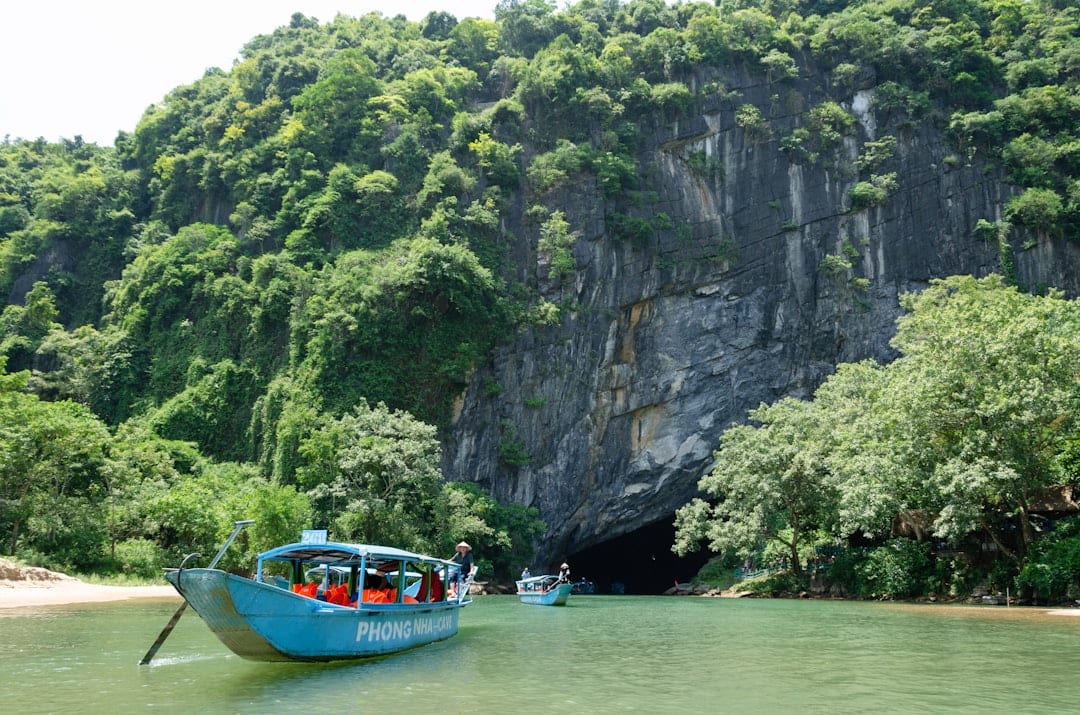
This is the park's namesake and the most accessible introduction. A traditional wooden rowboat ferries you 1.5 kilometers into the cave along an underground river—the longest wet cave passage in the park open to standard visitors. The boatman paddles by lantern light through cathedral-sized chambers where stalactites drip from ceilings 40 meters overhead.
Entrance fees run 150,000 VND (PHP 345) per person, but the boat itself is mandatory and costs 360,000 VND (PHP 830) per vessel. With two people, that's roughly PHP 760 each; with six, it drops to PHP 480. The entire experience lasts 2.5 to 3 hours including the river approach. Go early—boats queue heavily by 10:00 AM.
Paradise Cave: The Cathedral of Stone
At 31 kilometers long, Paradise Cave is one of the world's largest dry caves. Visitors access the first kilometer via a wooden staircase and elevated boardwalk that winds through chambers so vast you could park a jumbo jet inside. The lighting is subtle—amber spots that pick out calcite formations without turning the place into a disco.
The entrance ticket is 250,000 VND (PHP 575) plus a 100,000 VND (PHP 230) electric cart fee to cover the steep approach road. Budget PHP 800–850 total. Allow two hours. Unlike Phong Nha Cave, this is a walking experience—no boats, no river spray, just the echo of your own footsteps on timber walkways.
Son Doong: The Reality Check
Let's be direct: Son Doong is not a spontaneous add-on. Oxalis Adventure holds the exclusive concession, and their expeditions cost approximately $3,000 USD (PHP 168,000) for the four-day trek. Permits are strictly limited to a few hundred visitors per year, with booking windows opening six months to a year in advance. The trek itself involves 50 kilometers of jungle hiking, river wading, and two underground campsites inside the world's largest cave passage.
If that price and commitment level stops your heart, that's exactly the point. Son Doong is a once-in-a-lifetime expedition, not a day trip. For most Filipino travelers, the smarter move is booking Oxalis's shorter Hang En or Tu Lan cave treks—still demanding, still extraordinary, but achievable within a 3-day window and at roughly 15–20% of the Son Doong price.
Gear and Clothing for Cave Trekking and River Crossings
Vietnam's tropical heat doesn't follow you underground. Cave interiors hover between 18–22°C, and river crossings will soak you regardless of season. Pack wrong, and you'll spend day two shivering.
- •Trekking sandals or water shoes: Not flip-flops. Brands like Keen or Merrell handle sharp limestone and submerged rocks. Budget PHP 2,500–4,500.
- •Quick-dry long sleeves and trousers: Protection from bats, insects, and abrasive rock. Uniqlo's Airism line or local Decathlon equivalents work. PHP 1,500–3,000.
- •Headlamp with red-light mode: Essential for Tu Lan or Hang En overnights. White light disturbs cave ecosystems. PHP 800–1,500.
- •Dry bag (20L minimum): For electronics during boat entries and river crossings. PHP 600–1,200.
- •Lightweight rain jacket: Jungle trails turn slick fast. PHP 1,000–2,000.
- •Insect repellent (DEET-based): Leeches are active on jungle approaches after rain.
If you book with Jungle Boss or Oxalis, they provide helmets, harnesses, and basic headlamps for serious treks. But personal footwear and clothing are non-negotiable—rental gear in Phong Nha town is limited and often poorly sized for Filipino frames.
Where to Lay Your Head: Homestays vs. Hotels in Phong Nha Town
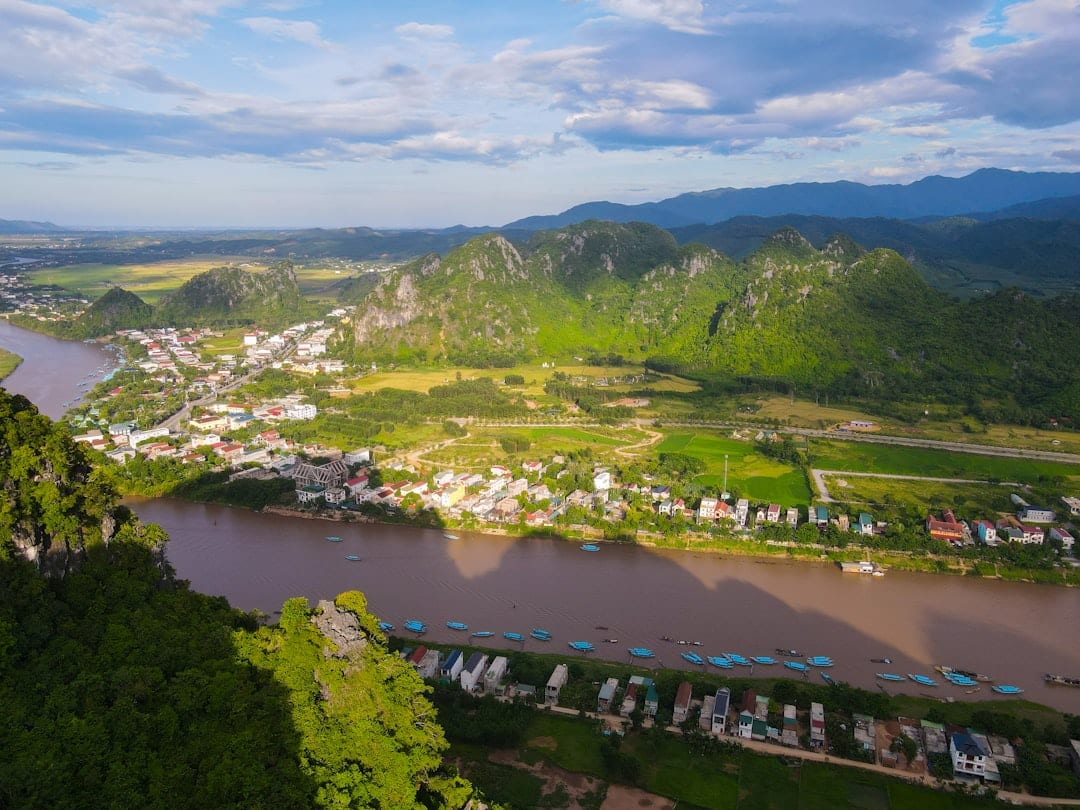
Phong Nha town is tiny—barely two main roads—but accommodation clusters tightly along the Son River.
Homestays and Hostels
For atmosphere and local intel, Phong Nha Farmstay remains the gold standard. Run by a local-Vietnamese-Australian family, it sits on working farmland 3 kilometers from town with free bicycles, a riverside pool, and dorm beds starting at PHP 850. Private rooms run PHP 1,500–2,000. Easy Tiger offers a livelier social scene, a rooftop bar with park views, and mixed dorms from PHP 600.
Hotels
If you need air-conditioning and guaranteed hot water after a muddy trek, Victory Road Villas delivers boutique comfort at PHP 2,800–3,500 nightly. Phong Nha Lake House Resort sits slightly outside town with kayaks and a calmer vibe for PHP 3,200–4,500.
Most travelers split the difference: two nights at a farmstay for the community feel, then splurge on a hotel for the final evening when sore muscles demand a real mattress.
The Real Numbers: 3-Day Budget Breakdown in PHP
Here's how the math works for one person across three days, mixing independent and guided experiences:
| Item | Budget | Mid-Range |
|---|---|---|
| Transport (Danang–Phong Nha return bus) | PHP 1,200 | PHP 3,500 (private car one way) |
| Accommodation (2 nights) | PHP 1,700 | PHP 6,000 |
| Phong Nha Cave + boat | PHP 760 | PHP 760 |
| Paradise Cave + cart | PHP 850 | PHP 850 |
| Guided trek (Tu Lan 1-day) | PHP 4,500 | PHP 7,500 |
| Meals (3 days) | PHP 2,100 | PHP 3,600 |
| Motorbike rental (2 days) | PHP 690 | PHP 690 |
| Park misc / tips | PHP 500 | PHP 1,000 |
| Total | PHP 12,300 | PHP 23,900 |
Add PHP 168,000 if you miraculously snag a Son Doong permit. For reference, a guided 3-day Hang En trek through Oxalis runs approximately PHP 25,000–35,000 including meals, camping gear, and porters.
Planning your trip? Mesho Travel And Tours curates Vietnam adventure packages that include Phong Nha-Ke Bang cave expeditions, transport, and accommodation—so you spend less time haggling with bus drivers and more time underground.
Explore Vietnam Tour PackagesInsider Tips from the Trail
- •Book cave tours before you arrive. Spots on Oxalis's Tu Lan and Hang En treks fill 2–4 weeks ahead in peak season (March–May). Jungle Boss's day trips are more flexible but still require 48 hours' notice.
- •Carry cash. Phong Nha town has one unreliable ATM near the main junction. Bring Vietnamese dong from Hanoi, Hoi An, or Dong Hoi.
- •The dry season (March–August) is best. September–November brings stunningly green jungle but also flash flood risks that close river caves without warning.
- •Eat at Nguyen Shack's restaurant for river fish grilled in banana leaves, or Bamboo Cafe for competent Western breakfasts before early morning treks.
- •Learn "cảm ơn" (kam un). A thank-you in Vietnamese goes further here than in Hanoi. Local guides remember travelers who make the effort.
"The moment our headlamps clicked off inside Paradise Cave, the silence was so complete I could hear my own heartbeat. That's when I understood why people save for years to see Son Doong."
Quick Summary: Your Phong Nha Essentials
- •Philippine passport holders enjoy 21-day visa-free entry to Vietnam.
- •Reach Phong Nha via sleeper bus from Danang (PHP 575–800) or fly to Dong Hoi and transfer (PHP 920–1,380).
- •Phong Nha Cave requires a boat; Paradise Cave is a dry walk. Son Doong demands months of advance planning and a PHP 168,000 budget.
- •Pack trekking sandals, quick-dry layers, a headlamp, and a dry bag.
- •Budget PHP 12,000–24,000 for three days excluding international flights.
Related Reading
- Hanoi to Halong Bay: A Filipino Traveler's Transport and Booking Guide
- Vietnam North to South: 14-Day Ultimate Itinerary from Hanoi to Ho Chi Minh City
- Vietnam E-Visa for Filipinos 2026: How to Apply Online and Validity Updates
Author Note: Marco Dela Cruz is Mesho's ASEAN Travel Consultant, focused on land, sea, and air routing for Filipino travelers heading to Southeast Asia. When he's not mapping bus connections, he's probably arguing that Vietnam's central coast is the region's most underrated adventure corridor.
Ready to Go Underground?
Let Mesho curate your Phong Nha-Ke Bang adventure—from cave permits to riverside beds—so you arrive prepared, not puzzled.
View Our Vietnam Tour Packages


