


You have finally booked your flight to Japan. The excitement of exploring Shibuya crossings, Kyoto temples, and Osaka street food is building. Then comes the dreaded question that stops every Filipino traveler mid-plan: should I buy the Japan Rail Pass, or will individual tickets cost less?
The JR Pass is famous, but after the 2023 price increase, it is no longer the automatic default for every itinerary. Some travelers still save significantly. Others waste thousands of yen. The difference comes down to your exact route, pace, and how many long-distance Shinkansen trips you plan to take.
In this guide, we break down current JR Pass prices with PHP conversions, compare real route costs side by side, and show you when individual tickets, regional passes, or even highway buses are the smarter financial choice.
Current JR Pass Prices in JPY and PHP
The Japan Rail Pass must be purchased before you arrive in Japan as a foreign tourist. You receive an exchange order, which you convert into the physical pass at a JR Exchange Office upon landing. Prices are set in yen and fluctuate slightly based on the exchange rate at the time of purchase.
As of 2026, the standard prices for Ordinary Car passes are approximately:
| Duration | JPY Price | Estimated PHP* |
|---|---|---|
| 7 Days | ¥50,000 | ~PHP 19,500 – 21,000 |
| 14 Days | ¥80,000 | ~PHP 31,000 – 33,500 |
| 21 Days | ¥104,000 | ~PHP 40,500 – 43,500 |
*PHP estimates based on JPY/PHP exchange rates ranging between 0.39 and 0.42. Always check the current rate before purchasing. Green Car (first-class) passes cost roughly 50% more.
Children aged 6 to 11 receive a 50% discount. Infants under 6 travel free when not occupying a seat. The pass covers nearly all JR trains nationwide, including most Shinkansen lines (with the exception of the fastest Nozomi and Mizuho services), JR local lines, the Miyajima ferry, and even some JR buses.
Side-by-Side Cost Analysis: Popular Routes
The most reliable way to decide is to compare your planned itinerary against the pass price. Below are two of the most common circuits for Filipino first-timers, with one-way reserved-seat Shinkansen fares listed for the Hikari or Kodama services covered by the JR Pass.
Route A: Tokyo – Kyoto – Osaka – Hiroshima – Return to Tokyo
| Leg | Individual Ticket (JPY) | Individual Ticket (PHP)* |
|---|---|---|
| Tokyo to Kyoto | ~¥13,500 | ~PHP 5,300 |
| Kyoto to Osaka | ~¥570 | ~PHP 225 |
| Osaka to Hiroshima | ~¥10,000 | ~PHP 3,900 |
| Hiroshima to Tokyo | ~¥19,000 | ~PHP 7,400 |
| Total Individual | ~¥43,000 | ~PHP 16,800 |
| 7-Day JR Pass | ¥50,000 | ~PHP 19,500 |
*PHP estimates use an approximate JPY/PHP rate of 0.39. Actual fares vary slightly by season and seat class.
On this route, individual tickets cost roughly ¥7,000 less than the 7-day JR Pass. However, this math changes if you add day trips to Nara (from Kyoto/Osaka), Himeji, or local JR travel within Tokyo on the Yamanote Line. Three or four extra JR journeys can close the gap quickly.
Route B: Tokyo – Kyoto – Osaka – Return to Tokyo (Classic 7-Day Loop)
| Leg | Individual Ticket (JPY) | Individual Ticket (PHP)* |
|---|---|---|
| Tokyo to Kyoto | ~¥13,500 | ~PHP 5,300 |
| Kyoto to Osaka | ~¥570 | ~PHP 225 |
| Osaka to Tokyo | ~¥13,500 | ~PHP 5,300 |
| Total Individual | ~¥27,500 | ~PHP 10,700 |
| 7-Day JR Pass | ¥50,000 | ~PHP 19,500 |
For the classic Tokyo-Kyoto-Osaka loop, individual tickets cost roughly half the price of a 7-day JR Pass. Unless you are taking multiple day trips on JR lines or extending to Hiroshima, the pass does not pay for itself on this itinerary.
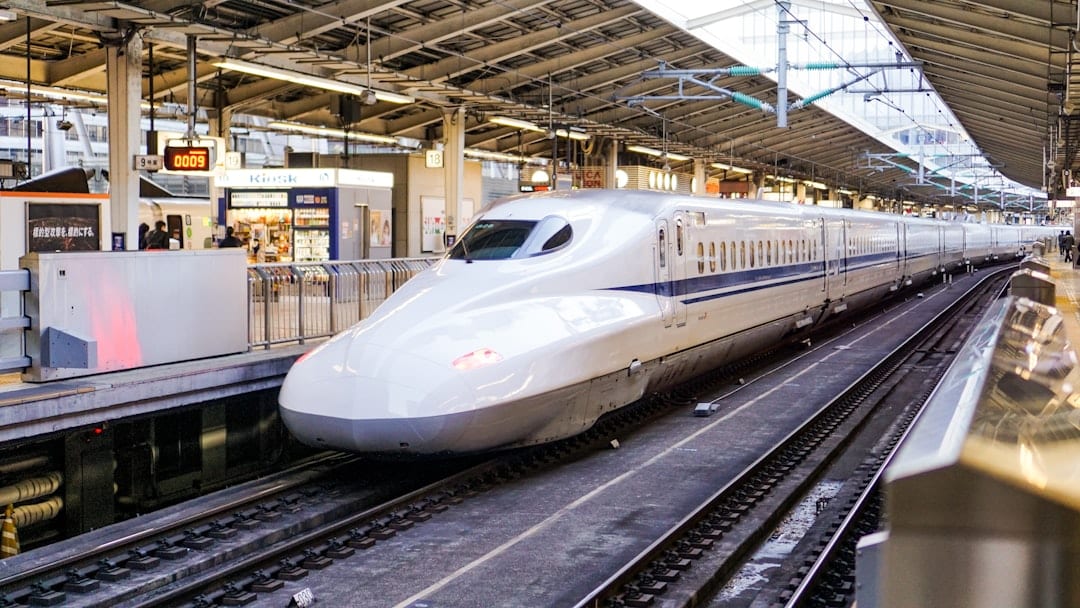
When Individual Tickets or Regional Passes Make More Sense
The JR Pass is not the only tool in the box. For many Filipino travelers, especially those on shorter trips or sticking to one region, these alternatives often deliver better value.
Individual Shinkansen Tickets
Buy individual tickets if your itinerary matches any of these profiles:
- You are visiting only Tokyo and one other city (e.g., Kyoto or Osaka) with no side trips.
- You plan to fly into Tokyo and depart from Osaka (or vice versa), eliminating the need for a return Shinkansen journey.
- You prefer the Nozomi service, the fastest Shinkansen, which is not covered by the standard JR Pass.
- Your trip spans more than 7 days but includes only 2 or 3 long-distance travel days.
Regional Rail Passes
Regional passes often beat the nationwide JR Pass on both price and coverage for focused itineraries:
- Kansai Area Pass (1–4 days): Ideal if you are basing yourself in Osaka or Kyoto and exploring Nara, Kobe, Himeji, and Wakayama. Prices start around ¥2,400 for one day.
- Kansai WIDE Area Pass (1–4 days): Extends to Okayama, Kinosaki Onsen, and even part of Shikoku. Useful for travelers looping west from Osaka.
- JR East Pass (Nagano, Niigata, Tohoku areas): Excellent for travelers who want to explore beyond Tokyo into the Japanese Alps or northern Tohoku region.
- Hokkaido Rail Pass (3–7 days): Essential if your trip focuses on Sapporo, Otaru, Furano, and Hakodate. Individual Hokkaido train tickets add up fast due to longer distances.
- Kyushu Rail Pass (3–5 days): Covers Fukuoka, Kumamoto, Beppu, and Kagoshima. A hidden gem for travelers heading south.
Many regional passes also cover reserved seats and certain non-JR lines, so always read the specific inclusions before deciding.
How to Reserve Seats and Activate the Pass
If you do choose the JR Pass, the logistics are straightforward but worth preparing for in advance.
Step 1: Purchase the Exchange Order
Buy your JR Pass exchange order through an authorized reseller before departure. The exchange order is valid for three months from the issue date. You cannot buy the pass itself inside Japan at the same price (limited domestic sales exist but cost significantly more).
Step 2: Activate at a JR Exchange Office
Upon arrival, head to a JR Exchange Office at major airports (Narita, Haneda, Kansai, Chubu) or major stations (Tokyo, Shin-Osaka, Kyoto, Hiroshima). Bring:
- Your passport (temporary visitor stamp required)
- The physical exchange order voucher
- The date you want the pass to start (it does not have to be the same day)
Step 3: Reserve Seats
The JR Pass covers reserved seats at no extra charge. During peak seasons (cherry blossom, Golden Week, Obon, New Year), reservations are strongly recommended. Visit any Midori no Madoguchi (green ticket office) at JR stations, show your pass, and request your train and seat preference.
You can also use ticket machines at major stations to reserve seats by scanning your pass. Look for machines with English guidance and the JR Pass scanning slot.
Step 4: Using Ticket Gates
At automatic ticket gates, walk through the manned booth on the side rather than inserting your pass into the machine. Show your pass to the station attendant. On newer gates at major stations, you may scan the pass directly on the IC reader. Keep your pass accessible; you will be asked to show it on board during random ticket checks.
"I activated my JR Pass on Day 2 and immediately reserved seats for the Tokyo-Kyoto Hikari. Having a guaranteed window seat during sakura season removed all travel stress. The key is activating it on the day you first need a long-distance train, not the day you land."
Budget Alternatives: IC Cards and Highway Buses
For travelers who want to stretch their yen further, combining transport modes often beats relying on rail alone.
IC Cards (Suica, Pasmo, Icoca)
These rechargeable smart cards are not passes, but they eliminate the need to buy individual tickets for local trains, subways, and buses. Simply tap in and tap out. A Suica or Pasmo card costs a ¥500 refundable deposit and can be topped up at any station machine.
IC cards are perfect for:
- Local JR lines, Tokyo Metro, Osaka Metro, and most city buses
- Convenience store purchases and some vending machines
- Short hops that do not justify a rail pass
IC cards do not offer discounts, but they save time and can be used across most major regions. As of 2026, physical cards are back in full circulation after the semiconductor shortage, though mobile Suica on iPhone and Android remains popular.
Highway Buses
For budget stretches between major cities, overnight highway buses cost a fraction of the Shinkansen. Companies like Willer Express and JR Bus operate routes such as:
- Tokyo to Kyoto/Osaka: roughly ¥3,000–¥7,000 depending on seat type and season
- Osaka to Hiroshima: roughly ¥3,500–¥6,000
- Tokyo to Nagoya: roughly ¥2,500–¥5,000
Overnight buses save you a night of accommodation, though they are less comfortable than the Shinkansen. For young travelers and tight budgets, they remain a legitimate option.
Low-Cost Domestic Flights
For long hauls like Tokyo to Sapporo or Osaka to Fukuoka, LCC carriers such as Peach Aviation, Jetstar Japan, and Spring Japan often undercut even the JR Pass. Book early, watch baggage allowances, and factor in airport transfer time.
Planning your trip? Mesho can help.
Not sure whether the JR Pass, regional passes, or individual tickets fit your exact itinerary? Our Japan specialists map out the most cost-effective transport strategy for your travel dates and destinations.
Quick Decision Framework
If you are still undecided, use this simple framework:
- Buy the 7-Day JR Pass if you are traveling Tokyo–Osaka–Hiroshima and back within 7 days, or taking 3+ long-distance Shinkansen trips.
- Buy individual tickets if you are only doing Tokyo–Kyoto–Osaka with no return journey, or staying within a single region.
- Buy a regional pass if you are basing yourself in Kansai, Hokkaido, Kyushu, or Tohoku and taking multiple day trips.
- Use IC cards + highway buses if you are on a tight budget, have flexible time, and want to save on both transport and accommodation.
- Combine methods if your trip spans more than 7 days with travel concentrated in specific windows. Many experienced travelers use a 7-day JR Pass for their busiest week and IC cards for the rest.
Final Takeaways
- The 7-day JR Pass at ¥50,000 (~PHP 19,500–21,000) only pays for itself on itineraries with 3+ long-distance Shinkansen trips.
- For the classic Tokyo–Kyoto–Osaka loop, individual tickets cost roughly half the price of the pass.
- Regional passes like the Kansai Area Pass or Hokkaido Rail Pass often deliver better value for focused regional trips.
- IC cards are essential for local travel convenience, even if you hold a JR Pass.
- Highway buses and domestic LCC flights are legitimate budget alternatives for specific routes.
Ready to Experience Japan?
Japan's rail network is one of the most efficient in the world, but choosing the wrong ticket strategy can cost you thousands of pesos. Whether you need a full nationwide JR Pass, a targeted regional pass, or a mix of individual Shinkansen tickets and IC cards, the right choice depends entirely on your itinerary.
Let Mesho curate your journey. Our Japan specialists analyze your route, dates, and budget to build a transport plan that saves money without sacrificing comfort. Explore our Japan tour packages or speak with our team to design a custom itinerary with optimized rail from Day One.
Related Reading
- Is the Japan Rail Pass Worth It in 2026? Complete Analysis for Filipino Travelers
- Japan 8-Day Itinerary: Tokyo, Kyoto, and Osaka for First-Time Filipino Travelers
- Japan Tourist Visa for Filipinos 2026: Complete Requirements and Application Timeline
Author's Note
Grace Villareal is a Taipei-based travel editor who has covered rail networks, border entry procedures, and etiquette across Northeast Asia for over a decade. She has ridden every major Shinkansen line and tested regional passes across Japan to find what actually works for Filipino travelers.


