


Imagine standing beneath a 400-year-old maple at Eikan-dō Zenrin-ji in Kyoto as crimson leaves spiral down around you. In the distance, the rhythmic pulse of taiko drums signals the start of a procession that has continued uninterrupted since the Edo period. This is Japan in autumn—not merely a season of pretty landscapes, but a window into a culture that has spent centuries perfecting the art of honoring transition.
For Filipino travelers planning a September–November journey, autumn offers something deeper than photo opportunities. It is a chance to walk alongside locals during ancient matsuri, to understand why the Japanese language has a dozen words for the color of a falling leaf, and to experience the quiet reverence of a temple illuminated at dusk. This guide connects the practical “when and where” with the emotional resonance of Japan’s seasonal traditions—so you return home with stories, not just snapshots.
Inside: a regional foliage forecast, three unmissable autumn festivals with 2026 dates, etiquette for shrines and onsen, packing and rail-pass strategy, and a Filipino-specific planning blueprint with PHP budget benchmarks.
When Autumn Arrives: A Regional Koyo Timeline
The Japanese word koyo (紅葉) refers to the changing autumn colors, and its progress southward down the archipelago is tracked with the same precision as cherry blossom forecasts. For travelers, this means you can chase the season from Hokkaido’s alpine slopes to Kyoto’s temple gardens if you time it right.
Hokkaido: Late September to Mid-October
Autumn arrives first in the north. By late September, Daisetsuzan National Park above Sounkyo Onsen turns brilliant shades of gold and crimson against a backdrop of early snow on the peaks. The Hokkaido Rail Pass is invaluable here, connecting Sapporo to Asahikawa and the park gateway. For a less strenuous alternative, the Jozankei Onsen area near Sapporo offers riverside maple corridors accessible by local bus.
Tohoku and the Japanese Alps: Mid-October to Early November
The Naruko Gorge in Miyagi Prefecture and the gorges of Oirase Stream in Aomori peak around mid-October. Further south, the Tateyama Kurobe Alpine Route offers high-altitude foliage above the tree line. If you are traveling by Shinkansen, the Tohoku Shinkansen line from Tokyo to Sendai and Shin-Aomori puts these landscapes within day-trip reach.
Kyoto and Kansai: Mid-November to Early December
This is the most iconic—and most crowded—window. Tofuku-ji’s valley of maples hits peak color around the third week of November. Arashiyama’s bamboo grove path is flanked by fiery hillsides, while Eikan-dō Zenrin-ji and Kiyomizu-dera extend evening illumination hours to accommodate the influx. Arrive before 8:00 AM at Tofuku-ji to experience the temple in relative stillness.
The Heartbeat of the Season: Autumn Festivals
While koyo draws the eye, Japan’s autumn festivals engage every other sense. These are not performances staged for tourists; they are living rituals where neighborhoods, guilds, and families invest months of preparation. Attending one means accepting an unspoken invitation into the community’s identity.
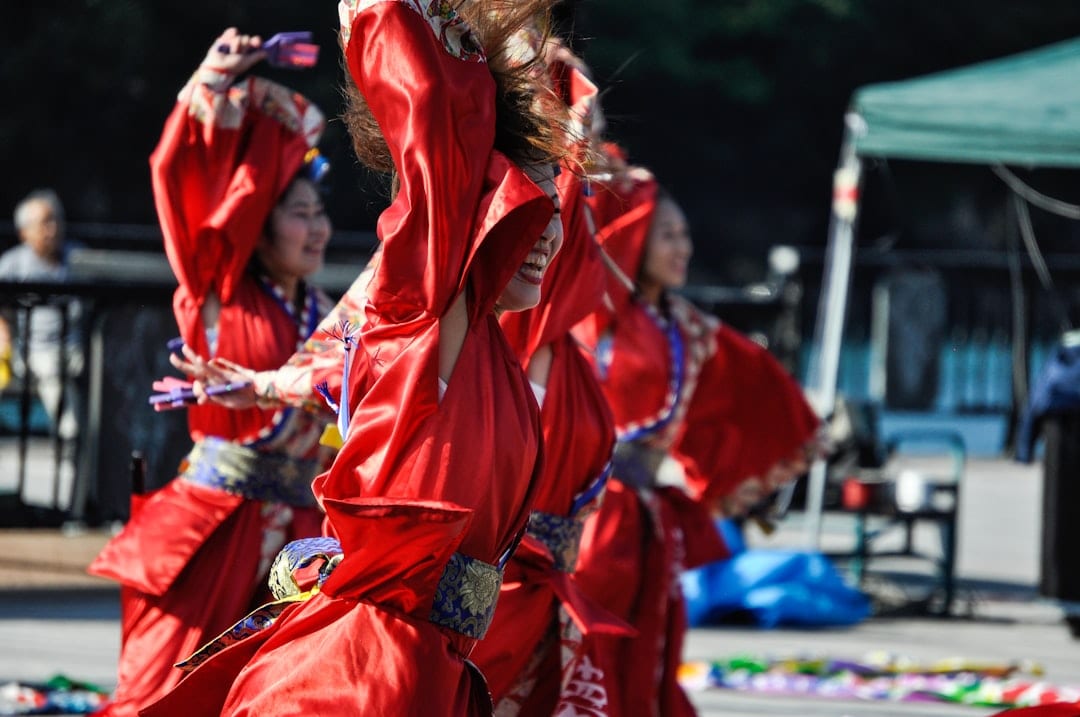
Nagasaki Kunchi Festival — a 400-year-old tradition of floats, dance, and cultural pride
Nagasaki Kunchi (October 7–9, 2026)
Held at Suwa Shrine, Nagasaki Kunchi is one of Japan’s most exuberant autumn festivals. Dating to the early 1600s, it blends Shinto ritual with Dutch, Chinese, and Portuguese influences—a reflection of Nagasaki’s history as Japan’s only open port during the sakoku era. Neighborhood chokai (district associations) compete by parading massive dashis (floats) shaped as ships, dragons, and mythological creatures through the steep streets of the city.
How to experience it: Secure a reserved seat at the shrine’s performance plaza at least a month in advance through the official Nagasaki Kunchi website. For a more intimate angle, position yourself along the Kankodori Arcade route where floats pause for honbasho (rotation performances). The Ja-odori dragon dance, performed by the Kajiya-machi district, is a highlight that demands to be seen rather than filmed.
Jidai Matsuri (October 22, 2026)
Kyoto’s Festival of Ages is a moving museum. Over 2,000 participants in meticulously recreated historical costumes—from Heian nobility to Meiji-era soldiers—process from the Imperial Palace to Heian Jingu Shrine. The 5-kilometer route along Karasuma-dori and Marutamachi-dori transforms central Kyoto into a timeline of Japanese history.
Insider perspective: The procession begins at noon, but the most atmospheric moment is the 9:00 AM shinkōsai rite inside the palace grounds. If you are not invited to the inner ceremony, the viewing stands near Oike-dori offer the best balance of visibility and crowd density. Bring a cushion—seating is on the curb, and the full procession takes roughly two hours to pass.
Autumn Illuminations: Night Gardens and Temple Light-Ups
After nightfall, the cultural experience shifts from sound to light. Rikugien Garden in Tokyo and Kiyomizu-dera in Kyoto operate extended evening hours during peak foliage, illuminating maples from below so they glow like stained glass. The effect is not theatrical; it is contemplative. Visitors are asked to maintain silence in the viewing areas.
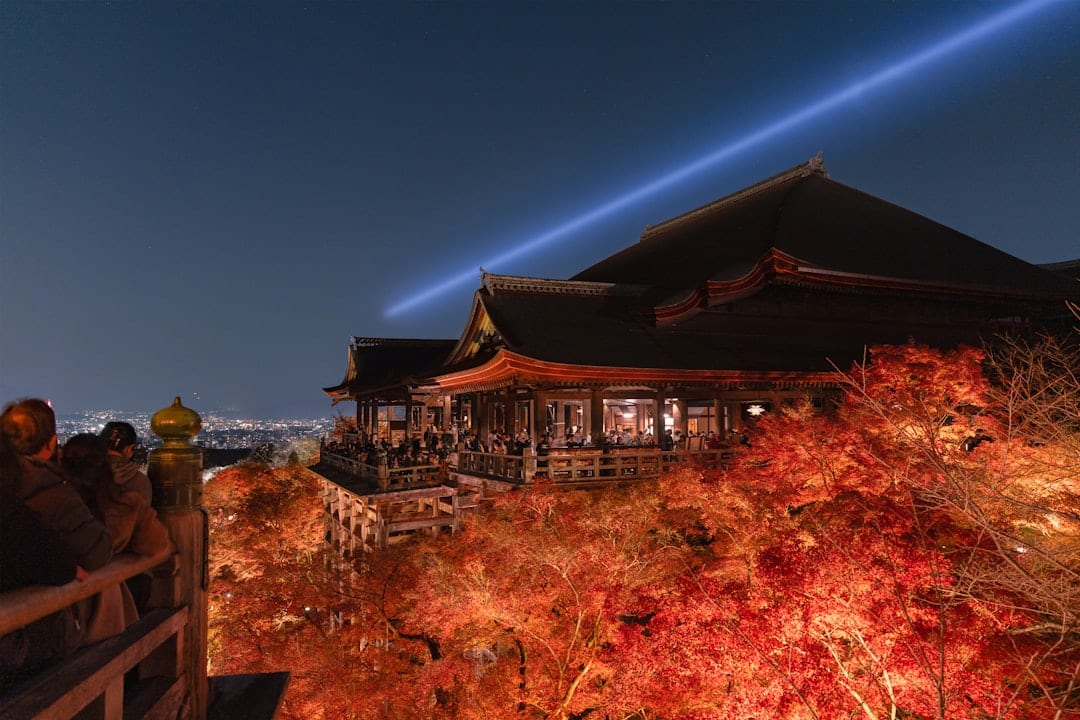
Kiyomizu-dera temple during autumn night illumination season in Kyoto
Sacred Spaces: Etiquette for Shrines, Festivals, and Onsen
Autumn is a season of harvest gratitude and ancestral remembrance. Understanding the unspoken rules of participation shows respect for the culture hosting you—and often leads to warmer interactions with locals.
Festival Attendance Manners
- Do not cross roped-off performance zones. The space immediately around a float or dancer is sacred during ritual moments.
- Ask before photographing participants up close. Many performers are neighbors volunteering their time, not paid entertainers.
- Applaud at the conclusion of a set, not during. In Japanese festival culture, sustained attention is often considered more respectful than vocal enthusiasm.
Shrine and Temple Visits During Peak Season
At major sites like Fushimi Inari Taisha or Kinkaku-ji, the crowds can feel overwhelming. Maintain the following: pause at the torii gate and bow before entering; perform temizuya water purification at the basin without letting the ladle touch your lips; and never photograph inside the main worship hall. If you wish to pray, toss a 5-yen coin into the offering box, bow twice, clap twice, and bow once more.
Onsen in Cooler Weather
An outdoor rotenburo hot spring surrounded by autumn maples is one of Japan’s great sensory experiences. In cooler months, the contrast between cold air and 40°C mineral water is especially restorative. Remember: wash thoroughly at the provided shower stools before entering the bath; no swimwear; and small towels must remain on the head or at the poolside, never in the water. For a deeper dive into ryokan and onsen customs, read our complete guide to Japanese onsen etiquette.
Dressing for the Season: What to Wear and How to Move
Autumn temperatures in Japan shift dramatically between day and night. A sunny afternoon in Kyoto can reach 22°C, while the same evening might drop to 10°C. Layering is not a suggestion; it is a necessity.
| Item | Why You Need It |
|---|---|
| Light down jacket or fleece | Compact warmth for dawn temple visits and evening illuminations |
| Comfortable walking shoes | Cobblestones at Kiyomizu-dera and gravel paths at Rikugien are unforgiving |
| Compact umbrella | Autumn rain is common; clear umbrellas are sold at every convenience store |
| Cross-body bag | Keeps hands free for photography and bowing at shrine gates |
Rail Pass Strategy for Autumn Routing
If your itinerary spans multiple regions, the JR Pass remains the most cost-effective option for unlimited Shinkansen and JR line travel. For autumn 2026, book your exchange order at least three months before departure—demand peaks in October and November. If you are focusing on a single region, consider the Kansai Thru Pass or Hokkaido Rail Pass instead. Learn more in our analysis of whether the Japan Rail Pass is worth it in 2026.
Critical tip: Reserve seats on the Tokaido Shinkansen between Tokyo, Kyoto, and Osaka at least 48 hours in advance during festival weekends. Unreserved cars on the Nozomi and Hikari services fill quickly with domestic travelers on autumn leaf tours.
The Filipino Traveler's Autumn Blueprint
Planning from Meycauayan or Manila requires specific logistics. Here is what you need to know before booking.
Flights and Visa Requirements
Philippine passport holders require a Japan tourist visa prior to arrival. As of 2026, applications are processed through accredited travel agencies in Metro Manila—Mesho Travel And Tours handles the full documentation checklist for clients. Single-entry visas typically allow a 15-day stay, while multiple-entry visas are available for frequent travelers with established financial documentation.
Direct flights from Manila (MNL) operate daily to Tokyo Narita (NRT), Tokyo Haneda (HND), and Osaka Kansai (KIX) via Philippine Airlines, Japan Airlines, and ANA. Cebu Pacific also serves Tokyo and Osaka routes. Flight time is approximately 4.5 hours.
PHP Budget Benchmarks for Festival Season
Autumn is peak domestic travel season in Japan, so prices reflect the demand. These benchmarks are per person for a 7-day trip, excluding shopping:
| Expense | Budget Range (PHP) | Notes |
|---|---|---|
| Round-trip flights | ₱25,000 – ₱45,000 | Book 4–6 months ahead for October–November |
| Accommodation (7 nights) | ₱28,000 – ₱84,000 | Business hotels in Tokyo vs. ryokan in Kyoto |
| 7-Day JR Pass | ~₱21,000 | Exchange order purchased before departure |
| Meals (7 days) | ₱10,500 – ₱24,500 | Convenience store breakfasts to kaiseki dinners |
| Attractions & festivals | ₱5,000 – ₱12,000 | Temple entries, illumination tickets, reserved seating |
Total estimated range: ₱90,000 – ₱190,000 per person for a 7-day autumn cultural trip, depending on accommodation class and dining preferences. For travelers seeking a curated package with guides, transfers, and guaranteed festival access, explore our Memorable Japan 2026 tour packages.
Why Autumn Rewards the Culturally Curious
"In Japan, autumn is not a backdrop. It is a participant. The leaves do not merely fall—they signal a time to gather, to give thanks, to remember. The traveler who understands this does not just witness autumn; they are invited into it."
The difference between a tourist and a cultural traveler in Japan often comes down to timing and intent. Arriving for koyo alone gives you beautiful photographs. Arriving for koyo while a neighborhood rehearses its Kunchi dance, while a priest lights the first lantern at twilight, while an old man on the train remarks that the maples at Tofuku-ji are mou sukoshi (just a little more) until peak—this gives you understanding.
Autumn in Japan is a conversation between nature and culture. You simply need to know when to listen.
Quick Takeaways
- Chase koyo from north to south: Hokkaido in late September, Kyoto in mid-November.
- Mark your calendar for Nagasaki Kunchi (Oct 7–9) and Jidai Matsuri (Oct 22, 2026).
- Book flights and hotels 4–6 months ahead; reserve Shinkansen seats 48 hours before travel.
- Dress in layers and carry a compact umbrella for temperature swings and autumn rain.
- Observe silence at illuminations, bow at shrine gates, and wash before entering any onsen.
Related Reading
- Japan 8-Day Itinerary: Tokyo, Kyoto, and Osaka for First-Time Filipino Travelers
- Is the Japan Rail Pass Worth It in 2026? Complete Analysis for Filipino Travelers
- Hot Springs and Hospitality: Mastering Japanese Onsen and Ryokan Etiquette
Ready to Experience Autumn in Japan?
Let Mesho curate your journey. From festival reservations to rail-pass logistics and hand-picked ryokan stays, we handle the details so you can immerse yourself fully in the season.
Explore Japan Tour PackagesGrace Villareal is Mesho’s Northeast Asia Travel Editor, based in Taipei. With years of experience covering border logistics, seasonal traditions, and cultural etiquette across Japan, Korea, Taiwan, and Greater China, she specializes in helping Filipino travelers navigate the nuances that transform a trip into a genuine immersion.


