


If you are staring at a map of Palawan and wondering whether to book El Nido or Coron, you are not alone. El Nido sells the postcard: sugar beaches, dramatic cliffs, and a lively strip of restaurants. Coron, on the other hand, feels like a different chapter of the same archipelago — fewer beachfront bars, more limestone lagoons you enter by swimming through narrow openings, and a seabed crowded with WWII shipwrecks. For Filipino travelers who want adventure with clear logistics, Coron rewards the extra planning.
This guide breaks down how to reach Coron from Manila, which island-hopping tours actually match the photos, how to pick a safe operator, where to stay, and a paced 3-day itinerary you can follow without rushing.
Coron or El Nido? How to Choose
Both destinations sit on the northern edge of Palawan, but the experience differs in three practical ways:
- Landscape: El Nido is famous for long white-sand beaches and open bays. Coron is built around freshwater lakes inside limestone walls, hidden lagoons, and a sheltered bay full of sunken Japanese warships.
- Crowds: Coron town is smaller and less built-up than El Nido's beachfront. You will still share Kayangan Lake with other boats, but the rhythm is slower once you move past the main stops.
- Access: Coron has its own airport at Busuanga, so you can fly direct from Manila in about an hour. El Nido requires a flight to Puerto Princesa or Lio Airport plus a longer road transfer.
Choose Coron if your priority is wreck diving, freshwater lake swims, and a quieter base. Choose El Nido if you want beach clubs, more accommodation tiers, and longer stretches of sand.
Getting to Coron: Flights and Ground Transfers
The gateway is Francisco B. Reyes Airport (USU) in Busuanga. From Manila, direct flights take roughly 60–70 minutes and are operated by Philippine Airlines, Cebu Pacific, and AirSWIFT. Round-trip fares usually range from PHP 3,500 to PHP 8,000, climbing during summer weekends and holidays.
After landing, the transfer to Coron town proper is straightforward:
- Shared van: PHP 250–300 per person. Departures fill quickly and drop you at your hotel in Brgy. Poblacion or nearby barangays.
- Private van: PHP 1,500–2,500 for the vehicle, worth it if you are traveling as a group or arriving late.
- Travel time: 30–45 minutes along a paved road through Busuanga's rolling ranchland.
Tip: Book the first flight out of Manila when possible. Morning arrivals give you a full afternoon to settle in, arrange your tours, and catch the sunset from Mt. Tapyas.
Island-Hopping Tours: What Each Category Covers
Coron tours are usually labeled Tour A, B, C, or the combined Super Ultimate Tour. The names vary between operators, so always check the actual stops before paying.
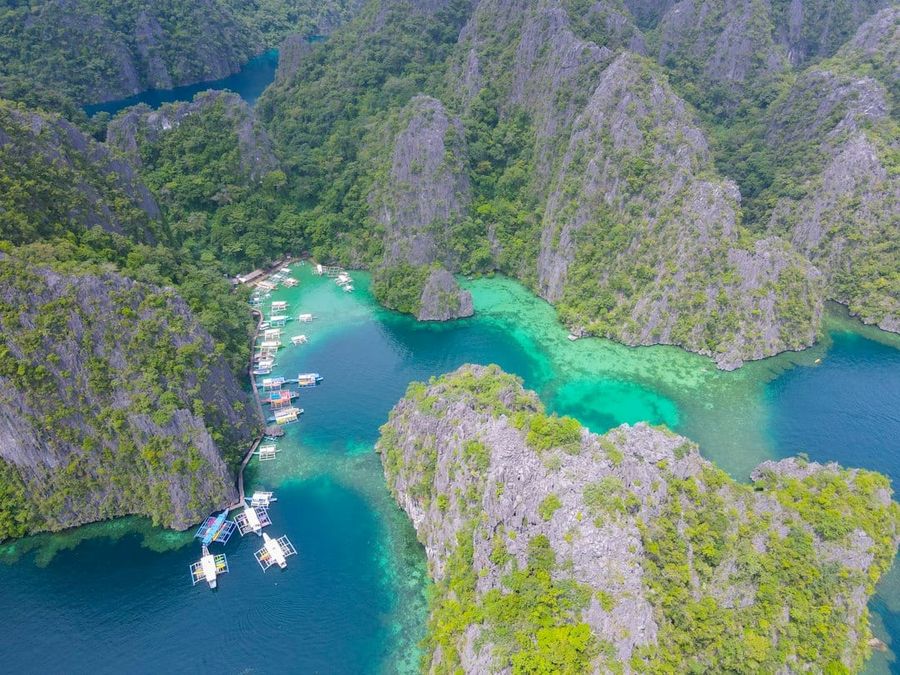
Kayangan Lake — Coron's most photographed viewpoint and freshwater swim.
Classic Lagoons and Lakes (Tour A / Super Ultimate)
This is the itinerary you have seen in photos. Expect Kayangan Lake, with its short climb to a viewpoint and cool freshwater swim; Twin Lagoon, where you slip through a small opening between limestone walls at high tide or climb a wooden ladder at low tide; and Barracuda Lake, known for its thermocline and dramatic underwater rock formations. Most Super Ultimate combinations also add Skeleton Wreck and a beach lunch at CYC Beach or Atwayan Beach.
Reef and Beach Circuits (Tour C)
If you want sand over cliffs, book a trip to Malcapuya Island, Banana Island, and Bulog Dos. These stops lie farther south and involve a longer boat ride, often 1.5 to 2 hours each way. The payoff is wider beaches and fewer boats clustered in one cove.
Wreck Diving Sites
Coron Bay is one of the most accessible wreck-diving areas in Southeast Asia. The Japanese supply fleet was sunk here in September 1944. Popular sites include the Irako, Akitsushima, Okikawa Maru, Olympia Maru, Kogyo Maru, and the shallow Lusong Gunboat, which snorkelers can sometimes see from the surface. Certified divers should budget around PHP 3,500–5,000 per dive including equipment and guide.
Note: Wreck penetration requires advanced certification and a reputable dive center. Do not enter enclosed spaces without proper training.
Choosing a Tour Operator: Group vs Private, Costs, and Safety
You can book island-hopping tours along the main road in Brgy. Poblacion, through your hotel, or in advance with a vetted agency. Here is how the two main formats compare:
| Format | Typical Cost | Best For |
|---|---|---|
| Group joiner tour | PHP 1,400–2,500 per person | Solo travelers, pairs, and tight budgets |
| Private boat | PHP 8,000–15,000 per boat (up to 10–12 pax) | Families, groups, flexible pacing |
On top of the tour rate, expect to pay:
- Environmental fee: around PHP 200–300 per person, usually valid for several days.
- Entrance fees: PHP 100–300 per attraction, depending on the barangay managing the site.
- Lunch: often included in group tours; private tours may add PHP 250–400 per person for a seafood or grilled-chicken meal.
Before you board, run through this safety checklist:
- Life vests for every passenger, including children.
- A registered boatman and a tourism-accredited guide.
- Visible first-aid kit and emergency contact numbers.
- Boat capacity that matches the number of people on board — do not accept an overloaded outrigger.
Planning your trip? Mesho can match you with vetted Coron operators, coordinate your flights, and build a private or group itinerary that fits your budget. Browse our Philippines domestic tours.
Where to Stay in Coron: Town Proper vs Outlying Resorts
Your base shapes how easy — and how quiet — your trip feels.
Coron Town Proper (Brgy. Poblacion and nearby barangays)
Staying in town puts you within walking distance of tour operators, restaurants, the public market, and the boat pier. Budget inns start around PHP 1,200 per night, mid-range hotels run PHP 2,500–4,500, and boutique properties can reach PHP 5,000+. The trade-off is occasional tricycle noise and no beachfront.
Outlying Resorts (Busuanga mainland and nearby islands)
Resorts in barangays like Lualhati, Tagumpay, or on private islands such as Uson Island offer seclusion and direct water access. Nightly rates typically start at PHP 4,500 and climb steeply for full-board packages. The downside is reliance on resort shuttles or private boats for island-hopping departures.
First-time visitors should base in town for flexibility. Return travelers looking to decompress can splurge on an outlying resort for the second half of the trip.
A Realistic 3-Day Coron Itinerary
This itinerary assumes a morning arrival on Day 1 and a late afternoon departure on Day 3. Pacing is deliberate — Coron's heat and boat transfers can drain energy quickly.
Day 1 — Arrival, Town Orientation, and Sunset
- Morning: Fly Manila to Busuanga, shared van to Brgy. Poblacion, check in.
- Lunch: Grilled seafood or pork sisig at Lolo Nonoy's Food Station along the main road.
- Afternoon: Walk to the tourism office, pay the environmental fee, and confirm your next day's tour.
- Late afternoon: Climb the roughly 700 steps to Mt. Tapyas for sunset over Coron Bay.
- Dinner: Casual Italian-Filipino plates at Santino's Grill.
Day 2 — Super Ultimate Lagoon Tour
- 7:00 AM: Hotel pickup and transfer to the boat pier.
- 8:00 AM – 4:00 PM: Super Ultimate Tour covering Kayangan Lake, Twin Lagoon, Barracuda Lake, Skeleton Wreck, and CYC Beach. Lunch is typically served on the boat or at a beach stop.
- 5:00 PM: Return to town, shower, and rest.
- Evening: Dinner at Brujita or La Sirenetta, then early night — the sun and salt will have caught up with you.
Day 3 — Wreck Diving or Beach Circuit, Then Departure
- Option A — Divers: Two-tank wreck dive to the Irako or Olympia Maru. Back by early afternoon.
- Option B — Non-divers: Half-day Tour C to Malcapuya and Banana Island, or a relaxed morning at Maquinit Hot Spring in Brgy. Lualhati.
- Lunch: Light meal at a town cafe before your van transfer.
- Afternoon: Shared van to Busuanga Airport for your flight home.
If you have four days, add a Calauit Safari Tour or a second beach day. Rushing all the major sites into two full days usually means more boat time than swim time.
Insider Tips for Filipino Travelers
- Best months: March to May offer the calmest seas, but expect higher prices. June to October can bring rain and rough boat rides; always check the Coast Guard clearance before booking.
- Cash is king: ATMs in Coron town sometimes run out of cash on weekends. Bring enough pesos for tours, tips, and small restaurants.
- Pack reef-safe sunscreen: Many tour stops are within protected areas. Regular sunscreen harms the coral that makes the lagoons worth visiting.
- Waterproof your gear: Dry bags are essential. Phone lanyards help, but salt spray and ladder climbs are hard on electronics.
- Respect local rules: Some lakes require life vests at all times. Follow your guide's instructions at thermocline sites like Barracuda Lake.
"The best Coron days are not the ones where you tick every lagoon off a list. They are the days when you let the boat captain choose the quietest cove for lunch and you float in water so clear it feels like glass." — Traveler insight from a recent Mesho client
Quick Summary
- Coron suits travelers who want lagoons, lakes, and wreck dives over long white-sand beach strips.
- Fly direct to Busuanga Airport (USU) and budget PHP 250–300 for the shared van to town.
- Book the Super Ultimate Tour for Kayangan Lake, Twin Lagoon, and Barracuda Lake in one day.
- Certified divers should set aside a day for WWII wrecks like the Irako or Olympia Maru.
- Base in Coron town proper for convenience; outlying resorts work best for a relaxed second half of the trip.
Related Reading
- El Nido vs. Coron: Which Palawan Destination Is Right for Your Travel Style?
- Palawan 5-Day Itinerary: El Nido and Coron for Filipino Island Hoppers
- Booking Domestic Flights and Ferries in the Philippines: A Practical Island-Hopping Guide
Ready to experience Coron?
Let Mesho Travel And Tours curate your Coron, Palawan journey — from flights and van transfers to private boats and hand-picked stays.
Explore Philippines ToursAuthor note: Marco Dela Cruz is an ASEAN travel consultant who specializes in land, sea, and air routing for Filipino travelers across Southeast Asia. He has helped families, dive groups, and first-time Palawan visitors plan Coron's boat transfers, lagoon routes, and resort logistics without the guesswork.


