


There is a moment at Borobudur when the first light does not simply illuminate the stone—it unlocks it. At around 5:30 AM, the mist that hangs over Central Java begins to lift, and the silhouette of the world’s largest Buddhist temple sharpens into tiers of bell-shaped stupas, each one containing a carved Buddha turned toward the rising sun. For Filipino travelers making the 3 AM departure from Yogyakarta, the reward is not just a photograph. It is a slow, almost meditative encounter with a monument that has welcomed pilgrims for more than a thousand years.
This guide is for travelers who want more than a checklist. It pairs the practical rhythm of a day trip—wake-up times, ticket tiers, transport, dress codes—with the deeper purpose of the temples themselves. You will learn how Borobudur teaches the Buddhist path to enlightenment through its carved galleries, why Prambanan’s Hindu towers still host living rituals, and how to move through both sites with the respect they deserve.
Why the 3 AM Wake-Up Is Worth It
Most visitors to Borobudur arrive after breakfast. By then, the stone platforms are warm, the tour buses have parked, and the soft dawn light has hardened into midday glare. The sunrise experience is different. It is quieter, cooler, and framed by the anticipation of waiting in the dark.
The temple was built in the 8th and 9th centuries during the Sailendra dynasty and was later buried under volcanic ash for centuries until explorers unearthed it in the 1800s. Its design mirrors the Buddhist cosmos: a square base representing the world of desire, circular terraces symbolizing formlessness, and a central stupa pointing toward nirvana. Seeing this structure emerge from shadow feels like watching the monument remember itself.
“Arrive while the stars are still out. Let your eyes adjust. When the sun finally touches the stone, you will understand why people have been coming here for a millennium.”
Sunrise Logistics: Tickets, Timing, and What to Wear
Manohara Hotel Access and Ticket Tiers
The most reliable way to experience Borobudur at sunrise is through the Manohara Hotel, located within the temple grounds. Their sunrise package grants early entry before the public gates open and includes a light snack and hot drink after the viewing. Foreign visitors should expect the following approximate costs:
- Borobudur sunrise ticket via Manohara: IDR 475,000–500,000 per person, roughly PHP 1,800–1,900.
- Regular same-day Borobudur entry: IDR 375,000–455,000, roughly PHP 1,400–1,700.
- Combined Borobudur + Prambanan ticket: IDR 675,000–750,000, roughly PHP 2,500–2,800, valid within two days.
Children often receive discounted rates. Tickets can be purchased online through the official Borobudur Park website or at the hotel reception, though sunrise slots are limited and should be reserved at least two days ahead, especially during the dry season from May to October.
What to Bring for the Pre-Dawn Climb
Central Java mornings can drop to 18–20°C, which feels cooler than Manila’s lowland climate. Dress in layers. A light jacket or long-sleeved shirt over a breathable top works well. Comfortable walking shoes with grip are essential because the andesite stone can be damp before sunrise.
- Flashlight or headlamp: The path to the upper terraces is dimly lit before dawn. A small headlamp keeps your hands free while climbing.
- Rain cover or poncho: Morning mist is common during the wet season from November to March.
- Small bag for shoes: Visitors are sometimes asked to remove footwear before entering certain upper areas or during conservation periods.
- Power bank: Cold weather drains batteries faster, and you will want your phone ready for the golden hour.
Reading the Temple: Stupas, Reliefs, and the Pilgrim’s Path
Borobudur is not a building to be seen from a single viewpoint. It is a mandala made walkable, designed to be circumambulated clockwise from the base upward. The journey covers approximately five kilometers of carved galleries and open terraces, and it tells the story of how a person moves from confusion to clarity.
The Three Realms of the Structure
- Kamadhatu (the realm of desire): The square base and first gallery, where reliefs depict ordinary human life, karma, and the consequences of attachment.
- Rupadhatu (the realm of form): The four square terraces above, lined with narrative panels from the Jatakas and the life of the Buddha. Look for scenes of the bodhisattva giving away his own body to feed a hungry tigress.
- Arupadhatu (the realm of formlessness): The three circular terraces and the central dome, where solid stone latticed stupas enclose Buddha statues. The lattices are shaped like diamonds and squares, and if you peer through the openings, you will see the Buddha inside.
The temple’s narrative panels number around 2,670, making it one of the most complete Buddhist storybooks in stone. A licensed local guide, usually available near the entrance for IDR 150,000–250,000 (PHP 550–925) per group, can transform a casual visit into a layered cultural conversation.
Prambanan in the Afternoon: Hindu Etiquette and the Ramayana Ballet
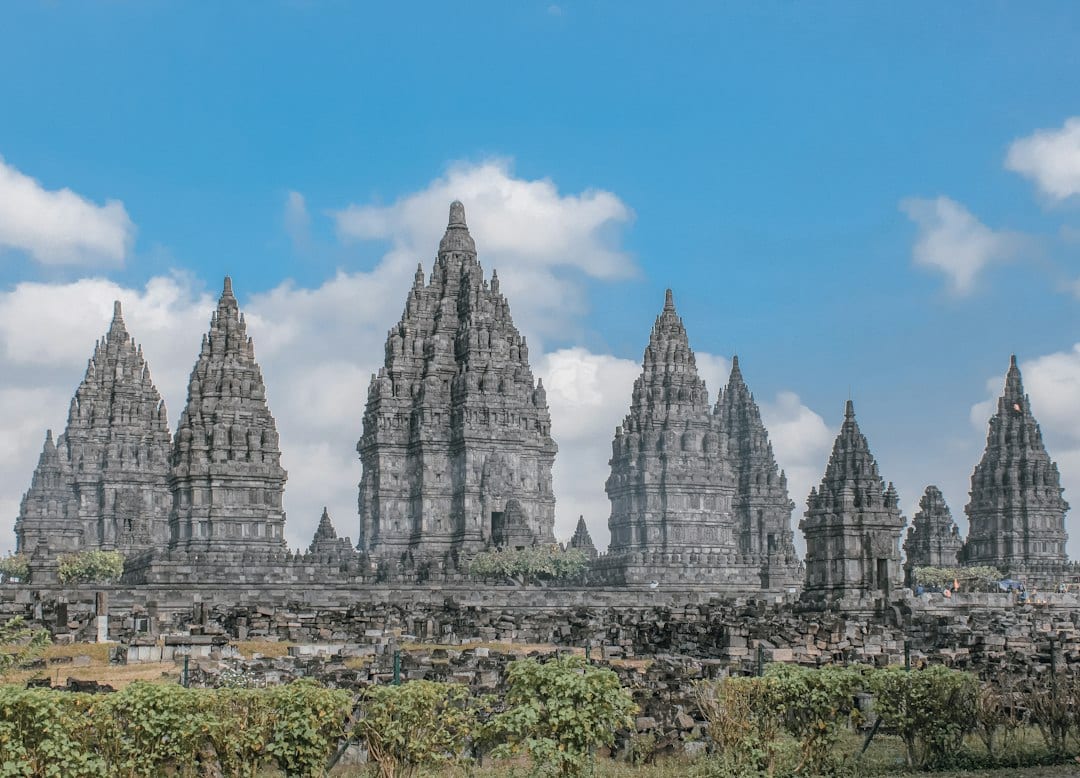
After a slow morning at Borobudur, shift to the Hindu side of Central Java’s spiritual landscape. Prambanan, located about 50 kilometers east of Borobudur and 17 kilometers from central Yogyakarta, is the largest Hindu temple complex in Indonesia. Its central towers, the Trimurti shrines, are dedicated to Brahma the creator, Vishnu the preserver, and Shiva the destroyer.
Getting There and Entry
The drive from Borobudur to Prambanan takes roughly 90 minutes to two hours through rice fields and small towns. Options include:
- Private car with driver: IDR 500,000–700,000 (PHP 1,850–2,600) for a full day, including waiting time.
- Grab or Gojek: One-way fares range from IDR 200,000–300,000 (PHP 740–1,100), though drivers may ask for a return booking.
- Organized day tour: Shared vans often combine Borobudur sunrise and Prambanan afternoon entry for convenience.
Foreign entry to Prambanan is around IDR 375,000 (PHP 1,400), or use the combined Borobudur-Prambanan ticket to save both money and queue time.
Hindu Temple Etiquette
Prambanan remains an active religious site for local Hindus, especially during Galungan and Nyepi-related observances. Treat the inner shrines as you would a church during Mass:
- Wear clothing that covers your shoulders and knees. A sarong can be borrowed at the entrance if needed.
- Remove shoes before entering the inner sanctums of the main temples.
- Avoid turning your back directly toward the central shrine when taking photos; step aside so others can pray uninterrupted.
- Do not climb on loose stone or sit on carved surfaces.
Ramayana Ballet Schedule
The Ramayana Ballet at Prambanan’s Trimurti Open Air Theatre is one of the most elegant ways to end the day. Against the illuminated temple towers, dancers in gold headdresses perform episodes from the Hindu epic using graceful gestures and gamelan music.
- Schedule: Performances are typically held on Tuesday, Thursday, and Saturday evenings during the dry season, starting around 7:30 PM.
- Wet season: The ballet moves to an indoor theatre at Trimurti from around November to March, though schedules can shift.
- Tickets: IDR 175,000–475,000 (PHP 650–1,750) depending on seating class. Class I and VIP seats offer the clearest view of the temple backdrop.
Planning your trip? Mesho can arrange your Borobudur sunrise access, Prambanan afternoon entry, and Ramayana Ballet seats as one seamless Yogyakarta itinerary. Our team handles the 3 AM transfers, ticket reservations, and local guides so you can focus on the experience.
Speak with our Indonesia specialists to customize your Central Java day trip.
Yogyakarta as Your Base: Malioboro, the Keraton, and Getting Around
Most travelers use Yogyakarta—often called Jogja—as the launch point for Borobudur and Prambanan. The city is less polished than Jakarta or Surabaya, but that is precisely its appeal. It is a university town, a sultanate, and a workshop for Javanese batik, silverwork, and gamelan.
Malioboro Street and the Keraton
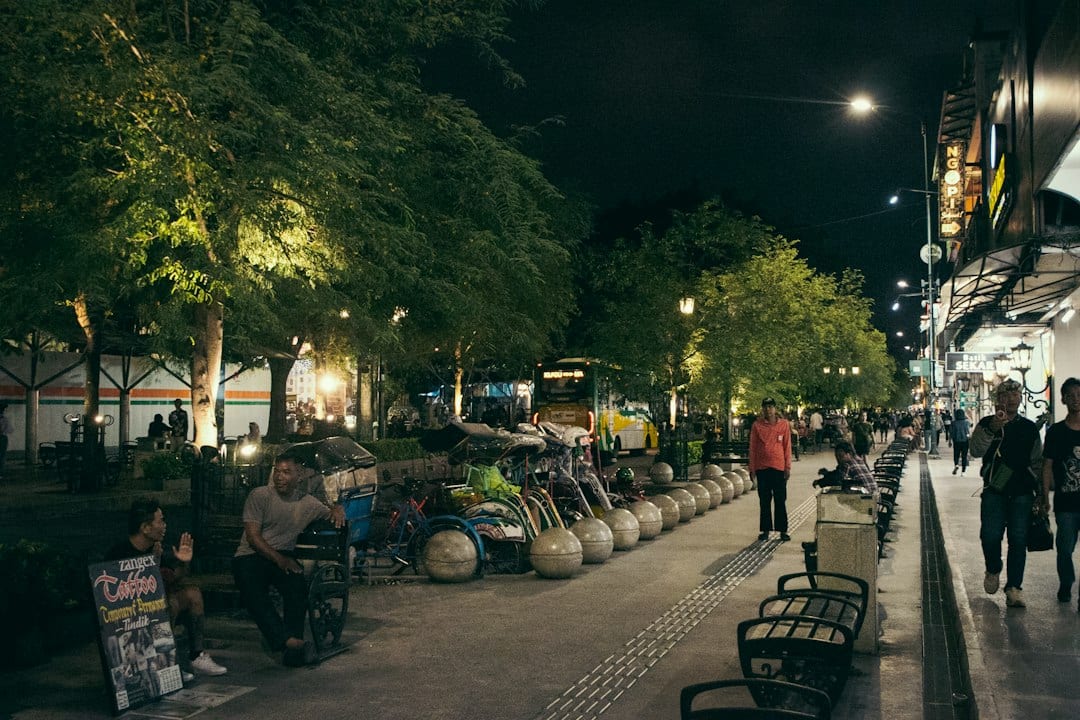
After your temple day, spend an evening on Malioboro Street. The sidewalks fill with stalls selling batik, leather goods, and warm wedang uwuh, a spiced Javanese drink. At the southern end stands the Keraton Ngayogyakarta Hadiningrat, the Sultan’s palace, where you can watch traditional dance performances and learn about Javanese court culture.
- Keraton hours: Generally 8:30 AM to 2:00 PM, closed Fridays.
- Entrance: Around IDR 15,000–25,000 (PHP 55–90), with additional fees for camera use.
- Best time to visit Malioboro: Late afternoon into evening, when the street lamps and becak lights create a warm atmosphere.
Becak Norms and Pricing
The pedal-powered becak is a Yogyakarta icon. Negotiate the fare before getting in. A short ride around Malioboro or from the Keraton to a nearby restaurant typically costs IDR 20,000–50,000 (PHP 75–185). For longer distances, a Grab or Gojek is usually more practical and metered.
Be respectful when photographing becak drivers. A polite “Permisi, foto?” and a small tip or ride afterward go a long way.
Respecting Sacred Space: Dress, Behavior, and Photography
Both Borobudur and Prambanan are UNESCO World Heritage Sites and active spiritual spaces. Your conduct shapes not only your own experience but also that of pilgrims, worshippers, and future visitors.
- Dress modestly: Shoulders and knees covered at both sites. Avoid sheer fabrics, sleeveless tops, and short shorts.
- Follow climbing restrictions: Some upper levels of Borobudur may be closed during conservation work. Do not bypass barriers. At Prambanan, only certain towers are open to visitors at a time.
- Photography guidelines: Drone use is prohibited without a permit. Flash photography inside shrines is disrespectful and often banned. Selfie sticks and tripods may be restricted during peak hours.
- Volume and presence: Keep voices low on the upper terraces of Borobudur, where pilgrims often sit in quiet meditation. At Prambanan, avoid walking in front of people praying.
“The temples were built for contemplation, not just admiration. If you walk slowly and watch where others pray, you will feel the difference between touring a ruin and entering a living tradition.”
A Sample Day Trip Timeline
| Time | Activity |
|---|---|
| 3:00 AM | Depart Yogyakarta hotel by private car. |
| 4:30 AM | Arrive at Manohara Hotel, collect flashlight, begin climb. |
| 5:15–6:30 AM | Sunrise viewing and quiet circumambulation of upper terraces. |
| 7:00–9:00 AM | Guided tour of relief galleries; light breakfast at Manohara. |
| 11:00 AM–1:00 PM | Return to Yogyakarta for rest and lunch. |
| 3:00–6:00 PM | Explore Prambanan temple complex. |
| 7:30 PM | Ramayana Ballet at Trimurti Open Air Theatre (dry season). |
Quick Takeaways
- Book the Borobudur sunrise package through Manohara Hotel at least two days in advance; expect to pay around PHP 1,800–1,900.
- Dress in layers, bring a flashlight, and wear gripped shoes for the pre-dawn climb.
- Use the combined Borobudur-Prambanan ticket to save money and queue time.
- Catch the Ramayana Ballet on Tuesday, Thursday, or Saturday evenings at 7:30 PM during dry season.
- Cover shoulders and knees, keep voices low, and avoid flash photography inside active shrines.


