


When Wonder Meets Reverence
You have seen the photos. Pura Tanah Lot balanced on its sea-washed rock. The kecak fire dance silhouetted against the burning sunset at Uluwatu. The misty tiers of Besakih climbing the slopes of Mount Agung. For many Filipino travelers, Bali's temples promise a spiritual encounter that feels both exotic and strangely familiar—we share a devotion to ritual, a love of procession, and a deep respect for the sacred.
But here is the truth many first-time visitors discover too late: Balinese Hinduism is not a backdrop for your travel album. It is a living, breathing faith practiced by over 90% of the island's population. The temples you visit—called pura—are active places of worship, not museums. That stunning doorway you want to lean against for a photo? It may be the entrance to an inner courtyard where only devotees may enter.
This guide was written for travelers who want to participate, not just observe. You will learn exactly what to wear, how to move, when to keep your camera lowered, and why those small flower baskets on the sidewalk deserve your full attention. Walk through Bali's temples with confidence—and with the respect they command.
Dress Code: Wrapping Yourself in Respect
If you remember only one rule, make it this: your legs must be covered, and your waist must be cinched with a sash. This applies to both men and women, regardless of whether you are Filipino, French, or Balinese yourself. The sarong and sash are not decorative souvenirs—they are ritual garments that signal your readiness to enter sacred space.
Sarong (Kain) and Sash (Selendang)
The kain or kamen is a length of cloth wrapped around the legs like a skirt, typically tied at the waist. Over this, you wear a selendang—a narrow sash that wraps around your waist and is knotted at the side. Together, these garments create a sealed boundary between your body and the temple's spiritual energy. In Balinese belief, the lower body is associated with earthly, impure forces. Wrapping the legs and waist is a way of containing that energy so it does not disturb the sanctity of the temple grounds.
Most major temples—Tanah Lot, Uluwatu, Tirta Empul, and Besakih—provide sarongs and sashes at the entrance for a small donation (usually IDR 10,000–20,000, or roughly PHP 35–70). However, the quality varies. Temple-provided sarongs are often thin, shared among thousands of visitors, and may not fit securely. If you plan to visit multiple temples during your Indonesia journey, invest in your own.
- Bring your own: Buy a sarong at a local market in Ubud or Kuta for IDR 50,000–100,000 (PHP 175–350). Choose a mid-weight fabric that won't slip.
- Sleeve rules: Shoulders must be covered. A light linen shirt or a shawl over a tank top works perfectly in Bali's heat.
- Footwear: You will remove your shoes before entering any prayer pavilion. Wear sandals or slip-ons for convenience.
- What to avoid: Shorts, mini-skirts, singlets, and anything transparent or overly tight. If you would not wear it to a solemn Catholic Mass in Manila, do not wear it to a temple in Bali.
The Deeper Meaning
In Balinese Hindu cosmology, the body is a microcosm of the universe. The head is the seat of the divine, the navel is the center, and the feet are the lowest point, touching the dust of the material world. When you wrap your lower body, you are literally containing your earthly energy. When you cover your shoulders, you acknowledge that the temple is a space where the divine is invited to descend. The dress code is not modesty policing—it is cosmological preparation.
Behavioral Norms: Moving Through Sacred Space
Filipinos understand communal worship. We know how to genuflect, when to kneel, and how to move quietly inside a church. Balinese temple etiquette carries a similar rhythm of reverence, though the specific gestures differ. Learn them, and you will move through these spaces with the same grace you would bring to Quiapo or Antipolo.
Quiet Voices, Steady Steps
Temples are not silent like a Trappist chapel, but the dominant sound should be the rustle of palm leaves, the tinkle of a genta bell, and the murmur of prayer. Keep your voice low. Avoid laughing loudly or arguing with your travel companion about where to eat next. If you need to discuss logistics, step outside the temple gates.
Never point your feet toward an altar, a priest, or a seated person. In Balinese Hindu belief, the feet are the lowest and least pure part of the body. Pointing them at a sacred object is the equivalent of turning your back on the Eucharist. Sit cross-legged or kneel with your feet tucked behind you. When passing in front of someone who is praying, bend slightly and walk with your body lowered—it is a small gesture that carries enormous respect.
Menstruation Restrictions
This is one of the most frequently misunderstood rules, and it applies strictly: women who are menstruating are not permitted to enter Balinese Hindu temples. The restriction is rooted in the concept of sebel—a state of ritual impurity associated with blood. It is not a statement about women's cleanliness or worth. Men who have open wounds or recent bleeding are also considered sebel and are similarly restricted.
If you are on your period, honor this rule without argument. You can still admire the temple's exterior architecture, explore the surrounding gardens, and wait at the entrance while your companions complete their visit. Never try to conceal your condition to sneak in—this is deeply offensive to devotees and can result in you being asked to leave by temple guardians.
Head and Hand Awareness
The head is the seat of the soul. Do not touch a Balinese person's head—not even a child's. When receiving a blessing from a priest, bow your head slightly so the priest can place rice grains or holy water there without reaching awkwardly. Accept offerings and holy water with your right hand only; the left hand is associated with purification and is considered impure in ritual contexts. If you must use both hands, place your left hand on your right elbow as a sign of respect.
Photography Rules: Capturing Memory, Not Disrespect
Bali is one of the most photographed places on earth, and for good reason. The carved stone gates, the tiered meru towers, the orange-robed priests carrying offerings through shafts of tropical light—it is a visual feast. But there are boundaries, and crossing them turns admiration into intrusion.
Where Selfies Are Disrespectful
Do not take selfies in front of active altars or inside inner courtyards (jeroan). These spaces are reserved for worship, not for social media content. At Tirta Empul, where devotees perform ritual purification in the holy spring pools, do not photograph individuals mid-prayer without explicit permission. The person you are photographing may be praying for a sick relative or performing a memorial rite for a deceased parent. Your selfie is never more important than that.
Never turn your back to an altar or sacred statue for a posed photo. It is the photographic equivalent of pointing your feet at a deity. If you want a photo with a temple structure, stand to the side and face the camera while keeping your body angled respectfully toward the shrine.
Asking Permission the Right Way
Before photographing a priest (pemangku) or a ceremony, make eye contact, smile, and ask, "Boleh foto?" (May I take a photo?). Most will agree warmly, especially if you approach with humility. If they decline, accept it without question. Offer to show them the photo afterward—they often appreciate seeing themselves through a visitor's lens.
At Uluwatu, photography of the kecak dance is generally permitted because it is a performance, but flash is strictly forbidden. At smaller village temples during odalan (temple anniversary festivals), leave your camera in your bag unless invited to document. The best photographs often come from the moments when you are fully present, not hunting for the perfect angle.
Nyepi: The Day of Silence and What It Means for You
Nyepi is Bali's New Year celebration, falling in March according to the lunar Saka calendar. For 24 hours, the entire island shuts down. No flights land or depart. No vehicles move on the roads. No lights shine from windows. No one works, cooks, or even steps outside their compound. The purpose is not punishment—it is a day of self-reflection, fasting, and purification designed to trick evil spirits into thinking the island is deserted so they will pass it by.
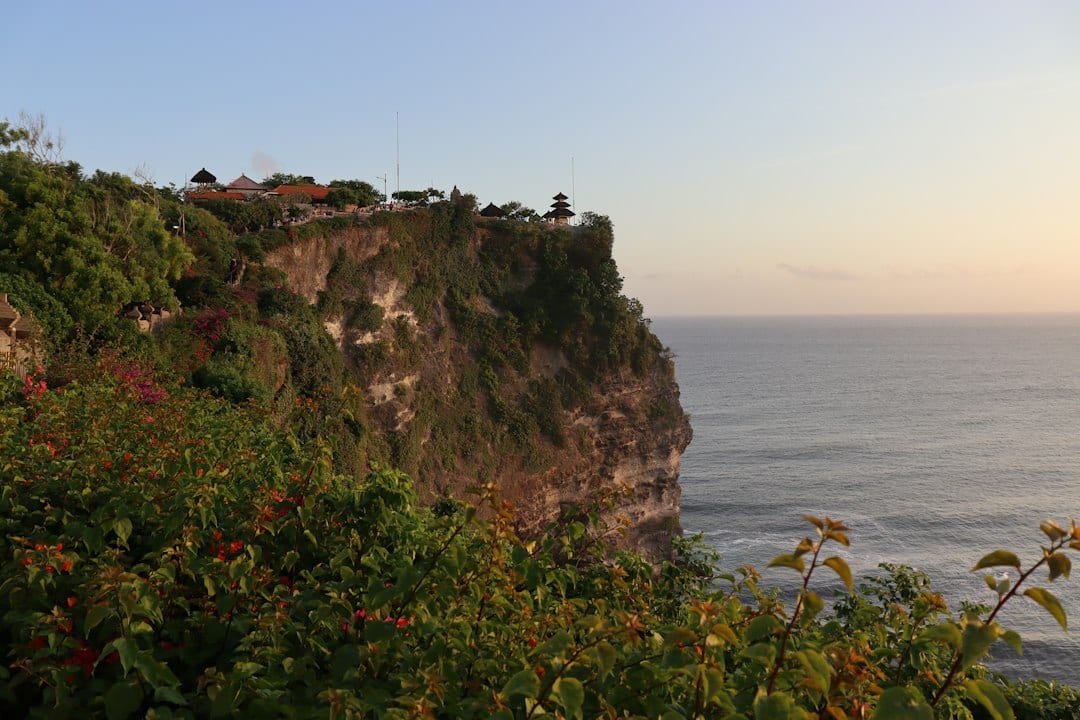
Pura Luhur Uluwatu — one of Bali's most sacred sea temples, perched 70 meters above the Indian Ocean
Practical Implications for Filipino Travelers
- Airport closures: Ngurah Rai International Airport in Denpasar closes completely for Nyepi. No arrivals, no departures, no transit. If your flight is scheduled for that date, it will be moved to the day before or after.
- Hotel confinement: You must remain inside your hotel or villa for the full 24 hours. Most hotels dim their lights, close restaurants (though room service may operate discreetly), and ask guests not to use loud devices.
- No beach, no pool wandering: Hotel staff will politely but firmly turn you back if you try to walk to the beach or linger in public areas.
- Internet blackout: Many telecom providers voluntarily shut down mobile internet for the day to support the spirit of disconnection.
Embracing the Silence
For many Filipino Catholics, the concept of a full day of silence and fasting echoes the solemnity of Good Friday. Lean into it. Bring a book. Journal. Meditate. The silence of Nyepi is not an inconvenience—it is a gift. There is nowhere else on earth where an entire island of 4.3 million people voluntarily pauses together. If you are in Bali during Nyepi, consider it the most authentic cultural immersion you could possibly experience.
The night before Nyepi, join the ogoh-ogoh parades—giant demonic effigies are carried through the streets and burned to drive away negative energy. It is raucous, joyful, and deeply communal. Then wake the next morning to absolute stillness. The contrast is unforgettable.
Canang Sari: The Offerings You Walk Past Every Day
Within hours of landing in Bali, you will notice them: small, palm-leaf baskets no larger than your palm, filled with rice, flowers, and sometimes a cracker or a coin, placed on sidewalks, shop counters, car dashboards, and temple steps. These are canang sari—daily offerings made by Balinese Hindus to Sang Hyang Widhi Wasa, the supreme god, and to the lower spirits who inhabit the material world.
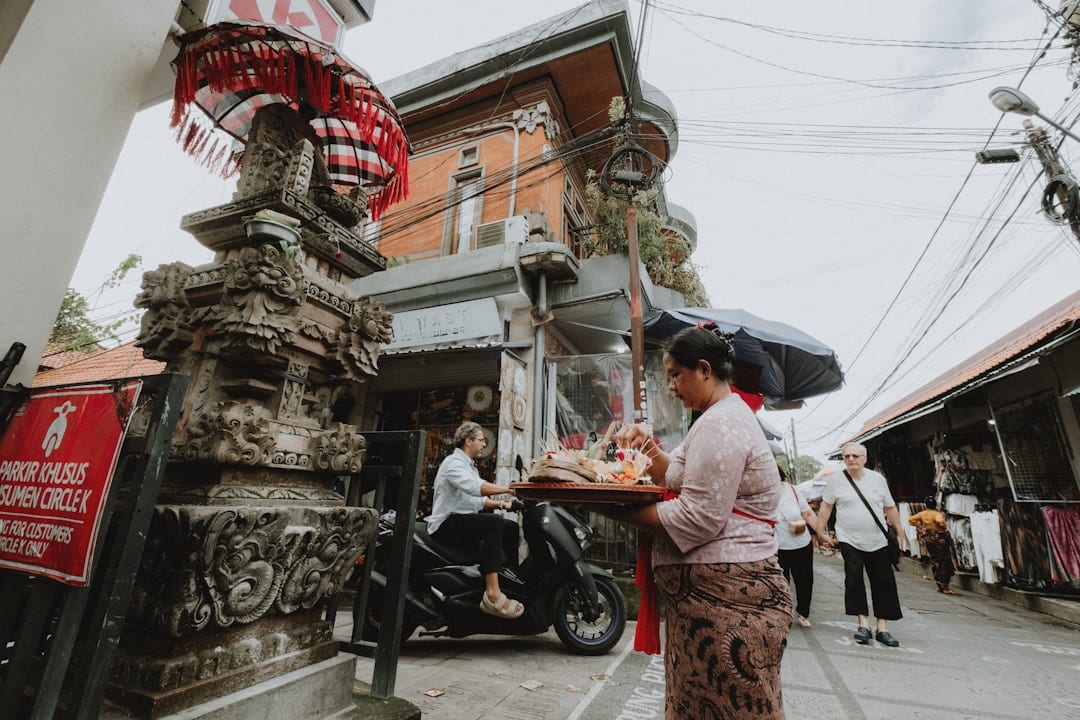
Canang sari — palm-leaf offering baskets filled with flowers and rice, placed daily by Balinese Hindus as gratitude to Sang Hyang Widhi Wasa
What Stepping on One Really Means
Stepping on a canang sari is not a minor faux pas. It is a serious spiritual offense. Each offering represents hours of careful preparation: the weaving of the palm-leaf basket, the selection of specific flowers by color (white for east, red for south, yellow for west, blue for north), the placement of rice as sustenance for the gods. When you step on one, you are not just crushing paper and petals. You are destroying a person's daily act of devotion.
Watch your step, especially on narrow sidewalks in Ubud and around temple entrances where offerings cluster. If you accidentally kick one aside, do not simply walk on. Stop, apologize quietly to no one in particular, and step around it. The Balinese are forgiving of genuine accidents, but they notice indifference.
The Cycle of Gratitude
Canang sari are placed fresh every morning, often before dawn. By afternoon, they have faded and been trampled by traffic. This impermanence is intentional. Balinese Hinduism teaches that nothing in the material world lasts, and clinging to permanence creates suffering. The offering is made, the gods receive the essence, and the physical form returns to the earth. It is a daily meditation on gratitude, impermanence, and release—a philosophy that resonates across faiths, including the Christian Filipino's own understanding of memento mori and earthly humility.
Planning your temple visits? Mesho Travel curates respectful cultural immersion experiences across Bali, from private guided tours of Besakih to sunrise purification rituals at Tirta Empul with local practitioners who explain the meaning behind every gesture.
Explore Indonesia PackagesQuick Summary: Temple Etiquette at a Glance
- Dress modestly: Sarong and sash are mandatory for all; cover shoulders and knees. Bring your own for a better fit.
- Move with awareness: Quiet voices, no feet pointed at altars, right hand for receiving blessings, no entry during menstruation.
- Photograph mindfully: No selfies at active altars, no photos of people praying without permission, no flash during ceremonies.
- Respect Nyepi: If visiting in March, prepare for 24 hours of airport closures, hotel confinement, and island-wide silence.
- Watch your step: Canang sari offerings are sacred acts of devotion—never step on them, and always move around them with care.
Related Reading
- Bali 5-Day Itinerary for First-Time Filipino Travelers: Beaches, Temples, and Culture
- Bali Visa on Arrival for Filipinos: Costs, Process, and Extension Rules in 2026
- Getting Around Bali: Transport Options, Apps, and Safety for Filipino Travelers
Ready to Experience Bali with Depth?
Temples are only the beginning. Bali rewards travelers who arrive with curiosity, humility, and a willingness to look beyond the surface. When you understand why a Balinese woman wakes before dawn to weave a palm-leaf basket, why a priest touches your forehead with rice and water, and why an entire island falls silent for a day—you stop being a tourist and start being a witness.
Let Mesho Travel guide you there. Our Bali cultural immersion packages connect you with local practitioners, respectful temple guides, and experiences designed to honor the island's living traditions while giving you memories that last a lifetime.
Author Note — Marco Dela Cruz
Marco is an ASEAN travel consultant based in Meycauayan, specializing in land and air routing for Filipino travelers exploring Southeast Asia. He has personally visited Bali's major temple complexes during both high season and Nyepi, and he works with Mesho's local partners to ensure every client experiences the island with cultural sensitivity and genuine connection.


