


You have flown into Delhi, survived the Golden Triangle circuit, and now stand at the threshold of something deeper. Most travelers skip Amritsar because it sits six hours northwest of Delhi by train, too far for a casual detour. That distance is exactly what preserves it. While Agra and Jaipur absorb tour-bus crowds, Amritsar offers Filipino travelers a rare combination of living spirituality, living history, and living cuisine that few other North Indian cities can match in a single day.
This guide answers one question directly: how can you experience the Golden Temple and Wagah Border ceremony respectfully, safely, and memorably? You will learn the exact protocols for entering Sikhism's holiest shrine, the logistics of the India-Pakistan border ritual, how to move between the airport and the temple complex, what to wear, and where to eat. Consider this your practical companion for a cultural day trip that stays with you long after you return to Manila.
Understanding the Golden Temple Before You Arrive
Harmandir Sahib is not a museum. It is the spiritual and geographical center of Sikhism, welcoming over 100,000 visitors daily regardless of faith, nationality, or caste. For Filipino Catholics, the closest parallel is not a cathedral during Mass but rather the prayerful openness of Quiapo Church during the Black Nazarene feast: intense devotion, communal energy, and an invitation to participate rather than observe from a distance.
The temple complex sits on a 750-kilogram gold-leafed structure surrounded by the Amrit Sarovar (Pool of Nectar). Pilgrims bathe in its waters. Volunteers prepare 75,000 meals daily in the communal kitchen. The Guru Granth Sahib, Sikhism's central scripture, is read continuously. Everything operates on the principle of seva (selfless service) and langar (communal eating), which means your visit is not transactional. There is no entrance fee, no VIP queue, no photography permit to purchase.
Golden Temple Visit Protocol: What to Do, Where to Go
Entering Through the Correct Gate
The complex has four entrances symbolizing openness to all directions and all people. As a visitor arriving from the city center, use the Ghanta Ghar (Clock Tower) entrance, the most accessible and clearly marked point for first-timers. Foreign visitors often enter here because the shoe-storage counters and head-covering stations are immediately visible. From the entrance, walk down the steps toward the marble causeway that leads to the sanctum.
Head Covering and Shoe Storage
Covering your head is non-negotiable. Men and women must both do it. You have three options:
- Bring your own scarf or bandana. A light cotton scarf works best in Punjab's heat. Avoid sheer fabrics; the covering should fully conceal your hair.
- Borrow from the temple. Free orange bandanas are available in wooden bins near every entrance. Return them after your visit.
- Purchase a souvenir head covering. Vendors outside the complex sell embroidered scarves for ₹50–150 (₱35–100). These make meaningful keepsakes.
For shoes, deposit them at the jora ghar (shoe house) near your entrance. You will receive a numbered token. Keep it safe. The attendants are volunteers; a respectful sat sri akal (greeting) is appreciated. Socks are optional but recommended in summer when marble surfaces exceed 45°C.
Participating in Langar
Langar is one of the largest free kitchens on earth. Do not treat it as a tourist checkpoint. Treat it as an act of shared humanity.
After washing your hands at the basins, collect a steel plate, bowl, and spoon. Sit cross-legged on the floor in rows alongside pilgrims from every background. Volunteers will serve dal (lentils), roti (flatbread), sabzi (vegetable curry), kheer (rice pudding), and water. The meal is simple, hot, and vegetarian. Eat everything you take. When finished, carry your utensils to the washing area.
If you wish to contribute, ask to volunteer. Foreign visitors are often invited to roll rotis, peel onions, or wash dishes alongside local families. This is the most authentic interaction you can have inside the complex.
The Wagah Border Ceremony: Timing, Seating, and Strategy
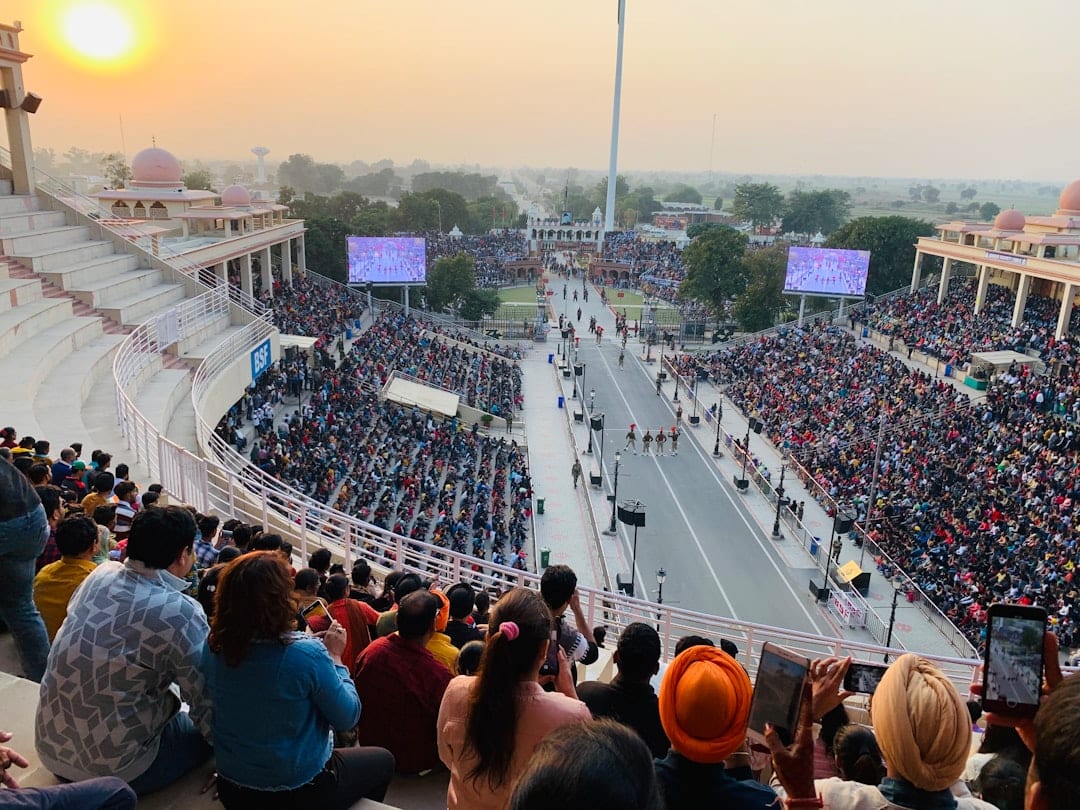
The Wagah Border ceremony — a daily ritual of pageantry and patriotism.
Every evening since 1959, Indian and Pakistani border guards perform a synchronized drill before lowering their national flags. It is theater, history, and nationalism compressed into forty-five minutes. For Filipino travelers, it offers a visceral education in the Partition of 1947 and the ongoing complexity of India-Pakistan relations.
Timing and Schedule
The ceremony begins at sunset, which shifts throughout the year:
- March–September: Arrive by 3:30 PM. Ceremony starts around 5:30–6:30 PM.
- October–February: Arrive by 2:30 PM. Ceremony starts around 4:30–5:30 PM.
The border is 28 kilometers west of Amritsar. Budget 60–90 minutes for transit, security checks, and the 800-meter walk from the parking area to the amphitheater.
Seating Strategy
The amphitheater has three zones: VIP chairs (reserved for officials), foreign tourist chairs (front-left), and general seating (everything else). As a Filipino traveler, you typically access the foreign tourist section by showing your passport at the entry gate. Arrive early to claim a seat in the first two rows of this section, directly facing the border gate.
If you miss the foreign tourist seats, the general section is energetic but further back. Bring a scarf or cap because the afternoon sun hits the stands directly. Water bottles are permitted after security screening.
What to Expect
The atmosphere resembles a sporting event more than a state ceremony. A master of ceremonies whips the Indian crowd into chants of Vande Mataram. Women run with the national flag. Soldiers in khaki and red turbans perform high-kick marches that look physically impossible. On the Pakistani side, an identical ritual mirrors every movement. When the flags lower simultaneously at dusk, the crowd falls silent for three seconds before applause erupts.
It is perfectly acceptable to feel conflicted. The ceremony glorifies military rivalry while demonstrating choreography so precise it requires cooperation. That tension is part of the experience.
Transport: Getting from the Airport or Railway Station
Amritsar is accessible, but last-mile planning prevents confusion.
| Route | Option | Duration | Est. Cost |
|---|---|---|---|
| Sri Guru Ram Dass Jee International Airport | Prepaid taxi booth | 30–45 min | ₹600–800 (₱400–550) |
| Airport | Uber / Ola | 30–45 min | ₹500–700 (₱350–480) |
| Amritsar Junction Railway Station | Auto-rickshaw | 15–20 min | ₹100–150 (₱70–100) |
| City center to Wagah Border | Shared taxi or private car | 45–60 min | ₹800–1,500 (₱550–1,000) |
If you arrive by the Shatabdi Express from Delhi (a popular train for Filipino travelers on the Golden Triangle route), the railway station is 2.5 kilometers from the Golden Temple. Auto-rickshaws are plentiful, but insist on the meter or agree on a price before departing. The prepaid booth inside the station eliminates haggling.
For the Wagah Border, shared taxis depart from the plaza near the Golden Temple from 2:00 PM onward. They fill quickly on weekends and holidays. A private car through your hotel costs roughly ₹1,500–2,000 (₱1,000–1,350) round-trip and includes waiting time. If you are traveling solo, the shared option is safe and sociable.
Planning your trip? Mesho curates North India itineraries that include Amritsar extensions with private transfers, pre-booked Wagah Border seating assistance, and guided temple orientation.
Dress Code, Safety, and Photography Rules
What to Wear
Modesty is expected at both sites but enforced strictly only at the Golden Temple. For the temple:
- Wear long pants or a long skirt that covers your legs fully. Shorts, short skirts, and sleeveless tops are not permitted inside the causeway or sanctum.
- Carry a light shawl to cover your shoulders if your top has short sleeves.
- Avoid tight or transparent clothing. The guards at the entrance will deny entry politely but firmly.
For the Wagah Border, dress comfortably but respectfully. You will sit on concrete or plastic seats for over an hour. A hat, sunscreen, and sunglasses are essential in summer.
Safety Notes for Filipino Travelers
Amritsar is generally safe for foreign tourists, including solo female travelers from the Philippines. That said, observe these precautions:
- Evening temple visits: The Golden Temple is open 24 hours, and the complex is well-lit and heavily staffed around the clock. However, avoid walking alone in the narrow lanes outside the complex after 10:00 PM.
- Currency: Carry small denominations of rupees. Few vendors outside the temple accept cards. An ATM exists near the Ghanta Ghar entrance.
- Scams: Ignore touts offering "special access" or "skip-the-line" services. The temple has no VIP lanes for payment. Every entrance is free.
- Water: Drink only bottled or filtered water. The amrit (holy water) in the sarovar is sacred but not sanitized for drinking.
Photography Guidelines
Photography is permitted in most areas of the Golden Temple complex, including the causeway and the marble walkways surrounding the sarovar. However:
- Inside the inner sanctum: Photography is strictly prohibited. Security will confiscate phones used here.
- During langar: Ask permission before photographing volunteers or fellow diners. Many consider it disrespectful to be photographed while eating.
- At Wagah Border: Cameras, phones, and small GoPros are allowed. Drones are banned. Do not photograph the actual border infrastructure beyond the ceremonial gate.
The best photographs at the Golden Temple happen during the early morning (4:30–6:00 AM) when mist hangs over the sarovar and the gold dome catches the first light. Evening (6:30–8:00 PM) offers warm reflections but larger crowds.
A 2-Day Amritsar Extension: Neighborhoods and Food Stops
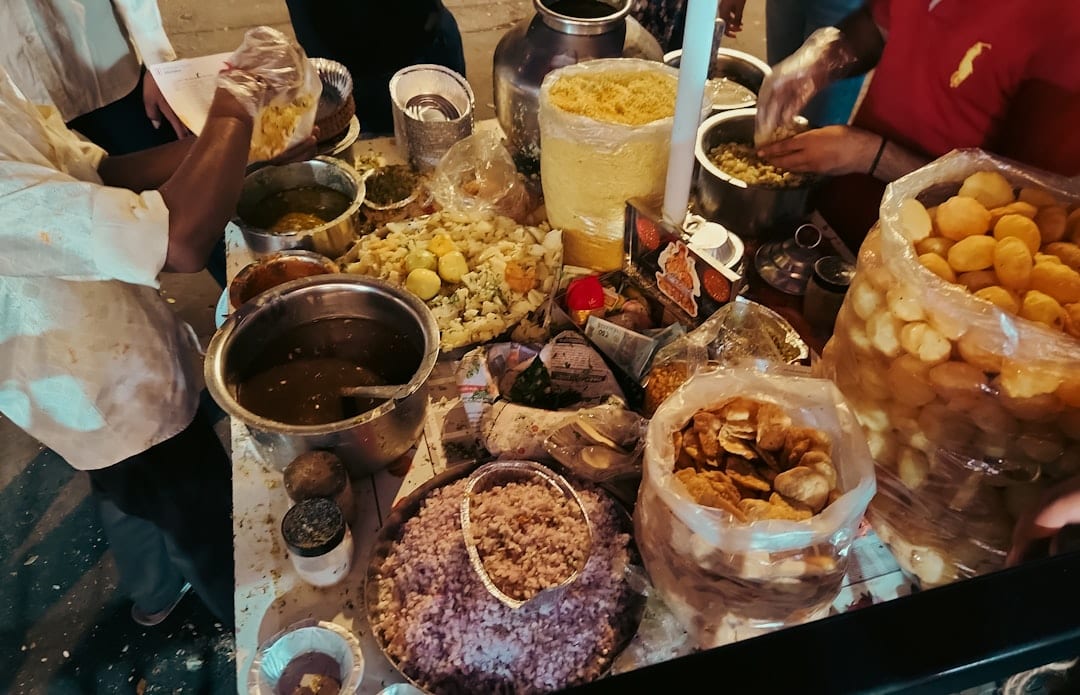
Amritsari cuisine is bold, buttery, and impossible to forget.
If you can spare two days instead of one, Amritsar rewards the extra time with culinary depth that rivals its spiritual offerings. Punjabi food is not "Indian food" as generic takeaway menus suggest. It is agricultural, generous, and rooted in the wheat-and-dairy belt of North India.
Day One: The Temple and the Old City
Morning: Arrive at the Golden Temple by 5:00 AM for the Prakash ceremony, when the Guru Granth Sahib is carried from the Akal Takht to the sanctum. The procession is quiet, musical, and deeply moving. Afterward, eat langar breakfast.
Afternoon: Walk through the Golden Temple Market surrounding the complex. Browse shops selling kada (steel Sikh bracelets), phulkari embroidered shawls, and wooden combs. Then visit Jallianwala Bagh, the memorial garden five minutes from the temple's north gate. The bullet marks on the walls remain visible. Entry is free; allow 45 minutes.
Evening: Eat Amritsari kulcha at Kulcha Land near Basant Avenue (₱150–250 per plate). The stuffed bread arrives with chole (chickpea curry), pickle, and raita. It is heavy, spicy, and exactly what you need after a day of walking.
Day Two: Wagah Border and Lawrence Road
Late morning: Visit the Maharaja Ranjit Singh Museum in the Ram Bagh Garden. The museum houses weapons, paintings, and coins from the Sikh Empire. It provides essential historical context for understanding Punjab's identity. Entry is ₹40 (₱30).
Afternoon: Depart for Wagah Border by 2:30 PM. After the ceremony, return to Amritsar for dinner at Brothers' Dhaba or Kesar Da Dhaba in the old city. Both serve dal makhani slow-cooked overnight, paneer tikka, and lassi in steel glasses. Budget ₹400–600 (₱270–400) per person.
Nightcap: If your stomach permits, try Amritsari fish (fried spiced river fish) at Makhan Fish near Majitha Road. It is the city's most famous non-vegetarian specialty.
Quick Summary: What to Remember
- ✓ Cover your head and remove shoes before entering the Golden Temple complex. Free bandanas and shoe storage are available at every gate.
- ✓ Eat langar with an open mind. Sit on the floor, accept what is served, and volunteer if time permits.
- ✓ Arrive at Wagah Border 90 minutes before sunset. Carry your passport for the foreign tourist seating section.
- ✓ Dress modestly. Long pants and covered shoulders are required at the temple; comfortable, sun-protective clothing works at the border.
- ✓ Budget ₹2,500–4,000 (₱1,700–2,700) per day including food, transport, and a mid-range hotel near the temple.
Related Reading
If you are building a longer India itinerary, these guides will help:
- India Train Travel for First-Timers: A Survival Guide for Filipino Travelers — essential reading before booking your Delhi-Amritsar Shatabdi ticket.
- Little India and Kampong Glam: A Cultural Neighborhood Walk for Filipino Travelers — a Southeast Asian prelude to your North India immersion.
- Mesho India Tour Packages — curated itineraries with Amritsar extensions, private guides, and seamless transfers.
Ready to Experience Amritsar?
Amritsar is not a destination you photograph and forget. It is a place where you remove your shoes, cover your head, sit on a marble floor beside a stranger, and share a meal prepared by volunteers who ask nothing in return. The Wagah Border reminds you that history is not abstract; it is shouted across a white line at sunset by soldiers in tall turbans while grandmothers wave flags in the stands.
For Filipino travelers, these experiences require no religious conversion, only respectful curiosity. Let Mesho handle the logistics — airport transfers, Wagah Border timing, temple orientation, and hotel selection near the Golden Temple — so you can focus on what matters: the moment when the Guru Granth Sahib is carried across the causeway at dawn, and the sarovar is so still it looks like liquid gold.
About the Author
Priya Aquino-Menon is Mesho's South Asia Travel & Culture Editor. Born to a Filipino mother and Indian father, she grew up navigating the customs of both cultures and has spent years documenting entry protocols, regional etiquette, and spiritual sites across India for Filipino travelers. She believes the best India itineraries begin with understanding, not sightseeing.


