


You have just touched down at Noi Bai International Airport after a three-hour flight from Manila. The humidity hits you first, then the motorbike chorus of Hanoi. In four days, you need to cover colonial boulevards, slurp authentic pho, ascend to 3,143 meters above sea level, and somehow get back to the airport without missing your return flight. The leg that breaks most itineraries is not the flight—it is the Hanoi-to-Sapa overland transfer.
I have routed hundreds of Filipino travelers through northern Vietnam. The same questions surface every time: Is the night train safe? Will the bus make me motion-sick? Do I need altitude medicine? This guide answers each one with specific names, terminals, prices in Philippine peso, and time allocations you can drop straight into your itinerary. No vague advice. No fluff. Just the logistics that separate a frantic trip from a seamless mountain escape.
Getting from Hanoi to Sapa: Your Three Main Options
Sapa sits roughly 320 kilometers northwest of Hanoi. There is no airport. Every traveler faces the same choice: overnight train, limousine bus, or private car. Each suits a different budget, sleep tolerance, and schedule.
Overnight Train: Chapa Express and Lotus Train
The classic route runs from Hanoi Railway Station (120 Le Duan Street, Hoan Kiem) to Lao Cai Railway Station, followed by a one-hour shuttle van to Sapa town. The journey takes about eight hours on the rails.
Two tourist-class operators dominate the route:
- Chapa Express — 4-berth soft-sleeper cabins with wood-paneled interiors, individual reading lights, and clean shared toilets. Expect to pay roughly ₱1,800–₱2,400 per person one-way depending on season.
- Lotus Train — Slightly older carriages but well-maintained, often ₱200–₱400 cheaper than Chapa. Both operators run as attached private carriages on the same SP1/SP3 state railway schedules.
Departure times: Most tourist trains leave Hanoi between 9:00 PM and 10:30 PM, arriving in Lao Cai around 5:00–6:30 AM. A pre-booked shuttle van (₱250–₱400 per person) meets you at Lao Cai station and climbs the mountain road to Sapa by 7:30 AM—just in time for hotel breakfast and a full day.
Who this suits: Travelers who can sleep through gentle rocking and want to save daylight. The downside? Shared cabins mean little privacy, and toilets are basic. If you are a light sleeper, pack earplugs and a sleep mask.
Limousine Bus: The Budget Workhorse
Multiple operators run 9-seater and 16-seater limousine vans from Hanoi Old Quarter direct to Sapa town center. Travel time is 5.5 to 6.5 hours depending on traffic at the mountain pass. Reputable names include Sapa Express and Good Morning Sapa.
Prices range from ₱600–₱1,000 one-way. Buses usually pick up from your Old Quarter hotel or a designated office near Hoan Kiem Lake between 6:30 AM and 3:00 PM. The seats recline, but legroom is tight for anyone over 5'8".
Who this suits: Budget-conscious travelers with strong stomachs. The winding ascent after Lao Cai is serpentine. Sit near the front, avoid heavy breakfast, and bring motion-sickness tablets if you are prone.
Private Transfer: Maximum Control
A private 7-seater SUV with driver costs roughly ₱4,500–₱6,500 for the entire vehicle one-way. You set the departure time, control rest stops, and reach Sapa in about five hours door-to-door. This is the only option that lets you pause at the Tram Ton Pass viewpoint for photos above the cloud line.
Who this suits: Families, small groups splitting cost, or anyone with tight flight connections. If you have three or four travelers, the per-person cost approaches train pricing.
| Option | Duration | One-Way Cost (PHP) | Best For |
|---|---|---|---|
| Chapa Express / Lotus Train | ~8 hrs + 1 hr shuttle | ₱2,050–₱2,800 | Saving daylight, train enthusiasts |
| Limousine Bus | 5.5–6.5 hrs | ₱600–₱1,000 | Solo travelers, tight budgets |
| Private SUV | ~5 hrs | ₱4,500–₱6,500 (whole vehicle) | Families, groups, tight schedules |
Where to Stay in Sapa: Town Center vs. Ta Van Village
Sapa is not one place. It is a ridgeline town surrounded by minority villages, each offering a different rhythm. Choosing the wrong zone can leave you hiking dark roads at night or trapped in tourist crowds.
Sapa Town Center
Stay near Cau May Street or Muong Hoa Road if you want restaurants, massage shops, and the Sapa Lake promenade within walking distance. Hotels here range from ₱1,500–₱4,000 per night. The trade-off is noise and slightly higher prices. This is the practical choice if you are doing the Fansipan cable car early morning, since the Sun World station is only a 10-minute taxi ride away.
Ta Van Village
For travelers who want the iconic terraced-rice-field sunrise from their balcony, Ta Van—about 8 kilometers from town—offers homestays and boutique lodges at ₱1,000–₱2,500 per night. You trade convenience for immersion: roosters replace car horns, and the Hmong and Giay families who host you often invite guests to evening rice-wine circles.
Important: Ta Van has no Grab service after dark. If you stay here, plan to eat dinner at your lodge or arrange a return shuttle to town by 7:00 PM.
Altitude, Weather, and What to Pack
Sapa town sits at 1,650 meters. Fansipan summit is 3,143 meters. The jump is enough to trigger mild altitude symptoms—shortness of breath, headaches, restless sleep—for sea-level Filipinos unused to elevation.
Best Months to Visit
- March–May: Rice-planting season. Fields are flooded mirrors reflecting the sky. Cool days, chilly nights. Expect some fog, but visibility is generally good.
- September–October: Harvest gold. The terraces turn amber. Crisp air and the highest chance of clear summit views. This is peak season—book trains and hotels three weeks ahead.
- June–August: Lush green but rainy. Landslide risk on mountain roads rises. Fog can park itself for days, erasing valley views entirely.
- December–February: Cold. Temperatures drop to 5°C. Occasional frost. Fewer crowds, but Fansipan can be closed during ice events.
Health Precautions
You do not need Diamox for Sapa town alone. If you plan to hike to Fansipan summit on foot rather than cable car, consult your doctor. Most Filipino travelers manage fine by hydrating aggressively, avoiding alcohol the first night, and pacing themselves on uphill walks.
Pack these essentials: A waterproof shell (rain arrives without warning), thermal base layers for evenings, sturdy hiking shoes with grip (village trails turn muddy), sunscreen (UV is stronger at altitude), and a small daypack for layered clothing.
Must-Do Routes and Realistic Time Allocations
Filipino travelers often try to cram too much into two Sapa days. Here is what actually fits without rushing.
Fansipan Cable Car (Half Day)
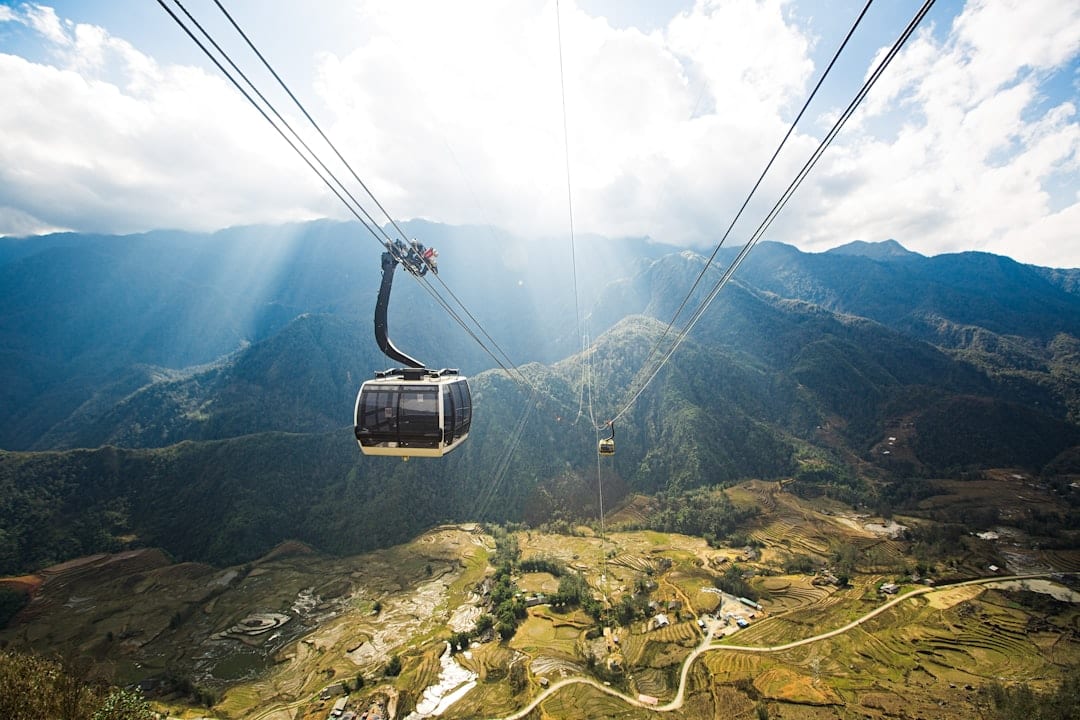
The Sun World Fansipan Legend cable car departs from a terminal 3 kilometers from Sapa town. The ride itself is 20 minutes each way. Budget 4–5 hours total including queuing, the final 600-step climb to the summit Buddha statue, and the misty photo sessions at the peak. Ticket price is roughly ₱1,600–₱2,000 round-trip. Go at 8:00 AM opening to beat tour groups.
Cat Cat Village (3–4 Hours)
A 2-kilometer walk downhill from town, Cat Cat is a Hmong settlement along a waterfall gorge. The entry fee is minimal (₱150–₱200). The path is paved but steep in sections. Plan three to four hours including the walk back uphill—taxis are available at the village base if your legs give out. The water wheels and traditional indigo-dye demonstrations are worth the descent.
Moana Check-in Point (1–2 Hours)
This man-made viewpoint complex on the road to Fansipan offers staged photo setups—a giant hand sculpture, a cliffside swing, a mirror lake—against real mountain backdrops. It is unapologetically Instagram-driven, but the views are genuine. Entry is around ₱250–₱400. Best light is between 3:00 PM and 5:00 PM. Budget one to two hours.
Navigating Hanoi Old Quarter and Food Safety
Most 4-day itineraries bookend Sapa with one night in Hanoi on arrival and one night before departure. The Old Quarter is a 36-street labyrinth where every corner sells pho, bia hoi, or knockoff North Face jackets.
Getting Around
Grab works reliably for motorbike and car rides. For short hops, flag a xich lo (cycle rickshaw) but agree on the price before climbing on—₱100–₱200 for a 10-minute ride is fair. Walking is manageable by day; at night, stick to well-lit streets around Ta Hien and Hang Bac.
Eating Safely
Hanoi street food is spectacular, but your first meal in Asia should not be a reckless gamble. Follow these rules:
- Eat where the locals queue. A busy stall with high turnover means fresh ingredients.
- Skip raw herbs and uncooked vegetables unless you see them washed in bottled water.
- Bottled water only. Even brushing your teeth with tap water is unnecessary risk.
- Start with pho ga (chicken pho) or bun cha at established shops like Bun Cha Huong Lien before graduating to roadside banh mi.
"The best bowl of pho I have ever eaten cost ₱80 from a plastic stool on Ly Quoc Su Street. But I only found it because I asked my hotel concierge—not because I wandered randomly at midnight on day one."
Planning Your Trip? Let Mesho Handle the Routing
Comparing train cabins, booking mountain-view rooms, and syncing shuttle pickups across time zones is not how you want to spend your evenings. Mesho pre-negotiates block rates on Chapa Express carriages, confirms Sapa hotels with verified valley views, and provides 24/7 support in English and Filipino so you are never stranded at Lao Cai station wondering where your van is.
If you want every transfer, ticket, and hotel handled before you land, explore our curated Hanoi–Sapa 4D3N Premium Tour. It is built precisely around the logistics in this guide—just without the stress of booking them yourself.
Quick Summary: Your Hanoi–Sapa Cheat Sheet
- Best transfer: Chapa Express or Lotus Train for comfort and schedule efficiency; private SUV if traveling in a group of three or more.
- Best months: September–October for harvest views; March–May for mirror-field reflections.
- Where to stay: Sapa town center for convenience; Ta Van village for immersion and sunrise views.
- Must-do priorities: Fansipan cable car (morning), Cat Cat Village (afternoon), Moana viewpoint (late afternoon).
- Health note: Hydrate, layer clothing, and avoid alcohol on your first night at altitude.
Related Reading
- Vietnam Tour Packages — Explore all curated itineraries from Hanoi to Ho Chi Minh City.
- Vietnam Destination Guide — Visa rules, currency tips, and transport basics for Filipino passport holders.
Author Note
Marco Dela Cruz is an ASEAN travel consultant focused on land, sea, and air routing for Filipino travelers departing to Southeast Asia. He has personally ridden every train carriage and mountain road mentioned in this guide. For questions about connecting flights, visa-on-arrival queues, or customizing your Hanoi–Sapa route, reach out through Mesho's travel specialists.
Ready to Experience Northern Vietnam?
The terraced fields of Sapa do not reveal themselves to travelers who are exhausted from haggling over bus tickets or decoding train timetables at midnight. Let Mesho curate your journey—from your Manila departure to your final bowl of pho in Hanoi. Reserve your Hanoi–Sapa 4D3N Premium Tour and arrive ready to explore, not troubleshoot.


