


The first time you step out of Shibuya Station and into the Tokyo light, your senses recalibrate. The scale is staggering—towers of polished glass, rivers of pedestrians, a soundscape of department-store jingles layered over train announcements. For Filipino travelers arriving from Manila, the shift is exhilarating but disorienting. Tokyo is not a city you merely visit; it is a city you learn to read, one neighborhood at a time.
This guide is built for travelers who want to move beyond tourist checklists and walk with cultural confidence. We will move through Asakusa, Shibuya, and Ginza—not as maps of attractions, but as living textbooks of ritual, space, and social choreography. You will learn when to bow, when to slurp, when to stand still, and when to cross. By the final section, the chaos will start to look like choreography.
Asakusa: Temple Etiquette and the Sensory World of Nakamise-dori
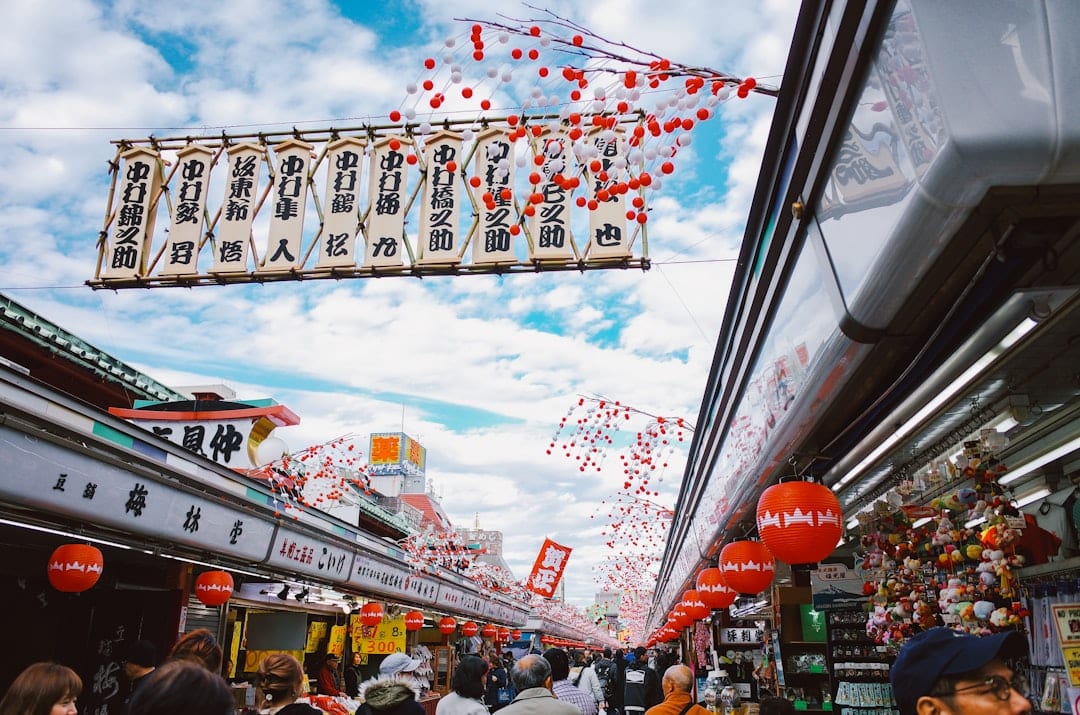
Start your walk at Asakusa Station on the Ginza Line. Exit at Gate 1 and the Kaminarimon Gate rises before you like a threshold into another century. The massive red lantern—chochin—sways gently in the wind, and the smell of senko incense drifts from the temple grounds before you even see the smoke.
Approaching Senso-ji with Respect
Before entering Senso-ji Temple, pause at the chozuya purification fountain. The ritual is specific: scoop water with your right hand, rinse your left, then your right, then pour a little into your left palm to rinse your mouth. Do not spit into the basin; bend forward and let the water fall to the ground. It feels theatrical the first time, but by the third fountain you encounter across Japan, it becomes a quiet meditation.
At the main hall, toss a five-yen coin—go-en, a homophone for “good fortune”—into the offering box. Bow twice, clap twice, pray, and bow once more. Photographs are permitted in the courtyard but avoid pointing your camera directly at people in prayer. If you receive an omikuji fortune and it is bad, do not carry it home; tie it to the designated wire rack and leave the misfortune at the temple.
The Ritual of Nakamise-dori
The approach to Senso-ji is lined by Nakamise-dori, a 250-meter stretch of stalls that has served pilgrims for centuries. The sensory experience is deliberate: the warm, sweet steam of ningyo-yaki doll-shaped cakes mixing with the savory glaze of age-manju fried buns. Vendors do not call out to you. They arrange their goods with precision and wait. This is not aloofness; it is trust in the product.
Eat while standing at the stall or walk to the designated eating area near the pagoda. Walking while eating is generally discouraged in quieter residential streets, though Nakamise-dori is more forgiving. Carry small coins; many stalls are cash-only and appreciate exact change.
Shibuya: The Organized Chaos and Its Unwritten Rules
From Asakusa, take the Ginza Line to Aoyama-itchome and transfer to the Hanzomon Line for Shibuya. The descent into Shibuya is a lesson in compression: streets narrow, vertical signage multiplies, and the energy tightens like a coil. Then you reach the Scramble Crossing.
The Crossing as Choreography
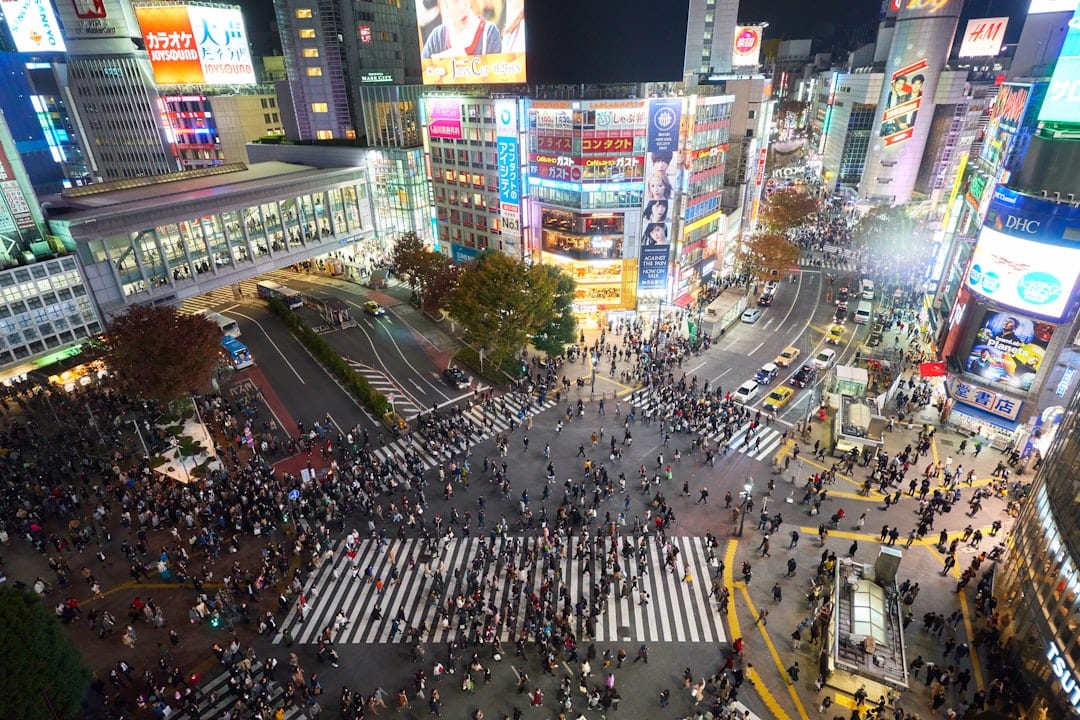
When the pedestrian light turns green, up to three thousand people surge into the intersection from five directions. Yet collisions are rare. The unwritten rule is deceptively simple: walk in a straight line at a predictable pace. Do not stop mid-crossing to take a photograph. Do not weave. If you want the iconic aerial shot, position yourself at the second-floor window of the Starbucks overlooking the crossing, order a matcha latte, and wait for the light to change.
More importantly, wait for the signal. Jaywalking is rare in Tokyo, even at 2:00 AM on an empty street. The discipline is social, not legal. Standing at a red light with no cars in sight signals that you respect the collective rhythm.
Street Photography and Spatial Awareness
Shibuya is magnetic for photographers, but privacy norms are strict. Avoid aiming your lens directly at individuals' faces without permission. If you are photographing street fashion near Center-gai or the backstreets of Dogenzaka, shoot from behind or focus on architectural details. A smile and a nod go further than a shouted “picture okay?”
Take a moment at the Hachiko Statue outside the station. The loyalty the dog represents is still a cultural cornerstone. You will notice people meeting there in absolute silence, scanning the crowd with patience. In Tokyo, waiting is an active state, not an empty one.
Ginza: Refined Atmosphere and Consumer Rituals
Take the Marunouchi Line from Shibuya to Ginza. The moment you emerge from Exit A2, the temperature of the city drops. Not literally—the district simply exhales. There is no shouting, no jostling. Even the taxis are black and polished, their doors opening with a soft pneumatic whisper.
The Art of the Bow and Packaging
Enter Mitsukoshi or Wako and observe the staff. A purchase is not a transaction; it is a ceremony. Your item is wiped, wrapped in tissue, placed in a bag, and the bag is presented with both hands and a bow. Return the bow with a slight nod. Do not rush to stuff the bag into your backpack in front of them; accept it with the same gravity with which it was offered.
On weekend afternoons, Chuo-dori becomes a pedestrian paradise. The street closes to traffic, and families stroll in polished shoes, dogs in strollers, and elderly couples holding hands at exactly the pace the city allows. Window shopping is a legitimate activity here. You are not expected to buy; you are expected to appreciate.
Tipping, Taxes, and Cash Trays
In Ginza—and across Japan—tipping is not practiced. Leaving extra yen on the table at a restaurant or rounding up for a taxi driver can cause confusion or even offense. Excellent service is the standard, not an extra. When paying, place your cash or card on the small tray provided at the register rather than handing it directly to the staff. The tray exists to minimize awkward hand-to-hand contact. Wait patiently for your change to be returned, counted, and bowed over.
Dining Customs by Neighborhood: Slurping, Tipping, and Queue Discipline
Tokyo's food culture shifts as dramatically as its architecture from district to district. In Asakusa, you will eat tempura seated on tatami mats; in Shibuya, you will slurp ramen at a counter facing a kitchen; in Ginza, you may sit for a kaiseki meal that unfolds like a slow concerto.
- Slurping is encouraged. In ramen shops along Shibuya's Dogenzaka backstreets, pulling noodles audibly cools them and signals enjoyment to the chef. It is the opposite of bad manners.
- Never tip. Service staff are paid living wages. A tip can imply you are trying to buy extra favor or that you pity their salary. Simply say gochisousama deshita—“thank you for the meal”—on your way out.
- Queue exactly where the line tells you to. Many shops have vinyl tape on the pavement marking where the line begins. Stand on it, not near it. In Ginza, a queue for a Michelin-starred tempura counter may stretch silently for forty minutes with zero complaints.
- Otoshi is not free. Some izakaya and bars place a small appetizer on your table upon seating. This is an automatic seating charge, usually ¥300–¥500 (roughly ₱120–₱200). It is not a gift; do not send it back.
- Pay at the register, not the table. In most casual restaurants, you bring the bill to the cashier near the exit. In Ginza's finer establishments, staff will handle payment discreetly at the table.
Seasonal Rhythms: Autumn Walks vs. Spring Strolls
Tokyo rewards the walker differently depending on when you arrive. For Filipino travelers, both autumn and spring offer manageable temperatures compared to Manila's humid peak, but the cultural texture of each season is distinct.
Autumn (October–November)
By mid-October, the typhoon season has tapered off and the air turns crisp. Meiji Jingu Gaien and Rikugien Garden ignite in shades of vermillion and gold—koyo foliage that draws locals in silent procession. The light is lower, casting long shadows across Ginza's boulevards by 4:30 PM. Bring a light jacket; morning temperatures can dip to 15°C. Autumn is the season of appetite—shokuyoku no aki—so expect longer queues at popular ramen shops as locals celebrate the harvest.
Spring (March–April)
Cherry blossom season transforms even the most utilitarian Tokyo street into a stage. In Asakusa, petals collect in the temple's purification fountains. In Shibuya, the scramble crossing is framed by pink canopies along Yoyogi Park's approach. The mood is festive but fragile—mono no aware, the pathos of things. Locals picnic beneath the trees with precision timing, spreading blue tarps at dawn to claim a spot. Temperatures hover between 10°C and 20°C. The only caution: Golden Week (late April to early May) compresses domestic travel, so book trains and restaurants weeks in advance.
Practical Guide for the Curious Walker
Walking Tokyo is not about distance; it is about observation. Here is how to prepare.
| Topic | Recommendation |
|---|---|
| Footwear | Slip-on shoes are essential. You will remove them frequently at temple verandas, certain restaurant entrances, and fitting rooms. |
| Clothing | Layered outfits in neutral tones. Tokyoites dress quietly; loud patterns make you visually loud too. |
| Transit | Get a Suica or Pasmo IC card. The Ginza Line connects Asakusa to Shibuya; the Hanzomon Line links Shibuya to Oshiage. A day pass costs around ¥800 (≈₱320). |
| Timing | Asakusa at 7:00 AM for empty temple grounds. Shibuya after 7:00 PM for neon energy. Ginza on a Sunday afternoon for car-free strolling. |
| Cash | Carry ¥10,000–¥15,000 (≈₱4,000–₱6,000) in cash daily. Many temples, stalls, and small restaurants do not accept cards. |
Planning your trip? Mesho Travel curates immersive Japan itineraries that balance iconic landmarks with neighborhood-level cultural guidance. Explore our Memorable Japan 2026 package for a seamless Tokyo-to-Osaka experience designed with Filipino travelers in mind.
Quick Summary: Tokyo Walking Essentials
- Bow at temple offering boxes and when receiving purchases; skip the handshake.
- Never tip at restaurants, taxis, or hotels—it contradicts local custom.
- Queue on marked lines, cross the Shibuya scramble in straight lines, and wait for pedestrian signals.
- Slurp ramen loudly; eat snacks at designated areas; pay at the register tray with cash.
- Visit Asakusa at dawn, Shibuya after dark, and Ginza on Sunday afternoons for the truest neighborhood character.
Related Reading
Dive deeper into seasonal rituals, koyo timing, and autumn etiquette beyond Tokyo.
Master the JR and Metro lines that connect these neighborhoods without confusion.
A complete day-by-day route with JR Pass calculations and budget estimates in PHP.
Ready to experience Tokyo with cultural confidence?
Let Mesho curate your journey through Japan's most compelling neighborhoods—complete with guided orientation, local dining reservations, and seamless transit.
Explore Curated Japan ToursAuthor's Note: Grace Villareal is a Taipei-based travel editor who has spent years documenting the quiet protocols and border-entry nuances of Northeast Asia. She believes the most extraordinary Japan experiences happen not at famous monuments, but in the pauses between them—at a temple fountain, a ramen counter, or a Sunday Ginza sidewalk.


