


You have already flown into Changi. The hawker centers are calling. The Merlion is photobombing your selfies. But here is what most Filipino travelers miss: Singapore is only the beginning. A short land crossing north unlocks an entirely different country—colonial port towns, rainforests, Hindu cave temples, and a skyline that competes with any in Asia. By pairing Singapore with Malaysia in one seamless overland circuit, you stretch your peso further and collect experiences that feel like two vacations in one.
This guide maps a 5-day Singapore–Malaysia land crossing optimized for Philippine passport holders: Singapore to Johor Bahru, Malacca, and Kuala Lumpur. You will get exact bus terminals, train stations, realistic time budgets, visa rules, and cost estimates in PHP—no guesswork, no missed connections.
Why Combine Singapore and Malaysia in One Trip?
Flying Manila–Singapore and Kuala Lumpur–Manila separately costs more and wastes a day in airports. The land corridor between the two nations is one of Southeast Asia’s most efficient overland routes. Buses and trains run on time. English signage is everywhere. And for Filipinos, both countries grant 30-day visa-free entry—no paperwork, no embassy queues.
The real advantage is contrast. Singapore dazzles with precision and futurism. Malaysia answers with heritage, jungle, and street-food chaos that feels closer to home. Crossing the border by bus or train turns the journey itself into a story—one you cannot get from a direct flight.
The Route at a Glance
- Day 1: Singapore arrival + Marina Bay & Kampong Glam
- Day 2: Singapore morning → cross to Johor Bahru → onward bus to Malacca
- Day 3: Malacca heritage core (Jonker Street, Dutch Square, river cruise)
- Day 4: Malacca → Kuala Lumpur by bus → Batu Caves evening
- Day 5: Kuala Lumpur (Petronas Towers, Bukit Bintang) → evening departure
Day 1: Singapore — Marina Bay & Kampong Glam
Arrive at Changi Airport and take the MRT or Grab to your hotel in the Bugis or Lavender area. These neighborhoods keep you close to both the city center and the Woodlands border crossing tomorrow. Drop your bags and head straight to Marina Bay.
Budget three hours for the Marina Bay loop: the Merlion, the Helix Bridge, and the exterior of Marina Bay Sands. If you want the SkyPark observation deck, book the 5:00 PM slot so you catch sunset and the Garden Rhapsody light show at Gardens by the Bay below. Dinner should be at a hawker center—Lau Pa Sat for satay or Maxwell Food Centre for chicken rice. Expect to spend PHP 430–650 per meal.
In the evening, walk north to Kampong Glam. Haji Lane’s street murals and Sultan Mosque’s golden dome are best photographed just before the shops close. Sleep early—you will cross a border tomorrow.
Day 2: The Crossing — Singapore to Malacca via Johor Bahru
This is the most logistically important day of the circuit. Done right, it is effortless. Done wrong, you lose half a day in immigration queues.
Step 1: Singapore to Johor Bahru (JB)
Take the MRT North-South Line to Woodlands Station, then connect to Woodlands Train Checkpoint via bus 856 or 911. If you are taking the KTM Shuttle Tebrau train, arrive 60 minutes early. The five-minute train ride to JB Sentral costs roughly PHP 215–430 one-way and lets you skip the Causeway traffic jam.
Alternatively, a cross-border bus from Queen Street Terminal or Woodlands Temporary Bus Interchange drops you at Larkin Sentral in JB after clearing both immigrations. Buses run every 15–30 minutes and cost PHP 130–260. Budget 90–120 minutes total during peak morning hours.
Step 2: Johor Bahru to Malacca
From JB Larkin Sentral, book a coach to Malacca (Melaka Sentral). Operators like KKKL, Transtar, and Billion Stars run direct buses every 1–2 hours. The journey takes 3.5 to 4 hours. A standard seat costs PHP 430–650; VIP seats with extra legroom run PHP 650–860.
Arrive in Malacca by late afternoon. Check into a hotel within walking distance of Jonker Street—the heritage zone is compact and best explored on foot. Have dinner at the Jonker Walk Night Market (open Friday to Sunday evenings) for oyster omelets, chicken rice balls, and cendol. If it is not a market night, Chung Wah on Jalan Hang Jebat serves the city’s most famous chicken rice balls for under PHP 260 per person.
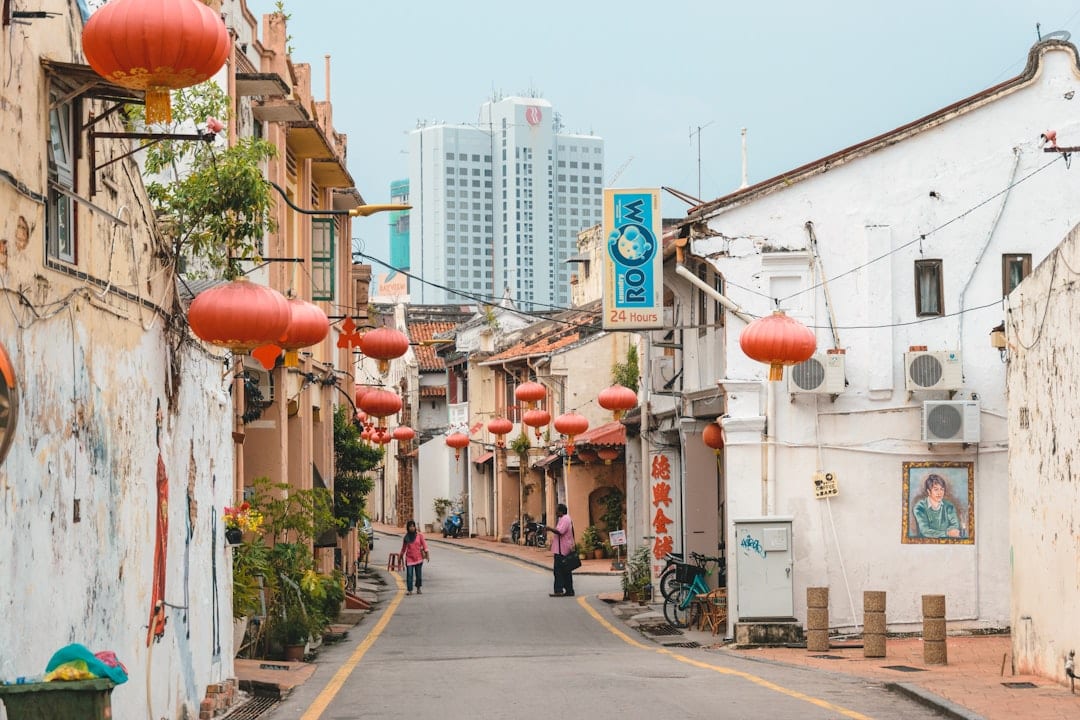
Jonker Walk Night Market in Malacca — a Friday-to-Sunday highlight for street food and heritage browsing.
Day 3: Malacca — Colonial Layers and River Life
Malacca is small but dense with history. Start early at Dutch Square (Stadthuys and Christ Church) before the tour buses arrive. The red colonial buildings photograph best in morning light. Walk five minutes to St. Paul’s Hill for the ruins of the old Portuguese church and a panoramic view of the strait.
By 10:00 AM, descend into the Jonker Street heritage row. Pop into the Baba & Nyonya Heritage Museum (entrance roughly PHP 520) for a guided tour of a preserved Peranakan townhouse. The intricate beadwork and carved furniture explain why Malacca’s hybrid culture is unlike anywhere else in Malaysia.
Lunch at Nancy’s Kitchen for authentic Nyonya laksa and pie tee. In the afternoon, take the Melaka River Cruise (PHP 260)—a 45-minute loop that shows you the back of the old town, street-art alleys, and converted warehouses you would miss on foot.
End the day at Klebang Beach for the coconut shake and a view of the Melaka Strait Mosque at sunset. It is a 15-minute Grab ride from the old town and costs roughly PHP 130–215.
Day 4: Malacca to Kuala Lumpur + Batu Caves
Book a morning bus from Melaka Sentral to TBS (Terminal Bersepadu Selatan) in Kuala Lumpur. The ride is 2 to 2.5 hours. Delima Express and Mayang Sari are reliable operators; tickets cost PHP 260–430. Aim for a bus departing between 8:00 and 9:00 AM so you reach KL before noon.
From TBS, take the KLIA Transit or Grab to your hotel in Bukit Bintang or Chinatown. Drop your bags and head straight to Batu Caves before the afternoon heat peaks. The KTM Komuter train from KL Sentral to Batu Caves Station takes 30 minutes and costs roughly PHP 65 each way.
The 272 rainbow-colored steps lead up to a massive limestone cathedral housing Hindu shrines. Budget two hours for the climb, exploration, and the cave interior. There is no entrance fee, but dress modestly—shoulders and knees covered. After descending, eat a vegetarian banana-leaf meal at one of the restaurants at the base for PHP 130–215.
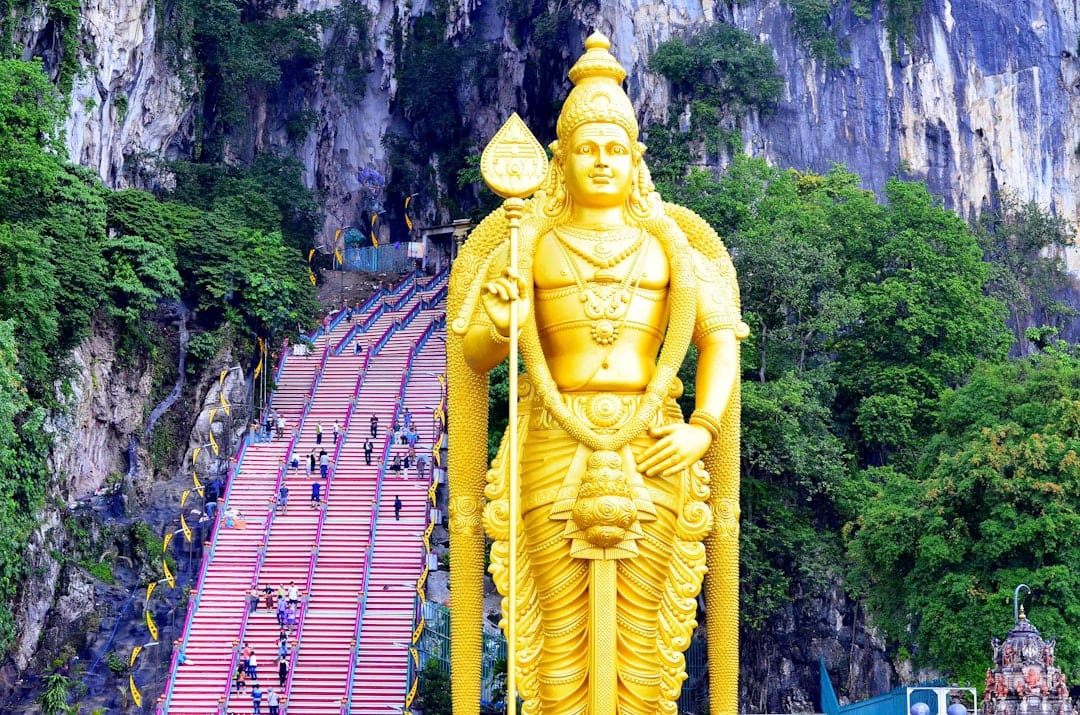
Batu Caves — a must-visit just north of Kuala Lumpur, accessible by KTM Komuter from KL Sentral.
Day 5: Kuala Lumpur — Towers, Markets, and Departure
Your final day centers on KL’s two icons. Start at the Petronas Twin Towers. The Skybridge and observation deck open at 9:00 AM; tickets run PHP 1,730 and sell out by midday on weekends, so book online in advance. If you skip the deck, the KLCC Park fountains and Suria KLCC mall still deliver great ground-level photos.
Walk 20 minutes or take the monorail to Bukit Bintang. Pavilion KL and Lot 10 are the retail anchors, but the real attraction is the food—Jalan Alor comes alive after 5:00 PM with grilled stingray, satay, and durian stalls. If your flight is late evening, this is your farewell dinner scene. Budget PHP 430–650 for a generous street-food feast.
For departure, KLIA Ekspres from KL Sentral reaches the airport in 28 minutes for roughly PHP 910. Grab rides to KLIA cost PHP 1,080–1,510 depending on surge. If you are flying out of Singapore Changi instead, take a budget flight from KLIA or a return coach—though most travelers find the one-way KL departure more efficient.
Border Crossing & Transport: What Filipino Travelers Need to Know
Immigration & Visa
Philippine passport holders receive 30 days visa-free in both Singapore and Malaysia. Have your return or onward ticket ready—Singapore immigration sometimes asks for proof of departure within the visa-free period. A printed bus booking from Malacca to KL, or a flight out of KLIA, satisfies this requirement.
At the Woodlands–Johor Bahru crossing, expect to clear Singapore exit immigration, cross the Causeway, then clear Malaysia entry immigration. The KTM Shuttle Tebrau streamlines this because you clear both checkpoints at the train terminals. Bus passengers walk through both immigrations with their luggage—wear comfortable shoes and keep valuables in a daypack.
Booking Buses & Trains
- KTM Shuttle Tebrau: Book via ktmb.com.my or the KTM mobile app. Tickets release 30 days ahead and sell out on weekends.
- JB to Malacca coaches: redBus.my or BusOnlineTicket.com accept Philippine credit cards. Book at least 48 hours ahead for Friday departures.
- Malacca to KL: Same platforms. Melaka Sentral has a dedicated ticket counter wing if you prefer to buy in person.
- Within KL: Use the Touch ‘n Go card for trains and some buses. The card itself costs roughly PHP 215 and is reloadable at 7-Eleven or train stations.
Currency, SIM Cards & Luggage Logistics
Money Matters
Singapore uses the Singapore Dollar (SGD); Malaysia uses the Malaysian Ringgit (MYR). As of early 2026, rough conversions are SGD 1 ≈ PHP 43 and MYR 1 ≈ PHP 13. Withdraw from ATMs in both countries using a Philippine-issued card with low forex fees—Maybank and UOB ATMs in Malaysia rarely charge local fees. Change only a small amount at airport counters; their rates are poor.
SIM Cards & Connectivity
At Changi, pick up a Singapore tourist SIM (Singtel, StarHub, or M1) with 100 GB for roughly PHP 650–860. For Malaysia, buy a Hotlink or Digi prepaid SIM at JB Sentral or Melaka Sentral—PHP 260–430 gets you 10–20 GB valid for a week. If you prefer one SIM for both, Airalo and Holafly offer ASEAN-wide eSIMs, but local SIMs are cheaper and faster.
Packing for Overland Travel
Bring a medium-sized rolling suitcase or a 40L backpack—coach luggage compartments are generous, but overhead racks are not. Pack a daypack with your passport, power bank, and a light jacket; Malaysian buses blast air-conditioning. Leave room for souvenirs—Malacca’s pineapple tarts and KL’s white coffee packs are heavier than they look.
Budget Breakdown (Per Person, Estimated in PHP)
| Item | Budget | Mid-Range |
|---|---|---|
| Singapore–JB transport | 130 | 430 |
| JB–Malacca bus | 430 | 860 |
| Malacca–KL bus | 260 | 430 |
| 4 nights accommodation | 4,300 | 10,750 |
| Meals (5 days) | 3,225 | 5,375 |
| Attractions & activities | 860 | 2,580 |
| Local transport (Grab/MRT/KTM) | 1,075 | 2,150 |
| SIM cards (both countries) | 910 | 1,290 |
| Total (excluding flights) | 11,190 | 23,865 |
*Budget estimates are per person, based on shared double accommodation and mid-2026 exchange rates. Actual costs vary by season and booking window.
Insider Tips from the Road
- Book the KTM Shuttle on a weekday. Weekend queues at Woodlands Train Checkpoint can stretch past 45 minutes. A Tuesday or Wednesday crossing feels almost leisurely.
- Carry cash for Malacca. Many Jonker Street stalls and heritage cafés do not accept cards. A wallet with MYR 200–300 (PHP 2,600–3,900) covers two days comfortably.
- Download Grab before you leave the Philippines. It works in Singapore, JB, Malacca, and KL with the same account. In Malaysia, Grab is often cheaper than street taxis and removes haggling stress.
- Time the Jonker Night Market. It only operates Friday, Saturday, and Sunday evenings. If your Malacca nights fall on weekdays, plan dinners at proper restaurants instead.
- Tag your luggage. Coaches sometimes unload bags in batches at rest stops. A bright tag or ribbon saves you from confusion at Melaka Sentral.
"The best part of this route is watching the landscape shift from Singapore's glass towers to Malaysia's palm plantations in under an hour. It reminds you how much diversity fits into a single afternoon."
Planning your first land crossing? Explore our dedicated Singapore destination guide for deeper dives into the Lion City’s neighborhoods, hawker culture, and transit hacks before you connect north.
Ready to Experience Two Countries in One Seamless Journey?
Routing a multi-country overland trip on your own is doable—but it eats time you could spend exploring. At Mesho Travel And Tours, we curate Singapore–Malaysia land circuits with pre-booked coach seats, vetted heritage hotels in Malacca’s old town, and private transfers that skip the terminal queues. You focus on the satay and the skyline. We handle the logistics.
Speak with a Mesho Travel Specialist
Quick Summary
- Route: Singapore → Johor Bahru → Malacca → Kuala Lumpur
- Best border crossing: KTM Shuttle Tebrau (Woodlands to JB Sentral) for speed; bus for budget
- Visa: 30 days visa-free for Philippine passport holders in both countries
- Total land transport cost: PHP 820–1,720 per person across all legs
- Key booking tip: Reserve KTM Shuttle and JB–Malacca coaches at least 48 hours ahead
Related Reading
- Singapore 4-Day Budget Itinerary for Filipinos
- Singapore on a Budget: Smart Travel Guide for Filipino Travelers 2026
- Hawker Heritage: Navigating Singapore's UNESCO-Recognized Food Culture
Author’s Note: Marco Dela Cruz is an ASEAN travel consultant based in Meycauayan, Philippines, with over a decade of experience routing Filipino travelers across Southeast Asia by land, sea, and air. He specializes in cross-border itineraries that maximize value without sacrificing comfort—and still believes the best satay in the region is found at a plastic stool in Jalan Alor.


