


Singapore's Hawker Centers: A Filipino Food Lover's Guide to Michelin Bib Gourmand Eats on a Budget
You land at Changi after a four-hour flight from Manila, drop your bags, and head straight to a polished mall restaurant for your first Hainanese chicken rice. The bill arrives: SGD 25 for one plate. That is roughly PHP 1,050 for a dish that locals regularly eat for under SGD 6 at a nearby hawker center. As a Filipino traveler, you already know that the best flavors often live in open-air markets and family-run stalls, not in air-conditioned food courts with English-language menus and service charges. Singapore works the same way.
This guide answers one question: how can Filipino food lovers navigate Singapore's hawker centers like locals, find Michelin Bib Gourmand dishes, and stay within budget? We will cover the three hawker centers every first-timer should know, the four dishes worth prioritizing, the unwritten rules of chope culture and tray returns, how to pay, and how to turn a food crawl into a full cultural day.
Why Hawker Centers Beat Mall Restaurants
Singapore has more than 120 hawker centers, and in 2020 the country's hawker culture was added to UNESCO's Representative List of the Intangible Cultural Heritage of Humanity. These are not random food courts. They are government-regulated, inspected for hygiene, and anchored by vendors who have cooked the same dish for decades. Many stalls hold Michelin Bib Gourmand recognition, awarded for quality food at moderate prices.
For Filipino travelers, the appeal is immediate. A hawker meal costs a fraction of a restaurant equivalent, portions are generous, and the seating is communal. You will sit beside office workers, students, and retirees. The noise, the steam, and the clatter of woks are part of the experience. This is where Singapore actually eats.
Top Hawker Centers for First-Timers
Start with these three centers. Each offers a different atmosphere, a different crowd, and a different set of signature stalls.
Maxwell Food Centre (Chinatown)
Maxwell is the easiest introduction for Filipino travelers because it sits in the heart of Chinatown and offers English-speaking stall signs. The center is compact, busy, and packed with recognizable flavors.
- Tian Tian Hainanese Chicken Rice — The stall that put Singapore chicken rice on the world map. Expect a queue by 11:30 AM.
- Zhong Guo La Mian Xiao Long Bao — Hand-pulled noodles and soup dumplings for when you want something beyond the usual Southeast Asian plates.
- Maxwell Fuzhou Oyster Cake — Crispy, savory, and easy to share while you queue for your main dish.
- Hock Lam Street Popular Beef Kway Teow — A Bib Gourmand-recognized name serving tender braised beef over rice noodles.
Best time to visit: 10:30 AM, just before the office lunch rush. By 12:30 PM, every table is choped and the queues snake around the center.
Lau Pa Sat (Raffles Place)
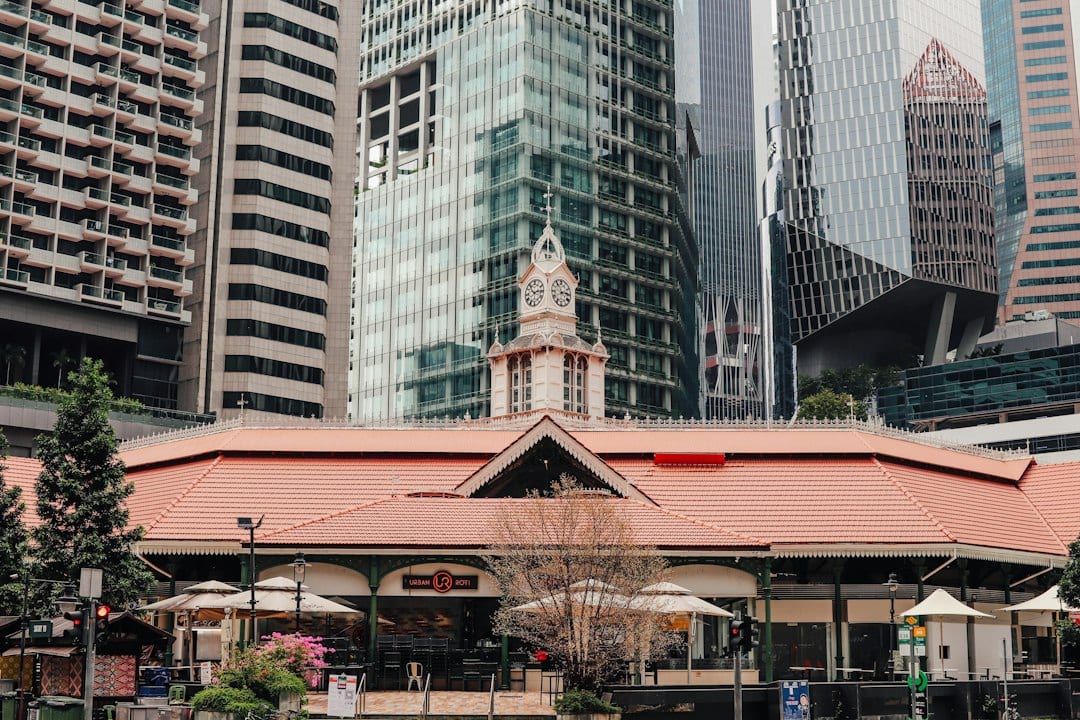
Lau Pa Sat's Victorian cast-iron structure dates back to 1894 and remains one of Singapore's most recognizable food halls.
Lau Pa Sat is the most atmospheric of the three. The building is a restored Victorian market hall from 1894, with filigree iron columns and a high pitched roof. It sits in the Central Business District, so the crowd is a mix of bankers, tourists, and construction workers.
- Satay Street on Boon Tat Road — Every evening after 7 PM, the road beside Lau Pa Sat closes to traffic and fills with charcoal grills. Try Best Satay 7 & 8 or Rafee's Corner for chicken, mutton, and beef skewers with peanut sauce and pressed rice cakes.
- Thai, Indian, and Western stalls — Lau Pa Sat is larger and more varied than Maxwell, making it a good backup if your group cannot agree on one cuisine.
Old Airport Road Food Centre (Mountbatten)
Old Airport Road is where Singaporeans go when they want the real thing without the tourist markup. It is farther from the Marina Bay hotel belt, but the MRT and bus connections are straightforward.
- Nam Sing Hokkien Fried Mee — Stir-fried Hokkien noodles with seafood, pork, and a squeeze of calamansi.
- Lao Fu Zi Fried Kway Teow — A favorite for char kway teow, smoky from the wok and loaded with cockles and Chinese sausage.
- Dong Ji Fried Kway Teow — Another solid option if Lao Fu Zi's queue is too long.
- Hock Lam Street Popular Beef Kway Teow — Yes, the same Bib Gourmand brand has a stall here too.
| Hawker Center | Best For | Signature Stall | Budget Per Meal |
|---|---|---|---|
| Maxwell Food Centre | First-timers, Chinatown pairing | Tian Tian Chicken Rice | PHP 170–340 |
| Lau Pa Sat | Atmosphere, satay dinner | Best Satay 7 & 8 | PHP 250–500 |
| Old Airport Road | Local crowd, fried noodles | Lao Fu Zi Fried Kway Teow | PHP 170–290 |
Signature Dishes to Prioritize
Singapore's hawker menus can overwhelm first-timers. If you only have time for three dishes, make it these three. They are affordable, widely available, and regularly featured in the Michelin Bib Gourmand guide.
Hainanese Chicken Rice
This is Singapore's national dish in all but name. Poached or roasted chicken is served over rice cooked in chicken stock and ginger, with chili-garlic sauce, dark soy, and a side of cucumber. The rice should be fragrant and slightly oily; the chicken should have a soft, jelly-like skin.
Where to find it: Tian Tian Hainanese Chicken Rice at Maxwell is the most famous. For a restaurant-style version, Boon Tong Kee and Chatterbox at Mandarin Orchard are consistently praised. Expect to pay SGD 4–8 (PHP 170–340) per plate.
Laksa
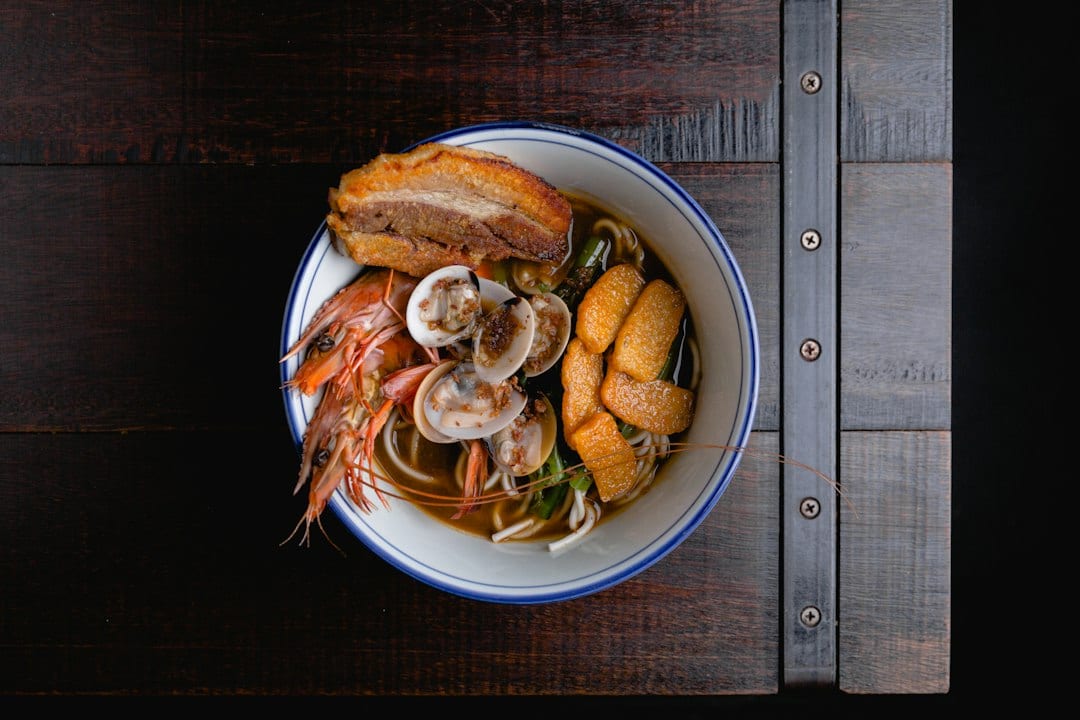
Katong laksa pairs rice noodles with a rich, coconut-based curry broth and fresh seafood.
Laksa is the dish that bridges Filipino palate and Singaporean tradition. The broth is coconut-curry, slightly spicy, and thick with rice noodles cut short so you eat it with a spoon. Prawns, fish cake, bean puffs, and sambal complete the bowl.
Where to find it: 328 Katong Laksa in Joo Chiat is the name most travelers recognize. Janggut Laksa and Depot Road Zhen Shan Mei Claypot Laksa are also Bib Gourmand-recognized options. A bowl costs SGD 4–6 (PHP 170–250).
Char Kway Teow
If you love pancit with wok hei, this is your dish. Flat rice noodles are stir-fried over high heat with dark soy sauce, egg, Chinese sausage, bean sprouts, and fresh cockles. The best versions smell smoky from the wok and arrive glistening without being greasy.
Where to find it: Lao Fu Zi Fried Kway Teow at Old Airport Road is a local favorite. Outram Park Fried Kway Teow Mee and Hill Street Fried Kway Teow have also earned strong followings. Prices run SGD 4–7 (PHP 170–290).
Hawker Etiquette Every Filipino Should Know
Singapore's hawker centers run on a quiet social contract. Break it and you will earn stares. Follow it and you will eat like a local.
- Chope with tissue packets. A packet of tissues, an umbrella, or a work lanyard on a table means the seat is taken. Do not remove it. Do not sit there. Bring your own tissue packet if you want to reserve a table while you order.
- Return your tray. Most hawker centers now require diners to clear their own trays and dishes to designated tray-return stations. Look for the signboards; fines apply at some locations.
- Divide and conquer. One person chopes the table. Another queues for food. This is standard practice during the lunch rush.
- Do not linger during peak hours. Between 12 PM and 2 PM, tables turn over quickly. Eat, chat, then free the seat.
- No tipping. Hawker stalls do not expect tips. The price on the menu is the price you pay.
- Smoking is prohibited. Hawker centers are smoke-free. Step outside to a designated smoking area if needed.
Budget, Payment, and Filipino Card Tips
This is the practical section that keeps your Singapore food crawl affordable.
- Cash is still king. Most hawker stalls accept Singapore dollars in cash only. Bring small notes and coins. A SGD 50 note for a SGD 4 meal can be awkward.
- PayNow and QR codes. Some newer stalls display PayNow, NETS QR, or SGQR codes. These require a Singapore bank app or a compatible e-wallet, so they are usually not practical for short-term Filipino visitors.
- Philippine cards. Visa and Mastercard issued in the Philippines work reliably at ATMs and major retailers, but hawker stalls rarely accept cards. Withdraw SGD cash at Changi or a 7-Eleven ATM instead.
- Budget per meal. A main dish costs SGD 5–8 (PHP 210–340). A drink adds SGD 1.50–3 (PHP 60–125). A full food crawl with snacks and dessert should land around SGD 15–25 (PHP 630–1,050) per person.
Planning your Singapore food crawl? Mesho can map hawker stops around your hotel, flights, and Singapore itinerary so you spend less time navigating and more time eating.
Pairing Food Crawls with Cultural Stops
The best Singapore days combine eating with walking. Hawker centers are often next to neighborhoods worth exploring.
Maxwell + Chinatown
Eat at Maxwell, then walk through Chinatown. Visit the Buddha Tooth Relic Temple, the colorful Sri Mariamman Temple, and the Chinatown Heritage Centre for a primer on early Chinese immigrants. End at Ann Siang Hill for shophouse architecture and a quiet coffee.
Old Airport Road + Katong and Joo Chiat
After noodles at Old Airport Road, take a bus or Grab to Katong and Joo Chiat. This is Peranakan Singapore: pastel shophouses, antique tiles, and the famous 328 Katong Laksa. Stop at the Katong Antique House if it is open, then walk toward East Coast Park to digest by the sea.
Lau Pa Sat + Marina Bay
Have satay for dinner at Lau Pa Sat, then stroll toward Marina Bay. The walk takes you past the Fullerton Hotel, Merlion Park, and the Esplanade. Time it for the 8 PM or 9 PM Spectra light show if you want a free evening finale.
Insider Tips for Your First Hawker Meal
- Go before 11 AM. Stalls are open, queues are short, and the best dishes have not sold out.
- Check the latest Michelin Bib Gourmand list. The list changes. Use it as a guide, not a rulebook. Some of the best stalls have no Michelin sticker at all.
- Share everything. Order one plate per stall and split among your group. This is how you taste more without overspending.
- Bring tissues and hand sanitizer. Napkins are not always provided, and Singapore's humidity will make you grateful for both.
- Ask the auntie or uncle. Stall owners are often proud of their food. A friendly "What do you recommend?" can lead to off-menu extras or the freshest batch.
"The best meal I had in Singapore cost SGD 5. It was a plate of chicken rice at Maxwell, eaten on a plastic stool next to a retiree who told me exactly which stall to queue for next. That conversation was worth more than any fine-dining menu."
Quick Summary
- Start with Maxwell, Lau Pa Sat, and Old Airport Road for a balanced first-timer experience.
- Prioritize Hainanese chicken rice, laksa, and char kway teow — all available for under PHP 350 per plate.
- Follow chope rules, return trays, and queue politely to avoid social friction.
- Bring SGD cash; Philippine cards rarely work at hawker stalls.
- Pair each hawker visit with a nearby cultural stop in Chinatown, Katong, or Marina Bay.
Related Reading
- Singapore Changi Airport to City Center: A Filipino First-Timer's Transport Guide
- Hoi An Ancient Town: A Filipino Traveler's Evening Lantern Walk and Cultural Etiquette Guide
- Malaysia's Cameron Highlands: A Filipino Traveler's Guide to Tea Plantations and Cool-Climate Escapes
- Princess Cruises' 11-Day Vietnam and Singapore Roundtrip: A Filipino Traveler's Port Planning Guide
Author's Note
Marco Dela Cruz is an ASEAN travel consultant who builds practical, budget-smart itineraries for Filipino travelers across Southeast Asia. He believes the best way to understand Singapore is through its hawker stalls — one plate, one queue, and one local conversation at a time.
Ready to eat your way through Singapore?
Let Mesho curate your hawker food crawl, cultural stops, and Singapore itinerary — so you skip the tourist traps and taste the city like a local.
View Mesho's Singapore Packages


