


At first, Hoi An Ancient Town looks like a lantern filter come to life. By six in the evening, the mustard-yellow shophouses along Nguyen Thai Hoc and Tran Phu glow amber, the Thu Bon River becomes a mirror for hundreds of silk lanterns, and every corner seems designed for a camera.
But this town was never built for Instagram. It was built for trade. For more than four centuries, merchants from Japan, China, Portugal, the Netherlands, and later France passed through this riverport, leaving behind covered bridges, clan assembly halls, tiled roofs, and a food culture that still feeds families in the same alleys. When Filipino travelers walk Hoi An after dark, the most rewarding souvenir is not the perfect photo—it is the quiet sense that you have understood, even briefly, how this town once moved the world.
In this guide, you will learn how to release a lantern responsibly, read the layers of Hoi An’s architecture, commission clothing from its famous tailors, eat like a local, and time your walks to avoid the midday crush.
Why Hoi An Rewards the Culturally Curious Traveler
Most visitors arrive in Central Vietnam chasing the Golden Bridge or the beaches of Da Nang. Hoi An, only thirty kilometers south, offers something different: a UNESCO-listed old town where the buildings themselves tell the story of Southeast Asia’s maritime silk route. The Japanese came first in significant numbers during the 16th and 17th centuries, followed by Chinese trading families who organized themselves into clan halls, and then by French administrators who added shuttered balconies and arched windows to the riverfront.
That layered heritage is why Hoi An feels less like a museum and more like a living market that simply slowed down. A tailor still measures fabric on the same street where a Chinese merchant once stored silk. A grandmother still sells banh vac (white rose dumplings) from a kitchen that predates the French shutters next door. The lanterns are beautiful, but they are also a continuation of the town’s history as a place where cultures met, traded, and stayed.
Reading the River of Lanterns: Etiquette and Participation
Releasing a small paper lantern onto the Thu Bon River is one of Hoi An’s most memorable rituals. For locals, it is a gesture of remembrance, gratitude, or a wish for ancestors. For visitors, it can still be meaningful—if done with awareness rather than performance.
Choose biodegradable lanterns
Avoid plastic-framed or styrofoam lanterns. Buy the simple paper ones sold by older women along the riverbank or from small wooden boats near the An Hoi Bridge. They cost around ₫10,000–20,000 (≈₱25–45) and are far kinder to the river. When the candle burns out, the paper softens and breaks apart naturally.
Release from a boat or a calm bank
The most respectful way to participate is from a small sampan with a local boat rower, who will hand you the lantern and guide you to place it gently on the water. If you release from the riverbank, step back once the lantern is afloat so others have space. Never toss it, and never crowd a boatman who is trying to navigate between other vessels.
Mind the flame, the flow, and the people around you
- Keep hair, scarves, and sleeves away from the candle.
- If the wind picks up, cup the flame or ask the seller to relight it safely.
- Do not photograph other visitors releasing lanterns without asking; many treat the moment privately.
- Avoid loud conversations and flashing lights near the water.
The river is not a stage. When you lower your lantern with both hands and watch it drift, you are taking part in something older than the town’s tourism industry—and that is the image worth keeping.
Walking Through Living History: Bridges, Halls, and Colonial Streets
Hoi An’s architecture is not a backdrop. Each structure was built for a specific community, faith, or commercial purpose. Knowing a little before you walk makes the streets feel like pages in a shared history book.
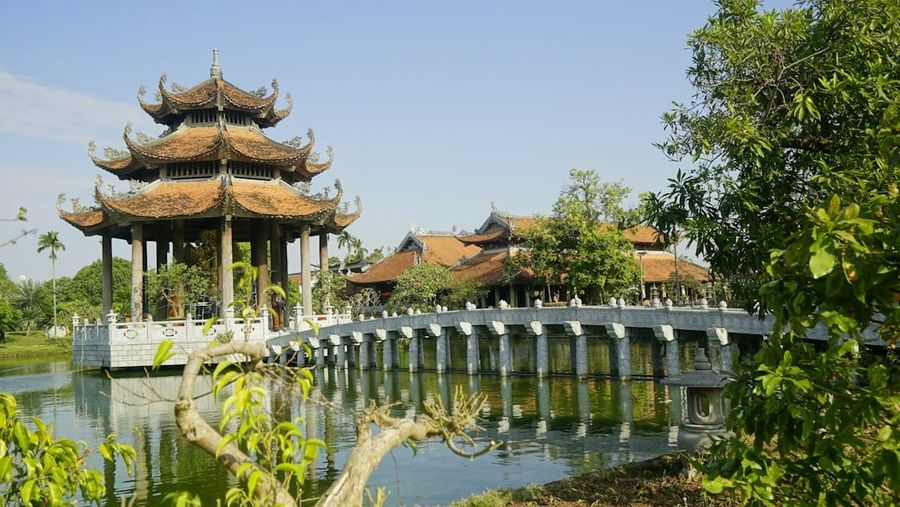
The Japanese Covered Bridge (Chua Cau), built in the early 17th century to connect the Japanese and Chinese quarters.
Chua Cau — the Japanese Covered Bridge
Built in the early 1600s, this small timber bridge linked the Japanese quarter with the Chinese quarter. Its curved roof and monkey-and-dog guardian statues reflect Japanese cosmology and the belief that the world was once protected by these animals. The bridge is narrow and can become a bottleneck, so pause to let others pass, speak softly, and resist the urge to climb or lean on the railings.
Chinese assembly halls
The Chinese trading families built clan halls that doubled as temples and meeting places. The four most significant are still open to visitors:
- Phuc Kien Assembly Hall (Fujian) on Tran Phu — the most ornate, dedicated to the sea goddess Thien Hau.
- Quang Dong Assembly Hall (Cantonese) on Nguyen Thi Minh Khai — known for its elaborate porcelain mosaics.
- Trieu Chau Assembly Hall (Teochew) on Nguyen Duy Hieu — smaller, quieter, with beautiful wood carvings.
- Hai Nam Assembly Hall (Hainan) on Tran Phu — honors ancestors from Hainan island.
When entering, cover your shoulders and knees, remove hats and sunglasses, and step over thresholds rather than on them. Avoid pointing your feet toward altars, keep your voice low, and turn off your camera flash. A small donation at the entrance helps maintain the halls.
French-colonial facades and merchant houses
Walk slowly down Nguyen Thai Hoc, Le Loi, and Phan Boi Chau to notice the second-floor balconies, arched windows, and mustard-yellow walls added during the French period. Many of these buildings now house cafés, lantern workshops, and family homes. Look for signs that say “Ancient House” — places like the Tan Ky Old House and Phung Hung Old House welcome visitors for a small fee and explain how merchants lived, stored goods, and prayed.
Tailor Shops: Commissioning Custom Clothing with Confidence
Hoi An’s tailoring tradition is not a tourist gimmick—it grew from centuries of cloth trading. Today the town has hundreds of tailor shops, and quality varies enormously. Knowing how to navigate them turns a risky impulse buy into a wardrobe piece you will wear for years.
Where to start
Reputable shops with established reputations include Yaly Couture on Nguyen Duy Hieu, A Dong Silk on Tran Phu, and Bebe Tailor. These shops cater to a mix of locals, expats, and travelers, and they are generally transparent about fabric and labor costs. Walk in with a clear idea: a photo of a dress, blazer, or ao dai helps far more than a vague description.
Negotiation norms and quality checks
Prices are often negotiable, but this is not a night market. Start by asking for the “best price” or a discount for multiple pieces. A simple cotton shirt might run ₫400,000–700,000 (≈₱900–1,600), while a lined blazer or silk ao dai can reach ₫1,500,000–3,000,000 (≈₱3,400–6,800) depending on fabric.
- Allow at least two to three days for fittings, or pay a rush fee.
- Inspect stitching, buttonholes, pattern alignment at seams, and how the lining hangs.
- Try on the garment and move your arms, shoulders, and waist before paying the balance.
- Pay a deposit of roughly 50 percent and the remainder only when satisfied.
A well-made Hoi An garment should feel like it was cut for you—not like a rushed souvenir. If the shop resists a second fitting, walk away.
Hoi An’s Plate: Cao Lau, Banh Mi Phuong, and Riverside Dining
Hoi An’s food is as layered as its architecture. Dishes here carry Japanese, Chinese, and French influences filtered through Central Vietnamese ingredients. Do not leave without trying these three signatures.
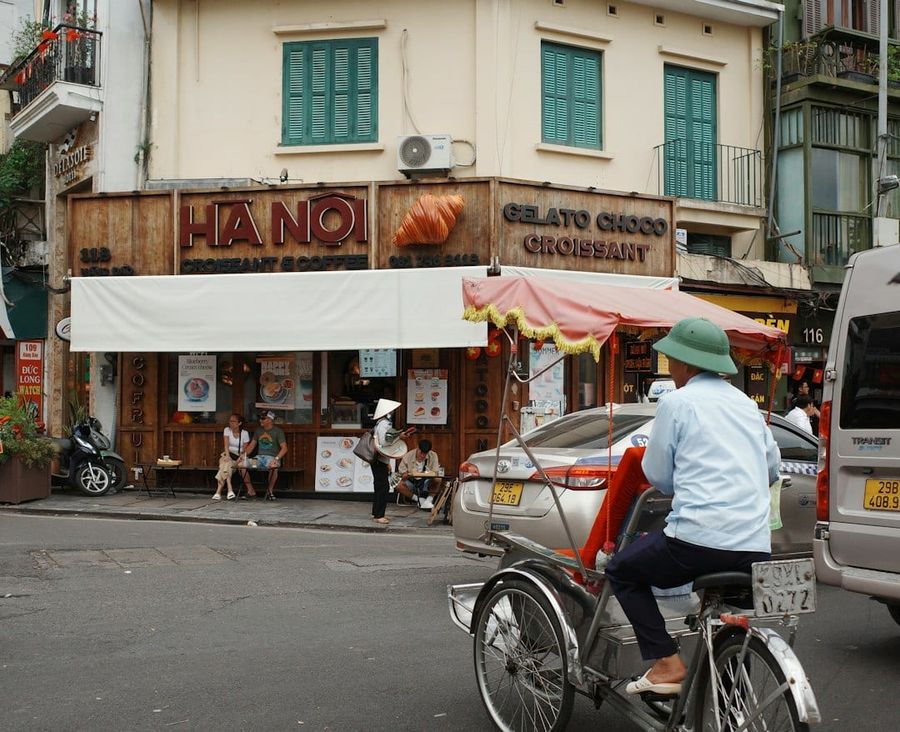
Cao lau, banh mi, and other Central Vietnamese dishes are best enjoyed at small shops and riverside tables.
The three must-eat dishes
- Cao lau — thick rice noodles tossed with char siu-style pork, fresh herbs, bean sprouts, and crispy fried squares. The legend says the water must come from the ancient Ba Le well to taste right. Try it at Morning Glory on Nguyen Thai Hoc or Cao Lau Khong Gian Xanh on Thai Phien.
- White rose dumplings (banh vac) — delicate rice-paper purses filled with shrimp and steamed until translucent. The White Rose Restaurant on Thai Phien has supplied many local kitchens for decades.
- Banh Mi Phuong — the famous baguette counter on Phan Chau Trinh, known for pâté, cold cuts, pickled vegetables, and a quick, efficient queue. A sandwich costs about ₫25,000–35,000 (≈₱55–80).
Riverside tables and evening drinks
For a sit-down meal with a view, book a table at Mango Mango or The Lantern on Nguyen Thai Hoc, or cross the river to An Hoi Islet for open-air seafood grills. Expect to pay ₫150,000–300,000 (≈₱340–680) per person for dinner with drinks. For a quieter pause, the Reaching Out Tea House on Nguyen Thai Hoc serves Vietnamese tea in a calm, tactile setting run by staff with hearing impairments.
Best Walking Routes and Timing to Beat the Heat and Crowds
Hoi An’s ancient town is small enough to cross in twenty minutes, but the experience changes completely depending on the hour. The best strategy is to walk early, retreat at midday, and return after sunset.
Early morning: the golden hour of quiet
Start at 5:30 AM when the air is cool and the old town still belongs to residents. Begin at the Japanese Covered Bridge, walk east along Tran Phu, turn south on Nguyen Thi Minh Khai to see the assembly halls opening for morning incense, then loop back via Phung Hung Old House and the Central Market. You will see shopkeepers sweeping, cooks prepping cao lau, and light that photographs beautifully without a single filter.
Late afternoon and evening: lanterns and river reflections
From 4:30 PM, head to the An Hoi Bridge for sunset over the Thu Bon River. Visit the assembly halls before they close around 5:30 PM, then wait for the lanterns to switch on at dusk. After 6:00 PM, motorbikes are restricted in much of the old town core, so walking feels safer and more immersive. Peak lantern crowds arrive between 7:00 PM and 9:00 PM; if you prefer stillness, linger until after 9:30 PM when the tour buses begin to leave.
Midday: rest, not roam
Between 10:00 AM and 3:00 PM, temperatures often climb past 33°C and group tours fill the narrow streets. Use this window for a tailor fitting, a long lunch, a nap at your hotel, or a bicycle ride to nearby An Bang Beach. You will return in the evening with far more energy and patience.
The most comfortable months are February to May and September to November, when rainfall is lower and humidity is more forgiving.
Planning your Danang–Hoi An trip?
Mesho Travel And Tours curates a Da Nang–Ba Na Hills–Hoi An standard tour that gives Filipino travelers a well-paced base in Central Vietnam, with local guides who can explain the stories behind the lanterns, bridges, and assembly halls.
View the Da Nang–Hoi An itineraryQuick Summary: Hoi An Etiquette for Filipino Travelers
- Release paper lanterns only, from a boat or calm bank, and keep the moment quiet.
- Dress modestly and remove hats when entering Chinese assembly halls and temples.
- Walk early (before 8:00 AM) and late (after 6:00 PM); rest during the midday heat.
- Try cao lau, white rose dumplings, and Banh Mi Phuong at least once.
- Commission tailoring from reputable shops, allow time for fittings, and pay only after inspecting quality.
Related Reading
- Da Nang–Ba Na Hills–Hoi An Standard Tour — Mesho’s curated Central Vietnam route for Filipino travelers.
- Vietnam Visa Guide for Philippine Passport Holders — visa-free entry covers 21 days; plan your flights and land transfers accordingly.
- Central Vietnam Packing List — lightweight breathable fabrics, comfortable walking sandals, and a reusable water bottle.
Author’s Note
Marco Dela Cruz is an ASEAN travel consultant with Mesho Travel And Tours, focused on land, sea, and air routing for Filipino travelers exploring Southeast Asia. He has walked Hoi An at dawn and at midnight, and still believes the town is best understood slowly—one lantern, one bowl of cao lau, and one conversation with a tailor at a time.
Ready to walk Hoi An with cultural awareness?
Let Mesho Travel And Tours curate your Central Vietnam journey, from the Golden Bridge to the lantern-lit lanes of Hoi An. Our team handles the logistics so you can focus on the experience.
Explore the Da Nang–Hoi An tour


