


You have just spent three days weaving through Hong Kong's neon-lit streets, riding the Star Ferry across Victoria Harbour, and hunting down the best egg tarts in Mong Kok. Then someone mentions Macau—just an hour away—and you wonder: Can I just hop on a ferry without a visa? For Filipino travelers holding a Philippine passport, the answer is yes. Macau remains visa-free for tourists in 2026, but the ease of entry depends on having the right documents and understanding how the Hong Kong–Macau connection actually works.
This guide breaks down everything you need to know before adding Macau to your Hong Kong itinerary: the 30-day visa-free rule, the documents immigration officers expect, how to cross between the two cities, and the common mistakes that can get you turned away at the border.
Macau Visa-Free Rules for Philippine Passport Holders in 2026
Macau operates under a separate immigration system from mainland China. This distinction matters because while mainland China requires most Filipino travelers to secure a visa in advance, Macau extends a visa-free privilege to Philippine passport holders for tourism and short business visits.
Key rule: Philippine passport holders can enter Macau without a visa and stay for up to 30 days. This is a significant window—double the 14-day limit Hong Kong grants to Filipino visitors. It means you can treat Macau as anything from a quick day trip to a week-long extension of your Greater China experience.
However, visa-free entry is not guaranteed on arrival. Macau immigration officers have the authority to deny entry if they are not satisfied with your documentation or travel purpose. The visa-free policy is an invitation, not an entitlement. Treat it with the same seriousness you would a formal visa application.
Documents You Must Carry at Macau Immigration
Walking up to the Macau immigration counter with only your passport is risky. Officers routinely ask for supporting documents to confirm you are a genuine tourist with plans to leave. Based on standard entry requirements, you should prepare the following before boarding any ferry from Hong Kong:
- Valid Philippine passport with at least 6 months validity remaining
- Return or onward ticket proving you will leave Macau (and eventually the region)
- Proof of accommodation—a hotel booking confirmation for at least your first night
- Proof of sufficient funds for your stay (bank statements, cash, or a combination)
- A clear travel itinerary showing why you are visiting and when you plan to depart
Officers may not ask for every item, but they can. Having them ready in a folder or on your phone prevents delays and reduces the chance of being pulled aside for secondary questioning.
Do not confuse Macau with mainland China
Macau's visa-free privilege is separate from mainland China's visa policy. If you plan to continue from Macau into Zhuhai or any other mainland city, you will need a valid Chinese visa. Many Filipino travelers have been caught off guard by this distinction. Macau and Hong Kong are Special Administrative Regions with their own immigration rules—mainland China is not.
Getting From Hong Kong to Macau: Ferries and the Bridge
The most straightforward way to reach Macau from Hong Kong is by sea. Ferries have connected the two cities for decades, and the service remains reliable and frequent.
Ferry Options and Terminals
Two main operators run the route: TurboJET and Cotai Water Jet. Both offer multiple daily departures from several Hong Kong terminals to two Macau terminals.
From Hong Kong:
- Sheung Wan (Hong Kong–Macau Ferry Terminal, near MTR Sheung Wan Station)
- Tsim Sha Tsui (China Ferry Terminal, near MTR Tsim Sha Tsui or Austin Station)
- SkyPier at Hong Kong International Airport (ideal if you are flying in and heading straight to Macau)
To Macau:
- Outer Harbour Ferry Terminal (closer to Macau Peninsula and the historic center)
- Taipa Ferry Terminal (closer to the Cotai Strip and major resorts)
The crossing takes approximately 55 minutes to one hour, depending on the operator and sea conditions. Morning and evening departures tend to book up faster, so reserve at least a day ahead during peak travel seasons.
Ferry Costs
TurboJET economy class fares from Hong Kong to Macau run approximately HK$171 one-way, which converts to roughly ₱1,200. Prices vary by operator, class, and time of day. Night sailings and premium cabins cost more. Booking online in advance often secures better rates than purchasing at the terminal.
The Hong Kong–Zhuhai–Macau Bridge
For travelers who prefer land transport, the Hong Kong–Zhuhai–Macau Bridge offers a bus connection. Buses depart from Hong Kong Port near the airport and arrive at the Macau border. While the bridge itself is an engineering marvel, the journey involves clearing immigration at both ends, and total travel time can stretch longer than the ferry depending on queues. Bus ticket prices and exact durations fluctuate, so check current schedules if you are considering this route.
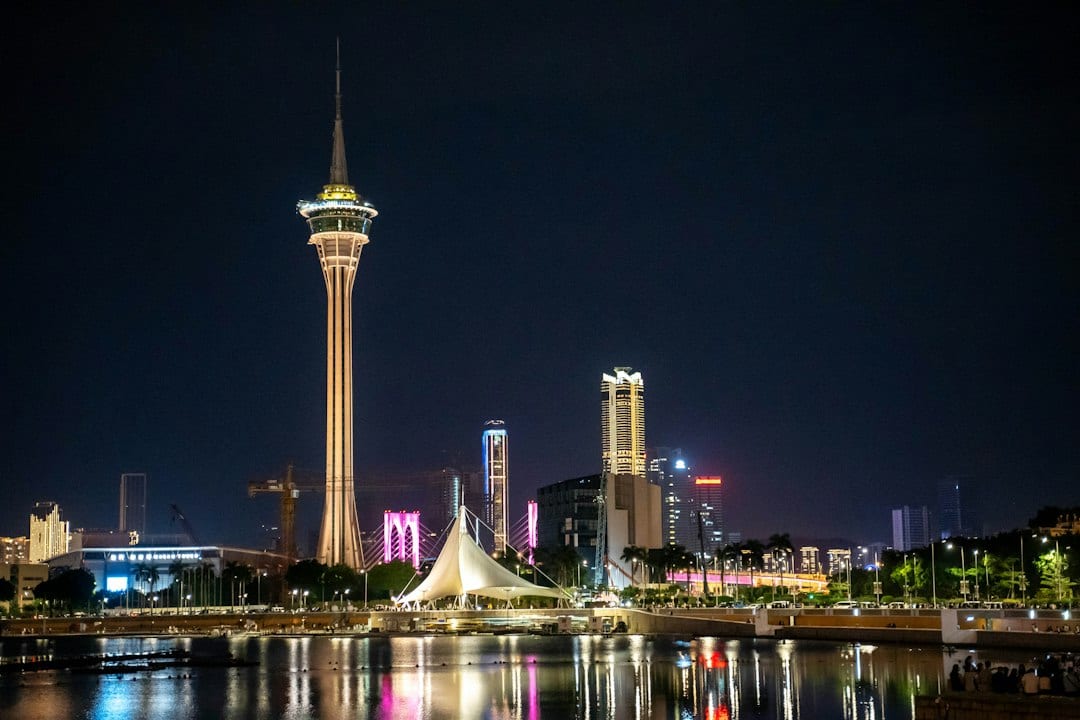
Macau's historic center glows after sunset, with the Ruins of St Paul's standing as a reminder of the city's Portuguese heritage.
Same-Day Return or Overnight Stay: Which Makes Sense?
One of the most common questions from Filipino travelers is whether Macau can be done as a day trip from Hong Kong or if an overnight stay is essential.
Same-day return is physically possible. The first ferries depart Hong Kong around 7:00 AM, and the last return ferries leave Macau around 10:00 PM. That gives you roughly 12 hours on the ground—enough to walk Senado Square, climb the Ruins of St Paul's, sample egg tarts at Lord Stow's, and catch the fountain show at Wynn Palace.
However, an overnight stay unlocks a different side of Macau. The city transforms after dark. The casinos along the Cotai Strip light up in synchronized displays, the historic lanes of Taipa Village empty of day-trippers, and the Portuguese restaurants in Coloane slow down to their natural rhythm. If your Hong Kong itinerary allows, spending at least one night in Macau turns a rushed checklist into a genuine experience.
Consider your energy levels and interests. If you are traveling with elderly family members or young children, the ferry schedules and walking distances of a day trip can feel exhausting. An overnight break gives everyone room to breathe.
Common Entry Denial Risks and How to Avoid Them
Even with a valid passport and visa-free eligibility, Filipino travelers are occasionally denied entry into Macau. Understanding why helps you avoid the same outcome.
Incomplete Documentation
The most frequent issue is arriving without proof of onward travel or accommodation. A vague plan to "figure it out later" does not satisfy immigration officers. Book at least one night in a hotel and have a ferry or flight ticket showing your departure from Macau.
Insufficient Funds
There is no published minimum amount, but officers expect you to demonstrate that you can support yourself. Carrying a reasonable amount of cash, a working ATM card, or recent bank statements strengthens your case. Traveling with nothing but a credit card and no backup can raise suspicion.
Suspicious Travel Patterns
Frequent short visits to Macau or a history of overstaying in Hong Kong, Macau, or Taiwan can flag you in the system. If you have previous immigration issues anywhere in the region, be prepared to explain your circumstances calmly and honestly.
Inconsistent Answers
Immigration officers may ask simple questions: Why are you visiting? Where are you staying? How long will you remain? Answer clearly and consistently. Hesitation or contradictory responses trigger further scrutiny.
Dress and present yourself neatly
While it should not matter, first impressions count at immigration counters. Presenting yourself as a organized, purposeful traveler—documents in hand, answers ready—sets a positive tone for the interaction.
Money Matters: What Currency to Use in Macau
Macau's official currency is the Macanese Pataca (MOP), but Hong Kong Dollars (HKD) are accepted almost everywhere at a 1:1 rate. For Filipino travelers coming directly from Hong Kong, this is convenient. You do not need to exchange currency immediately upon arrival.
That said, if you are paying in HKD, you will usually receive change in MOP. Small purchases at local bakeries or bus fares are easier with exact change or an Octopus card loaded with HKD. Major hotels, casinos, and restaurants accept credit cards, but carry cash for street food and heritage-area shops.
Planning Your Hong Kong–Macau Side Trip
If you are already booking a Hong Kong vacation from Meycauayan, adding Macau requires minimal extra planning. The two cities complement each other: Hong Kong delivers urban energy and mountain trails, while Macau offers colonial architecture, world-class dining, and a slower pace.
Mesho Travel And Tours offers a First Love Hong Kong — Macau 4 Days 3 Nights package starting from $555 per person, which includes flights, hotel stays, guided sightseeing, and the ferry connection between the two cities. This removes the guesswork from ferry bookings, terminal transfers, and hotel coordination.
For travelers who prefer to build their own itinerary, Mesho also provides a complimentary 60-minute in-person consultation at its Meycauayan office. You can book via info@meshotravel.com or +63 906 053 9130 to review your documents and map out a Hong Kong–Macau route that fits your budget and schedule.
Ready to cross the Pearl River Delta?
Let Mesho handle your ferry bookings, hotel coordination, and entry guidance so you can focus on the journey—not the paperwork.
Explore Hong Kong–Macau packagesQuick Summary: What Filipino Travelers Need for Macau
- Visa status: Visa-free for up to 30 days for Philippine passport holders
- Passport validity: Minimum 6 months remaining
- Must-carry documents: Return/onward ticket, hotel booking, proof of funds, travel itinerary
- Ferry crossing: 55 minutes to 1 hour via TurboJET or Cotai Water Jet
- Ferry cost: Approximately HK$171 (around ₱1,200) one-way in economy class
- Currency: MOP official; HKD widely accepted at 1:1
- Mainland China reminder: A Chinese visa is still required to enter mainland China from Macau
Related Reading
- Hong Kong and Macau Visa Guide for Filipinos: Do You Need One in 2026?
- Macau's Senado Square and Ruins of St. Paul: A Filipino Heritage Walker's Guide
- Hong Kong First-Timer's Guide for Filipinos: Transport, Food & Neighborhoods
Grace Villareal is a Taipei-based travel editor who has spent years covering border crossings, entry protocols, and cultural etiquette across Northeast Asia and Greater China. She writes for Mesho Travel And Tours to help Filipino travelers navigate the region with clarity and confidence.


