


You spot a well-priced Manila–Shanghai–Seoul ticket and imagine squeezing in the Bund and a dumpling breakfast without a visa. For many Philippine passport holders, that assumption is the fastest way to a denied boarding or a stressful immigration conversation. This guide clarifies who can use China’s 144-hour (now 240-hour) visa-free transit, which ports accept it, and what Filipino travelers should book instead.
What Is China’s 144-Hour Visa-Free Transit?
China’s transit-without-visa (TWOV) program lets eligible nationalities enter mainland China for a short stopover before continuing to a third country or territory. In late 2024, the window was expanded from 144 hours to 240 hours (10 days), and more ports were added. The rules that matter most are unchanged:
- You must hold a passport from one of the eligible countries.
- Your arrival point and onward destination must be different countries or territories.
- You must enter and exit through designated ports within the time limit.
Can Filipino passport holders use the 144/240-hour transit?
Ordinary Philippine passport holders are not on the current 240-hour visa-free transit nationality list. Eligible passports include most EU countries, the United States, Canada, Australia, New Zealand, Japan, South Korea, Singapore, Brunei, and several others—but not the Philippines.
That does not mean China is off the table. Filipino travelers can still use the 24-hour transit-without-visa option for short layovers, or apply for a regular Chinese tourist visa (L visa) for longer stays. More on both below.
Eligible Ports and Transit Corridors
The 240-hour program is available through dozens of designated airports, seaports, and a few land/rail crossings. For most multi-city Asia itineraries, the relevant gateways are:
- Shanghai: Pudong International Airport (PVG) and Hongqiao International Airport (SHA).
- Beijing: Capital International Airport (PEK) and Daxing International Airport (PKX).
- Guangzhou: Baiyun International Airport (CAN).
- Shenzhen: Bao’an International Airport (SZX) and Shekou Cruise Center.
- Other useful hubs: Hangzhou, Nanjing, Chengdu, Xi’an, Xiamen, and Qingdao.
The “third country” rule
You cannot use the transit program to fly Manila → Shanghai → Manila. The onward ticket must be to a third country or territory. Hong Kong, Macau, and Taiwan count as separate destinations, so Manila → Shanghai → Hong Kong can qualify for eligible nationalities. For Filipino travelers using the 24-hour option, the same rule applies.
Required Documents and Booking Rules
Whether you are using the 24-hour TWOV or you hold an eligible passport for the 240-hour program, immigration officers will check the same basics:
- Valid passport: At least three months of validity beyond arrival is strongly recommended.
- Confirmed onward ticket: A printed or digital itinerary showing departure to a third country within the allowed window. Standby tickets are not accepted.
- Visa for the next destination, if required: For example, if your onward stop is Seoul, have your Korea visa or K-ETA ready.
- Completed arrival card: Usually handed out on arrival or completed electronically.
- Hotel bookings or host address: Useful if asked where you will stay during the layover.
Keep copies in both your phone and a printed folder. Chinese immigration officers appreciate clear, complete paperwork, and a confident, polite explanation of your route.
Visa-Free Transit vs. a Regular Tourist Visa
| Factor | 24-Hour Transit (Filipino-eligible) | 240-Hour Transit (Eligible passports only) | Chinese Tourist Visa (L Visa) |
|---|---|---|---|
| Max stay | 24 hours | Up to 10 days | 30–90 days per entry |
| Onward ticket | Required within 24 hours | Required within 240 hours | Not required at entry |
| Where you can go | Usually the port city only | Travel within eligible provinces | All of mainland China |
| Best for | Long layover sightseeing | Short city break without visa | Multi-city China trips |
For Philippine passport holders, the practical choice is usually between a 24-hour layover or a proper tourist visa. If you want to see Beijing, Xi’an, and Shanghai in one journey, a visa is the correct path. We cover the full requirements in our China visa requirements guide.
Sample Itineraries Using Shanghai or Beijing
Itinerary 1: 24-hour Shanghai layover (visa-free for Filipinos)
This works under the 24-hour TWOV because you arrive on an international flight and depart to a third country the next day.
- Day 1 evening: Land at Shanghai Pudong (PVG). Take the Maglev or Metro Line 2 into the city. Check into a hotel near the Bund.
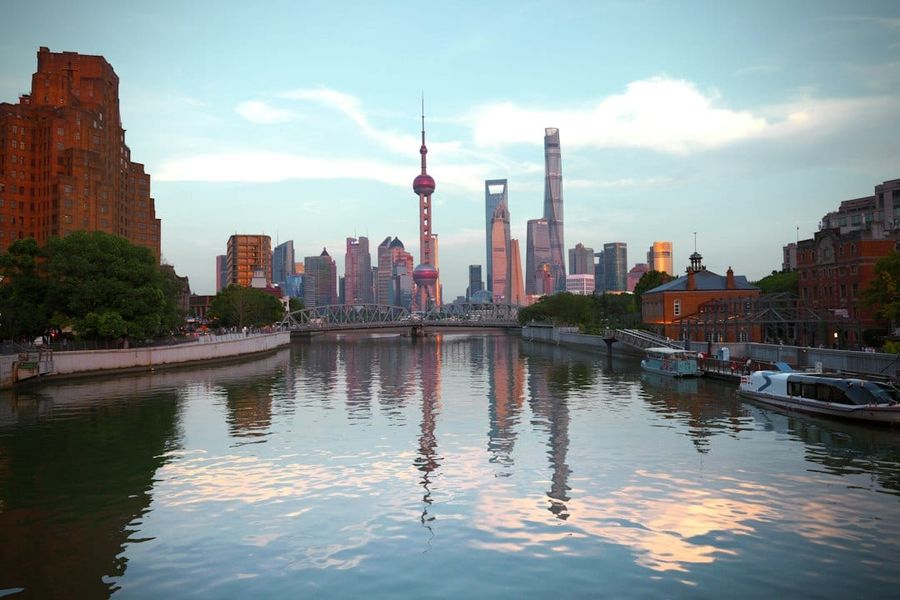
- Day 2 morning: Walk The Bund at sunrise, then explore Yu Garden and the old city streets.
- Day 2 afternoon: Ride Metro Line 2 back to Pudong for your onward flight to Seoul, Tokyo, or Hong Kong.
Budget estimate: around ₱8,000–₱12,000 for airport transfers, meals, and a mid-range hotel—perfect for breaking up a long journey.
Itinerary 2: 6-day Beijing gateway (requires a Chinese tourist visa)
For Filipino travelers, anything longer than 24 hours in mainland China requires a visa. This classic route is worth the paperwork.
- Day 1: Arrive at Beijing Capital (PEK) or Daxing (PKX). Take the Airport Express or Daxing airport metro to the city center.
- Day 2: Tiananmen Square, the Forbidden City, and a sunset walk along the Jingshan Park ridge.
- Day 3: Great Wall at Mutianyu by tourist bus or private car; it is less crowded than Badaling and easier for families.
- Day 4: Temple of Heaven, the hutongs around Houhai, and a Peking duck dinner.
- Day 5: Day trip to the Summer Palace via Subway Line 4.
- Day 6: Depart for your next Asian hub or back to Manila.

Itinerary 3: Multi-city Asia routing with a China stop
If you hold an eligible passport, a Manila → Shanghai → Tokyo or Manila → Beijing → Seoul routing lets you add China without an extra visa. Philippine passport holders can replicate the effect by securing a Chinese visa first, then building the same circuit.
A well-structured itinerary might look like: Manila → Shanghai (2–3 days) → Xi’an (2 days) → Beijing (3 days) → Seoul or Tokyo. Use high-speed rail between Shanghai and Beijing, and an overnight train or flight to Xi’an.
Planning your China stopover? Mesho can review your flight routing, check which visa rules apply to your passport, and build a seamless multi-city Asia itinerary.
Common Pitfalls and Immigration Reminders
- Assuming the Philippines is on the 144/240-hour list. It is not. Double-check the latest eligible-country list before you book; policies can change, but do not rely on hope.
- Booking a return-only ticket. Manila → Shanghai → Manila does not qualify as transit. You need a confirmed onward ticket to a third destination.
- Using a standby or unconfirmed onward ticket. Immigration wants a confirmed reservation, not a placeholder.
- Overstaying the 24-hour window. The clock starts from your arrival time, not your hotel check-in. Penalties include fines and possible future entry bans.
- Forgetting hotel registration. If you stay overnight anywhere other than a licensed hotel, you must register at the local Public Security Bureau within 24 hours. Licensed hotels register you automatically.
- Mixing up Hong Kong/Macau with mainland China. They have separate immigration systems. A flight Manila → Hong Kong → Shanghai counts as entering mainland China from a third region, which can help satisfy the transit rule.
- Assuming an APEC Business Travel Card covers tourism. Philippine-issued ABTCs with “CHN” on the back allow business visits of up to 60 days, but not leisure travel.
Quick Summary
- The 144-hour transit program has been expanded to 240 hours, but ordinary Philippine passport holders are not eligible.
- Filipinos can use 24-hour visa-free transit for short layovers with a confirmed onward ticket to a third country.
- For longer stays, Philippine passport holders need a Chinese tourist visa (L visa).
- Top gateways are Shanghai Pudong/Hongqiao and Beijing Capital/Daxing.
- Keep printed onward tickets, hotel bookings, and a clear itinerary ready for immigration.
Related Reading
- China Visa Requirements for Philippine Passport Holders in 2026
- Xi’an’s Terracotta Warriors and Muslim Quarter: A Cultural Day Trip
- MSC Fly & Cruise October 2026: Shanghai, Japan & Philippines Route Guide
Ready to Experience China?
Whether you need a visa, a 24-hour layover plan, or a curated multi-city Asia journey, Mesho is your gateway to a seamless China experience.
Explore Mesho China ToursAuthor’s Note
Grace Villareal is a Taipei-based travel editor who has spent years tracking border and entry rules across Northeast Asia. Her advice: never assume a stopover is visa-free just because the itinerary looks convenient. A ten-minute document check before booking can save you a missed flight and a ruined trip.


