


You have waited months—perhaps years—for this moment. The flight from Manila touches down in Tel Aviv, and suddenly you are no longer in the Philippines. You are in the land where everything began. The excitement is overwhelming, a flutter in your chest as the bus winds toward Jerusalem and the golden dome appears on the horizon. But here is what no one tells you until you are already there: the stones of the Old City are unforgiving, the summer sun in Jericho is relentless, and the dress code at the Church of the Holy Sepulchre is strictly enforced. The spiritual high of walking where Jesus walked can be dimmed by blisters, sunburn, or the embarrassment of being turned away at a shrine because your shoulders are bare.
This guide was written for Filipino Catholic pilgrims who want to arrive prepared—body, mind, and soul. Inside, you will find what to wear at churches, mosques, and the Western Wall; how to choose footwear that carries you across ancient terrain; how to read the Holy Land's dramatic weather; and how to prepare your heart for the emotional weight of this journey. Because when you stand at Calvary, the last thing you want to worry about is your shoes.
Dressing with Reverence: Modest Dress Codes for Sacred Sites
At every sacred site in the Holy Land, your clothing is a silent prayer. It signals humility, respect, and an understanding that you are entering a space where heaven and earth have met. For Filipino pilgrims, this is deeply familiar—like dressing for Simbang Gabi, only the nave is two thousand years old and the stone floor has been kissed by generations of the faithful.
Churches and Basilicas
Christian holy sites—such as the Church of the Nativity in Bethlehem, the Church of the Holy Sepulchre in Jerusalem, and the Basilica of the Annunciation in Nazareth—require modest dress for entry. For women, this means sleeves that cover at least to the elbow and skirts or trousers that fall below the knee. Shoulders must be covered; a light scarf or shawl tucked into your daypack is your most versatile companion. For men, long trousers and shirts with sleeves are expected. Sleeveless tops, shorts, and revealing necklines will result in denial of entry, no matter how far you have traveled.
Mosques and Muslim Holy Sites
When visiting sites like the Dome of the Rock or the Al-Aqsa Mosque compound, modesty rules become even more exacting. Women must cover their hair, arms, and legs completely. A long, loose skirt and a headscarf that covers all hair are essential. Men should wear long trousers and shirts with sleeves. Footwear is removed before entering prayer halls, so slip-on shoes make this transition seamless. Remember, you are a guest in a living house of worship. Observing these customs with grace opens doors to warm hospitality and quiet mutual respect.
The Western Wall
At the Western Wall, Judaism's most sacred prayer site, the atmosphere is intensely devotional. Men are required to cover their heads with a kippah, provided at the entrance if you do not have your own. Women should dress modestly with covered shoulders and knees, and many choose to cover their hair as a sign of respect. The plaza is divided into men's and women's sections, so be mindful of the boundaries. Approach the ancient stones with reverence, and you will feel the weight of millennia of prayer pressed into every crack and crevice.
The Ground Beneath Your Feet: Footwear for Holy Terrain
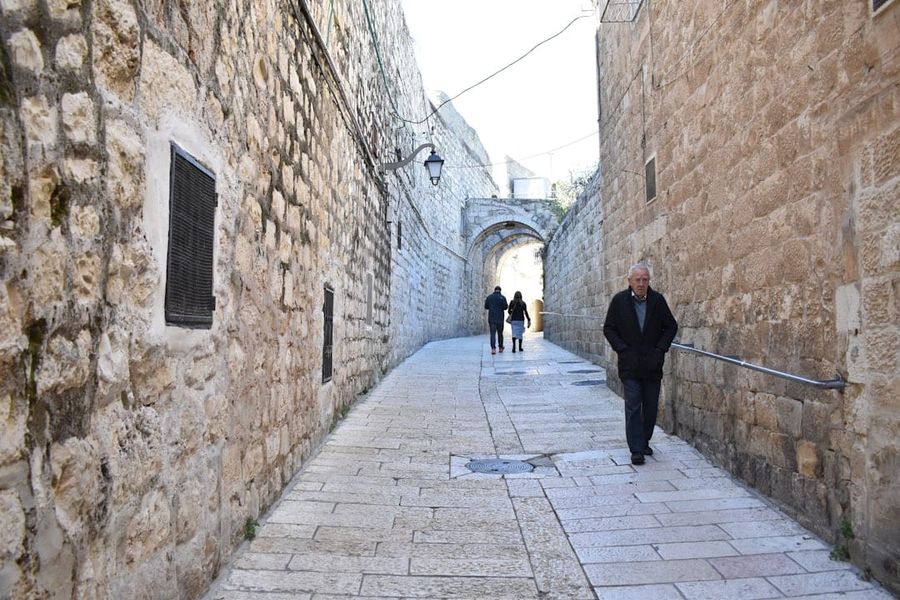
The cobblestones of the Via Dolorosa, the uneven steps of the Mount of Olives, and the rocky paths around the Sea of Galilee were not designed for fashion. They were designed for endurance. A typical Holy Land pilgrimage day involves 12,000 to 18,000 steps across terrain that is slippery, steep, and unforgiving. When you walk the path Jesus walked, you want every step to be an act of prayer—not a negotiation with pain.
Leave the sandals and heels at home. Instead, invest in a pair of well-broken-in walking shoes or lightweight hiking trainers with thick, cushioned soles and excellent ankle support. Trail running shoes with aggressive tread patterns perform well on the dusty paths of Masada and the polished limestone of Jerusalem's Old City. Break them in for at least three weeks before departure—new shoes on Day One of a pilgrimage are a recipe for misery.
Consider packing a second pair to alternate every other day; this allows damp insoles to dry and reduces pressure-point fatigue. Moisture-wicking socks in merino wool or synthetic blends prevent blisters far better than cotton. When you kneel at the stone of Calvary, you want your focus on prayer, not on the throbbing in your arches.
Reading the Skies: Weather Across the Holy Land
The Holy Land is not one climate but many. In a single day, you can descend from the cool hills of Jerusalem to the scorching valley of Jericho, experiencing a temperature swing of 15°C or more. Understanding this rhythm helps you pack wisely and keeps your attention on the sacred rather than the uncomfortable.
Summer Heat in Jericho and the Jordan Valley
From June through September, Jericho and the Jordan Valley become furnace-like. Daytime temperatures regularly exceed 40°C, and the sun reflects off pale stone and desert sand with blinding intensity. If your pilgrimage falls in these months, lightweight, breathable fabrics in natural fibers—cotton and linen—are essential. Light colors reflect heat; dark colors absorb it. A wide-brimmed hat and UV-blocking sunglasses are not accessories here. They are survival gear. The baptismal site at the Jordan River offers spiritual refreshment, but the walk there demands sun-smart preparation.
Winter Chill in Bethlehem and Jerusalem
December through February bring a different challenge. Bethlehem and Jerusalem sit at elevation, and winter temperatures can drop to 5°C at night. Rain is frequent, and occasional cold winds sweep across the Judean hills. A waterproof jacket, a warm fleece layer, and a compact umbrella should find space in your luggage. The Grotto of the Nativity is underground and chilly even in mild weather, so a cardigan or shawl you can drape over your shoulders during Mass is invaluable. There is something profoundly moving about praying in Bethlehem's cold air—just be sure your jacket is warm enough to let you stay present.
The Layering Strategy
The single most effective approach to Holy Land weather is layering. Mornings in Jerusalem can be crisp, afternoons in the Jordan Valley sweltering, and evenings on the Mount of Beatitudes breezy. A moisture-wicking base layer, a breathable long-sleeve shirt, and a packable windbreaker give you flexibility without bulk. Peel layers off as the day warms; add them back as the sun sets. This strategy keeps your luggage light and your body comfortable, freeing your mind to meditate on the Beatitudes instead of your thermostat.
Planning your pilgrimage wardrobe and logistics?
Mesho Travel's Holy Land specialists have guided hundreds of Filipino pilgrims through every detail—from dress-code reminders to packing checklists. Explore our curated Holy Land tour packages to see how we prepare travelers for this extraordinary journey.
Preparing the Heart: Spiritual Readiness for Pilgrimage
A Holy Land pilgrimage is not a vacation. It is a spiritual encounter that will rearrange something inside you. The places you will visit are not museums. They are living testimonies to the mysteries of your faith. Preparing your heart is as important as packing your bag. In fact, the two are inseparable: every practical choice you make—what you wear, what you carry, how you rest—becomes part of your offering.
Journaling and the Rosary
Bring a small journal. Not for documenting what you ate or how much you spent, but for capturing the movements of grace. Write at the end of each day: What surprised you? Where did you feel God? The Sea of Galilee looks different when you record the sound of the waves and the color of the light at 5:00 in the morning.
Your rosary should travel in your pocket, not your suitcase. Pray the Joyful Mysteries in Nazareth, the Sorrowful Mysteries on the Via Dolorosa, the Glorious Mysteries at the empty tomb. The physical act of moving bead by bead through ancient streets roots your prayer in geography. It becomes incarnational. You are no longer recalling the Annunciation from a chapel in Quezon City. You are standing in the very place the Angelus was first spoken.
Group Prayer Dynamics
Most Filipino pilgrims travel in groups led by a spiritual director or chaplain. Embrace this communal rhythm. Group rosaries on the bus, shared Mass at holy sites, and evening reflections create a spiritual scaffolding that holds everyone together. There will be personalities that test your patience. There will be schedules that feel rushed. Offer these irritations as part of your pilgrimage. The person who snores in the hotel room next to you is your brother or sister in Christ. The delayed bus is an invitation to practice the patience of the saints.
Emotional Readiness
Stand at the Western Wall, and you may weep without knowing why. Touch the stone of Calvary, and grief may rise in your throat for every loss you have ever carried. The Holy Land has a way of unlocking doors you did not know were closed. This is normal. It is the purpose of pilgrimage.
Before you depart, spend time in silent prayer. Ask God what He wants to heal, reveal, or confirm during this journey. Share your intentions with your prayer group at home. And give yourself permission to feel overwhelmed. You are walking on hallowed ground. The emotions that surface are part of the gift.
The Essential Packing List
Beyond clothing and footwear, a few items will make your pilgrimage smoother and more prayerful:
- Reusable water bottle: The dry climate dehydrates quickly. Many sites have refill stations, and your bottle becomes a daily companion on long walking days.
- Sun protection: SPF 50+ sunscreen, lip balm with SPF, and a wide-brimmed hat. The Middle Eastern sun does not forgive sunburn.
- Small backpack for day trips: A lightweight 15–20 liter daypack carries your water, scarf, journal, and small purchases. Ensure it has padded straps; you will wear it for hours.
- Denomination-appropriate items: Filipino Catholics often bring blessed rosaries, scapulars, holy oil, or prayer cards. Pack these in your carry-on, not checked luggage, so they are always with you.
- Personal medication: Pharmacies in Israel and Palestine carry most common medicines, but bring a full supply of your prescriptions plus basic remedies for headaches, stomach upset, and allergies.
- Power adapter: Israel uses Type C and Type H plugs. A universal adapter keeps your phone charged for photos and group coordination.
- Modest swimwear: If your itinerary includes the Dead Sea, bring a modest one-piece or athletic swimwear. Bikinis and trunks are culturally inappropriate.
"The Holy Land does not need you to perform. It asks you to be present. Every scarf, every water bottle, every blister pad is part of the yes you are offering."
Ready to Walk Where Faith Began?
The stones of Jerusalem have been waiting for your footsteps. The Sea of Galilee has been holding the reflection of the sky where you will finally stand. Every preparation you make—every blister prevented, every scarf packed, every rosary decade prayed—is an act of love for the journey ahead.
Mesho Travel's PATHWAYS 2026 Holy Land Pilgrimage is designed for Filipino Catholics who want more than a tour. It is a twelve-day immersion in the land of Scripture, led by experienced spiritual guides who understand both the logistics and the longings of a pilgrim's heart. Spaces are limited, and early preparation ensures you arrive ready—not anxious.
Ready to walk where faith began? Reserve your place on PATHWAYS 2026 and let Mesho guide you home.
Quick Summary
- Cover shoulders and knees at all sacred sites; carry a scarf or shawl for churches, mosques, and the Western Wall.
- Wear broken-in walking shoes with thick soles and ankle support; never bring new footwear.
- Layer your clothing to handle temperature swings between Jerusalem's hills and Jericho's valley.
- Prepare your heart with a journal, daily rosary, and openness to emotional breakthroughs.
- Pack a reusable water bottle, high-SPF sun protection, a small daypack, and denomination-appropriate prayer items.
Related Reading
- Jordan's Petra and the Dead Sea: Extending Your Holy Land Pilgrimage from Israel
- Holy Land Tour Packages | Sacred Pilgrimage Tours | Mesho Travel
About the author: Elena Ramos is a long-time Catholic pilgrimage tour leader who has accompanied Filipino pilgrims to the Holy Land, Rome, and Lourdes for over a decade. She believes that proper preparation deepens spiritual openness—and that every blister avoided is one more moment of attention given to God.


