


For many Filipino travelers, Taiwan begins and ends with Taipei's neon-lit night markets and the silhouette of Taipei 101. But cross the mountains that cradle the capital, and the island reveals a quieter, more soulful face. Here, emerald lakes hold the creation stories of the Thao people, century-old cedars scrape the sky, and narrow-gauge railways climb through cloud forests that feel worlds away from the city bustle. This is central Taiwan—an interior of living culture and vertical landscapes that deserves its own chapter in your travel story.
In this guide, we map a 3-day cultural nature itinerary connecting Sun Moon Lake and Alishan. You will learn the indigenous significance of these lands, navigate the transport web that links them, and discover where to sleep, sip tea, and watch the sun paint the Central Mountain Range in shades of amber and gold. If you are ready to see Taiwan beyond Taipei, read on.
Why Taiwan's Central Mountains Matter
Taiwan's spine is the Central Mountain Range, a wall of peaks that runs north to south and historically shielded indigenous nations from colonial forces arriving on the western plains. Today, these mountains remain the homeland of groups such as the Thao around Sun Moon Lake and the Tsou in the Alishan highlands. Their languages, oral histories, and ceremonial cycles are inseparable from the landscape itself.
The region is also the cradle of Taiwan's high-mountain tea culture. Nantou County, which wraps around Sun Moon Lake, produces the celebrated Dong Ding Oolong and other semi-oxidized teas cultivated at elevations between 600 and 1,000 meters. The cool mist, mineral-rich soil, and dramatic temperature swings create leaves with a creamy body and floral finish that connoisseurs across East Asia prize.
"The lake is not scenery for us. It is where our ancestors walked, where our stories begin. When you visit, you walk through our memory."
— Thao community guide, Ita Thao
Sun Moon Lake: The Thao Heartland
At 748 meters above sea level, Sun Moon Lake is Taiwan's largest alpine body of water. Its name comes from the distinct shape: the eastern lobe is round like the sun, while the western lobe curves like a crescent moon. For the Thao people, the lake is Lalu—a sacred origin place where their ancestors emerged and where their highest spiritual traditions still anchor.
Ita Thao Village, on the lake's southeastern shore, is the primary settlement where Thao language, weaving, and ceremonial song remain visible to visitors. The Thao Cultural Village offers performances of traditional song and dance, but the more authentic encounters happen in the village itself: at family-run eateries serving thinusa (millet-based dishes), or along the waterfront where elders still launch wooden canoes during the annual Harvest Festival.
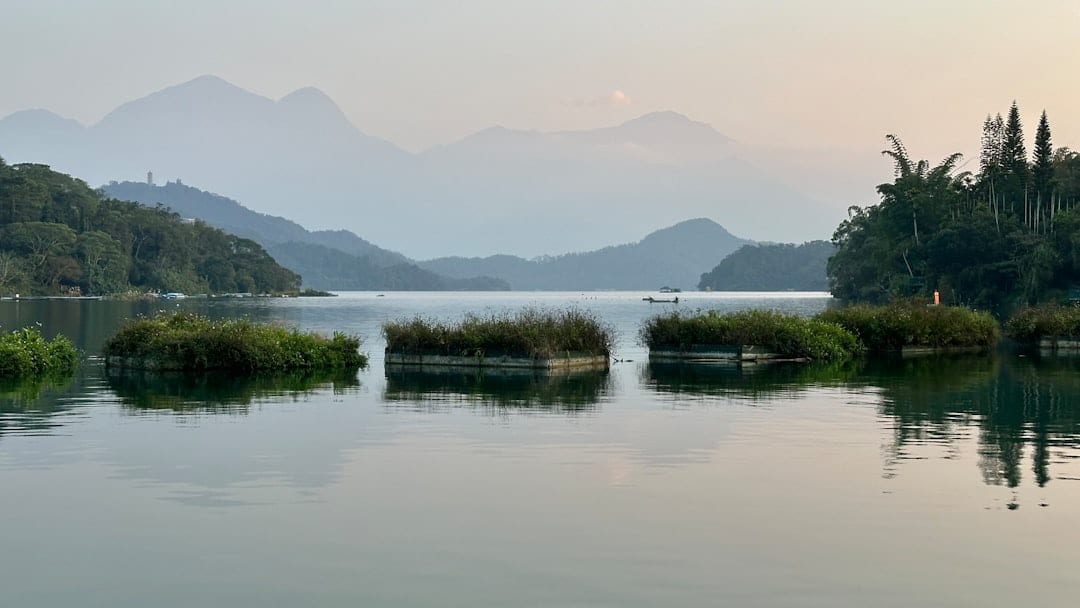
The lake's surrounding hills are carpeted in tea terraces. A short drive toward Yuchi Township brings you to family-owned tea houses where you can taste Dong Ding Oolong and learn the gongfu brewing style. Unlike the quick cup-and-go culture of city cafes, mountain tea service here is slow, rhythmic, and deeply social—an invitation to pause that mirrors the lake's still surface.
Alishan: Where Cedars Touch the Sky
Southeast of Sun Moon Lake, the road climbs higher into Alishan National Forest Recreation Area, a realm of ancient cedars, rhododendron thickets, and mist that rolls in like ocean tides. At elevations between 2,000 and 2,700 meters, Alishan is home to the Tsou people, whose legacy lives in place names, hunting trails, and seasonal rituals that honor the mountain spirits.
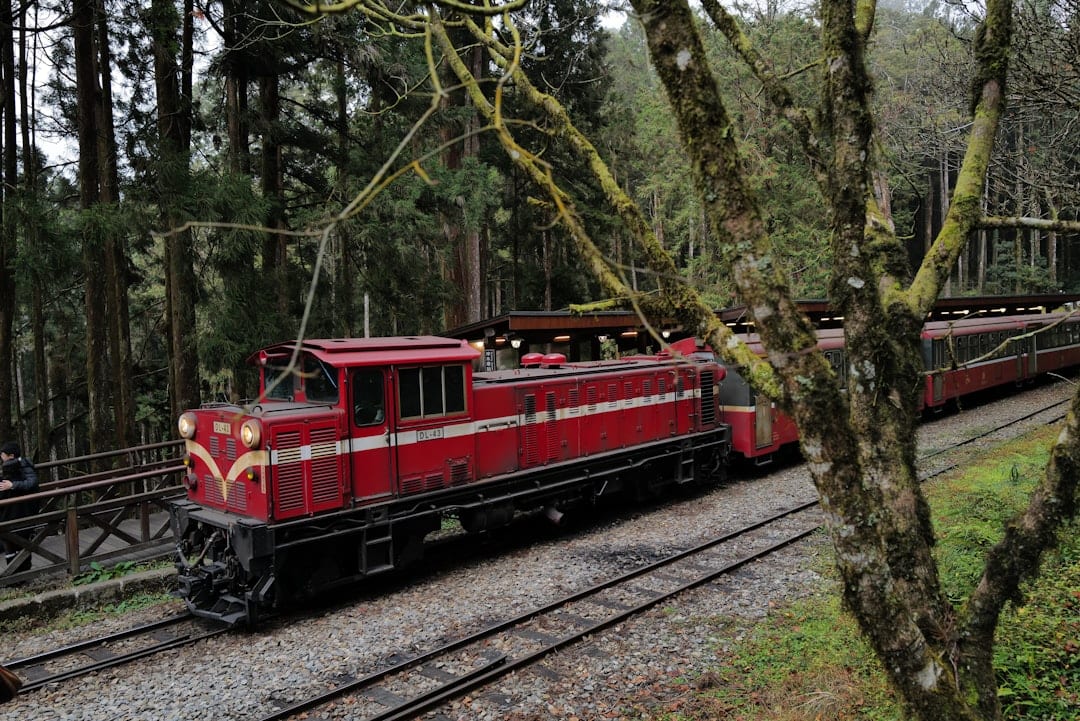
The most storied thread in Alishan's modern identity is the Alishan Forest Railway. Built during the Japanese colonial era to haul prized Alishan cypress (hinoki) down to the plains, the narrow-gauge line now carries travelers instead of timber. Its switchback climbs, stone viaducts, and tunnel sequences are regarded as an engineering marvel—and riding the vintage rail cars through moss-draped forest remains one of East Asia's most atmospheric rail experiences.
Your 3-Day Mountain Itinerary
This routing assumes a visa-free arrival from Manila (Philippine passport holders currently enjoy 14-day visa-free entry; confirm your e-Arrival Card before departure). The loop can be done independently or as part of a curated Taiwan package.
Day 1 — Taipei to Sun Moon Lake: Arrival on Sacred Water
- Morning: Board the Taiwan High Speed Rail (HSR) from Taipei Main Station to Taichung. The journey takes roughly 50 minutes. From Taichung, connect via Nantou Bus or a pre-arranged charter to Sun Moon Lake (2 to 2.5 hours).
- Afternoon: Check in, then walk the Shuishe Lakeside Trail to acclimate to the 748-meter altitude. Visit Wenwu Temple, perched above the lake with sweeping views of the crescent-shaped western shore.
- Evening: Dine in Ita Thao Village. Try Assam black tea-smoked chicken, a regional specialty that bridges local Thao culinary traditions with the area's tea heritage.
Day 2 — Sun Moon Lake to Alishan: Tea, Temples, and Mountain Roads
- Early morning: Take the first lake ferry from Shuishe Pier to Ita Thao Pier. The morning mist rising off the water is worth the early alarm. Pause at Xuanguang Temple, accessible only by boat, before returning.
- Mid-morning: Visit a tea house in Yuchi for a guided Dong Ding Oolong tasting. Learn to read the unfurling leaves and detect notes of orchid and toasted grain.
- Afternoon: Transfer to Alishan. The direct mountain bus via Provincial Highway 21 takes approximately 3 hours and offers dramatic ridgeline views. Alternatively, backtrack to Chiayi and ascend via the Alishan Forest Railway or shuttle bus.
- Evening: Settle into your mountain lodging. After dinner, step outside—the altitude and distance from urban light pollution make for exceptional stargazing.
Day 3 — Alishan: Sunrise Among the Giants
- Pre-dawn: Rise before 4:00 AM and board the Zhushan Line of the Alishan Forest Railway (or a pre-booked sunrise shuttle) to Zhushan Station, the island's most famous sunrise viewing platform. Watch the sun ignite the Yushan massif across the valley.
- Morning: Walk the Giant Trees Trail among cedars aged over 1,000 years. The Sisters Ponds and Shouzhen Temple add cultural texture to the forest immersion.
- Afternoon: Descend to Chiayi by railway or bus, then connect via HSR back to Taipei or onward to your next destination.
Transport at a Glance
| Route | Mode | Duration | Est. Cost (PHP) |
|---|---|---|---|
| Taipei → Taichung | HSR | ~50 min | ₱800–1,200 |
| Taichung → Sun Moon Lake | Bus / Charter | ~2.5 hr | ₱400–800 |
| Sun Moon Lake → Alishan | Mountain Bus | ~3 hr | ₱500–700 |
| Chiayi → Alishan | Forest Railway / Bus | ~2.5–3 hr | ₱400–600 |
| Alishan → Taipei | Bus + HSR | ~4–5 hr | ₱1,000–1,500 |
Prices are approximate and vary by season, booking window, and exchange rates. Chartered transfers cost more but save time and offer flexibility for groups.
Planning your mountain loop?
Coordinating HSR tickets, mountain buses, and sunrise rail reservations across two languages can feel overwhelming. Mesho Travel And Tours handles the routing, bookings, and local guides so you can focus on the landscape.
Explore Taiwan PackagesMust-Do Experiences
These four experiences form the cultural and sensory core of the itinerary. Do not rush them.
1. Boat Ride Across Sun Moon Lake
The ferry network connects Shuishe, Ita Thao, and Xuanguang piers. Early morning crossings offer mirror-still water and the best light for photography. From the boat, you understand why the Thao consider this a mirror of the cosmos.
2. Alishan Forest Railway
Whether you ride the full ascent from Chiayi or just the Zhushan sunrise line, the click-clack of the narrow gauge, the smell of cypress, and the sudden emergence above the cloud line create a journey that feels suspended in time. Book sunrise train tickets at least one day ahead—they sell out fast.
3. Zhushan Sunrise Viewing
At 2,451 meters, the Zhushan viewing deck looks east toward Yushan (Jade Mountain), Taiwan's highest peak. On clear mornings, the sunlight strikes Yushan's summit first, then floods the sea of clouds below. Bring a thermos of tea and a down jacket—even summer dawns here can dip to 8°C.
4. High-Mountain Tea Tasting
Skip the souvenir-shop bags. Instead, sit for a proper tasting in a Yuchi tea house or an Alishan mountain farm. You will learn why Taiwanese oolong commands such reverence: the altitude, the hand-plucking standards, and the precise roasting that transforms leaf into liquid silk.
Where to Stay: Accommodation & Budget Estimates
Both destinations offer a spectrum of lodging, from restored heritage properties to intimate family guesthouses. Below are verified options with approximate nightly rates in Philippine Pesos.
| Property | Type | Location | Est. Rate/Night (PHP) |
|---|---|---|---|
| The Lalu Sun Moon Lake | Luxury Resort | Shuishe | ₱12,000–18,000 |
| Hotel Del Lago | Boutique Hotel | Yuchi | ₱4,500–7,500 |
| Ita Thao Lakeside B&Bs | Boutique Guesthouse | Ita Thao | ₱3,000–5,000 |
| Alishan House | Historic Hotel | Alishan Recreation Area | ₱5,500–9,000 |
| Alishan Shermuh Int'l Tourist Hotel | Mid-Range Hotel | Alishan | ₱4,000–6,500 |
Rates fluctuate by season and room category. Breakfast is often included at mountain properties. Book early for cherry blossom season (March–April) and autumn foliage (October–November).
Total trip budget estimate: A comfortable 3-day, 2-night independent trip runs between ₱18,000 and ₱35,000 per person, excluding flights from Manila. This covers mid-range lodging, HSR tickets, local transport, meals, and activity fees. Luxury stays or private charters push the range to ₱40,000+.
Best Seasons to Visit & Weather Considerations
Taiwan's central mountains create their own microclimates. What is true in Taipei rarely applies here.
- Spring (March–May): Cherry blossoms erupt across Alishan in late March, and Sun Moon Lake enjoys mild days averaging 18–22°C. This is peak season—book trains and hotels two months ahead.
- Summer (June–August): Warm but wet. Afternoon thunderstorms are common, and typhoons can disrupt mountain roads and railway service. If you must travel in summer, build buffer days.
- Autumn (September–November): Arguably the best window. Typhoon risk drops, skies clear for sunrise viewing, and temperatures hover between 15–20°C. Autumn foliage colors the slopes in late October.
- Winter (December–February): Cold but crowd-free. Morning temperatures at Alishan can fall below freezing. Pack thermal layers and a windproof jacket. Sunrise visibility is often excellent.
Filipino traveler note: If you are coming from Manila's tropical climate, the temperature swing can be jarring. A lightweight down jacket is essential year-round for Alishan's pre-dawn sunrise trips. Layering is key: mornings are cold, midday warms quickly, and lake evenings carry a damp chill.
Cultural Notes & Insider Tips
- Respect sacred spaces: Lalu Island in Sun Moon Lake is sacred to the Thao and has restricted access. Observe signage, and do not assume all waterfront areas are open for casual swimming or photography.
- Book sunrise trains early: The Zhushan Line tickets for Alishan's sunrise service are released daily and sell out by mid-afternoon the day before. Your hotel concierge or a local guide can secure these for you.
- Cash remains king in the mountains: While Taipei is card-friendly, many tea houses, small eateries, and guesthouses in Ita Thao and Alishan prefer cash. Withdraw enough New Taiwan Dollars in Taichung or Chiayi before ascending.
- Altitude awareness: At 2,400+ meters, some travelers experience mild altitude fatigue. Hydrate, avoid heavy alcohol on your first night, and pace your walking.
- Learn a few Thao greetings: A simple "Marhai" (hello) or "Muzu" (thank you) goes a long way in Ita Thao. Local guides deeply appreciate the gesture.
Ready to Experience Taiwan's Mountain Soul?
Let Mesho Travel And Tours curate your Sun Moon Lake and Alishan journey. From HSR reservations and sunrise rail bookings to indigenous community guides and hand-selected tea house visits, we handle the details so you can immerse fully in Taiwan's central mountain culture.
View Taiwan PackagesQuick Summary
- Sun Moon Lake is the sacred homeland of the Thao people—explore Ita Thao Village and taste Dong Ding Oolong from nearby terraces.
- Alishan's ancient cedars and narrow-gauge forest railway offer one of East Asia's most atmospheric mountain experiences.
- A 3-day loop (Taipei → Sun Moon Lake → Alishan → Taipei) is best done via HSR to Taichung, then mountain bus and forest rail connections.
- Budget ₱18,000–35,000 per person for mid-range lodging, transport, meals, and activities excluding Manila flights.
- Autumn (September–November) offers the clearest skies and most reliable sunrise viewing; spring brings cherry blossoms but larger crowds.
Related Reading
- Taiwan 5-Day Itinerary for First-Time Filipino Travelers: Taipei to Jiufen — Perfect if you want to combine city culture with your mountain loop.
- Taiwan Night Markets Decoded: Complete Guide for Filipino Food Lovers — Essential reading for the Taipei bookends of your trip.
- Taiwan Visa-Free Entry for Filipinos: What You Need to Know Before You Fly — Confirm your documents, e-Arrival Card, and entry procedures before departure.
Author's Note — Grace Villareal: I have lived and traveled across Northeast Asia for over a decade, and Taiwan's central mountains remain the region's most underrated cultural corridor. The Thao and Tsou communities are not museum pieces—they are living nations with active ceremonies, contested land rights, and warm hospitality for visitors who arrive with respect. If this itinerary has sparked your curiosity, reach out to Mesho. We work with local guides in Ita Thao and Alishan who can open doors that independent travelers rarely find.


