


You touch down at Incheon, ride the AREX into Seoul, and within hours you are standing at the Gyeongbokgung gate, camera in hand, convinced you have unlocked Korea. Most Filipino travelers stop there. Seoul dominates our K-drama-fueled imagination so completely that the rest of the peninsula fades into a blur of subway transfers and duty-free shopping.
But Korea is not a single city. It is a coastline of mountain temples, a rhythm of shared meals and poured drinks, a protocol of bows and quiet shoes inside palace walls. Busan, the country's second city on the southeastern coast, carries a cultural identity distinct from Seoul's urban rush—slower, more maritime, and deeply traditional in ways that surprise first-time visitors.
This guide takes you beyond Seoul's city limits. You will learn the etiquette of temple stays at Beomeosa, navigate the unspoken rules of Jagalchi Market, wear a hanbok through Gyeongbokgung with confidence, share soju without causing offense, and time your visit to catch the Busan International Film Festival at its peak. Whether you are a K-culture fan or a cultural explorer, these layers of Korean life are worth the train ride south.
Busan's Distinct Identity: Temples, Markets, and Coastal Soul
Seoul pulses with energy. Busan breathes. The difference hits you the moment the KTX emerges from the final tunnel and the sea appears beyond the apartment blocks. Busan is Korea's largest port city, but it is also its mountain-backed spiritual counterweight to the capital.
Beomeosa Temple: A Mountain Retreat Above the City
Founded in 678 AD, Beomeosa sits on the slopes of Geumjeongsan, a 30-minute bus ride from central Busan. Unlike Seoul's city-center temples, which can feel like cultural islands surrounded by traffic, Beomeosa is enveloped in forest. The approach alone—cedar-lined paths, stone lanterns, and the smell of pine—sets a different tone.
The temple stay program here is one of Korea's most accessible for foreign visitors. You do not need to speak Korean, but you do need to understand the etiquette. Arrive before the 4:00 PM check-in. Wear modest clothing—no shorts, no sleeveless tops, no loud patterns. Shoes come off before every wooden hall. During evening chanting, sit cross-legged on the floor and follow the monastics' lead. Photography inside the main Daeungjeon Hall is prohibited. The wake-up bell rings at 4:00 AM for morning meditation, and attendance is expected if you are staying overnight.
Meals are communal and vegetarian. You will receive four bowls stacked in a specific order. Do not start eating until the head monk begins, and finish everything—leaving rice is considered disrespectful. A temple stay at Beomeosa costs roughly ₱3,500–₱5,500 per night including meals.
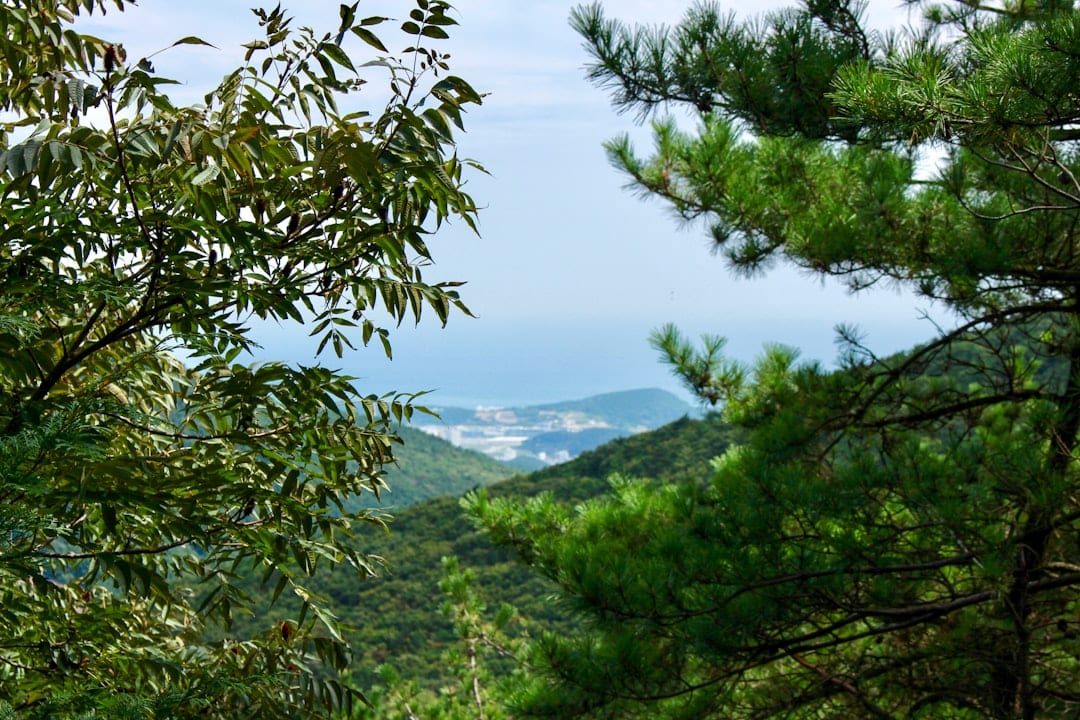
Beomeosa Temple, nestled in the mountains above Busan, offers one of Korea's most serene temple stay experiences.
Haedong Yonggungsa: Where Temple Meets Tides
If Beomeosa is Busan's mountain soul, Haedong Yonggungsa is its coastal heart. This is one of the few major temples in Korea built directly on the shoreline. The stone stairway descends past a twelve-zodiac corridor to a complex of shrines perched on volcanic rock, waves breaking below the Buddha statues. Sunrise here is non-negotiable—arrive by 6:00 AM to watch the light hit the sea-facing Daeungjeon Hall. From Busan Station, Bus 181 gets you there in about an hour.
Jagalchi Market: Reading the Room
Korea's largest seafood market is not a polished tourist corridor. It is a working port market where Busan matriarchs—Jagalchi ajumma—have sold the morning catch for decades. Do not touch fish without asking. Pointing is acceptable, but negotiate before the vendor cleans or prepares anything. If you want to eat on-site, the upstairs restaurants will cook what you buy downstairs for a small fee, usually ₱400–₱700 per person.
The golden rule: do not haggle for sport. These women know the price of every species by the gram. A polite request for "ssage juseyo" (a little cheaper, please) is acceptable, but aggressive bargaining marks you as disrespectful. Try the hoe (sliced raw fish) or gwamegi (dried Pacific saury) if you are feeling adventurous.
Palace Etiquette: Walking Gyeongbokgung with Intention
Seoul's Gyeongbokgung Palace is magnificent, but it is also a site of living cultural protocol. Most visitors treat it as a backdrop for photos. If you want to experience it authentically, you need to understand the rhythms of conduct that govern the space.
Hanbok Rental Norms and Free Entry
Wearing a hanbok grants you free entry to Gyeongbokgung and the other four major palaces. Rental shops cluster around Anguk Station and along Bukchon Hanok Village. A standard two-hour rental costs ₱700–₱1,400; full-day rentals run up to ₱2,500. Choose traditional designs over cosplay variants—the palace staff appreciate authenticity.
When renting, bow slightly to the staff. Handle the garments with care; the chima (skirt) and jeogori (jacket) are tied, not zipped, so ask for help rather than forcing anything. Return the hanbok on time—late fees are strict, and Korean punctuality norms apply.
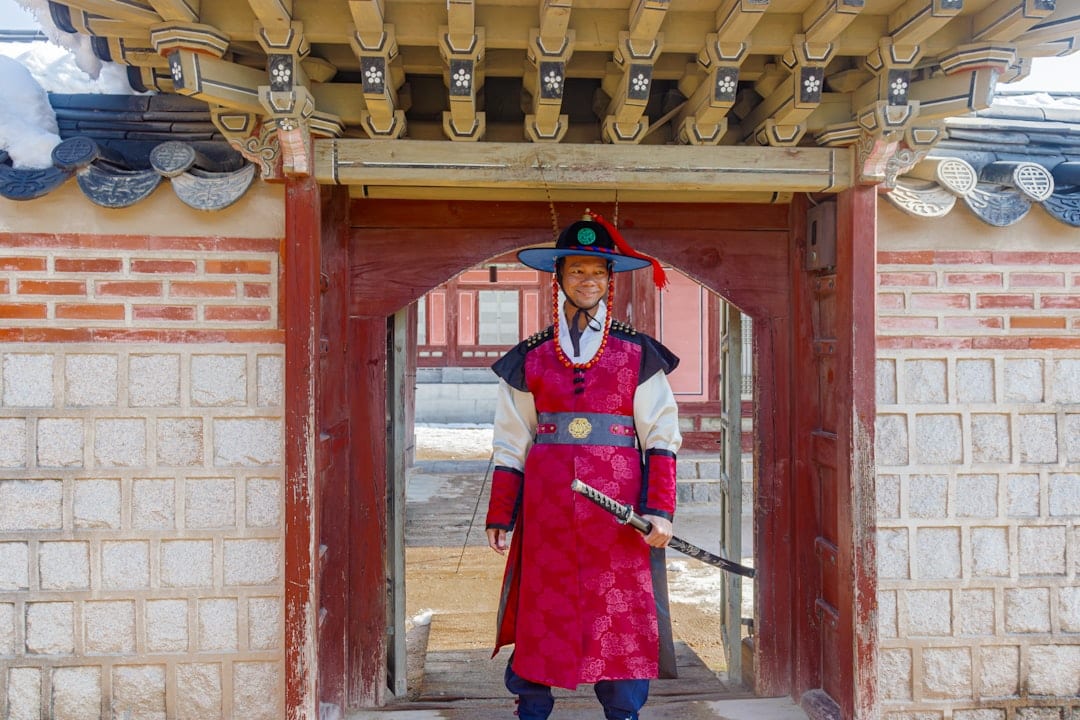
The changing of the guard ceremony at Gyeongbokgung Palace, a daily ritual steeped in Joseon Dynasty tradition.
The Changing of the Guard and Proper Conduct
The changing of the guard ceremony happens at 10:00 AM and 2:00 PM daily at Gwanghwamun Gate, except Tuesdays when the palace is closed. Arrive 15 minutes early to secure a front-row spot. During the ceremony, do not cross the performance line, do not touch the guards' uniforms, and keep your phone on silent. The guards are reenactors, but the ritual itself is treated with reverence.
Inside the palace grounds, walk on the marked paths, not the grass. The buildings are wooden and historic—leaning on pillars or walls is frowned upon. If you see a monk or a formal group in traditional dress, step aside and bow slightly. It is a small gesture that earns quiet appreciation.
Dining and Drinking Customs: The Unspoken Rules
Korean dining is communal by design. The table is a shared space, and the rules around it reflect a hierarchy of respect that runs through Korean society. For Filipino travelers, the parallels to our own pagkakaisa around a boodle fight are clear—but the specifics differ enough to cause awkward moments if you miss them.
Soju Protocol: Pouring, Receiving, and Refusing
Soju is rarely poured for yourself. The bottle moves around the table, and you pour for others using both hands if the person is older or of higher status. When receiving a pour, hold your glass with both hands as well. If you are drinking with close friends, one hand is acceptable, but the other hand should rest lightly on your forearm as a sign of respect.
Turn your head away from elders when taking a shot. It is a modesty gesture that signals deference. If you do not drink alcohol, say "mashil su eopseoyo" (I cannot drink) politely at the start of the meal. Most hosts will not pressure you, but they appreciate the clarity upfront.
BBQ Ordering and Shared Meal Etiquette
At a Korean BBQ restaurant, the eldest or the host usually orders. If you are splitting the bill evenly, discuss quantities before calling the server. A standard group order for four people is two portions of galbi or samgyeopsal, one jjigae, and rice. Let the staff handle the grilling unless they indicate you should do it yourself.
Do not start eating until the eldest picks up their chopsticks. When sharing banchan (side dishes), use the serving spoons provided; do not dig through a communal plate with your own chopsticks. Slurping noodles is acceptable, but speaking with a full mouth is not. When the meal ends, place your chopsticks and spoon neatly on the table—never sticking upright in the rice bowl.
"The first time I shared soju with a Busan ship captain, I poured with one hand. He laughed, corrected me gently, and we drank the night away. That small mistake opened every door in the city."
— Grace Villareal, Northeast Asia Travel Editor
Planning Your Korea Trip?
Mesho's Korea specialists can arrange temple stay bookings, hanbok rentals, and KTX tickets before you even leave Manila. Explore our Heartfelt Korea Summer 2026 package for a curated itinerary that covers Seoul, Busan, and the traditions in between.
Seasonal Cultural Events: Timing Your Visit
Korea's calendar is dense with festivals, but two stand out for travelers seeking culture over crowds.
Busan International Film Festival (BIFF)
The Busan International Film Festival runs every October, typically for ten days in the first half of the month. It is Asia's largest film festival and turns the Haeundae district into a red-carpet corridor. Even if you do not attend screenings, the open-air village along Busan Cinema Center is free to explore, and the late-night beachfront screenings draw thousands. Book accommodation at least two months ahead—prices spike and rooms vanish.
Spring and Autumn Palace Programs
Gyeongbokgung extends its hours during cherry blossom season (late March to early April) and autumn foliage (late October to mid-November), opening select gates for night viewing. Tickets for these limited evening programs sell out online within minutes. Check the Cultural Heritage Administration website at midnight Korean time, exactly 14 days before your desired date. The sight of Gyeongbokgung lit by traditional lanterns after dark is worth the effort.
Getting Around: KTX, T-Money, and Essential Apps
Practical logistics separate a smooth Korea trip from a frustrating one. Here is what Filipino travelers need to know.
Seoul to Busan by KTX
The KTX high-speed rail connects Seoul Station to Busan Station in roughly 2 hours and 15 minutes. Trains depart every 20–30 minutes from 5:30 AM to 11:00 PM. A standard-class ticket costs approximately ₱3,200–₱3,800 one way; first-class is roughly ₱4,500. Book through the Korail website or the KORAILTALK app. If you are traveling on a Friday evening or Sunday afternoon, reserve at least three days ahead.
T-Money Cards and Local Transport
Buy a T-Money card at any convenience store (CU, GS25, 7-Eleven) for ₱150–₱200 and load it with cash. The card works on subways, buses, and even taxis in Seoul, Busan, and most major cities. Transfers from subway to bus within 30 minutes receive a discount. Busan's subway system has six lines and covers most tourist zones including Haeundae, Seomyeon, and Busan Station. Signage is in Korean, English, Chinese, and Japanese.
Filipino-Friendly Apps
- Papago — Naver's translation app handles Korean-to-English (and Tagalog) better than Google Translate for menus, signs, and casual conversation.
- KakaoMap / Naver Map — Google Maps is unreliable in Korea. KakaoMap and Naver Map provide accurate walking directions, bus timings, and restaurant reviews. Both have English modes.
- Kakao T — Korea's dominant ride-hailing app. Register with a Philippine mobile number; payment can be cash or linked card.
- Visit Korea — The official Korea Tourism Organization app lists festival dates, palace schedules, and emergency numbers.
Quick Summary: Essential Takeaways
- → Busan is not Seoul-lite. It is a culturally distinct city with mountain temples, working seafood markets, and a slower maritime rhythm worth experiencing on its own terms.
- → Temple stays require etiquette. Modest dress, punctuality, and clean bowls at meals are non-negotiable at Beomeosa.
- → Hanbok grants free palace entry. Rent one near Anguk Station and observe guard ceremony protocols at Gyeongbokgung.
- → Soju and BBQ have hierarchy rules. Two-handed pouring, elder-first eating, and proper chopstick placement signal respect.
- → Book KTX and BIFF early. Weekend trains sell out fast, and Busan's October film festival requires accommodation reserved months ahead.
Related Reading
- Seoul, Busan & Jeju: The Perfect 10-Day South Korea Itinerary for Filipino Travelers
- Seoul Food: Korean Dining Etiquette and Drinking Culture for Travelers
- South Korea Visa for Filipinos 2026: Step-by-Step Application Guide and Requirements
"I have watched sunrise at Haedong Yonggungsa in every season, and it still catches me off guard. Korea's coastal east is where the country's traditions feel least performative and most alive. For Filipino travelers willing to look past Seoul's skyline, the reward is a version of Korea that few K-dramas ever show."
— Grace Villareal, Taipei-based Northeast Asia Travel Editor
Ready to Experience Korea Beyond the Capital?
Let Mesho curate your journey from Seoul's palaces to Busan's temples. We handle the KTX bookings, temple stay reservations, and local guides so you can focus on the culture.
Explore Heartfelt Korea Summer 2026


