


Rajasthan's Forts and Palaces: A 5-Day Cultural Circuit for Filipino Travelers
Most Filipino travelers picture India through a single frame: the Taj Mahal at sunrise, crowded and luminous. But Rajasthan—India's most photogenic state—deserves its own chapter. Here, sandstone forts rise from desert hills like golden ships, palace walls are inlaid with mirrors that catch candlelight, and bazaars smell of sandalwood, cumin, and freshly pressed textiles. The best part? This royal circuit is more accessible from the Philippines than many assume. With direct flights from Manila to Delhi or Mumbai, a short domestic hop lands you in Jaipur, the gateway to a 5-day journey through Jaipur, Jodhpur, and Udaipur.
This guide blends the practical with the poetic: a real itinerary, crowd-timing strategies, etiquette essentials, safe dining tips, and the difference between a haveli stay and a standard hotel. By the end, you'll see why Rajasthan is not a side trip from Agra—it is North India at its most extraordinary.
Why Rajasthan Belongs on Your North India Itinerary
Rajasthan is not a museum. It is a living kingdom. Maharajas may have merged their princely states into modern India, but their descendants still open palace doors to guests, musicians still play maand ballads in courtyards, and artisans in Jodhpur and Udaipur continue the same craft traditions their grandfathers taught them.
For Filipino travelers, Rajasthan satisfies a particular hunger: the desire for grandeur without the anonymity of a mega-city. The pace is slower than Delhi, the architecture more theatrical than Mumbai, and the hospitality—rooted in the Sanskrit phrase Atithi Devo Bhava ("the guest is god")—genuinely warms a culture-accustomed heart.
The 5-Day Circuit: Jaipur, Jodhpur, Udaipur
This route follows a classic westward arc. You begin in Jaipur's pink-hued bustle, descend into Jodhpur's blue labyrinth, and finish in Udaipur's lake-refined romance. The total driving distance is roughly 700 kilometers, but the real joy is choosing between scenic road transfers and India's efficient overnight trains.
Day 1–2: Jaipur — The Pink City
Arrive at Jaipur International Airport (JAI) and settle into the old city or a heritage property near C-Scheme. Spend your first afternoon walking the Hawa Mahal facade and the Johari Bazaar, where goldsmiths and gemstone dealers have traded for centuries.
Rise early on Day 2 for Amber Fort (Amer Fort), 11 kilometers northeast of the city. The fort opens at 8:00 AM; arriving by 7:45 AM lets you enter with the first light and avoid the tour-bus crush. Hire a licensed guide at the ticket counter (₹400–₹600) rather than accepting unsolicited offers at the parking lot. The guide will walk you through the Sheesh Mahal (Mirror Palace), where thousands of tiny mirrors transform a single lamp into a constellation, and explain the water-cooling channels that made desert summers bearable.
In the afternoon, visit the City Palace and the adjacent Jantar Mantar observatory. The palace still houses the royal family, so certain courtyards feel intimate rather than monumental—a rare blend of residence and museum.
Day 3: Jodhpur — The Blue City
Leave Jaipur after breakfast for the 6-hour drive or the Jaipur–Jodhpur train (options include the Mandore Express or Rajasthan Sampark Kranti, roughly 5.5 to 6.5 hours). The road journey rewards you with Aravalli Range views and village scenes; the train is more comfortable and lets you watch the landscape shift from pink sandstone to scrub desert.
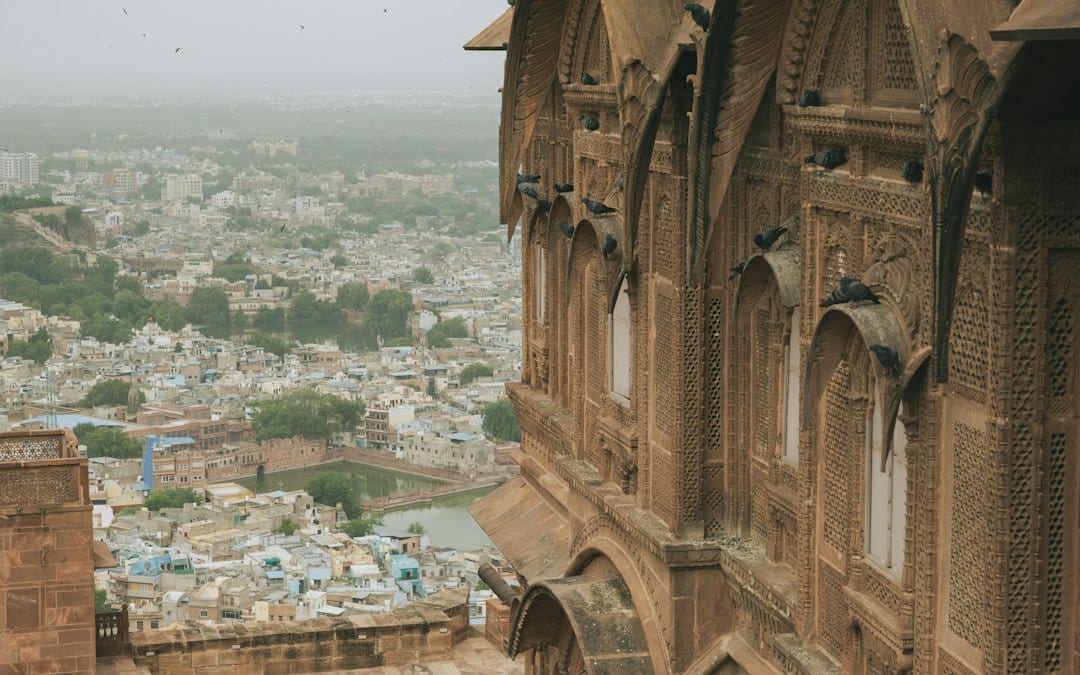
Mehrangarh Fort rises above Jodhpur's famous blue-washed old city.
Mehrangarh Fort is the emotional peak of the entire circuit. Perched 125 meters above the city on a rocky outcrop, its walls bear the cannon scars of past sieges and the quiet pride of a dynasty that never fell. Enter through Jaipol, the Victory Gate, and climb through a series of courtyards to the Moti Mahal (Pearl Palace) and the museum galleries.
Stay until late afternoon. As the sun lowers, the blue houses below turn indigo, and the fort's sandstone glows amber. This is the photograph you came for.
Day 4–5: Udaipur — City of Lakes
The drive from Jodhpur to Udaipur takes about 5 hours through the Aravalli hills. Alternatively, the Jodhpur–Udaipur City Express covers the route in roughly 6.5 hours, offering a relaxed arrival.
Udaipur immediately feels different. Where Jaipur and Jodhpur are fortified and vertical, Udaipur spreads horizontally along Lake Pichola. The City Palace here is the largest palace complex in Rajasthan, a fusion of Rajput and Mughal styles built over nearly 400 years. Wander the Badi Pol entrance, the Amar Vilas garden courtyard, and the Krishna Vilas chamber with its miniature paintings.

Udaipur's City Palace mirrored on Lake Pichola at golden hour.
End your final evening with a sunset boat ride on Lake Pichola. As the palace lights flicker on and the Aravalli hills dissolve into silhouette, Rajasthan reveals its softer, more romantic side.
Forts in Focus: What to Look For
Each fort in this circuit tells a different story of power, faith, and adaptation. Knowing what to notice transforms a sightseeing checklist into a genuine cultural conversation.
- Amber Fort — Look for the Ganesh Pol gateway, covered in delicate floral motifs, and the Sheesh Mahal. The fort's location above Maota Lake was strategic: the water doubled as a defense barrier and a cooling system.
- Mehrangarh Fort — Notice the seven gates, each commemorating a military victory or royal event. The Chamunda Devi Temple within the fort is still actively worshipped, so shoes must be removed and shoulders covered.
- Udaipur City Palace — Pay attention to the balconies and cupolas that frame Lake Pichola. The palace was designed not just for defense but for spectacle: rulers received guests against a backdrop of water and marble.
Guide hiring tip: Official guides wear badges issued by the Archaeological Survey of India or state tourism boards. A good guide costs ₹400–₹800 per monument and is worth every rupee for context on Mughal-Rajput relations, mirror-work technique, and the symbolism behind courtyard layouts.
Logistics: Trains, Transfers & Timing
Getting around Rajasthan is part of the experience. Filipino travelers can choose between private car transfers, which offer flexibility for roadside chai stops and temple detours, and Indian Railways, which connects the three cities reliably.
| Route | By Road | By Train |
|---|---|---|
| Jaipur → Jodhpur | ~6 hours / 370 km | 5.5–6.5 hours (Mandore Express / Rajasthan Sampark Kranti) |
| Jodhpur → Udaipur | ~5 hours / 260 km | ~6.5 hours (Jodhpur–Udaipur City Express) |
| Udaipur → Delhi (exit) | ~11 hours / 670 km | ~7.5 hours (Mewar Express / Chetak Express) |
Best time to visit: October to March, when daytime temperatures hover between 22°C and 30°C and desert nights turn cool. April to June can exceed 42°C and is best avoided. The monsoon months of July to September bring greener landscapes but occasional travel disruptions.
Budget estimate: A mid-range 5-day circuit including heritage hotels, private transfers, monument entries, guides, and meals runs roughly ₱55,000–₱85,000 per person excluding international flights. Upgrading to a palace hotel in Udaipur can double that figure but delivers an unmatched experience.
Planning your trip? Mesho Travel And Tours designs curated North India itineraries that handle trains, guides, and heritage stays in one seamless package. Explore our India tour options to see how we can adapt this circuit to your pace and budget.
Rajasthani Etiquette: Moving With Respect
Rajasthani culture is warm, proud, and conservative. Small gestures of awareness open doors—sometimes literally—to experiences that rushed tourists miss.
- Temple visits — Remove shoes before entering any temple or sacred courtyard. Some sites require head coverings as well. Carry a scarf or sarong; it doubles as a sun shield and a modesty layer.
- Dress code — Shoulders and knees should be covered in towns, villages, and religious sites. Lightweight linen or cotton long skirts and loose trousers are more comfortable than shorts in the heat and show respect.
- Bazaar haggling — Bargaining is expected in markets like Johari Bazaar and Sadar Bazaar. Start at 50–60% of the quoted price, keep the tone friendly, and be willing to walk away. A smile is your strongest currency.
- Photography — Always ask before photographing people, especially women and elders. Many will agree and may invite conversation; others will decline, and that boundary deserves respect.
"In Rajasthan, a little patience earns you more than a good photograph. It earns you a seat at the table, a story, and sometimes a second cup of masala chai."
Food in Rajasthan: From Dal Baati to Safe Dining
Rajasthani cuisine is bold, warming, and built for desert life. The flavors—cumin, dried mango, red chilies, and ghee—are intense but welcoming, especially when you ease into them.
- Dal Baati Churma — The state's signature dish: baked wheat dumplings (baati) broken into a bowl of spiced lentils (dal) and sweetened crushed wheat (churma). It is hearty, vegetarian, and an excellent entry point for Filipino palates.
- Laal Maas — A fiery mutton curry traditionally cooked with red chilies and yogurt. Request a milder version if you are sensitive to heat; most restaurants accommodate.
- Gatte Ki Sabzi — Gram flour dumplings in yogurt gravy, another vegetarian staple that feels similar in comfort to Filipino ginataan-style dishes.
- Safe dining choices — Stick to restaurants with high turnover, avoid raw salads and unpeeled fruits from street stalls, and drink only bottled or filtered water. A good rule: if a place is full of local families, the kitchen is likely safe.
For travelers transitioning from Filipino flavors, start with dal baati churma and lassi (yogurt drink) before venturing into the spicier dishes. Many heritage hotels also offer mild "continental Indian" options that still feel authentic.
Heritage Hotels: Sleep Inside History
One of Rajasthan's greatest gifts is the chance to stay inside the very architecture you came to admire. Heritage accommodations fall into three categories, and understanding the difference helps you choose wisely.
| Type | What It Is | Best For |
|---|---|---|
| Palace Hotels | Former royal residences converted into luxury properties; often include museums, courtyards, and royal-family hospitality. | Splurge nights, honeymoons, once-in-a-lifetime stays in Udaipur or Jaipur. |
| Havelis | Historic merchant mansions with carved sandstone facades, inner courtyards, and family-run service. | Authentic atmosphere, personal storytelling, and mid-range budgets in Jodhpur's old city. |
| Heritage-Style Hotels | Modern properties built in traditional Rajasthani architectural style. | Predictable amenities, air-conditioning reliability, and comfortable rates. |
A haveli stay often includes breakfast on a rooftop terrace overlooking the old city, while a palace hotel might welcome you with a traditional arti ceremony and a turbaned doorman. Both beat a standard business hotel for a circuit like this.
Insider Tips for a Smoother Journey
- Book trains early — Indian Railways opens reservations 60 days in advance. Popular routes like Jaipur–Jodhpur fill quickly, especially around festivals.
- Carry cash — Many smaller shops, guides, and entrance counters prefer rupees. ATMs are common in cities but less reliable in rural stretches.
- Dress in layers — Desert mornings can be cool, afternoons hot, and palace interiors surprisingly chilly.
- Learn a few Hindi phrases — Namaste (hello), Dhanyavaad (thank you), and Kitna hua? (how much?) go a long way in building goodwill.
- Hire a driver for at least one leg — The road between Jodhpur and Udaipur crosses the Ranakpur temple region, worth a detour for its stunning marble Jain temple.
Quick Summary: Your Rajasthan Takeaways
- Rajasthan is India's most visually dramatic state and pairs naturally with a Delhi or Mumbai entry point.
- The Jaipur–Jodhpur–Udaipur circuit covers Amber Fort, Mehrangarh, and City Palace in 5 well-paced days.
- Trains and private cars both work; mix them for comfort and scenery.
- Respectful dress, shoe removal at temples, and friendly haggling are essential cultural skills.
- Heritage hotels and haveli stays turn sightseeing into lived experience.
Ready to Walk Through Living Royalty?
Rajasthan does not need the Taj Mahal to justify your attention. Its forts, palaces, blue alleys, and lake reflections offer a North India experience that feels both epic and personal. For Filipino travelers ready to move beyond the obvious, this 5-day circuit is the perfect introduction.
Explore Mesho's India tour packages and let us craft a Rajasthan journey with verified guides, handpicked heritage stays, and transfers that let you focus on the architecture instead of the logistics.
Related Reading
- North India Beyond the Taj Mahal: Temples, Rivers, and Desert Kingdoms
- What Filipino Travelers Should Know Before Visiting India
- Golden Triangle vs. Rajasthan: Choosing Your First North India Route
Author Note
Priya Aquino-Menon is Mesho's South Asia Travel & Culture Editor. With Filipino-Indian roots and years of experience navigating India's entry requirements, rail systems, and cultural nuances, she specializes in helping Filipino travelers approach the subcontinent with confidence and curiosity.


