


The Two-Gate Dilemma Every First-Timer Faces
You have finally secured your Japan tourist visa, sorted your accommodation in Shinjuku, and started drafting that Tokyo itinerary. Then the booking page asks you to choose your arrival airport, and everything stalls. Narita (NRT) or Haneda (HND)? The price difference is only a few hundred pesos, yet the two airports sit on opposite sides of the metropolis with entirely different transport networks, travel times, and terminal experiences.
For Filipino travelers departing from Manila, this decision shapes your first impression of Japan, your jet-lag recovery, and how much you spend before you even check into your hotel. This guide breaks down every factor that matters, from flight availability and train fares to luggage delivery and late-night arrivals, so you can book with clarity instead of guesswork.
Flight Availability from Manila: Who Flies Where
Manila is one of the most connected Southeast Asian cities to Tokyo, with daily nonstop options to both airports. Your airline loyalty and schedule flexibility will often determine which airport makes sense.
Narita (NRT) — The Established Hub
Narita remains the primary gateway for many full-service and budget carriers. Philippine Airlines operates multiple daily frequencies to Narita, while Cebu Pacific and Jetstar Japan base their Tokyo operations here. If you are traveling on a package tour, there is a strong chance your group will land at Narita because of its long-haul infrastructure and consolidated arrival halls.
Haneda (HND) — The City-Adjacent Contender
ANA and Japan Airlines treat Haneda as a major international hub, offering premium cabin products and seamless domestic connections. Philippine Airlines also serves Haneda with daily flights, making it a viable option for travelers who want to minimize ground transit. If your itinerary includes a same-day connection to Osaka, Sapporo, or Fukuoka, Haneda's domestic terminal network is unbeatable.
Bottom line: If you are chasing the lowest fare, check both. If you are connecting to another Japanese city within 24 hours, Haneda saves you an hour of surface travel.
Transport Time and Cost to Central Tokyo
This is where the two airports diverge most dramatically. Narita sits roughly 60 kilometers east of central Tokyo, while Haneda is just 14 kilometers south of the city center. Those kilometers translate directly into yen and minutes.
Approximate conversion used: ¥1 ≈ ₱0.42. Rates fluctuate, so treat PHP figures as planning estimates.
| Route | Narita (NRT) | Haneda (HND) |
|---|---|---|
| To Tokyo Station Fastest train option |
Narita Express (N'EX) 53 min · ¥3,070 · ~₱1,290 |
Keikyu Line + JR Yamanote 25–30 min · ¥480 · ~₱202 |
| To Shinjuku Direct vs. transfer |
N'EX direct 80 min · ¥3,250 · ~₱1,365 |
Limousine Bus 45–70 min · ¥1,400 · ~₱588 |
| To Shibuya Train routing |
N'EX direct 75 min · ¥3,250 · ~₱1,365 |
Keikyu to Shinagawa + JR 30–35 min · ¥660 · ~₱277 |
| Airport Limousine Bus Door-to-major-hotel |
70–90 min · ¥2,800–3,200 · ~₱1,176–1,344 | 40–60 min · ¥1,300–1,400 · ~₱546–588 |
If your hotel is near a major station like Shinjuku or Tokyo, the Narita Express is the most comfortable rail option from Narita, with reserved seating, luggage racks, and free WiFi. From Haneda, the Keikyu Line is the budget champion, while the Tokyo Monorail offers a more scenic ride into the city with a transfer to the JR Yamanote Line at Hamamatsucho Station.
Insider tip: If you are activating a Japan Rail Pass on arrival day, the N'EX from Narita is fully covered, turning a ¥3,250 ride into a zero-yen journey. From Haneda, the JR Pass does not cover the Keikyu or Monorail access lines, so you will pay out of pocket for that first segment.
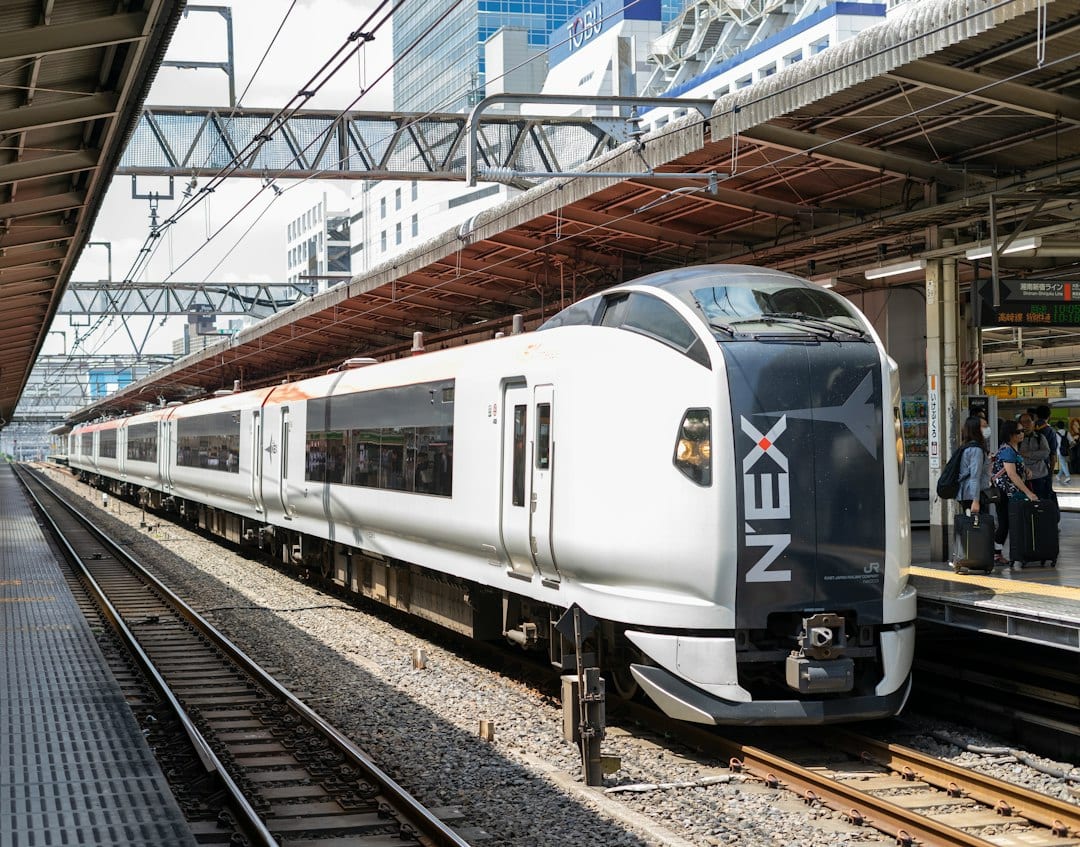
Narita Express (N'EX) at Tokyo Station — the most comfortable direct link from Narita Airport
Terminal Amenities and Filipino-Friendly Services
Both airports are world-class, but their layouts and passenger flow feel different. Knowing what to expect helps you navigate arrival fatigue with less friction.
Narita Airport (NRT)
Narita has three terminals. Terminal 1 handles Star Alliance carriers and several long-haul airlines. Terminal 2 serves SkyTeam, JAL, and other full-service carriers. Terminal 3 is dedicated to low-cost carriers. The terminals are not connected airside, so if you need to transfer between them, allow at least 20 minutes on the free shuttle bus.
- English support: Tourist Information Centers in all terminals have English-speaking staff, and signage is fully bilingual.
- Rest and recharge: Terminal 1 and 2 both have 24-hour convenience stores, shower rooms, and the Nine Hours Narita capsule hotel in Terminal 2 for overnight layovers.
- Food: Terminal 1's Edo Koji and Terminal 2's JAPAN FOOD HALL offer ramen, sushi, and rice sets before you even clear customs.
Haneda Airport (HND)
Haneda's Terminal 3 handles all international flights. It is newer, more compact, and designed for faster passenger processing than Narita's sprawling terminals.
- English support: Haneda's international terminal is heavily staffed with multilingual personnel, and the Japan National Tourism Organization (JNTO) desk is immediately visible after customs.
- Rest and recharge: The Haneda Airport Garden is directly connected to Terminal 3, housing a hotel, shopping mall, and even a public onsen with runway views. The First Cabin capsule hotel is also on-site.
- Food: Edo Market Place on the fourth floor replicates a traditional Japanese streetscape with tempura, soba, and izakaya-style dining.
For Filipino travelers: Both airports accept Philippine-issued credit cards at major shops and restaurants. If you need to withdraw yen, 7-Eleven ATMs in both terminals accept international cards. Load your Suica or Pasmo IC card at the airport station before boarding your train — it will save you from fumbling with cash tickets for the rest of your trip.
How Airport Choice Affects Early-Morning and Late-Night Days
Your flight timing should influence your airport choice as much as the fare does. A cheap ticket that lands at 23:00 in Narita can cost you an extra ¥20,000 in taxi fare or a night at an airport hotel.
Late-Night Arrivals (After 22:00)
From Haneda, the last Keikyu train departs around 00:02, and the last Monorail around 00:01. Even if you land at 23:30, you can usually clear immigration and catch the final train into the city. A taxi from Haneda to Shibuya costs roughly ¥6,000–8,000 (~₱2,520–3,360) — painful, but manageable in an emergency.
From Narita, the last N'EX departs around 21:44, and the last Skyliner around 22:30. After that, your options narrow to a night bus (limited schedule) or a taxi that can exceed ¥25,000 (~₱10,500) to central Tokyo. If your flight arrives after 21:00, strongly consider staying at a Narita airport hotel and traveling into the city the next morning.
Early-Morning Departures (Before 08:00)
Haneda wins decisively here. The first trains from central Tokyo reach Haneda by 05:00, and the Airport Limousine Bus starts running from major hotels around 04:30. You can realistically sleep in Shinjuku and catch a 07:00 international flight without panic.
From Narita, the first N'EX from Tokyo Station departs around 06:20, reaching the airport by 07:15. For flights before 09:00, this is cutting it close for international check-in. Most travelers book an airport hotel or stay in Narita City the night before.
"We booked a 23:55 arrival into Narita thinking we would just train into the city. We ended up spending ¥24,000 on a taxi because we missed the last N'EX by ten minutes. Now I always check transport schedules before I book the flight." — Mesho traveler feedback, 2026
Luggage Delivery and Pocket WiFi Pickup
Two of the most common questions Mesho clients ask: Can I send my luggage ahead to the hotel? and Where do I pick up my Pocket WiFi? Both airports handle these services smoothly, but the exact counters differ.
Luggage Delivery (Takuhaibin)
Japan's takuhaibin (door-to-door luggage delivery) is a game-changer. Instead of wrestling a 30-kilo suitcase onto a crowded train, you can hand it to a courier at the airport and receive it at your hotel the next day.
- At Narita: Yamato Transport (Kuroneko) and JAL ABC counters are located in the arrival lobbies of Terminal 1 and 2. Expect to pay ¥1,500–2,500 (~₱630–1,050) per standard suitcase for next-day delivery within Tokyo.
- At Haneda: Yamato Transport operates from Terminal 3's arrival lobby, near the international exit. Pricing is nearly identical to Narita. Because Haneda is closer to the city, same-day delivery to central Tokyo hotels is occasionally possible if you drop off your bag before 10:00.
Pocket WiFi and SIM Card Pickup
Pre-ordering a Pocket WiFi or tourist SIM before departure is standard advice for first-timers. Most rental companies offer pickup at both airports.
- At Narita: Counters for major providers like Ninja WiFi, Japan Wireless, and Global Advanced Communications are in Terminal 1 and 2 arrival halls. Because Narita serves more long-haul routes, the queues can be longer during peak morning arrival banks (08:00–11:00).
- At Haneda: Terminal 3 has concentrated rental counters on the second and third floors, including a JNTO-sponsored SIM vending machine area that accepts Philippine credit cards. The smaller terminal footprint means less walking between pickup and your train platform.
Mesho tip: If your Mesho package includes a Pocket WiFi or SIM, our operations team will confirm the exact pickup counter and opening hours based on your arrival airport and time, so you are never left searching at midnight.
Planning your first Japan trip and feeling overwhelmed by the details? Mesho Travel And Tours curates end-to-end Japan itineraries that include airport transfers, JR Pass coordination, and hotel reservations — so you land with a plan, not a puzzle. Explore our Japan travel packages to see how we remove the guesswork from your Tokyo arrival.
Quick Decision Guide
- ▸ Choose Haneda if you want the shortest transfer, a late-night arrival, an early-morning departure, or a same-day domestic connection.
- ▸ Choose Narita if you are activating a Japan Rail Pass immediately, flying with a specific budget carrier, or do not mind the longer ride in exchange for potentially lower airfares.
- ▸ Book airport transit before you fly. N'EX and Limousine Bus tickets can be reserved online; Keikyu and Monorail use IC cards or ticket machines at the station.
- ▸ Always check last-train times if your flight lands after 21:00. Missing the final N'EX or Skyliner is an expensive mistake.
- ▸ Load your Suica or Pasmo at the airport station. It works on virtually every train, subway, and convenience store in Tokyo.
Related Reading
Ready to deepen your Japan planning? These guides will help you navigate the next steps:
- Japan 8-Day Itinerary: Tokyo, Kyoto, and Osaka for First-Time Filipino Travelers
- Japan Rail Pass vs. Individual Tickets: A Cost Breakdown for Filipino Travelers
- Tokyo Transit Mastery: Suica, Pasmo, and Navigating the Train Network
Ready to Experience Tokyo?
Whether you land at Narita or Haneda, your Tokyo story begins the moment you step off the plane. The difference is how seamless that first hour feels. Mesho Travel And Tours designs Japan packages that account for your arrival airport, transport preferences, and itinerary pace — so you spend less time decoding train maps and more time discovering the city.
Author's Note — Grace Villareal, Northeast Asia Travel Editor
I have cleared immigration at both Narita and Haneda more times than I can count, and the airport you choose sets the tone for your entire Tokyo stay. Haneda's proximity is unbeatable for short trips, but Narita's rail links remain excellent if you plan around the schedules. My advice? Pick the airport that matches your flight times and energy level on arrival day, not just the cheaper fare. For personalized routing advice tailored to your hotel and itinerary, the Mesho team in Meycauayan is only a message away.


