


You have seen the photographs. Thousands of paper lanterns drifting upward like golden stars against a velvet Thai sky, each one carrying a whispered wish into the November night. For many Filipino travelers, the Yi Peng Lantern Festival in Chiang Mai sits at the very top of a Southeast Asia bucket list. Yet the same images that inspire wonder rarely reveal the logistics: which nights actually feature the mass release, how much tickets cost, where to stand so you are not trampling a prayer circle, and what to wear when temperatures drop faster than the lanterns rise.
This guide is built for travelers who want the spiritual and photographic experience without the accidental offense. You will learn the exact 2026 dates, the critical difference between Yi Peng and Loy Krathong, how to choose between paid and free events, and how to weave everything into a respectful three-day Chiang Mai itinerary that balances temples, night bazaars, and ethical wildlife encounters.
Understanding Yi Peng vs. Loy Krathong: Two Festivals, One Magical Night
Filipinos often hear “Yi Peng” and “Loy Krathong” used interchangeably, but they are not the same celebration. Loy Krathong is the national Thai festival of light, observed across the entire kingdom. Families craft small floating offerings—banana-leaf vessels adorned with marigold, incense, and a single candle—and release them onto rivers and lakes to symbolize letting go of negativity and honoring the water goddess, Phra Mae Khongkha.
Yi Peng is distinctively Lanna, rooted in the ancient kingdom of Northern Thailand. Instead of water, the medium is air. Locals release khom loy—large paper lanterns heated by a small flame—which rise on thermal currents and are believed to carry misfortune away while welcoming merit and good luck. The visual spectacle is unmatched, but the ritual carries deep Buddhist significance. Treating it as a mere photo backdrop is the fastest way to alienate locals and disrespect the monks who often lead the prayers preceding each release.
In Chiang Mai, the two festivals overlap on the same lunar date, creating a layered experience of floating offerings on the Ping River and ascending lanterns above the old city walls. Understanding this duality helps you participate rather than simply spectate.
Exact 2026 Dates and When to Book
The Yi Peng Lantern Festival follows the Thai lunar calendar, falling on the full moon of the 12th month. For 2026, the main celebration aligns with November 3. However, the energy builds across a multi-day window, and savvy travelers plan for at least three nights in Chiang Mai.
Here is how the 2026 calendar breaks down:
- October 31 – November 1: Temples begin decorating with lanterns and sand chedis. Smaller community releases start in suburban districts. Hotels raise rates but still have availability.
- November 2: Processions and cultural performances intensify around the Tha Phae Gate and Three Kings Monument. The Lantern Parade features traditional Lanna dance and music.
- November 3 (Full Moon): The main Yi Peng mass release. If you are attending a ticketed event, this is the night. Free community releases peak at temples and along the Ping River.
- November 4: Post-festival calm. Some travelers use this day for Doi Suthep or ethical elephant encounters without the crowds.
Critical booking note: Flights from Manila to Chiang Mai (typically one stop via Bangkok on carriers like Thai Airways or Philippine Airlines) and central Old City accommodations should be reserved by August 2026 at the latest. Guesthouses near Tha Phae Gate and boutique hotels inside the moat routinely sell out by September. Expect rates to surge 40–60% above low-season prices.
Ticketed Mass Releases vs. Free Community Celebrations
The iconic photograph of ten thousand lanterns synchronized in the sky comes from organized, ticketed events. The most famous is the CAD Khomloy Lantern Festival, held at a private venue outside the city. Tickets typically range from 5,500 to 12,000 THB (approximately PHP 9,000–19,500) depending on seating tier, dinner inclusion, and lantern allotment. These events guarantee a mass release, English-speaking hosts, shuttle transport, and a seated dinner—ideal for first-timers who want structure and the definitive photograph.
However, ticketed events are not the only authentic experience. Free community celebrations unfold across Chiang Mai with equal spiritual weight:
- Wat Phan Tao: The wooden temple in the Old City hosts an intimate lantern release accompanied by monk chanting. The reflection of temple lanterns on the pond creates one of the most photogenic scenes in Chiang Mai—and there is no admission fee.
- Nawarat Bridge and the Ping Riverbanks: Locals gather here for Loy Krathong floating and spontaneous Yi Peng releases. The atmosphere is chaotic, joyful, and deeply local. Arrive by 6:00 PM to secure riverbank standing room.
- Wat Chedi Luang: While the massive chedi dominates daylight visits, the temple grounds transform after sunset with candlelit processions and smaller lantern releases led by resident monks.
- Mae Jo University area (community sector): Adjacent to the ticketed zone, local villages sometimes hold their own releases. These are not advertised online; ask your guesthouse owner or a songthaew driver for the ngan wat (temple event) schedule.
| Factor | Ticketed Event (CAD Khomloy) | Free Community Event |
|---|---|---|
| Cost | PHP 9,000–19,500 per person | Free–PHP 300 (lantern purchase) |
| Crowd Size | 3,000–5,000 (controlled) | Variable; can feel crowded or intimate |
| Transport | Shuttle included | Songthaew or Grab (PHP 150–400) |
| Photography | Tripods allowed; predictable timing | Handheld only; spontaneous moments |
| Best For | First-timers, photographers, families | Budget travelers, repeat visitors, cultural immersion seekers |
My recommendation? If this is your first Yi Peng and you are traveling with family or a photography group, invest in a mid-tier ticketed event for the guaranteed spectacle. If you are returning to Chiang Mai or traveling solo on a modest budget, the free temple ceremonies offer a more textured, personal encounter with Lanna tradition. Either way, purchase your lantern from a local vendor rather than bringing your own—locally made khom loy use rice-paper and bamboo frames that burn cleanly, while imported synthetic versions can melt mid-air and litter the countryside.
Respectful Behavior and Photography Etiquette
The most common mistake Filipino travelers make at Yi Peng is treating the event like a concert or fireworks display. It is a religious observance first and a tourist attraction second. Here is how to navigate the evening without causing offense:
Around Monks and Worshippers
- Never position yourself higher than a seated monk. Crouch or kneel if you are taking photographs near prayer circles.
- Do not touch monks, their robes, or their alms bowls. Women should be especially mindful—direct physical contact between monks and women is prohibited in Thai Buddhism.
- If a monk is chanting, remain still and silent. Wait for the prayer to conclude before moving or speaking.
- Locals often bow three times before releasing a lantern. You are welcome to follow this gesture, but do not mock or rush through it for a video clip.
Photography Without Intrusion
- Disable your flash. A burst of artificial light during meditation or chanting is deeply disruptive. Raise your ISO and embrace the grain.
- Ask permission before photographing individuals in prayer. A polite “Tai ruup dai mai?” (“May I take a photo?”) goes a long way.
- Do not fly drones near temple grounds or mass-release venues without explicit permits. Many ticketed events ban drones entirely to prevent fire hazards.
- At free events, avoid monopolizing the best vantage point for twenty minutes. Share the riverbank and temple steps.
"The lantern is not a prop. It is a prayer written in flame. Hold it with both hands, make your wish, and release it only when the heat is strong enough to carry it. Watching it fall because you rushed is considered bad luck—and it is dangerous."
Fire safety matters. Each year, a handful of lanterns collapse onto rooftops or into dry fields because the flame was insufficient or the paper was torn. Inspect your lantern before lighting, hold it vertically until the air pocket is fully heated, and release only in open areas away from power lines and trees.
What to Wear and What to Pack
Chiang Mai in early November is pleasant during the day—roughly 28–30°C—but temperatures drop to 18–20°C after sunset. The festival keeps you outdoors for four to six hours, so layering is essential.
Clothing Guidelines
- Shoulders and knees must be covered at temples. A light linen long-sleeve shirt and breathable trousers work perfectly for both spiritual sites and the lantern release.
- Avoid white clothing if you plan to release a lantern yourself—soot marks are inevitable.
- Closed-toe shoes are safer than sandals. You will walk on uneven temple grounds and may need to stand on grassy fields at ticketed venues.
- Bring a compact windbreaker or shawl. The November evening breeze in the Ping River valley can feel surprisingly cool to travelers accustomed to Manila humidity.
Practical Pack List
- Headlamp or small flashlight: Temple grounds and rural release venues are dimly lit. A hands-free light helps you navigate without blinding others.
- Mosquito repellent: Dengue remains a concern in Northern Thailand. Apply DEET-based repellent before dusk.
- Portable phone charger: Cold weather drains batteries faster, and you will be using your camera extensively.
- Small bills (20–100 THB): Street vendors, songthaew drivers, and temple donation boxes rarely have change for 1,000 THB notes.
- Ziplock bag: Protect your phone and camera from lantern ash and sudden drizzle.
Filipino passport holders receive a 30-day visa exemption for Thailand, so no pre-trip embassy visit is required for a short festival getaway. If you are considering a longer circuit through Bangkok and Chiang Rai, you may want to review our guide on Thailand tourist visa requirements for Filipinos.
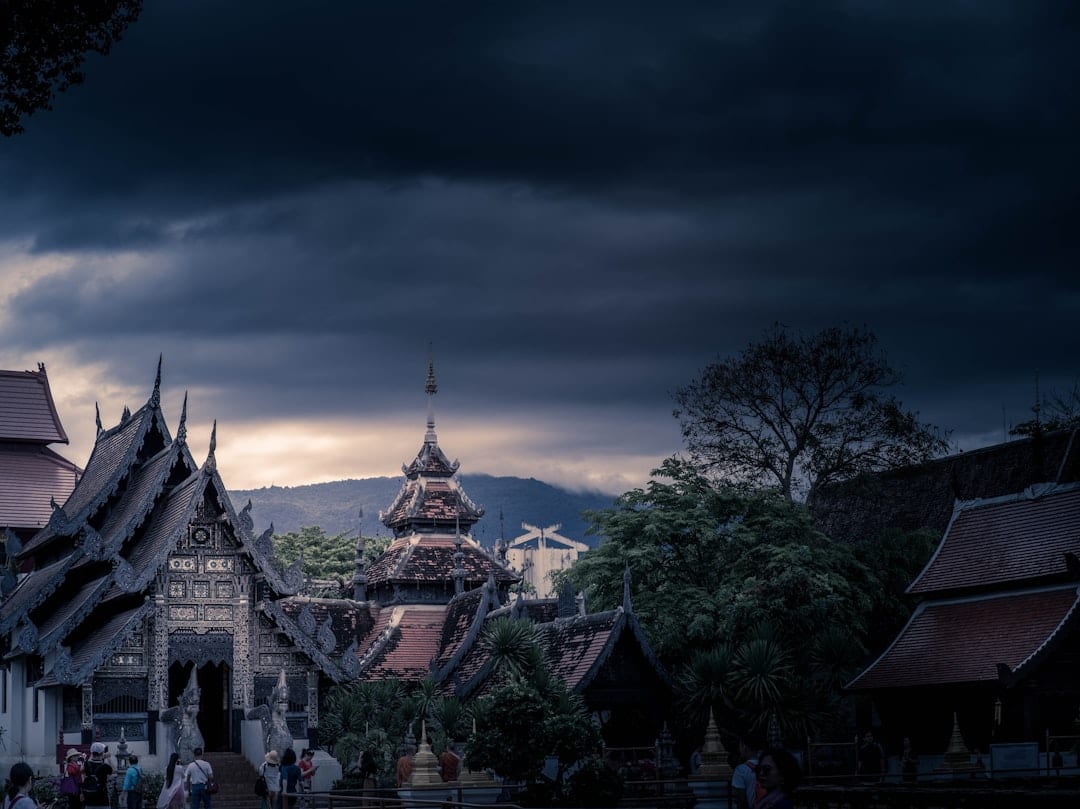
Wat Phra That Doi Suthep crowns the mountain overlooking Chiang Mai and is best visited in the golden hour before festival crowds gather.
A 3-Day Chiang Mai Itinerary Around Yi Peng
Yi Peng deserves context. Pair the festival with a compact itinerary that introduces you to Chiang Mai’s spiritual architecture, artisan heritage, and ethical wildlife encounters. This three-day plan assumes your main lantern event falls on November 3 and positions you inside the Old City moat for minimal transport hassle.
Day 1: Old City Temples and the Night Bazaar
Arrive in Chiang Mai by midday and check into accommodation within the Old City square—Wat Phra Singh or Tha Phae Gate neighborhoods offer the best festival access. After a late lunch of khao soi (curry egg noodles, the signature Lanna dish) at Khao Soi Khun Yai, spend the afternoon at Wat Phra Singh, whose Lai Kham chapel houses a revered Buddha image and some of the finest temple murals in the north.
Walk ten minutes east to Wat Chedi Luang, where the partially ruined massive chedi dominates the skyline. The temple’s monk chat program runs most afternoons—an opportunity to ask questions about Yi Peng’s Buddhist significance directly from resident monastics. As dusk falls, stroll to the Chiang Mai Night Bazaar along Chang Klan Road. Skip the generic souvenirs and focus on the artisan pavilion near the Shangri-La hotel, where Hill Tribe textiles and silverwork are sold at fair-trade prices.
If you are attending a free community release tonight, Wat Phan Tao is within walking distance. Arrive by 7:00 PM to hear the monks chant before the first lanterns rise.
Day 2: Doi Suthep and the Festival Evening
Rise early and hire a songthaew or join a shared van to Wat Phra That Doi Suthep, the golden mountaintop temple 15 kilometers west of the city. The 309-step naga staircase is manageable if you pace yourself, or take the funicular for 20 THB. The morning mist often clears by 9:00 AM, revealing panoramic views of the Chiang Mai valley—an ideal orientation before the evening’s festivities.
Descend by late morning and head to an ethical elephant experience for the afternoon. Avoid venues offering rides, painting, or bathing shows. Instead, choose a sanctuary like Elephant Nature Park or Into the Wild Elephant Camp, where observation and feeding replace performance. Half-day programs run roughly 2,500–3,500 THB (PHP 4,000–5,700) and include transport. The experience offers a grounding contrast to the evening’s spectacle—a reminder that Chiang Mai’s identity is rooted in nature as much as in festival lights.
Return to your hotel by 4:00 PM to freshen up and layer for the cold evening. If you hold a ticketed event pass, shuttles usually depart the Old City between 4:30 and 5:30 PM. For free events, walk to Nawarat Bridge by 6:00 PM with a lantern purchased from a street vendor along the way. Release your lantern only after the main procession passes, and spend the later hours watching the river fill with floating krathong.
Day 3: Morning Alms and Artisan Departure
Wake before 6:00 AM to witness sai bat—the morning alms-giving. Monks in saffron robes walk silently through the Old City streets, and locals kneel to offer sticky rice and fruit. You may participate by purchasing food from nearby market stalls, but observe quietly and remove your shoes when kneeling. The ritual is not a photo opportunity; keep your camera lowered unless you have explicit permission.
After breakfast, visit the Bo Sang Umbrella Village or San Kamphaeng Road handicraft strip if time permits. Both lie on the eastern highway and showcase the paper-making and painting traditions that actually produce the lanterns you released the night before. Purchasing a hand-painted parasol directly from the artisan supports the same craft ecosystem.
Depart Chiang Mai by late afternoon, or extend your stay with a slower exploration of the Chiang Rai Golden Triangle loop. For travelers building a longer Thailand circuit, our 7-day Bangkok to Chiang Mai itinerary offers a seamless northern extension.
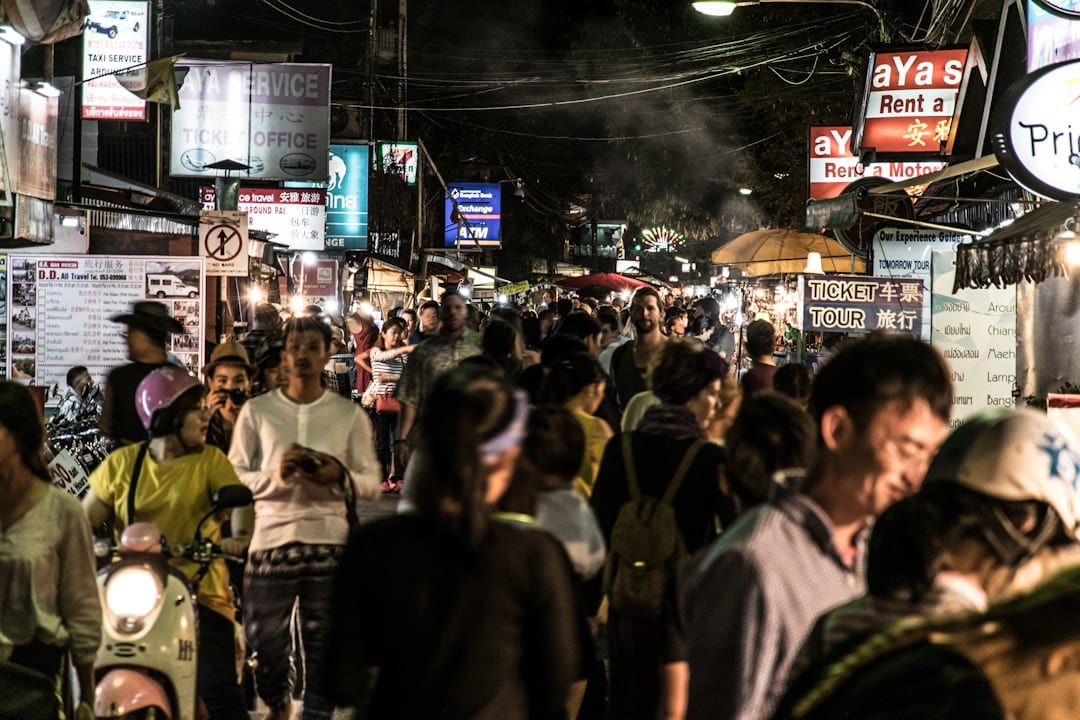
Chiang Mai's night bazaars offer artisan crafts and Lanna street food long after the lanterns have faded.
Budget Snapshot for Filipino Travelers
Yi Peng can be experienced across a wide budget range. Here is a realistic cost breakdown for three nights in Chiang Mai during the festival period, excluding international flights:
| Expense | Budget (PHP) | Comfort (PHP) |
|---|---|---|
| Accommodation (3 nights) | 4,500–6,000 | 12,000–18,000 |
| Yi Peng Event | 300–500 (free event + lantern) | 9,000–19,500 (ticketed) |
| Food (3 days) | 2,000–3,000 | 4,500–6,500 |
| Transport (local) | 800–1,200 | 1,500–2,500 |
| Doi Suthep + Elephant Sanctuary | 4,000–5,500 | 5,500–7,500 |
| Total (per person) | 11,600–16,200 | 32,500–54,000 |
These figures assume shared accommodation and modest dining for the budget column, and boutique lodging plus a mid-tier ticketed event for the comfort column. Airfare from Manila adds roughly PHP 15,000–28,000 depending on how early you book.
Ready to Experience Yi Peng?
The Yi Peng Lantern Festival is not a backdrop for your social media feed. It is a living ritual, a collective exhale of hope and renewal that happens to be extraordinarily beautiful. When you approach it with preparation and humility, you move from tourist to participant—and the experience changes from pretty to profound.
Planning your 2026 Yi Peng trip? Mesho Travel And Tours curates seamless Chiang Mai packages that include pre-vetted accommodation inside the Old City, ethical elephant sanctuary bookings, and guided orientation walks that teach you temple etiquette before the festival begins. Explore our Thailand tour packages and let us handle the logistics while you focus on the moment your lantern joins the sky.
Quick Takeaways
- Yi Peng (sky lanterns) and Loy Krathong (water floats) are different festivals that coincide in Chiang Mai on November 3, 2026.
- Ticketed mass releases guarantee scale and photography; free temple events offer deeper cultural intimacy at a fraction of the cost.
- Cover shoulders and knees, bring a jacket for 18°C evenings, and carry small bills for donations and street food.
- Never use flash near monks, ask before photographing worshippers, and release lanterns only in open, safe areas.
- Pair the festival with Doi Suthep at sunrise, ethical elephant observation, and the Chiang Mai Night Bazaar for a complete northern Thai experience.
Related Reading
- → Beyond the Temples: Thailand Cultural Immersion Guide for Filipino Travelers
- → Thailand Tourist Visa for Filipinos: When You Need One and How to Apply in 2026
- → Thailand 7-Day Itinerary: Bangkok to Chiang Mai for Filipino Cultural Explorers
Author's Note — Marco Dela Cruz, ASEAN Travel Consultant
I have routed hundreds of Filipino travelers through Chiang Mai during festival season, and the ones who return with the most meaningful stories are never the ones who chased the perfect Instagram shot. They are the travelers who sat quietly at Wat Phan Tao, who asked a monk about the meaning of the lantern's flame, and who released their khom loy with both hands and a genuine wish. If you are ready to experience Yi Peng with that same spirit of curiosity and respect, Mesho's team is here to build an itinerary that honors both the spectacle and the culture behind it. Safe travels, and may your lantern rise true.


