


You have already seen the Bangkok skyline from a rooftop bar. You have walked through Chatuchak Weekend Market and posed beside the reclining Buddha at Wat Pho. But somewhere between the shopping malls and street-food stalls, you feel a pull toward something older, quieter, and far more profound. That pull is Ayutthaya, the ancient capital of Siam, located only eighty kilometers north of Bangkok. For Filipino travelers standing at the threshold of their first Thailand trip, Ayutthaya offers what no modern city can: the chance to walk through centuries of history in a single morning, to stand before stone Buddhas wrapped in tree roots, and to understand why Thais speak of this place with reverence rather than mere tourism pride.
This guide is designed for travelers who want depth without confusion. You will find exact transport instructions from real Bangkok stations, a curated temple route that respects your limited time, etiquette guidance that protects both your dignity and the sanctity of these grounds, and food stops that turn a history lesson into a full sensory journey. By the final section, you will know not only how to reach Ayutthaya, but why the trip reshapes the way you see Thailand.
Why Ayutthaya Still Matters
From 1351 until its fall in 1767, Ayutthaya was one of the wealthiest and most cosmopolitan cities in Asia. Portuguese, Dutch, Japanese, and Persian traders walked its streets while European capitals were still comparatively provincial. When the Burmese army sacked the city, they left behind a landscape of brick towers, headless Buddha images, and collapsed halls that nature has since reclaimed. Rather than rebuild over the ruins, Thais preserved them. Today, Ayutthaya Historical Park is a UNESCO World Heritage Site spanning multiple temple complexes across an island formed by the Chao Phraya, Pa Sak, and Lopburi rivers.
For Filipino visitors, Ayutthaya resonates on a particularly intimate frequency. Like Intramuros in Manila or the Spanish-era churches of Iloilo and Bohol, these ruins are not museum pieces. They are living wounds and living pride. You will see elderly Thais leaving lotus blossoms at the feet of stone images. You will hear monks chanting inside reconstructed halls beside collapsed chedis. The emotional texture is familiar, even if the architectural language is Khmer, Sri Lankan, and Thai rather than Spanish colonial.
"Ayutthaya is not a place you visit for photographs. It is a place you visit to remember that empires rise, empires fall, and what remains is faith."
Getting There: Transport Options from Bangkok
One of the biggest anxieties for first-time Filipino travelers in Thailand is figuring out ground transport without getting overcharged or lost. Ayutthaya is straightforward to reach, but the quality of your morning depends on choosing the right mode for your travel style.
Train from Hua Lamphong or Bang Sue Grand Station
The State Railway of Thailand operates regular services to Ayutthaya from both Hua Lamphong (the historic downtown station) and the newer Bang Sue Grand Station (Krung Thep Aphiwat). Third-class tickets cost roughly 15 to 20 THB (about 25–35 PHP), while air-conditioned second-class seats range from 200 to 300 THB (350–520 PHP). The journey takes 1.5 to 2 hours depending on stops. Trains depart roughly every hour from early morning. If you are staying near Sukhumvit or Silom, Hua Lamphong is often more accessible via MRT. If you are near Chatuchak, Bang Sue is closer. The train drops you at Ayutthaya Railway Station, from which it is a short ferry ride or tuk-tuk hop to the temple island.
Minivan from Mo Chit 2 or Victory Monument
Minivans are faster but less scenic. From Mo Chit 2 Bus Terminal or the van stands near Victory Monument BTS, the ride to Ayutthaya takes about 1 to 1.5 hours and costs 70 to 100 THB (120–175 PHP). These vans fill quickly on weekends, so arrive before 8:00 AM if you want to secure a seat without a long wait. The minivan drops passengers at Chao Phrom Market on the eastern edge of the old city, putting you within walking or bicycle distance of several major temples.
Private Tour with Mesho
If you prefer a seamless, curated experience, a private day tour eliminates transfer guesswork. Mesho arranges air-conditioned vehicle pickup from your Bangkok hotel, an English-speaking guide, temple admission fees, and a mapped route that hits the major ruins without backtracking. The total door-to-door time is roughly 10 to 12 hours, including travel. For families, senior travelers, or anyone who wants to maximize cultural immersion without logistics stress, this is often the most rewarding option. Explore our Thailand tour packages to see how Ayutthaya fits into a broader itinerary.
| Transport Mode | Travel Time | Estimated Cost (PHP) | Best For |
|---|---|---|---|
| Third-Class Train | 1.5–2 hours | ₱25–35 | Budget travelers, slow travelers |
| Air-Con Train (2nd Class) | 1.5 hours | ₱350–520 | Comfort without high cost |
| Minivan | 1–1.5 hours | ₱120–175 | Speed, early arrival |
| Private Tour | 10–12 hours total | Varies by package | Families, first-timers, comfort |
The Temples to Prioritize in One Day
Ayutthaya Historical Park is vast. Attempting to see every ruin in a single day leaves you exhausted and culturally numb. The following three complexes deliver the highest emotional and architectural impact within a tight itinerary.
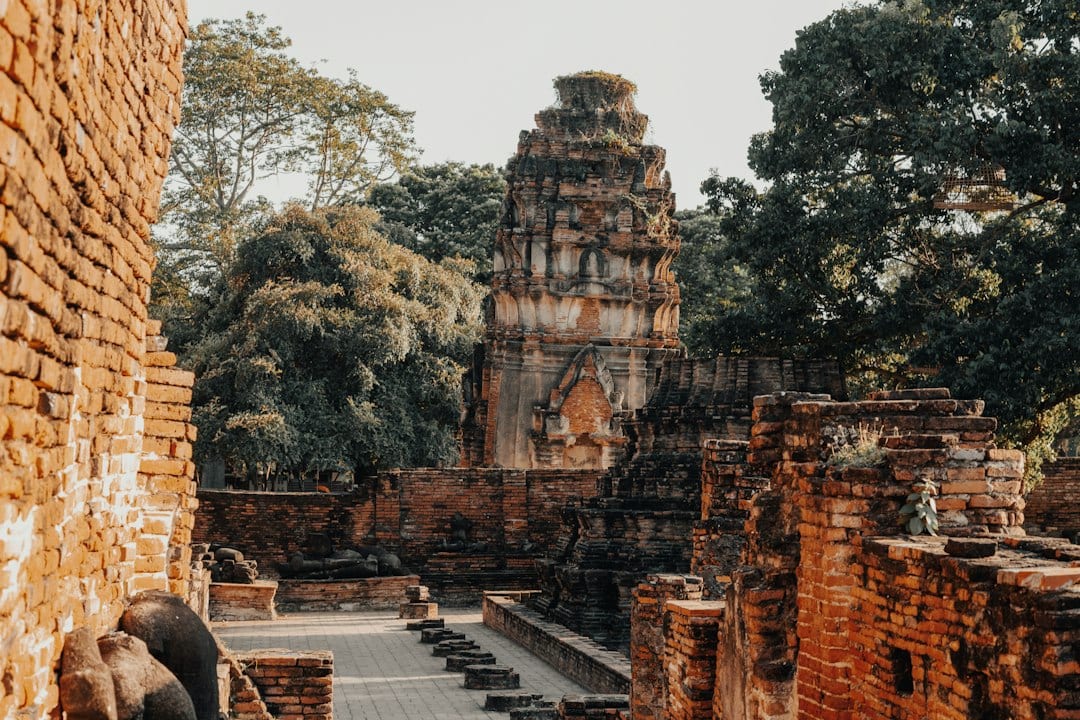
The red-brick prangs of Ayutthaya Historical Park, remnants of a once-mighty Siamese capital
Wat Phra Si Sanphet
This was the royal temple of the Ayutthaya kings, analogous to the Temple of the Emerald Buddha in modern Bangkok. Three massive chedis dominate the skyline, containing the ashes of King Borommatrailokanat and his successors. Walk the raised platforms where palace chambers once stood. The scale is humbling. Unlike the crowded temples in Bangkok, Wat Phra Si Sanphet offers stretches of lawn and open sky that let you absorb the weight of what was lost.
Wat Mahathat
Famous for the Buddha head entwined in bodhi tree roots, Wat Mahathat is Ayutthaya's most photographed site, and deservedly so. But do not let that single image distract you from the rest of the complex. Dozens of headless sandstone Buddhas lie in rows where they fell during the 1767 sack. The visual echoes war damage in European cathedrals or the earthquake-scarred churches of Bohol. It is haunting, beautiful, and deeply human.
Wat Chaiwatthanaram
Located on the western bank of the Chao Phraya River, Wat Chaiwatthanaram is best visited in the late afternoon when the sun turns its central Khmer-style prang and corner towers the color of burnt amber. The symmetry here is stunning, and the riverside setting adds a cinematic quality. This is where many visitors finally understand why Ayutthaya was considered the Venice of the East by early European traders.
Temple Etiquette Every Filipino Visitor Should Know
Filipinos are no strangers to religious courtesy. The protocols in Thailand will feel familiar, but a few specifics can prevent awkward moments and show genuine respect for local faith.
- Dress modestly. Shoulders and knees must be covered. Lightweight linen trousers and a loose button-down shirt work perfectly in the tropical heat. Avoid tank tops, shorts, and sheer fabrics. Some temples rent sarongs at the gate, but bringing your own scarf or cover-up is more dignified.
- Remove footwear before entering any hall or platform. Wear sandals or slip-ons to make this easier. The stone floors can burn your feet at midday, so socks are not a bad idea.
- Photography rules. Never climb onto Buddha images or structures for a photo. Do not turn your back to a Buddha statue to take a selfie. Keep your voice low, and avoid pointing your feet toward sacred images when sitting.
- Monk interaction. Women should never touch a monk or hand objects directly to him. If you wish to offer something, place it on a cloth or hand it to a male companion first. Monks are approachable and often willing to chat, but always let them initiate conversation.
- Offerings. If you see lotus buds or incense for sale near an entrance, purchasing them and leaving a small offering is a meaningful gesture. It costs only a few baht and connects you to the devotional rhythm of the place.
Eating Your Way Through the Ancient Capital
A day in Ayutthaya is incomplete without eating like a local. The culinary traditions here predate modern Bangkok, and certain dishes are arguably better in their hometown.
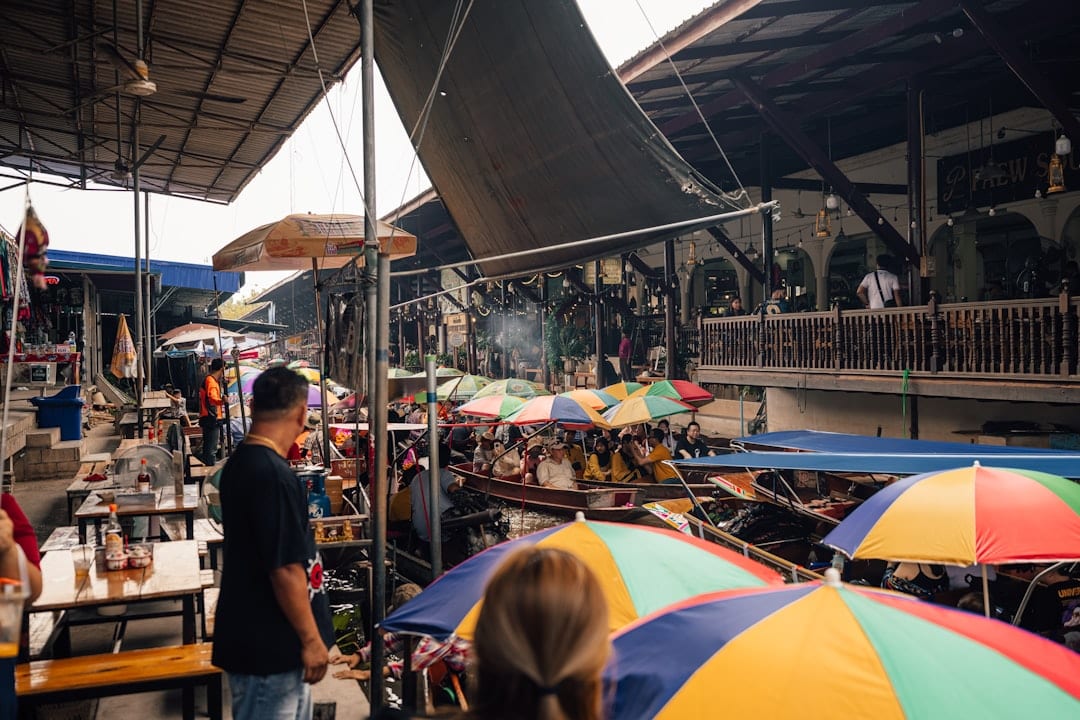
Thai boat noodles, a must-try staple near Ayutthaya's canal-side communities
Boat Noodles at Klong Sa Bua
Kuay tiao ruea, or boat noodles, were originally served from wooden vessels paddling through Ayutthaya's canals. Today, the best iterations are found in shophouses near Klong Sa Bua. The broth is dark, rich, and spiced with cinnamon and star anise. A bowl costs roughly 40 to 60 THB (70–105 PHP). Order a few small bowls rather than one large one. It is the local way.
Riverfront Dining Near Hua Raw Night Market
For lunch, settle into one of the open-air restaurants along the Pa Sak River near Hua Raw Night Market. Order pla raet luk chin (fish balls in clear broth), kao mok gai (Thai biryani-style chicken rice), or a simple platter of tom yum goong with river prawns. The setting is unpretentious, the flavors are bold, and the breeze off the water cools you down between temple visits.
Roti Sai Mai and Market Snacks
Before heading back to Bangkok, look for roti sai mai, a sweet Ayutthaya specialty of thin crepes wrapped around spun sugar floss. Vendors sell them near Chao Phrom Market and around the temple island. It is the kind of nostalgic snack that Thai families drive up from Bangkok specifically to buy.
Afternoon River Cruise & Return Timing
After a morning of walking ruins, an afternoon river cruise offers perspective and rest. Several operators run boat tours along the Chao Phraya and Pa Sak rivers, circling the temple island and passing Wat Phanan Choeng, Wat Putthaisawan, and the Portuguese settlement area from the water. The vantage point is entirely different: you see how the rivers once served as defensive moats and commercial arteries, and how the spires rise above the tree line like broken crowns.
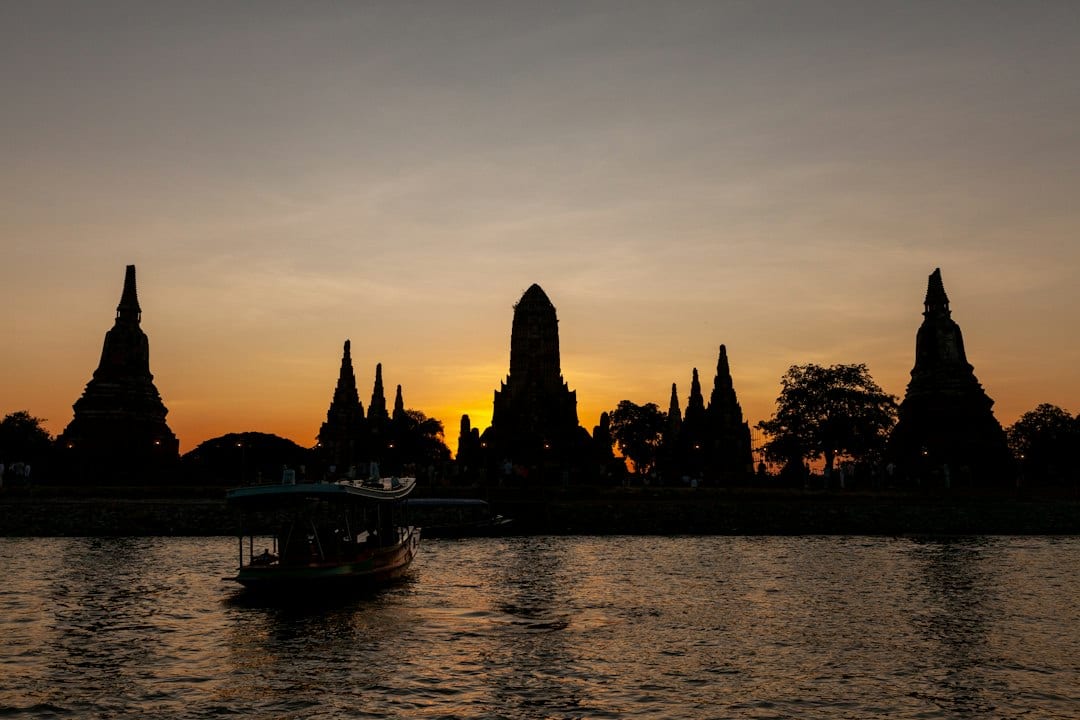
A late-afternoon river cruise reveals Ayutthaya's temples from their most cinematic angle
A one-hour cruise typically costs 200 to 400 THB (350–700 PHP) per person, depending on whether it includes a guide or refreshments. If you are traveling by train, aim to board your return departure from Ayutthaya Railway Station by 5:30 PM to avoid the evening commuter crush and reach Bangkok before dinner. Minivans run until roughly 6:00 PM, though the last seats fill quickly. Private tours offer the most flexible return timing.
Planning your trip? Mesho Travel And Tours can arrange your entire Ayutthaya day trip from Bangkok, including private transport, an English-speaking guide, temple admissions, and a riverside lunch reservation. View our curated Thailand experiences and let us handle the logistics while you absorb the history.
Quick Summary: Your Ayutthaya Day Trip at a Glance
- Best transport: Morning train from Hua Lamphong or Bang Sue for atmosphere; minivan for speed; private tour for comfort.
- Top three temples: Wat Phra Si Sanphet, Wat Mahathat, and Wat Chaiwatthanaram.
- Dress code: Covered shoulders and knees; remove shoes before entering halls.
- Must-try food: Boat noodles at Klong Sa Bua, riverfront lunch near Hua Raw Market, and roti sai mai for the road.
- Return timing: Aim for the 5:30 PM train or earlier minivan to avoid evening rush.
Related Reading
If you are building a longer Thailand itinerary, these guides will help you connect the dots:
- The Ultimate 5-Day Bangkok and Pattaya Itinerary for Filipino Travelers
- Mastering Bangkok's BTS and MRT: A Filipino Traveler's Complete Transit Guide
- Thailand Tourist Visa for Filipinos: When You Need One and How to Apply in 2026
Author's Note
Marco Dela Cruz is an ASEAN travel consultant focused on land, sea, and air routing for Filipino travelers across Southeast Asia. Based in Metro Manila with over a decade of experience, he has guided hundreds of first-time travelers through the transport hubs, temple complexes, and food streets of Thailand. He believes the best itineraries leave room for wonder, and the worst ones leave you stranded at a bus terminal with no seat.
Ready to step beyond the Bangkok skyline and into the soul of old Siam? Let Mesho curate your Ayutthaya journey with expert guides, comfortable transport, and an itinerary designed for travelers who want more than snapshots.


