


Philippines Travel • Cultural Immersion • Walking Guide
Step Into a Living Museum
You do not need a visa to Spain to walk cobblestone streets lined with ancestral houses dating back to the 16th century. In Vigan, Ilocos Sur, the Spanish colonial era is not a chapter in a textbook—it is a living, breathing neighborhood where residents still sleep in wooden lofts, cook in courtyard kitchens, and open their capiz-shell windows to the morning breeze.
For Filipino travelers craving curated cultural depth without the cost of international airfare, Vigan delivers an extraordinary immersion into our shared colonial past. This guide maps a half-day walking route through the city’s most significant landmarks, points you to the Ilocano food that defines the region, and arms you with practical logistics to plan your trip from Manila with confidence.
Inside: why Vigan earned its UNESCO crown, a street-by-street itinerary through Calle Crisologo and beyond, where to eat authentic empanada and bagnet, and how to get there by bus, plane, or car.
Why Vigan Earned Its UNESCO World Heritage Status
In 1999, Vigan became the only UNESCO World Heritage Site in the Philippines recognized for its intact urban planning—not for a single monument, but for an entire cityscape. Unlike Intramuros, which preserves ruins and fortifications, Vigan preserves a functioning colonial town where trade, worship, and daily life continue within structures built by Chinese and Filipino craftsmen under Spanish rule.
What makes this distinction rare is the fusion of architectural influences you see in every block:
- Ground-floor stone walls inspired by European military architecture, built to withstand floods and earthquakes
- Upper-floor timber frames with sliding capiz-shell windows and ventanilla grilles, adapted from tropical Filipino and Chinese building traditions
- Sloped terracotta-tiled roofs and azotea balconies designed for ventilation and storm drainage
- The grid street plan centered on a central plaza—Plaza Salcedo and Plaza Burgos—faithful to Spanish colonial urban design
The result is not a film set. It is a working heritage city where calesa drivers still offer rides along Calle Crisologo and families have lived in the same ancestral homes for six generations. That authenticity is what UNESCO recognized—and what you will feel the moment your shoes hit the cobblestones.
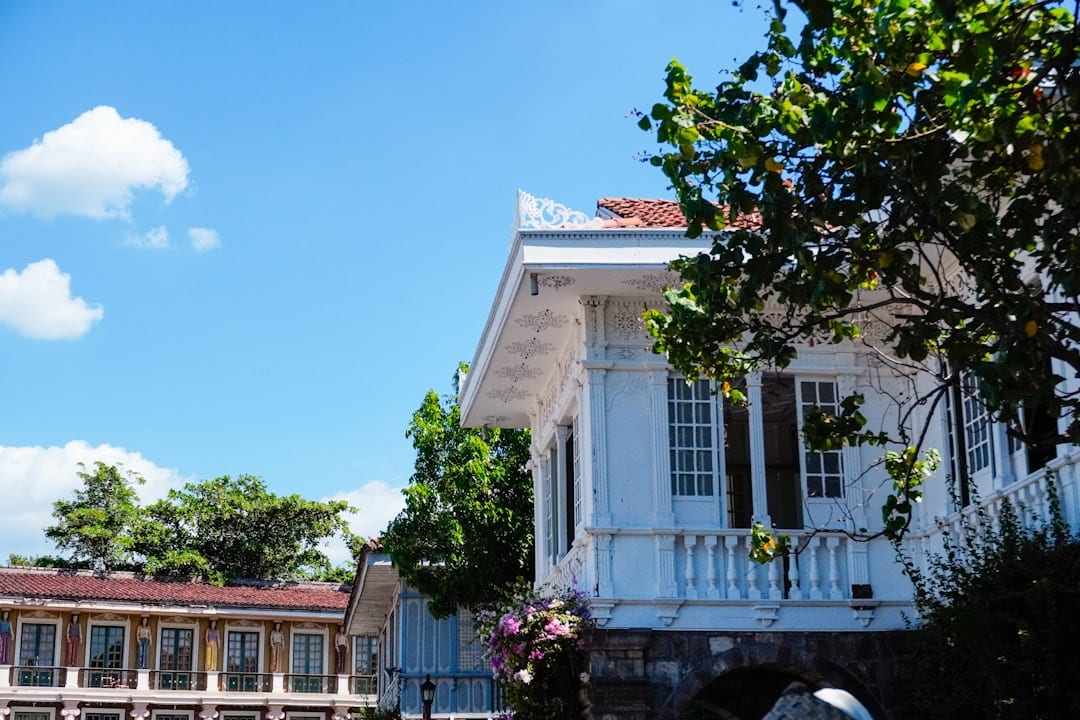
Traditional Spanish colonial houses along Vigan’s heritage streets, preserved through generations of continuous habitation.
The Half-Day Walking Route: Calle Crisologo to Plaza Salcedo
This route covers approximately 3.5 kilometers and takes four to five hours at a relaxed pace, including stops. Begin early—7:00 AM is ideal—before the midday heat and while the morning light is perfect for photography.
1. Calle Crisologo (Crisologo Street)
Start at the northern end of Calle Crisologo, Vigan’s most photographed street. The cobblestones here are original river stones, laid during the Spanish period. Walk slowly—the uneven surface is part of the experience.
Key stops along this stretch:
- Crisologo Museum (near the intersection with Quirino Boulevard): Housed in the ancestral home of the Crisologo political family, this museum displays period furniture, family memorabilia, and the original kalesa carriage collection.
- Various ancestral homes open to visitors: Several privately owned houses along Calle Crisologo operate as souvenir shops or small cafés on the ground floor. Look for the hand-painted ceramic tile signs—these indicate original Spanish-era facades.
- Heritage photo spots: The corner of Calle Crisologo and Plaza Burgos offers the classic wide-angle view of the street receding into a tunnel of wooden balconies.
2. Syquia Mansion (Quirino Boulevard)
Turn west from Calle Crisologo onto Quirino Boulevard and walk two blocks to the Syquia Mansion, the ancestral home of former President Elpidio Quirino’s wife, Dona Alicia Syquia. This is one of the largest preserved bahay na bato structures in Vigan.
The mansion offers an unfiltered look at how affluent ilustrado families lived during the late Spanish and early American periods. Inside, you will find:
- Original Belgian mirrors and Victorian-era furniture imported through the Manila-Acapulco galleon trade
- A full-size calesa stored in the ground-floor stable, demonstrating how the street-level space was historically used for horses and carriages
- Family portraits and memorabilia that connect the house to Philippine political history
The guided tour (included in the entrance fee of roughly ₱30–₱50) lasts about 20 minutes and is worth the time for the context it adds to the surrounding architecture.
3. Plaza Salcedo and St. Paul’s Metropolitan Cathedral
From Syquia Mansion, head south along Quirino Boulevard then east on Florentino Street to reach Plaza Salcedo, the geographic and spiritual heart of Vigan.
The plaza is anchored by the St. Paul’s Metropolitan Cathedral, a Baroque structure built in the 1790s with its distinctive white-and-yellow facade and separate bell tower (the belfry) located across the street. Unlike many heritage churches in the Philippines, the cathedral remains fully active, so you may encounter a wedding or a Sunday Mass in progress.
Walk the perimeter of the plaza to see:
- The Salcedo Obelisk and landscaped gardens, popular with families in the early evening
- The Ilocos Sur Provincial Capitol facing the plaza—a neoclassical American-era building that contrasts with the Spanish structures nearby
- Evening fountain light show: If you are staying overnight, return to Plaza Salcedo after 7:30 PM for the choreographed dancing fountain display
"The best way to see Vigan is on foot, early in the morning, when the cobblestones are still cool and the only sound is your own footsteps echoing off wooden balconies."
Where to Eat: Authentic Ilocano Food Stops
Ilocano cuisine is defined by salt, smoke, and sourness—flavors developed to preserve food in a region where the dry season is long and the soil is tough. Do not leave Vigan without trying these dishes at specific local stops.
Vigan Empanada
Unlike the sweet, flaky empanadas of Iloilo or the meat-heavy versions of Latin America, the Vigan empanada is a crispy rice-flour shell filled with grated green papaya, shredded carrots, bean sprouts, longganisa (local garlic sausage), and a whole egg. It is fried fresh in front of you in a large wok.
Where to try it: The empanada stalls along Plaza Burgos and the corner of Jose Singson Street are the most consistent. Look for Irene’s Vigan Empanada or the row of open-air fryers near the plaza. Prices range from ₱50 to ₱80 per piece. Eat it immediately while the shell is still crackling.
Bagnet and Sinanglaw
Bagnet is Ilocano lechon kawali taken to its logical extreme: pork belly is boiled, air-dried, then deep-fried until the skin balloons into a golden, glass-like crackling. It is served with sinanglaw, a bitter-sour beef innards soup that balances the richness of the pork.
Where to try it: Café Leona on Calle Crisologo serves reliable bagnet in an atmospheric heritage-house setting. For a more local experience, walk to Abuelita’s Restaurant on Delos Reyes Street, where the sinanglaw is simmered fresh each morning. Budget ₱250 to ₱400 per person for a full meal.
Other Ilocano Specialties to Sample
- Vigan longganisa: Small, garlicky pork sausages, best eaten with vinegar dipping sauce and garlic rice for breakfast. Available at most local eateries and as a take-home pasalubong.
- Pinakbet: A vegetable stew of eggplant, bitter melon, squash, okra, and tomatoes, flavored with bagoong isda (fermented fish paste). It is the definitive Ilocano vegetable dish and tastes distinctly different from the Tagalog versions found in Manila.
- Dinengdeng: A lighter vegetable soup boiled in bagoong broth, often with grilled fish. It reflects the Ilocano preference for boiled dishes over oily preparations.
- Sukang Iloko: The region’s cane vinegar, often infused with siling labuyo. Many heritage houses sell small bottles as souvenirs.

Vigan empanada, one of Ilocos Sur’s most iconic street foods, freshly fried and best eaten hot.
Planning your Vigan trip?
Mesho Travel And Tours curates Philippines domestic tour packages that include heritage walking experiences in Vigan with local guides, heritage house entries, and authentic Ilocano dining reservations.
Explore Philippines ToursPractical Tips: Footwear, Weather, and Photography Etiquette
Footwear
Cobblestones are beautiful but unforgiving. Wear closed shoes with thick soles—hiking sandals or comfortable sneakers work best. Avoid high heels, thin flip-flops, or dress shoes with smooth leather soles. The stones are uneven, and some sections of Calle Crisologo slope gently toward the center for drainage, which can be slippery after rain.
Weather
Vigan follows the same dry-wet pattern as the rest of Luzon:
- November to April (dry season): Ideal for walking. Mornings are cool at 20–24°C, but midday temperatures can reach 32°C. Start your walk at dawn.
- May to October (wet season): Afternoon thunderstorms are common. Bring a compact umbrella and a waterproof bag for your camera. The wet cobblestones actually photograph beautifully, but traction is reduced.
Photography Etiquette
Vigan is a residential city, not a theme park. These guidelines help you capture great images while respecting the community:
- Ask before photographing private homes: Many ancestral houses are still family residences. If a gate is open and the family is visible, a polite “Excuse po, puwede mag-picture?” goes a long way.
- Do not climb on doorsteps or balconies for Instagram shots unless you have explicit permission. These structures are old wood and mortar.
- The golden hour is your friend: The best light on Calle Crisologo is between 6:30 and 8:00 AM, when the sun casts long shadows through the balcony overhangs. Evening light (5:00–6:00 PM) is also favorable.
- Drone use: Check with the Vigan City Tourism Office before flying. Some heritage zones restrict drone activity to protect privacy and structural integrity.
Getting There: Transport Options from Manila
Vigan is approximately 400 kilometers north of Manila. Here are your three main options, ranked by cost and convenience:
| Option | Duration | Estimated Cost | Best For |
|---|---|---|---|
| Bus (Partas / Dominion) | 8–10 hours | ₱800–₱1,200 | Budget travelers, overnight sleeper buses |
| Flight to Laoag + Van | 1.5 hr flight + 1.5 hr land | ₱3,000–₱6,000+ | Time-pressed travelers, combining with Pagudpud |
| Private Car / Van | 7–8 hours | ₱5,000–₱9,000 (fuel + toll) | Families, groups, flexible itineraries |
By Bus
Partas Bus Lines and Dominion Bus Lines operate direct services from Cubao and Pasay to Vigan City. The overnight deluxe buses (departing around 9:00–11:00 PM) are popular because they arrive at dawn—perfect for starting your walking tour early. Book tickets online in advance during weekends and holiday seasons.
By Flight
Fly from Manila to Laoag International Airport (1 hour 10 minutes) with Philippine Airlines or Cebu Pacific. From Laoag, hire a van or take a public bus south to Vigan (approximately 1.5 hours, ₱100–₱200 by bus). This option works well if you are combining Vigan with a North Luzon circuit that includes Pagudpud or the Bangui Windmills.
By Car
Take the NLEX–SCTEX–TPLEX route north to Rosario, La Union, then follow the MacArthur Highway through La Union and Ilocos Sur. The road is fully paved and well-signposted. Parking in Vigan is available near Plaza Salcedo and along Quezon Avenue. A private van or car is the most comfortable option if you are traveling with family or plan to visit nearby heritage towns like Bantay (home to the historic Bantay Church Bell Tower) and Santa Maria (a separate UNESCO-listed church).
Cultural Notes: Reading the City
Vigan rewards travelers who look closely. The decorative ceramic tiles on house facades often display the original owner’s family name or Chinese zodiac symbol. The ventanilla—the small sliding window below the main capiz panels—was designed to let air circulate while keeping the house secure during the galleon trade era, when Vigan was a major commercial port.
When entering heritage houses or museums, remove your hat and lower your voice. Many of these structures are still private homes where elders sit in the azotea (roof terrace) in the afternoon. A smile and a greeting of “Good afternoon, po” are always appreciated.
If you are offered sukang Iloko or local longganisa by a resident, accept it. Food is the primary language of hospitality in Ilocos, and these small exchanges often lead to the most memorable stories of your trip.
Quick Takeaways
- Vigan is the Philippines’ only UNESCO site recognized for intact urban planning, not just a single landmark.
- Start your walking route at 7:00 AM on Calle Crisologo, then proceed to Syquia Mansion and Plaza Salcedo.
- Try Vigan empanada at Plaza Burgos, bagnet at Café Leona or Abuelita’s, and longganisa for breakfast.
- Wear thick-soled closed shoes for the cobblestones and ask permission before photographing private homes.
- From Manila, overnight buses are the most budget-friendly option; flying to Laoag works best for multi-stop North Luzon itineraries.
Ready to Walk Through History?
Vigan is not a place you rush. It is a city best experienced at the pace of a morning stroll, with the smell of garlic longganisa in the air and the sound of a calesa’s iron wheels against 400-year-old stone.
Let Mesho Travel And Tours curate your journey. Our Philippines domestic tour packages include guided heritage walks in Vigan, pre-arranged entries to Syquia Mansion and other ancestral homes, and authentic Ilocano dining experiences that go beyond the tourist trail. We handle the logistics so you can focus on the stories written into every wall.
Related Reading
- Beyond Boracay: 7 Underrated Philippines Destinations to Explore in 2026
- Philippines Domestic Travel 2026: Essential Planning Tips for Filipino Explorers
- Fiesta Philippines: A Year-Round Guide to the Country’s Most Vibrant Festivals
Author’s Note: I’m Marco Dela Cruz, an ASEAN travel consultant focused on routing and budgeting for Filipino travelers. I’ve personally walked Calle Crisologo at dawn, eaten empanada from the same fryers my grandparents frequented, and navigated every bus terminal from Cubao to Ilocos Sur. If you are planning a Vigan heritage trip and want help sequencing it with Bantay, Pagudpud, or Sagada, reach out to our team at Mesho Travel And Tours. We know the roads, the schedules, and the best seats for the fountain show.

