


Why This Circuit Feels Like Coming Home — Three Times Over
You step off the plane in Singapore and the humidity wraps around you like a familiar blanket. The scent of laksa hangs in the air. A few days later, you are tracing Portuguese tiles in George Town, and by the end of the week you are pressing your palms together in a wai at a Bangkok temple. For Filipino travelers, this 10-day Singapore–Malaysia–Thailand circuit is not just convenient — it is culturally resonant. Malay, Chinese, Indian, and indigenous threads weave through all three nations, echoing the same tapestry we know from home.
This itinerary is built for travelers who want more than skyline selfies. It is for the explorer who wants to understand why Peranakan tiles matter, who George Town's clan jetties still belong to, and why Thais remove their shoes before entering a home. Every stop is chosen for depth, not volume. You will leave with stories, not just stamps.
The Route at a Glance
The circuit moves northward in a natural arc: Singapore (3 nights) → Penang, Malaysia (3 nights) → Bangkok, Thailand (3 nights), with one buffer day for transit or recovery. This direction keeps flight segments short, avoids backtracking, and builds cultural intensity as you travel — from Singapore's polished multiculturalism to Penang's raw heritage, climaxing in Bangkok's spiritual density.
| Leg | Route | Transit Time | Mode |
|---|---|---|---|
| 1 | Manila → Singapore | ~3.5 hours | Direct flight |
| 2 | Singapore → Penang | ~1.5 hours | Direct flight |
| 3 | Penang → Bangkok | ~2 hours | Direct flight |
| 4 | Bangkok → Manila | ~3.5 hours | Direct flight |
Budget airlines like Scoot, AirAsia, and Jetstar operate these routes daily. Book early for the best rates — expect roughly ₱3,500–₱6,000 per segment when booked a month ahead.
Singapore: Living Inside a Peranakan Jewel Box
Singapore often gets dismissed as too sterile, too shiny. But step off Orchard Road and into Katong and Joo Chiat, and you enter a world that feels almost Filipino in its warmth — tiled facades in pistachio and rose, ancestral portraits behind shuttered windows, and the unmistakable aroma of babi pongteh simmering in clay pots.
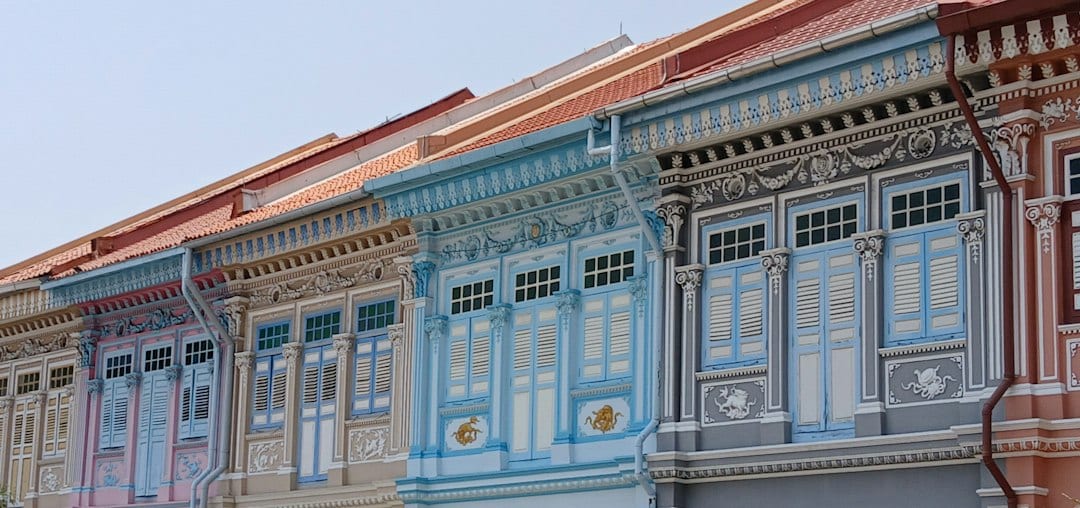
Peranakan shophouses along Joo Chiat Road showcase Singapore's rich Straits Chinese heritage with ornate facades and vibrant colors.
What Peranakan Culture Actually Means
The Peranakans — also called Straits Chinese or Baba-Nyonya — are descendants of Chinese immigrants who settled in the Malay archipelago between the 15th and 17th centuries. They adopted Malay customs, dress, and cuisine while preserving Chinese ancestral rites. The result is a culture that is neither purely Chinese nor Malay, but something entirely its own.
In Joo Chiat, this lives on in the Intan Museum, a private home-museum run by a Peranakan collector. Unlike sterile national museums, this is a lived-in space. You will sit on antique furniture while the owner explains why wedding slippers were beaded with pineapple motifs (they signify prosperity) and why the color indigo was reserved for mourning. Visits are by appointment only — a deliberate choice to keep encounters intimate.
Where to Eat and What to Order
- 328 Katong Laksa — The coconut curry broth is spoon-cut (no chopsticks needed), and the chili sambal is fierce. Order the standard bowl and ask for extra tau pok (fried tofu puffs).
- True Blue Cuisine — Set inside a heritage shophouse near the Peranakan Museum, this is where you try ayam buah keluak: chicken stewed with Indonesian black nuts that taste like truffles soaked in dark chocolate. It is an acquired taste, but it is the dish Peranakan grandmothers judge each other by.
- Kueh Garden — For snacks: kueh salat (glutinous rice with pandan custard) and ondeh-ondeh (pandan balls bursting with gula melaka).
Singapore Festival Moments
If your trip falls between late January and mid-February, Chinese New Year turns Chinatown into a lantern-lit river of red and gold. The Chingay Parade — held on the fifteenth day — is Southeast Asia's largest street performance, with lion dancers, stilt walkers, and floating lanterns. For something quieter, visit during Hari Raya Puasa (marking the end of Ramadan) when the Geylang Serai bazaar erupts with Malay kuih, tapestry vendors, and open-house hospitality that feels strikingly familiar to Filipino fiesta culture.
Planning to extend your Singapore stay? Explore curated packages and destination details on our Singapore destination page.
Penang, Malaysia: Walking Through a UNESCO Novel
George Town is the anti-Singapore. Where Singapore preserves heritage behind glass, Penang lets you live inside it. The entire core zone is a UNESCO World Heritage Site, but there are no velvet ropes. A 19th-century clan house sits next to a nasi kandar stall. A street artist paints a mural on a wall that still bears Japanese occupation bullet holes. It is messy, alive, and unforgettable.
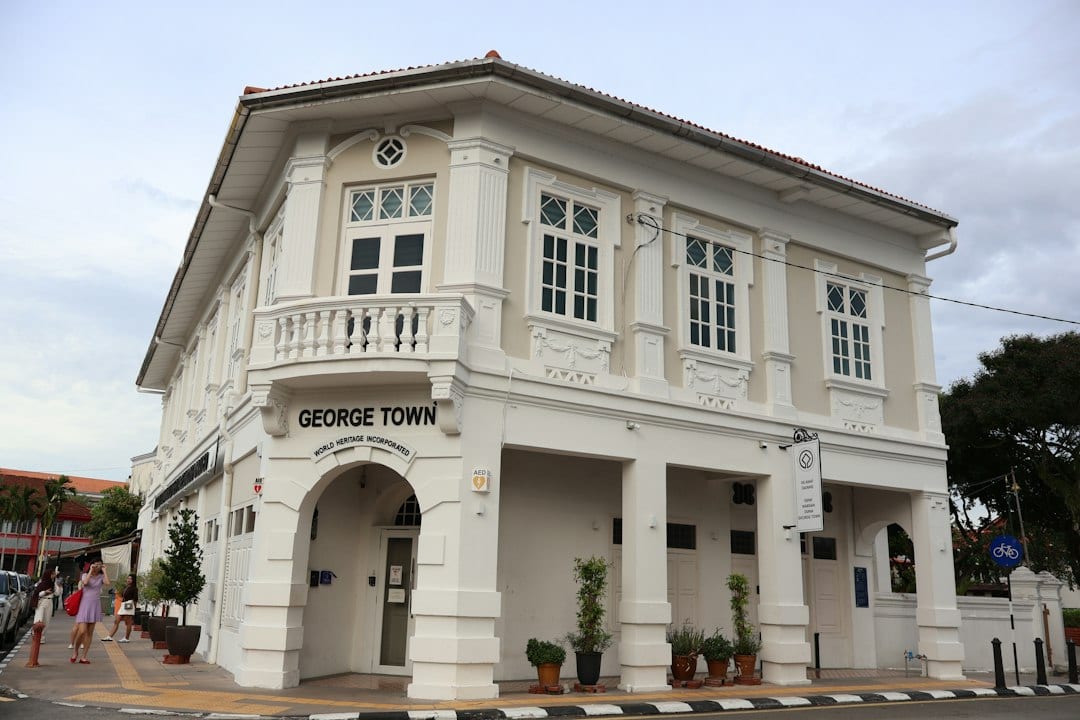
George Town's UNESCO-listed streets blend colonial architecture with contemporary murals and living traditions.
The Clan Jetties: Homes on Stilts
The Chew Jetty is the largest and most accessible of George Town's waterfront clan villages. Wooden houses extend on stilts over the harbor, connected by planks that creak underfoot. The Chew clan has lived here for six generations, originally arriving from Fujian as stevedores. Today, some homes have opened as guesthouses and cafes, but most remain private residences. Walk to the end at sunset, when the mosque's call to prayer mingles with the clatter of dinner prep from open kitchens.
Respect the boundary between visitor and resident. Photography of private homes is fine from the walkway, but do not step onto private decks uninvited. Many families still observe ancestor worship rites here — you may see incense burning at small altars built into the walls.
Heritage Food That Built a City
- Line Clear Nasi Kandar — Open 24 hours, this stall serves Penang's iconic Indian-Muslim rice dish. Choose your curries (the squid and fried chicken are standouts) and watch them cascade gravy over your plate in the signature "banjir" (flood) style.
- Joo Hooi Cafe — Home to the legendary Penang assam laksa: a sour, fish-based noodle soup thickened with shredded mackerel, tamarind, and mint. It is ranked among the world's best foods for a reason.
- Ming Xiang Tai — For tau sar pneah: flaky biscuits filled with mung bean paste, a Teochew tradition that Penang has perfected.
George Town's Living Festivals
Thaipusam (January or February) is the most visually intense festival in Penang. Hindu devotees undertake a pilgrimage from the city to the Waterfall Hill Temple, some carrying kavadi — elaborate metal frames pierced into their bodies. It is not a performance for tourists; it is a devotional act. Observe quietly from a respectful distance, and never photograph individuals without explicit permission.
In August, the George Town Festival transforms the city into an open-air stage — theater in abandoned warehouses, dance in clan houses, and contemporary art installations that dialogue with heritage architecture. It is the rare festival that feels curated but not corporate.
Bangkok, Thailand: Where the Sacred Meets the Everyday
Bangkok can overwhelm. The heat, the traffic, the sheer density of golden spires rising between glass towers. But beneath the chaos is a city that moves to Buddhist time — slow, cyclical, deeply courteous. Your job as a visitor is to match that rhythm.
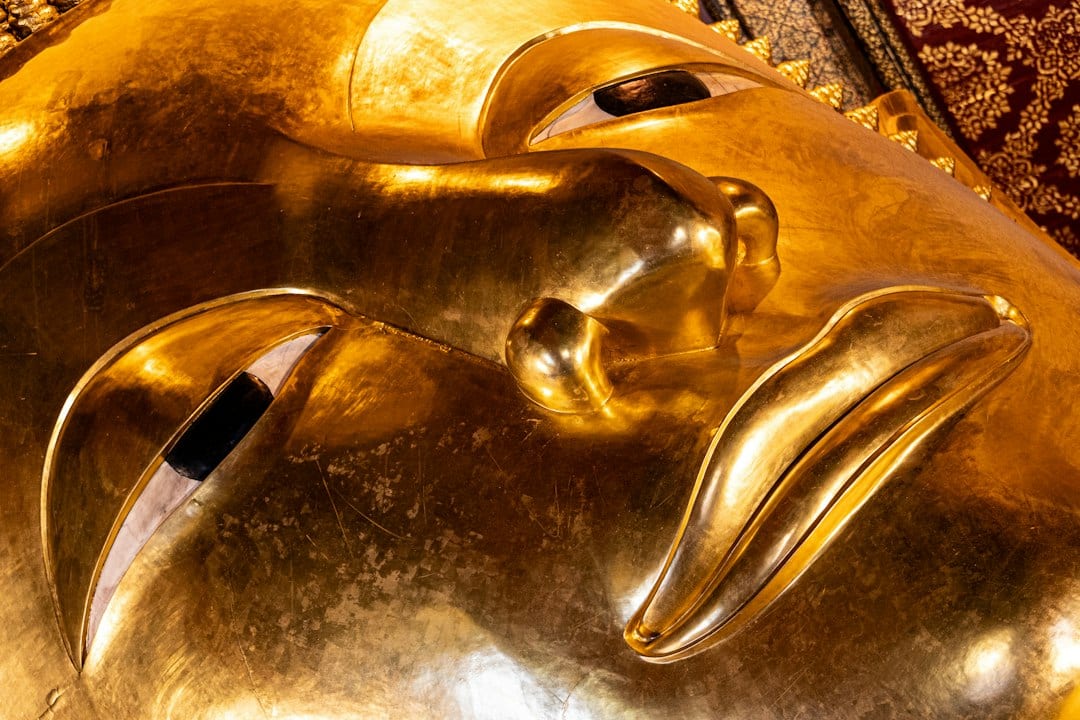
Wat Pho's magnificent reclining Buddha embodies Thailand's deep Buddhist heritage and architectural mastery.
Temple Etiquette Every Filipino Traveler Should Know
Thai temple customs share DNA with Filipino Catholic church etiquette — cover your shoulders and knees, speak softly, and do not turn your back on the altar. But there are differences that matter:
- Remove your shoes before entering any temple building, not just the inner sanctum. Watch where others put theirs and follow suit.
- Do not point your feet toward Buddha images or monks. Feet are considered the lowest part of the body. Sit with legs tucked to the side or kneel.
- Women must not touch monks or hand objects directly to them. If giving an offering, place it on a cloth or have a male companion transfer it.
- Modesty is non-negotiable. Sarongs are available at major temples like Wat Phra Kaew and Wat Pho, but it is better to arrive prepared in long pants or a maxi skirt and a sleeved top.
Temples Worth the Early Wake-Up
Wat Pho opens at 8:00 AM. Arrive then, before the tour buses, and you will have the 46-meter reclining Buddha almost to yourself. The temple is also the birthplace of traditional Thai massage — the on-site massage school offers 30-minute foot rubs for a fraction of spa prices.
Wat Arun, the Temple of Dawn, is best visited at sunset from the opposite riverbank — the spires turn molten gold. If you climb the steep central prang, wear shoes with grip; the porcelain-tiled steps are treacherous.
For something less crowded, Wat Saket (the Golden Mount) requires a climb up 300 steps, but the 360-degree view of old Bangkok at the top is unmatched. The surrounding cemetery — final resting place of plague victims — adds a contemplative weight that grander temples lack.
Bangkok's Cultural Table
- Jay Fai — The only street-food stall in the world to earn a Michelin star. The crab omelet is legendary, but the queue forms at 2:00 PM. Arrive early or risk disappointment.
- Thip Samai Pad Thai — Often called Bangkok's best pad thai, cooked over charcoal in an open kitchen. Order the pad thai sen chan goong sot (with fresh prawns) and a side of fresh-squeezed orange juice.
- Or Tor Kor Market — Not a tourist market. This is where Bangkok's chefs buy produce. Try the mango sticky rice here — the mangoes are graded like diamonds.
Festivals That Transform the City
Songkran (Thai New Year, mid-April) turns Bangkok into the world's largest water fight. Silom Road closes to traffic and becomes a battleground of super-soakers and buckets of ice water. It is joyful chaos, but protect your electronics and expect to be soaked through within seconds of stepping outside.
Loy Krathong (November) is quieter and more poetic. Thais release lotus-shaped floats carrying incense and candles onto rivers and canals, symbolizing the letting go of anger and misfortune. The Chao Phraya River becomes a flickering carpet of light. As a Filipino, you may feel a kinship with this ritual — it echoes our own pagpag and pasasalamat traditions of release and gratitude.
Filipino Traveler Essentials: Visas, Modesty, and Money
Visa Basics
Philippine passport holders enjoy visa-free entry to all three countries for tourism:
- Singapore: 30 days visa-free. Ensure your passport is valid for at least 6 months beyond arrival.
- Malaysia: 30 days visa-free. Same 6-month passport validity requirement.
- Thailand: 30 days visa-free by air; 15 days by land. Passport must be valid for at least 6 months.
If you need visa assistance for other destinations or have a non-standard passport situation, Mesho's visa team can guide you through requirements.
Modesty and Cultural Sensitivity
Filipino travelers generally adapt well to Southeast Asian modesty norms, but a few reminders help:
- Shoulders and knees covered at all religious sites across all three countries. A light scarf or sarong in your daypack solves most situations.
- Public displays of affection are more conservative than in the Philippines. Holding hands is fine; more intimate gestures should be reserved for private spaces.
- Shoes off indoors is standard in homes, temples, and some traditional restaurants. Watch for shoe racks at entrances.
- The wai — the Thai prayer-like greeting — is not mandatory for foreigners, but returning one with a slight nod and hands at chest level is polite. Do not wai service staff or children; a smile suffices.
Budget Reality Check
Singapore is expensive; Penang and Bangkok balance the ledger. A rough daily budget per person (excluding flights):
| Destination | Budget (₱) | Mid-Range (₱) | Comfort (₱) |
|---|---|---|---|
| Singapore | 3,500–4,500 | 6,000–8,000 | 10,000+ |
| Penang | 1,500–2,500 | 3,500–5,000 | 7,000+ |
| Bangkok | 2,000–3,000 | 4,500–6,500 | 9,000+ |
These figures cover accommodation, meals, local transport, and entrance fees. Singapore's MRT and Bangkok's BTS/MRT are efficient and affordable. In Penang, Grab is your best friend — rides within George Town rarely exceed ₱150.
Insider Lessons: What We Wish Every Traveler Knew
"The best laksa in Singapore is not in a guidebook — it is in a hawker center where the auntie has been ladling the same recipe for forty years. Ask your hotel concierge where they eat, not where they send tourists."
- Learn five phrases in each language. Terima kasih (Malay), Khop khun krub/ka (Thai), and Terima kasih again in Singlish — the smiles you earn are worth the effort.
- Carry cash. Hawker centers, street stalls, and smaller temples rarely accept cards. Malaysia and Thailand are more cash-dependent than Singapore.
- Book temple mornings, save markets for evenings. Temples are cooler and less crowded before 9:00 AM. Night markets — like Bangkok's Rot Fai or Penang's Chulia Street — come alive after 6:00 PM.
- Do not rush George Town. The city rewards wandering. Pick a neighborhood and let your feet lead. The best discoveries — a hidden shrine, a vintage sign painter, a grandmother selling apom from a sidewalk griddle — happen between the landmarks.
Ready to Walk These Streets?
This circuit is more than a checklist of countries. It is a conversation between cultures that Filipino travelers are uniquely positioned to understand. The Malay hospitality, the Chinese ancestral reverence, the Indian festival energy, the Buddhist calm — these are not foreign concepts. They are variations on themes we already know.
Mesho Travel And Tours designs personalized Southeast Asia circuits with the routing, visa guidance, and local connections that turn a good trip into an extraordinary one. Whether you want to follow this exact 10-day path or adapt it to your own rhythm, our team builds journeys that match your curiosity.
Start Planning Your Cultural Circuit
Email us at info@meshotravel.com, call +63 906 053 9130, or visit our office at University Drive Phase 4D, Meycauayan, Bulacan. We will craft your itinerary within 24 hours.
Explore Singapore PackagesQuick Takeaways
- This 10-day circuit runs Singapore → Penang → Bangkok in a natural northward arc with short, affordable flights between each leg.
- Philippine passport holders get 30 days visa-free in Singapore and Malaysia, and 30 days by air in Thailand.
- Cultural immersion happens in Joo Chiat's Peranakan shophouses, George Town's clan jetties, and Bangkok's temple mornings — not in shopping malls.
- Modesty norms are stricter than in the Philippines: cover shoulders and knees at religious sites, remove shoes indoors, and keep public affection restrained.
- Budget roughly ₱3,500–₱4,500 daily in Singapore, but only ₱1,500–₱2,500 in Penang — the Malaysia stop balances the ledger.
Related Reading
- Singapore Travel Guide: Gardens, Cuisine & Culture — Extend your Singapore stay with curated packages and insider neighborhood walks.
- Royal Caribbean Fly & Cruise: Singapore, Malaysia & Thailand — See the same destinations from the deck of a ship with port excursions included.
Author's Note from Marco Dela Cruz: I have been routing Filipino travelers through Southeast Asia for over a decade, and this Singapore–Penang–Bangkok arc remains my favorite introduction to the region. The cultural threads between our islands and theirs run deeper than most travelers realize. If you are unsure where to start, start here — and let the streets teach you the rest.


