


Imagine waking up to a different skyline every morning—one day the misty mountains of Taiwan, the next the neon harbors of Busan, then the sloping hills of Nagasaki dressed in late autumn color. For Filipino travelers who have long dreamed of experiencing Northeast Asia without the puzzle of multiple flights, hotel check-ins, and visa juggling, the Star Navigator Fly & Cruise offers a single, seamless gateway.
This 9-day journey (November 21–29, 2026) unfolds across three distinct cultures: Taiwan, South Korea, and Japan. You fly from Manila to Taipei, board the ship for five nights of full-board cruising, and return with stories from four remarkable ports. Here is what awaits at each stop—and how to prepare for the adventure.
Taipei: The Calm Before the Voyage
Your journey begins with round-trip Cebu Pacific airfare from Manila, including 20kg baggage allowance. You will spend your first night in Taipei with breakfast included, giving you a soft landing before embarkation.
Most cruise calls dock at Keelung, roughly 30–45 minutes northeast of central Taipei. If your schedule allows, arrive a day early and wander the lanes around Dihua Street, where dried-goods shops and tea houses still operate much as they did a century ago. The National Palace Museum holds one of the world's finest collections of Chinese imperial art—jade carvings and landscape scrolls that reward even a short visit.
For dinner, seek out a beef noodle shop in the Yongkang Street quarter. The broth is slow-simmered, the noodles hand-pulled, and the atmosphere unpretentious. It is the kind of honest, flavorful meal that sets the tone for the days ahead.
Busan: Where the Mountains Meet the Sea
Your first port of call introduces one of Korea's most visually striking cities. Busan does not feel like Seoul. It is slower, more maritime, and shaped by ridges that drop straight into the East Sea.
Haedong Yonggungsa: A Temple on the Water
Most Korean temples hide in mountain valleys. Haedong Yonggungsa breaks the rule. Built on a rocky outcrop above the surf, it is one of the few seaside temples in the country. Follow the zodiac-lined staircase down to the main hall, where the sound of waves replaces the usual mountain silence. The ocean views are expansive, and the atmosphere feels closer to a coastal pilgrimage than a typical temple visit.
"Arrive early if your shore window allows. Morning light on the stone lanterns and the sea mist rising off the rocks create a scene you will not find in guidebooks."
After the temple, head to Jagalchi Fish Market. The ground floor is a working wholesale hall; upstairs, small restaurants turn the morning catch into hoe (sashimi) and haemultang (spicy seafood stew) within minutes. For Filipino palates accustomed to bold flavors, the stew's gochujang heat will feel familiar and welcome.
End your Busan hours with a walk along Gwangalli Beach at dusk. The Gwangan Bridge lights up across the bay, and the beachfront cafes serve hotteok (sweet filled pancakes) that make for a perfect handheld snack as you stroll.
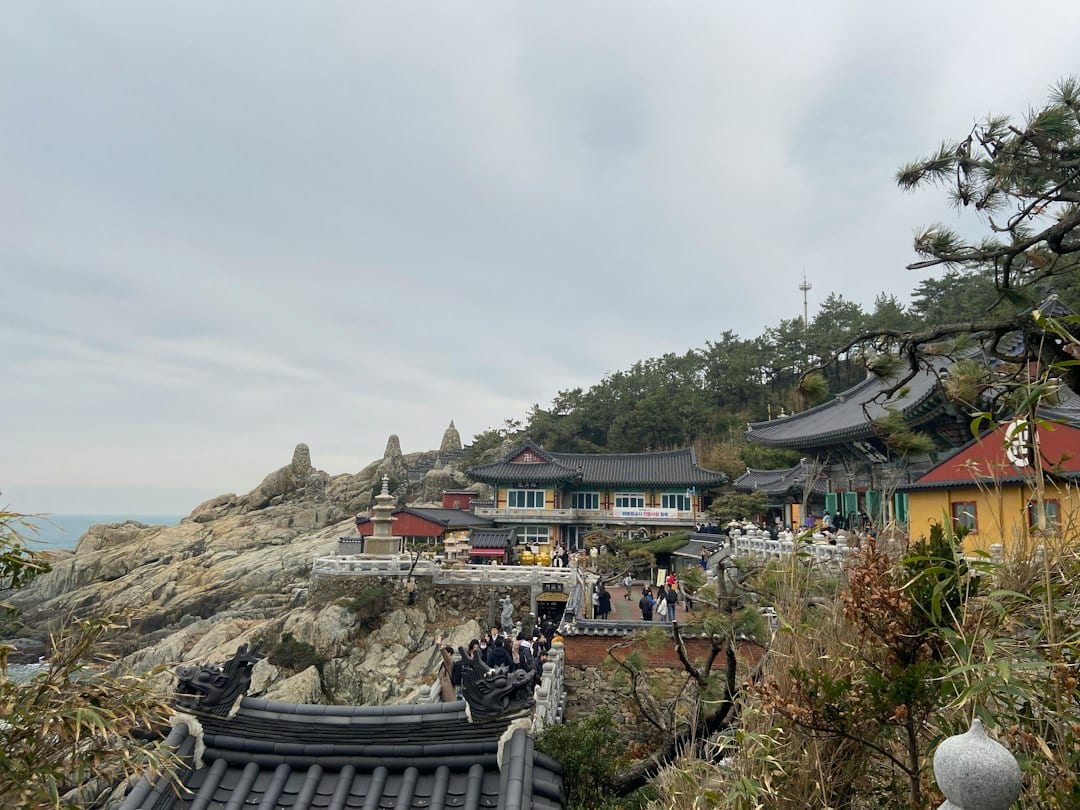
Haedong Yonggungsa, a rare seaside temple in Busan with zodiac-lined stairs overlooking the East Sea.
Nagasaki: Layers of History on a Hillside
Nagasaki carries a weight no other Japanese city does, yet its streets feel unexpectedly warm and intimate. The city is built on steep slopes, so every walk becomes a series of revealing vistas—old churches, Chinese temples, and Western-style houses stacked above the harbor.
Glover Garden and the View from the Hill
Glover Garden sits on a hillside overlooking the port. The preserved Western residences date from the late 19th century, when Nagasaki was one of Japan's few open ports. In late November, the maples and ginkgo here still hold color, and the garden paths offer some of the best harbor views in the city. The Thomas Glover House, with its green shutters and verandas, feels transported from Scotland—yet the surrounding camphor trees and stone lanterns root it firmly in Japan.
A short walk away, the Nagasaki Peace Park and Atomic Bomb Museum demand quiet attention. The park's bronze statue and the museum's recovered artifacts tell a story that resonates across any nationality. Many Filipino visitors find the experience deeply moving; the shared history of wartime suffering creates an unexpected emotional connection.
Dejima and the Multicultural Streets
Nagasaki's Dejima was a man-made island where Dutch traders lived under Tokugawa isolation. Today the reconstructed buildings and canals offer a glimpse into a Japan that once looked outward through a single, narrow window. Nearby, the Shinchi Chinatown serves champon (a thick noodle soup born here from Chinese-Japanese fusion) and kakuni manju (braised pork buns) that have become local specialties rather than tourist concessions.
For a quick, memorable meal, find a castella shop. The sponge cake arrived with Portuguese missionaries in the 16th century and has since become Nagasaki's signature sweet. It is light, not overly sweet, and travels well if you want to bring a box back to the ship.
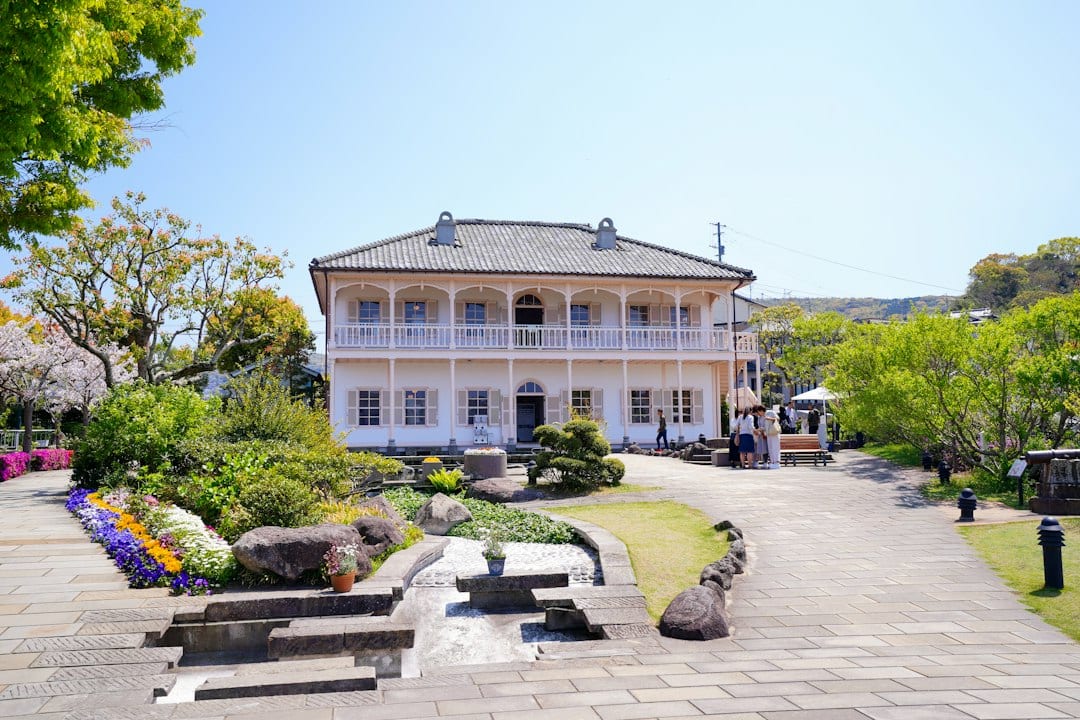
Glover Garden in Nagasaki, where late-autumn color lingers into November amid Western-style hillside residences.
Naha: The Ryukyu Soul of Okinawa
Your final port introduces a Japan that feels almost separate from the mainland. Okinawa's Ryukyu heritage blends Japanese, Chinese, and indigenous island influences into something distinct—visible in the architecture, the food, and even the pace of life.
Shuri Castle and the Red Walls
Shuri Castle dominates the hillside above Naha. Its vermilion walls and ornate gates reflect the Ryukyu Kingdom's centuries of trade with China and Japan. The main hall's throne room, with its gilded dragons and lacquered columns, feels closer to a Fujian palace than a Tokyo shrine. Even after the 2019 fire, restoration has returned much of the complex to its former presence, and the surrounding Shurijo Castle Park offers shaded walks through stone walls and banyan groves.
Below the castle, the Tsuboya Pottery District preserves Naha's ceramic tradition. Small workshops still hand-form yachimun (Okinawan pottery) in kilns fired with local wood. The glazes tend toward deep browns and seafoam greens—earthy, unhurried colors that suit the island's mood.
Okinawan Flavors to Seek Out
Okinawan cuisine diverges from mainland Japanese cooking in welcome ways. Rafute is pork belly simmered in awamori (local rice liquor) until it collapses under chopsticks. Goya champuru stir-fries bitter melon with egg and tofu—a home-style dish that reveals the island's resourceful cooking tradition. And blue seal ice cream, born from American military influence, offers flavors like ube and shiiquasa (Okinawan citrus) that feel surprisingly familiar to Filipino tastes.
If time permits, ride the Yui Rail monorail from the port area to Kokusai-dori, Naha's main entertainment street. The covered market arcades sell everything from pickled papaya to sanshin (three-stringed Okinawan instruments), and the shopkeepers are notably patient with visitors who want to browse without buying.
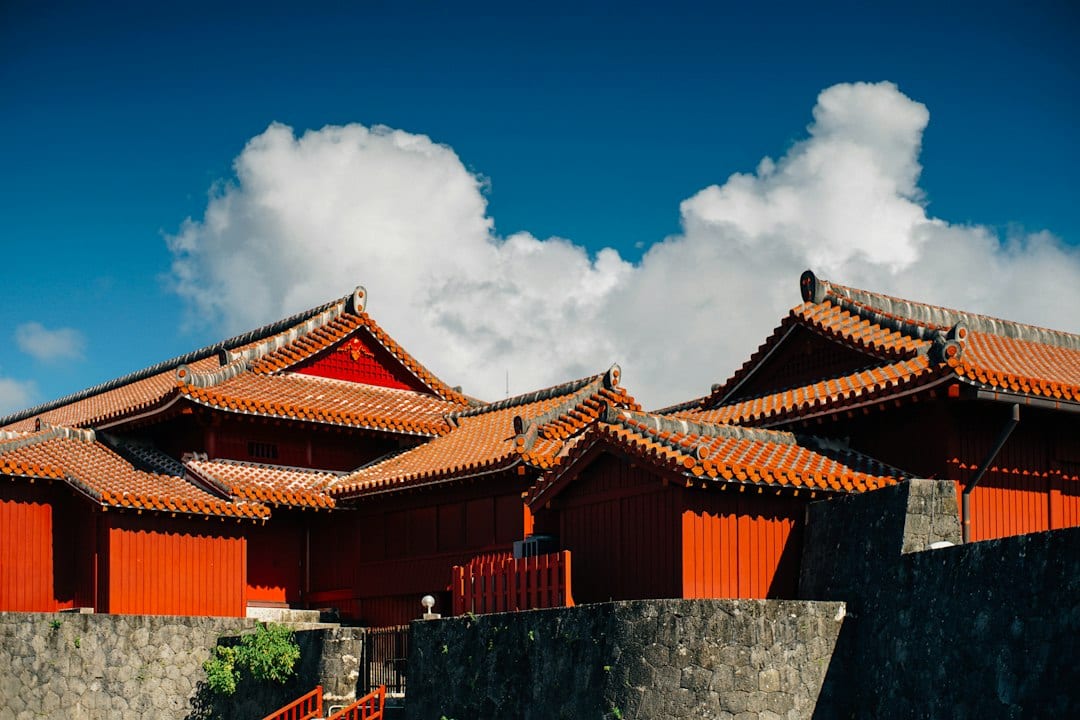
Shuri Castle in Naha, Okinawa, a centerpiece of Ryukyu heritage and traditional architecture.
Onboard Life: Five Nights at Sea
Between ports, the Star Navigator becomes your floating hotel. The package includes full-board meals and entertainment, which means your evenings are free for theater shows, live music, or simply watching the wake from an upper deck. For Filipino travelers who enjoy group karaoke or ballroom dancing, cruise ships tend to attract a social, community-oriented crowd—do not be surprised if you make friends over shared travel stories at the buffet.
The cabin choice shapes your experience. An Interior Cabin starts from $1,288 USD per person, while a Balcony Cabin starts from $1,588 USD per person. The balcony is worth considering for this itinerary: autumn evenings in the East China Sea can be crisp and clear, and private outdoor space adds a contemplative dimension to sea days.
Visas, Documents, and Timing
This is where a fly-and-cruise package proves its value. The Star Navigator package includes Korea group visa assistance (conditions apply), which removes one major bureaucratic hurdle. For Japan and Taiwan, Filipino passport holders should confirm current entry requirements well ahead of departure.
Mesho's visa team advises starting applications at least one month before departure. Japan and Korea visas usually take 7–10 business days to process, but holiday seasons and document corrections can stretch that timeline. Having a DOT-accredited agency handle the paperwork reduces the risk of errors that delay approval.
Document Tip
Keep photocopies of your passport, visa pages, and travel insurance separate from the originals. Store digital copies in cloud storage you can access from your phone. If your passport is lost or damaged in port, these backups expedite replacement at the nearest Philippine embassy or consulate.
What This Journey Costs in PHP
While exact peso equivalents fluctuate with exchange rates, Filipino travelers should budget beyond the base package price. Here is a practical breakdown:
| Expense Category | Estimated PHP Range | Notes |
|---|---|---|
| Interior Cabin base | ~₱75,000–80,000 | Per person; based on prevailing USD rates |
| Balcony Cabin base | ~₱92,000–98,000 | Per person; based on prevailing USD rates |
| Shore excursions (all ports) | ~₱15,000–25,000 | Varies by private vs. cruise-line booking |
| Meals ashore & snacks | ~₱5,000–8,000 | Assumes one major meal per port plus snacks |
| Port transport & tips | ~₱3,000–5,000 | Taxis, trains, and discretionary gratuities |
| Travel insurance | ~₱3,000–5,000 | Essential; medical care in Japan and Korea is excellent but costly for uninsured visitors |
| Personal shopping | Variable | Castella, pottery, skincare, souvenirs |
Total estimated budget: Approximately ₱100,000–140,000 per person for the full experience, depending on cabin choice and spending habits.
Ready to set sail?
The Star Navigator Fly & Cruise departs November 21, 2026. Spaces fill quickly for autumn sailings—secure your cabin and let Mesho handle the visas, flights, and port logistics.
View package detailsCultural Etiquette for Filipino Travelers
A little cultural awareness deepens every interaction:
- In Korea, use both hands when giving or receiving money, business cards, or temple offerings. Remove shoes before entering temple buildings.
- In Japan, speak quietly on trains and in restaurants. Tipping is not customary and can cause confusion.
- In Okinawa, the island's laid-back rhythm means shops may open later and close earlier than mainland Japan. Plan accordingly.
Quick Summary: What to Remember
Star Navigator at a Glance
- 9 days, 4 ports: Taipei, Busan, Nagasaki, Naha—each with a distinct cultural identity
- Fly-and-cruise convenience: Round-trip Manila-Taipei airfare, 5 nights onboard, 2 nights Taipei hotel with breakfast
- Cultural highlights: Haedong Yonggungsa's seaside serenity, Nagasaki's layered multicultural history, Naha's Ryukyu soul
- Budget estimate: ₱100,000–140,000 per person all-in, depending on cabin and spending
- Visa timing: Start applications at least one month before departure; Korea group visa included
- Best preparation: Comfortable walking shoes, light layers for November weather, and an appetite for champon, rafute, and castella
Related Reading
- Star Navigator November 2026 Fly & Cruise: Full Itinerary Details
- 2-Week Japan-Korea Itinerary for Filipino Travelers
- South Korea Beyond Seoul: Busan, Gyeongju & Jeju Cultural Itinerary
Dominic Reyes is a cruise and multi-port itinerary specialist at Mesho Travel & Tours, familiar with departure routes from Manila, Hong Kong, and Singapore. He has helped Filipino travelers navigate cross-border connections across East Asia for years, and he still believes the best travel stories begin at the gangway.


