


Standing in front of an empty suitcase the night before a multi-country trip is a special kind of panic. You are not just packing for one climate or one culture. You are packing for two. For Filipino travelers joining Mesho's Nihao Adora China and Okinawa 6D5N tour, the challenge is real: how do you fit temple-appropriate outfits, beachwear, and urban walking gear into one carry-on-friendly bag without paying excess baggage fees?
This checklist removes the guesswork. Designed specifically for first-time multi-country East Asia travelers from the Philippines, it balances practical logistics with the excitement of crossing two distinct worlds in under a week. From layering strategies that handle cool Chinese mornings to Okinawa's subtropical afternoons, here is exactly what to bring and what to leave behind.
Decode the Climate Gap: Layering for Two Worlds
The biggest packing mistake on a dual-country tour is treating both destinations as one weather zone. China and Okinawa sit at very different latitudes and seasonal rhythms. Understanding this divide is the first step to packing light.
The China Segment
Depending on your departure month, mainland China can range from crisp and breezy to outright cold. Urban centers like Shanghai or Beijing demand breathable base layers topped with a medium-weight jacket. Even in milder months, air-conditioned tour buses and hotel lobbies can feel chilly to travelers accustomed to Manila's warmth.
The Okinawa Segment
Okinawa operates on a subtropical clock. Humidity is higher, sunshine is intense, and sudden coastal drizzles are common. You will want quick-dry fabrics, UV protection, and a hat that won't fly off during island stops. The shift from China's cooler urban corridors to Okinawa's palm-lined shores can happen within the same travel day.
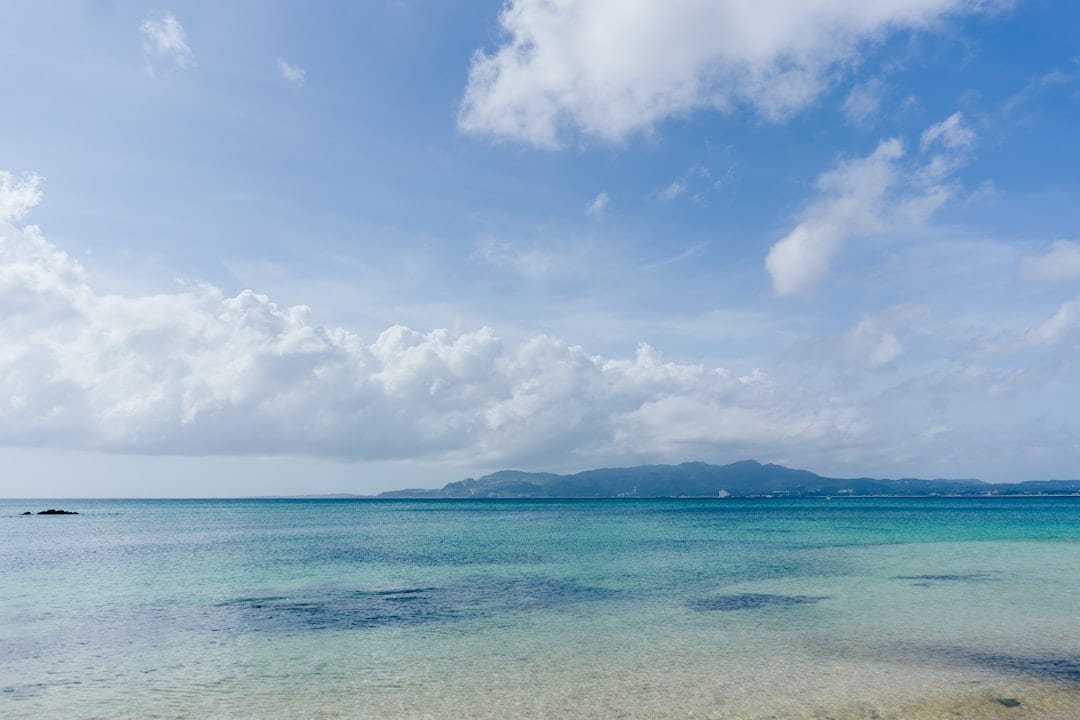
Emerald Beach, Okinawa — a typical stop where swimwear and reef-safe sunscreen become essentials.
The Layering Formula
- Base layer: Two moisture-wicking tees or long sleeves (Uniqlo Airism or similar).
- Mid layer: One lightweight fleece or merino sweater.
- Outer shell: One packable windbreaker or water-resistant jacket.
- Bottoms: One pair of dark jeans or travel trousers, one pair of quick-dry shorts for Okinawa.
- Extras: A light scarf or sarong — works as a temple cover-up, airplane blanket, or sun shield.
Dress Smart: Clothing & Footwear Etiquette
East Asia is generally forgiving of tourists, but temples and heritage sites in China appreciate modest dress. Meanwhile, Okinawa's beach stops reward travelers who packed wisely. Your footwear choice will make or break your daily comfort.
Temple & Urban Walks
China's temple complexes involve stone staircases, uneven courtyards, and shoe-removal zones. Bring one pair of broken-in walking shoes with good arch support. Slip-on styles are ideal for temple thresholds. Avoid flip-flops in religious sites entirely.
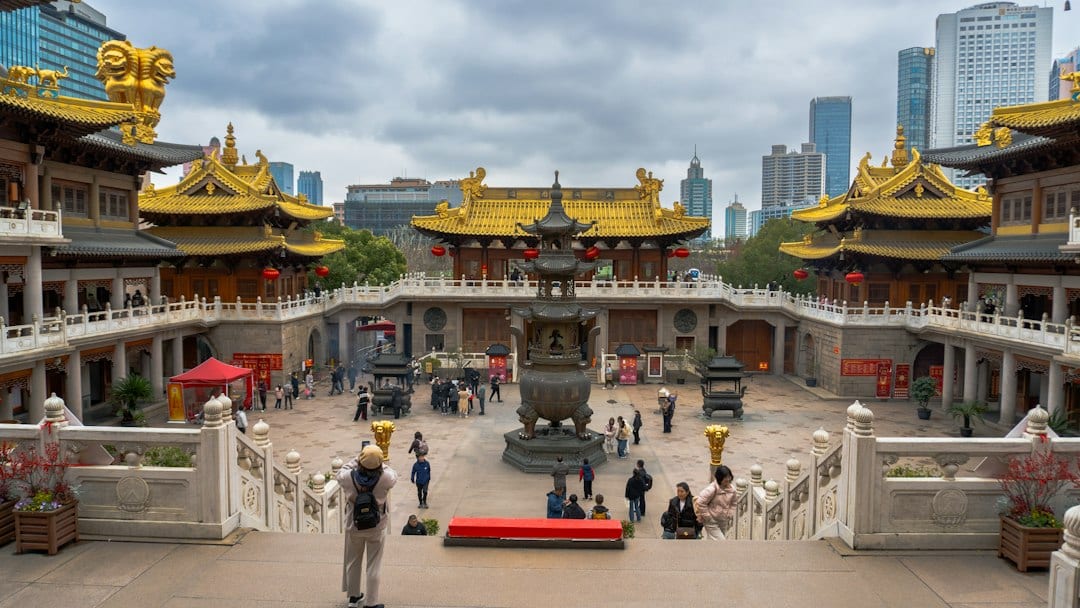
Traditional temple courtyards in China often require modest clothing and easy-to-remove footwear.
Beachside Okinawa
Okinawa's coastal stops call for swimwear worn under casual clothes. Pack one swimsuit and a quick-dry cover-up. Reef-safe sunscreen is a must — many Okinawan marine parks prohibit standard chemical sunscreens to protect coral. Water shoes are optional but handy if your itinerary includes rocky tide pools.
The One-Bag Wardrobe Checklist
| Item | Quantity | Purpose |
|---|---|---|
| Moisture-wicking tops | 3 | Base layers for both climates |
| Lightweight trousers / dark jeans | 1 | Urban China and temple visits |
| Quick-dry shorts | 1 | Okinawa beach stops |
| Packable jacket / windbreaker | 1 | China mornings and A/C spaces |
| Swimwear + cover-up | 1 set | Okinawa coastal activities |
| Walking shoes (slip-on preferred) | 1 pair | Temples and city walks |
| Casual sandals / water-friendly shoes | 1 pair | Beach and downtime |
| Light scarf or sarong | 1 | Modesty layer, blanket, sun shield |
Power Up: Electronics, Adapters & Power Banks
China and Japan do not share the same electrical standard. China runs on 220V with Type A, C, and I sockets. Japan operates on 100V with Type A and B sockets. The good news: most modern phone and laptop chargers support 100–240V automatically. The bad news: hair dryers and curling irons from the Philippines (220V) may struggle or fail in Japan.
Bring a universal travel adapter with multiple USB ports. Hotel rooms in both countries often have limited outlets, and sharing one socket between your phone, power bank, and camera is impractical. A compact power bank (10,000mAh minimum) is non-negotiable — long tour days and navigation apps drain batteries fast.
- Adapter: Universal all-in-one with Type A, C, and I compatibility.
- Power bank: 10,000–20,000mAh (check airline carry-on limits).
- Cables: One long charging cable plus a short backup.
- Voltage check: Verify your hair tools support dual voltage; if not, leave them home.
Wallet Strategy: Managing CNY & JPY
Juggling two currencies in six days sounds complicated, but a simple system keeps you sane. You will need Chinese Yuan (CNY) for the mainland segment and Japanese Yen (JPY) for Okinawa. Both countries are still largely cash-reliant outside major metropolitan centers, so plastic-only travelers often find themselves stuck.
Pre-Departure Exchange Tips
For Filipino travelers, exchanging PHP to CNY and JPY before departure at a reputable Manila or Meycauayan money changer typically yields better rates than airport counters. Split your cash into two labeled envelopes or a dual-compartment travel wallet. Keep a small emergency reserve in PHP as well — it is easier to re-exchange unused PHP at the end of the trip than leftover CNY or JPY.
| Expense Category | Estimated Daily Budget | Notes |
|---|---|---|
| Meals & Snacks | PHP 800 – 1,500 | Street food in China; local Okinawan soba sets |
| Local Transport / Taxis | PHP 400 – 800 | Subway cards in China; Okinawa bus fares |
| Souvenirs & Incidentals | PHP 1,000 – 2,000 | Tea, ceramics, Okinawan sea salt products |
| Emergency Buffer | PHP 2,000 | Keep separate from daily spending cash |
Consider carrying a multi-currency prepaid travel card as backup. It reduces the need to carry large cash volumes and locks in exchange rates ahead of your trip.
Planning your dual-country trip? Mesho's Nihao Adora China and Okinawa 6D5N tour handles your core itinerary, accommodations, and inter-country transfers — so you can focus on packing, not logistics.
Documents & Health Essentials for Dual Entry
Crossing two international borders in one week means your paperwork needs to be flawless. Philippine passport holders require visas for both China and Japan, so confirm that Mesho or your consulate has processed these well before departure. Never assume a single document covers both countries.
Document Organization
- Passport: Valid for at least six months beyond your return date.
- Visas: Printed copies of both Chinese and Japanese visas, even if digital versions exist.
- Travel insurance: Physical and digital copies of your policy with emergency hotlines.
- Tour vouchers: Mesho itinerary printouts and hotel confirmations.
- Backup copies: Email yourself passport scans and keep one photocopy in a separate bag.
Health Kit Essentials
A compact health kit prevents minor issues from derailing your itinerary. Pharmacies in China and Japan are well-stocked, but language barriers can make finding specific Filipino-brand medications challenging.
- Personal prescriptions: Carry original packaging and a doctor's note for customs.
- Stomach remedies: Loperamide and oral rehydration salts — new cuisines can surprise your system.
- Pain relievers: Paracetamol or ibuprofen for headaches and muscle aches after long walking days.
- Plasters & antiseptic: Blister pads are essential when breaking in new walking shoes.
- Motion sickness tablets: Useful for coastal drives in Okinawa and any ferry segments.
Insider Packing Techniques
Seasoned multi-country travelers rely on systems, not brute force. These techniques help you fit everything into a single medium-sized suitcase with room left for souvenirs.
- Rolling beats folding: Rolled garments occupy less volume and resist wrinkles better than folded stacks.
- Packing cubes: Use color-coded cubes — one for China-appropriate clothing, one for Okinawa gear, one for undergarments and sleepwear.
- Shoe strategy: Wear your bulkiest shoes on the plane. Stuff socks and chargers inside the second pair to save space.
- Toiletries decanted: Transfer shampoo and lotion into 100ml travel bottles. Both countries have strict liquid rules if you are flying between segments.
- Leave room: Aim for 80% capacity on departure. You will thank yourself when you discover Okinawan sea salt candies or Chinese oolong tea.
"The smartest travelers I know pack for the trip home, not just the trip there. Always leave space for the memories you will carry back — both literal and figurative."
Quick Summary: Your China-Okinawa Packing Cheat Sheet
- Layer for contrast: Pack a packable jacket and quick-dry base layers to handle China's cooler urban air and Okinawa's tropical humidity.
- Respect the dress code: Modest shoulders and knees for temples; swimwear-ready layers for Okinawa's coast.
- Charge smart: A universal adapter and 10,000mAh power bank cover both countries' electrical quirks.
- Split your cash: Pre-exchange PHP into CNY and JPY; use labeled envelopes or a dual-compartment wallet.
- Secure your paperwork: Keep printed visa copies, insurance details, and Mesho vouchers in both your carry-on and suitcase.
Related Reading
- Japan Visa Requirements for Philippine Passport Holders in 2026 — Stay ahead of entry rules before your departure.
- Adora Cruise Manila to Japan: Complete Experience Review and 2026 Booking Guide — Get a full preview of the cruise experience included in your tour.
- What to Pack for a 14-Day Southeast Asia Cruise — Additional multi-stop packing wisdom from Mesho's travel editors.
Ready to Pack? Let Mesho Handle the Rest
Packing light for two countries is an art, but the journey itself should feel effortless. Mesho's Nihao Adora China and Okinawa 6D5N tour takes care of your inter-country transfers, guided excursions, and accommodations — so you can arrive with nothing but a well-packed bag and an open mind.
Need personalized packing advice or help finalizing your documents? Consult with Mesho's travel specialists at our Meycauayan office. We have guided hundreds of Filipino first-timers across East Asia, and we know exactly what you need — and what you don't.
Author's Note: Grace Villareal is Mesho's Northeast Asia Travel Editor, based in Taipei with years of experience covering border crossings, etiquette nuances, and packing logistics across China, Japan, Korea, Taiwan, Hong Kong, and Macau. She still travels with only a carry-on — most of the time.


