


You have seven days of annual leave. Two countries. One itinerary that actually works.
For Filipino travelers, combining Tokyo and Busan in a single week is one of the most rewarding multi-city circuits in Northeast Asia. You get Japan's electric urban energy and Korea's coastal calm—without the burnout of rushing through five cities. This itinerary is built for first-timers: realistic pacing, specific neighborhoods, and transit details you can follow from the moment you land.
Why Tokyo + Busan Makes Sense
A 7-day Tokyo–Busan circuit fits the typical leave allowance for Filipino office workers. Four days in Tokyo gives you enough time to absorb the city's scale without exhaustion. Three days in Busan slows the pace down—think seaside temples, hillside villages, and seafood markets that reward wandering.
The connection between the two cities is straightforward. Most travelers fly from Tokyo to Busan direct, or route through Fukuoka with a short ferry or flight across the Korea Strait. Either way, the hop is short enough that you won't lose a full day in transit.
Best months to go
March–May and October–November offer mild weather in both cities. Cherry blossom season (late March to early April) and autumn foliage (mid-October to November) are peak periods—book flights and hotels at least two months ahead. Summer is humid and crowded; winter is cold but festive, especially around Christmas in Tokyo.
Days 1–4: Tokyo — Neon, Shrines, and Day-Trip Options
Day 1: Arrival and Shibuya Immersion
Land at Narita (NRT) or Haneda (HND). Haneda is closer to central Tokyo—roughly 30 minutes by train versus 60–90 minutes from Narita.
Take the Keikyu Line or Tokyo Monorail from Haneda to Hamamatsucho, then transfer to the JR Yamanote Line to reach your hotel. If you're arriving at Narita, the Narita Express (N'EX) or Skyliner are the most direct options.
Drop your bags and head straight to Shibuya. Cross the scramble intersection, then walk up to Shibuya Sky for a panoramic view of the city at dusk. Dinner in the area—try a local izakaya along Nonbei Yokocho or the restaurant floors of Shibuya Hikarie.
Day 2: Asakusa Traditions and Tokyo Skytree
Start early at Senso-ji Temple in Asakusa. The Nakamise shopping street leading to the temple opens around 10:00 AM, but the temple grounds are accessible earlier and far quieter.
After exploring Asakusa, walk or take the Ginza Line to Ueno for the park and museums, or continue to Tokyo Skytree for views from 350 meters. The Sumida River Walk connects Asakusa to Skytree on foot—about 20 minutes of pleasant strolling.
Evening option: Akihabara for electronics and anime culture, or Ginza for upscale window shopping and refined dining.
Day 3: Choose Your Day Trip
Option A: Kamakura (1 hour from Shinjuku) The Enoshima Electric Railway winds through a coastal corridor of temples and surf beaches. Visit the Great Buddha (Daibutsu) at Kotoku-in and the bamboo groves of Hokoku-ji. This is the easiest cultural escape from Tokyo.
Option B: Nikko (2 hours from Asakusa) UNESCO-listed shrines and misty mountain scenery. The Toshogu Shrine complex is elaborate and historically significant. Best for travelers who want nature paired with heritage.
Option C: Odaiba (30 minutes from Shimbashi) Stay in Tokyo proper. The Yurikamome Line crosses Rainbow Bridge to this artificial island of teamLab exhibitions, giant Gundam statues, and waterfront parks.
Day 4: Harajuku, Meiji Shrine, and Departure Prep
Morning at Meiji Jingu, Tokyo's most visited Shinto shrine, set in a 170-acre forest. Walk through Harajuku's Takeshita Street for youth culture and crepe stalls, then contrast it with the upscale calm of Omotesando.
In the afternoon, collect your luggage and head to the airport, or stay one more night if your Tokyo–Busan flight departs the next morning.
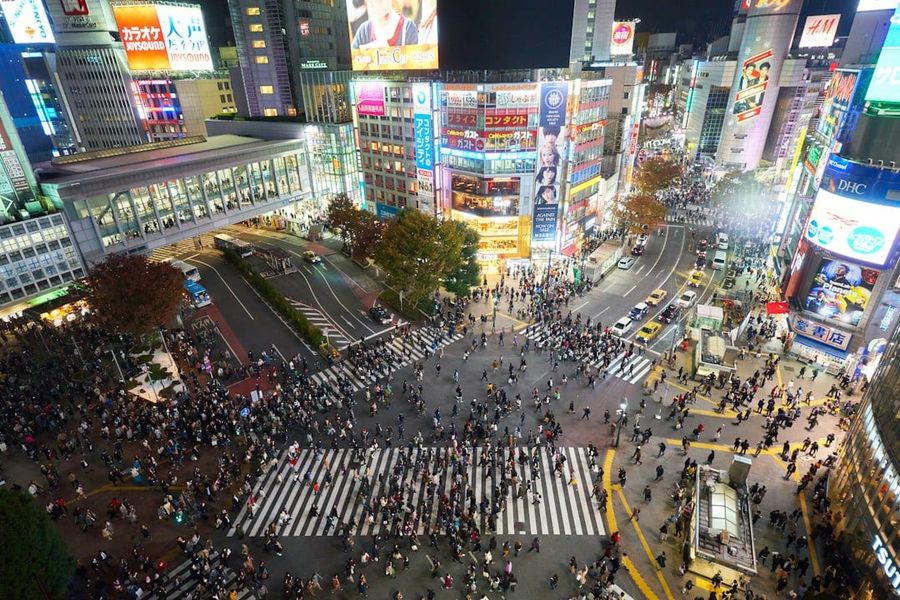
Shibuya Crossing — start your Tokyo immersion here, then escape upward to Shibuya Sky for perspective.
Days 5–7: Busan — Temples, Villages, and Coastal Markets
Day 5: Arrival and Haedong Yonggungsa
Fly into Gimhae International Airport (PUS). The Busan Metro connects the airport to the city center via Line 3 (Daejeo) with a transfer to Line 2—budget 45–60 minutes to Haeundae or Seomyeon.
Your first stop: Haedong Yonggungsa Temple. Unlike most Korean temples tucked into mountains, this one clings to rocky cliffs above the East Sea. Take Busan Metro Line 2 to Haeundae Station, then bus 181 or a taxi for the final stretch. Sunrise or early morning visits are best for fewer crowds.
Afternoon: Settle into your hotel in Haeundae or Gwangan. Walk Gwangalli Beach at dusk—the Gwangan Bridge lights up after dark.
Day 6: Gamcheon Culture Village and Jagalchi Market
Take Busan Metro Line 1 to Toseong Station, then catch the mini bus up the hill to Gamcheon Culture Village. This hillside neighborhood of brightly painted houses, art installations, and narrow alleys rewards slow exploration. Wear comfortable shoes—the streets are steep.
Lunch nearby, then head to Jagalchi Fish Market via Line 1 to Jagalchi Station. This is Korea's largest seafood market. You can buy fresh catch on the ground floor and have it cooked upstairs. Even if you don't eat there, the atmosphere is worth experiencing.
Evening: Nampo-dong for street food and shopping, or Seomyeon for Busan's densest concentration of restaurants and nightlife.
Day 7: Spa Land, Beach Walk, and Departure
Start at Spa Land Centum City—a massive jjimjilbang (Korean spa) in the world's largest department store. It's an authentic, affordable way to experience Korean bath culture before you fly.
If you prefer outdoor time, walk Haeundae Beach or visit Dongbaekseom Island—a small coastal park with a lighthouse and views back toward the beach.
Depart from Gimhae, or extend your trip. If Seoul is calling, Mesho offers Seoul extension packages through our Korea tour page.
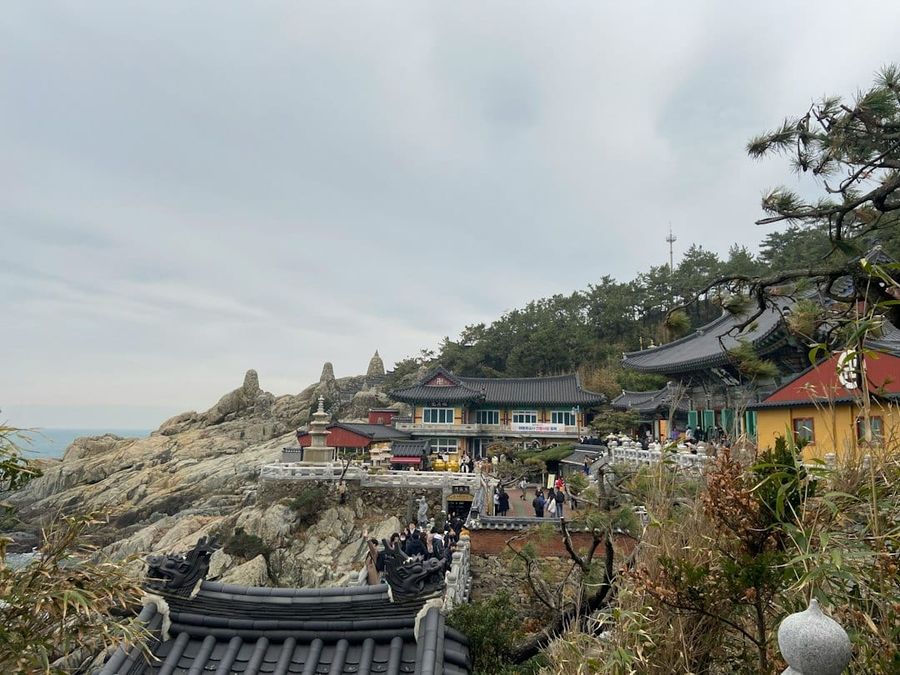
Haedong Yonggungsa Temple — one of the few seaside Buddhist temples in Korea, best visited at dawn.
Visa, Documents, and Timing
Mesho's visa team recommends starting your Japan and Korea tourist visa applications at least one month before departure. Processing typically takes 7–10 business days for both countries, but peak seasons can stretch timelines.
You will need:
- Valid Philippine passport (6+ months validity)
- Completed application forms for both embassies
- Proof of financial capacity (bank statements, ITR, or certificate of employment)
- Confirmed flight and hotel bookings
Mesho provides visa assistance as part of our Japan and Korea packages, guiding you through document requirements to avoid common rejection reasons.
Getting Around: Transit Apps That Work
| App | City | Best For |
|---|---|---|
| Google Maps | Tokyo + Busan | General navigation, walking directions, business hours |
| Hyperdia / JapanTransit | Tokyo | JR and private railway timetables, route planning |
| KakaoMetro / Naver Map | Busan | Busan Metro navigation, Korean-language accuracy |
Download these before departure. Tokyo's railway network is extensive but logical once you understand the JR Yamanote Line loop. Busan's Metro is smaller and easier—three main lines cover most visitor destinations.
Budget Estimate (Per Person, Excluding Shopping)
Mesho's Japan Travel Package starts from ₱48,000 for 5–10 days, while our South Korea Travel Package starts from ₱45,000 for 4–7 days. A realistic 7-day Tokyo + Busan circuit typically falls in the ₱60,000–₱90,000 range per person, depending on your hotel tier, meal choices, and whether you book flights separately or as a package.
Factors that shift the number:
- Flights: Manila–Tokyo and Tokyo–Busan segments
- Hotels: Capsule hotels and guesthouses versus business hotels
- Meals: Convenience store meals (¥400–¥800) versus sit-down restaurants (¥1,500–¥3,000)
- Local transport: Tokyo Metro 24-hour passes versus single-journey tickets
For a precise quote tailored to your travel dates, contact Mesho directly.
Planning your Tokyo + Busan trip?
Mesho's travel designers can build this exact itinerary around your dates, handle your visas, and book your flights and hotels—so you focus on the experience, not the logistics.
Get a custom quoteWhat to Pack and What to Know
Tokyo etiquette:
- Remove shoes when entering temples, ryokan, and some restaurant seating areas
- Speak quietly on trains—phone calls are discouraged
- Tipping is not customary; exceptional service is acknowledged with a bow
Busan etiquette:
- Use both hands when giving or receiving money, cards, or items
- At jjimjilbangs, shower thoroughly before entering communal baths
- Drinking culture is social—never fill your own glass; fill others' and let them fill yours
Practical reminders:
- Carry cash. Japan is still heavily cash-based, especially outside major chains. Korea accepts cards more widely, but markets and small eateries prefer cash.
- Buy a pocket WiFi or eSIM before departure. Both cities have excellent free WiFi, but navigation apps need constant connectivity.
- Learn basic phrases. "Arigatou gozaimasu" (thank you) in Japan and "Kamsahamnida" (thank you) in Korea go a long way.
Quick Summary: Your 7-Day Tokyo + Busan Circuit
- Days 1–4: Tokyo — Shibuya, Asakusa, Harajuku, plus a day trip to Kamakura, Nikko, or Odaiba
- Days 5–7: Busan — Haedong Yonggungsa, Gamcheon Village, Jagalchi Market, and Spa Land
- Best months: March–May and October–November
- Visa timeline: Start applications at least one month before departure
- Estimated budget: ₱60,000–₱90,000 per person excluding shopping
- Transit essentials: Google Maps, Hyperdia for Tokyo, KakaoMetro for Busan
Related Reading
- Narita vs. Haneda: Which Tokyo Airport Should Filipino Travelers Choose?
- Seoul, Busan & Jeju: The Perfect 10-Day South Korea Itinerary for Filipino Travelers
- Japan Visa 2026: Complete Application Guide for Philippine Passport Holders
Grace Villareal is a Taipei-based travel editor covering Northeast Asia. She has spent years navigating the border and entry details that make or break multi-country itineraries across Japan, Korea, Taiwan, and Greater China.

