


Eleven nights. Four flags. One ship moving from the neon canyons of Tokyo to the glass towers of Singapore. For experienced Filipino cruisers, Royal Caribbean's Tokyo to Singapore route is one of the most ambitious sailings in Asia—an itinerary that folds together Japan's layered history, Korea's volcanic coast, Hong Kong's harbor drama, and Vietnam's tropical energy before ending in the Lion City.
But ambition brings complexity. You are not just booking a balcony cabin and showing up at the terminal. You are navigating multiple immigration regimes, deciding whether to join ship excursions or explore independently, and budgeting across currencies while the ship is at sea for several full days. This guide answers the questions we hear most often from Filipino travelers: Which ports reward independent exploration? Does Royal Caribbean's documentation cover your entry? And how do you stretch your peso wisely across 11 nights?
If you are ready to see the full package, start with our Royal Caribbean 11-night Tokyo to Singapore cruise tour page.
The Route in One Glance
Most departures leave from Yokohama, the cruise port serving Tokyo, and sail southwest toward Singapore. The exact order can shift by sailing date, but a typical sequence looks like this:
- Day 1: Embarkation in Yokohama / Tokyo
- Day 2: Sea day — settling in, Pacific orientation
- Day 3: Nagasaki, Japan
- Day 4: Jeju, South Korea
- Day 5–6: Sea days toward subtropical waters
- Day 7: Hong Kong
- Day 8: Sea day
- Day 9: Vietnam stop — commonly Nha Trang or Phu My (gateway to Ho Chi Minh City)
- Day 10: Sea day
- Day 11: Singapore arrival
That rhythm—port, sea day, port, sea day—is deliberate. It gives you time to decompress between countries, but it also means you need a plan for both ashore and onboard.
Port-by-Port: What to See in 6–8 Hours
Cruise stops in Asia are rarely long. You want one or two anchor sights, reliable transport, and a clear path back to the gangway. Here is how each port breaks down for an independent traveler.
Nagasaki, Japan
Nagasaki is a compact, hilly city that fits a short port call beautifully. Its history as Japan's only open port during centuries of isolation shows in the terraced churches, Dutch trading houses, and Chinatown near the waterfront.
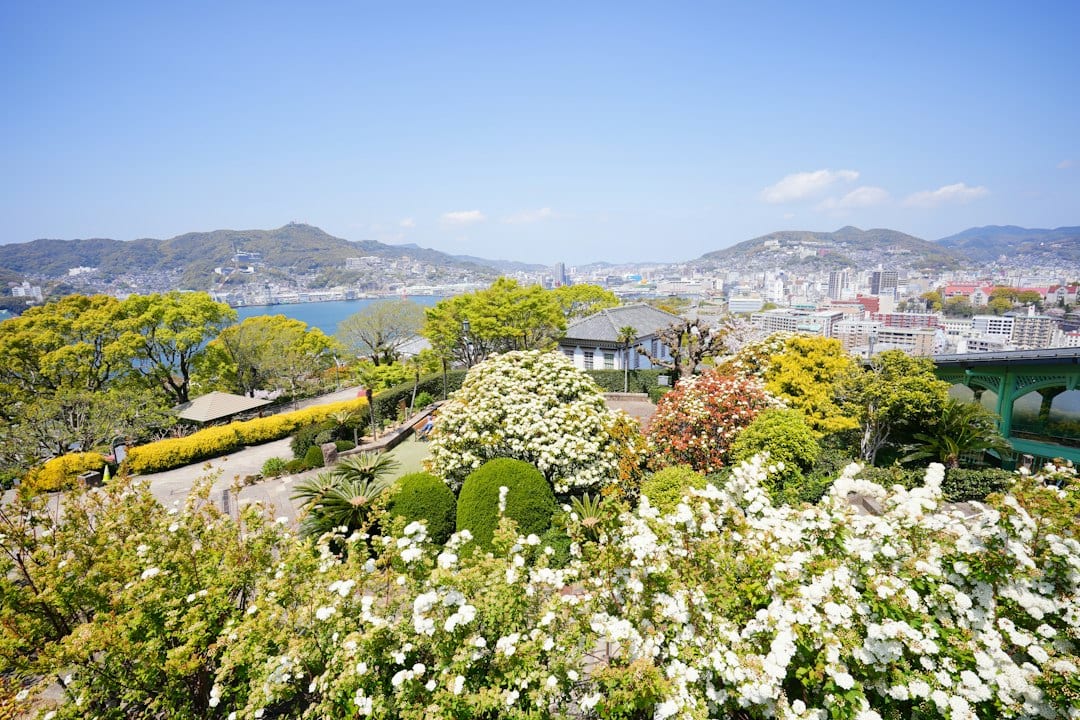
Nagasaki's harbor and terraced hillsides are a short tram ride from the cruise terminal.
Top independent itinerary:
- Glover Garden & Oura Church: A 15-minute tram or taxi ride from the pier. Walk the hillside gardens for harbor views and see Japan's oldest standing wooden church.
- Peace Park & Atomic Bomb Museum: Tram line 1 runs directly from near the port to Matsuyamamachi. Allow 90 minutes for the museum and adjacent park.
- Chinatown & Dejima: If you prefer a slower pace, the restored Dejima island and nearby Chinatown are within walking distance of the terminal.
| Option | Cost estimate per person | Best for |
|---|---|---|
| Nagasaki tram day pass | ₱320–400 | Budget explorers hitting multiple sights |
| Private taxi for 4 hours | ₱3,500–5,000 (split 2–3 ways) | Groups wanting comfort and flexibility |
| Royal Caribbean shore excursion | ₱6,000–10,000 | Guaranteed return to ship, no language barrier |
Jeju, South Korea
Jeju is the volcanic island Filipinos often associate with Korean dramas: black-rock coasts, tangerine groves, and Hallasan looming inland. The main cruise pier is in Jeju City on the north coast, but the island's best-known natural sights sit to the east.
Top independent itinerary:
- Seongsan Ilchulbong (Sunrise Peak): A 90-minute drive east. Best visited on an organized tour or hired van given the distance.
- Yongduam Rock & Dongmun Market: Closer to the port. Good for a self-guided walking loop with street food and local Jeju chocolates.
- Jeju Folk Village or O'sulloc Tea Museum: Mid-distance options if you want culture over nature.
Transport note: Public buses exist but can be slow for a tight port window. A shared van tour from the terminal usually costs ₱2,500–4,000 per person and covers 2–3 eastern sights with a fixed return time.
Hong Kong
Hong Kong is the most urban port on this itinerary, and also the one where your ship often docks right beside the action. The Kai Tak Cruise Terminal or Ocean Terminal puts you within reach of the MTR, Star Ferry, and Victoria Peak.
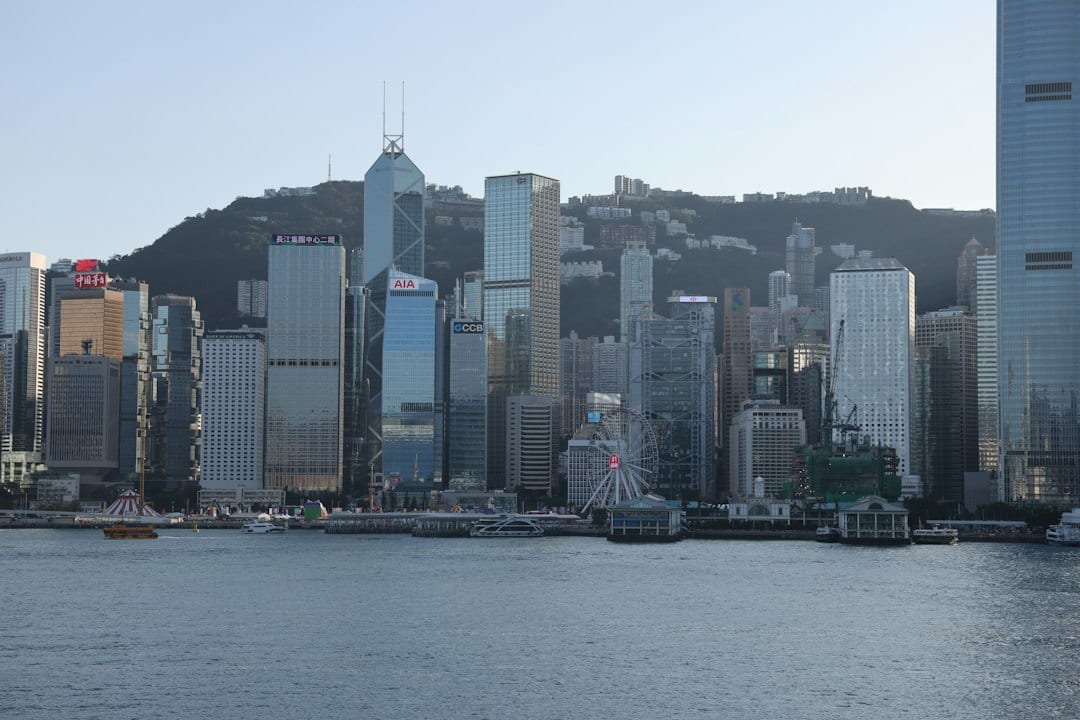
Victoria Harbour's skyline is reachable via the Star Ferry or MTR from the cruise terminal.
Top independent itinerary:
- Victoria Peak & Peak Tram: Take the MTR to Central, then the Peak Tram. Go early to avoid cruise-ship crowds.
- Star Ferry + Tsim Sha Tsui Promenade: The cheapest harbor cruise in the world. Walk the Avenue of Stars for the skyline view.
- Lan Kwai Fong / Soho: Better for evening departures; skip if your ship leaves by late afternoon.
Transport note: Hong Kong's MTR and Octopus card system are world-class. Load an Octopus card at the terminal or use contactless payment. A round trip to Central plus the Peak Tram runs roughly ₱700–1,200 per person.
Vietnam
Royal Caribbean uses different Vietnamese ports depending on the season and berth availability. The two most common are Nha Trang, a beach city with a fast-developing waterfront, and Phu My, the industrial gateway roughly two hours from Ho Chi Minh City.
If you dock in Nha Trang:
- Po Nagar Cham Towers: 8th-century Cham temple complex overlooking the river.
- Long Son Pagoda & White Buddha: A short taxi ride from the port.
- Beachfront promenade: Nha Trang's main beach is long and walkable, with cafés and seafood restaurants.
If you dock in Phu My:
- Ho Chi Minh City day trip: The drive is 1.5–2 hours each way, so this only works on longer port calls. Book a private car or ship excursion.
- Ba Ria town & local market: A low-key alternative near the port if you do not want the long haul to the city.
Transport note: Taxis and Grab are widely available in Nha Trang. In Phu My, options are limited near the industrial port—arrange transport in advance or book the ship's Ho Chi Minh City excursion.
Visa Implications for Philippine Passport Holders
This is the most common source of anxiety for Filipino cruisers on this route. Here is the current landscape, but we always recommend confirming requirements with Royal Caribbean and the relevant embassy at least eight weeks before sailing.
| Country / Port | Philippine passport rule | Royal Caribbean documentation |
|---|---|---|
| Japan (Tokyo / Yokohama) | A valid Japan visa is required to embark in Tokyo/Yokohama. | The cruise line does not issue Japan visas. Apply through a Japan visa-accredited agency in the Philippines. |
| Japan (Nagasaki port call) | Cruise passengers with a valid embarkation visa generally clear immigration via a ship-arranged landing permit for the port call. | Royal Caribbean coordinates the manifest; your cruise card and passport copy are usually sufficient for re-entry. |
| South Korea (Jeju) | Jeju Island has special visa-free provisions for direct arrivals, but cruise passengers should verify whether the ship qualifies you for a shore pass or if a Korean visa is needed. | The cruise line typically arranges group landing permission for the duration of the port call. |
| Hong Kong | Philippine passport holders usually need a Hong Kong visa for entry. | Some cruise passengers may be cleared under a ship-group arrangement if they remain on an official shore excursion; independent exploration usually requires your own visa. |
| Vietnam | Philippine passport holders enjoy visa-free entry for up to 21 days. | No special cruise documentation needed beyond your passport and cruise card. |
| Singapore | Philippine passport holders enjoy visa-free entry for up to 30 days. | Disembarkation is straightforward; the ship will provide immigration clearance instructions. |
"The safest approach is to secure every visa you might need, then let Royal Caribbean tell you which ones the ship can waive at the gangway. It is far less stressful than hoping for an on-the-spot exception." — Dominic Reyes, Cruise Specialist
For a full checklist tied to your sailing date, consult our Royal Caribbean 11-night Tokyo to Singapore cruise tour page.
Onboard Budgeting in PHP
Your cruise fare covers the cabin, main dining, buffet, and most entertainment. Almost everything else goes on your sea pass account and settles in US dollars at the end. For Filipino travelers, converting early helps avoid sticker shock.
| Expense | Ship price (USD) | Approx. PHP | Notes |
|---|---|---|---|
| Daily gratuities | ~$18 / person / night | ₱1,000 / night | ~₱11,000 per person for the full 11 nights |
| Specialty dining | $50–$100 / person | ₱2,800–5,600 | Steakhouses, hibachi, and chef's table experiences |
| Wi-Fi package | $20–$25 / day | ₱1,100–1,400 / day | ~₱13,000–15,500 for one device over 11 nights |
| Beverage package | $60–$90 / day | ₱3,400–5,000 / day | Worth it only if you drink several coffees/cocktails daily |
| Shore excursion | $80–$250 / person | ₱4,500–14,000 | Most expensive in Hong Kong and Ho Chi Minh City |
| Spa / salon | $120–$300 | ₱6,700–16,700 | Book on embarkation day for discounts |
Money-saving tip: Pre-purchase Wi-Fi, beverage, and dining packages before boarding. Royal Caribbean often discounts these by 20–30% compared to onboard pricing. That can save you ₱3,000–5,000 on Wi-Fi alone.
Planning your trip? Mesho can help you compare shore excursions, lock in pre-cruise package discounts, and sort out the visa paperwork. Start by viewing the full cruise tour details.
Sea Day Strategies for an 11-Night Crossing
With roughly five full sea days, this itinerary is not a port-hopping sprint. It is a true crossing. The stretch between Korea and Hong Kong, and again between Hong Kong and Vietnam, is where the ship becomes the destination.
What to do on sea days
- Book the specialty restaurants on sea days when you have time for a long dinner. Wonderland and the steakhouse fill up fast on shorter sailings.
- Use the thermal suite in the morning before it gets crowded. Sea-day spa passes are often cheaper than port-day passes.
- Attend the enrichment lectures on upcoming ports. They are underrated and help you decide whether to book a ship excursion or go independent.
- Reserve shows in advance via the Royal Caribbean app. The best productions book up on the first sea day.
Managing seasickness on longer sailings
The East China Sea and South China Sea can be lively, especially in autumn and early spring. If you are prone to motion sickness, prepare before you feel it.
- Pack dramamine or meclizine from a Philippine pharmacy. The ship's medical center stocks medication, but it costs roughly ₱550–1,100 per dose.
- Choose midship, lower decks for less motion. See the cabin section below.
- Book a balcony so you can get fresh air without navigating public decks when you feel queasy.
- Eat light and avoid alcohol on the first day at sea until you know how your body reacts.
Cabin Selection for This Route
Cabin choice matters more on an 11-night multi-country sailing than on a quick weekend cruise. You want comfort, stability, and a view that matches the itinerary.
| Cabin type | PHP price premium vs. interior | Best for this route |
|---|---|---|
| Interior | Baseline | Budget travelers who plan to be out of the cabin all day |
| Oceanview | ₱25,000–45,000 | Natural light without balcony cost; good if seasickness is a concern |
| Balcony | ₱55,000–90,000 | Best overall value for sea days and fresh air |
| Suite | ₱150,000+ | Longer sailing comfort, priority boarding, and concierge dining |
Port side vs. starboard side
On the Tokyo-to-Singapore run, the ship generally tracks southwest with land to the west/port side for long stretches. A port-side balcony may give you sunset views over the Asian mainland and better scenery during the approach to some ports. A starboard-side balcony faces the open Pacific and sunrise. If you are only booking one balcony for the view, port side is usually the better bet for this direction.
Weather considerations
Departures in October–November leave Tokyo in crisp autumn air and arrive in Singapore's tropical humidity. Pack layers: a light jacket for Japan and Korea, breathable linen for Vietnam and Singapore, and a compact rain shell for Hong Kong drizzles. A balcony becomes more valuable in warmer latitudes, where you will want private outdoor space without fighting for deck chairs.
Quick Summary: Your Tokyo-to-Singapore Checklist
- Secure your Japan visa first. Without it, you cannot board in Tokyo/Yokohama.
- Verify Hong Kong and Korea requirements with Royal Caribbean at least 8 weeks out; do not assume the ship handles everything.
- Pre-book Wi-Fi, dining, and beverage packages online to save 20–30% versus onboard prices.
- Plan one anchor sight per port and keep a 90-minute buffer before all-aboard time.
- Choose a midship balcony for stability, and favor the port side for mainland views on this southwest route.
- Budget at least ₱35,000–55,000 per person for onboard extras, gratuities, and 2–3 independent excursions.
Related Reading
- Royal Caribbean 11-Night Tokyo to Singapore Cruise Tour — full package details, dates, and inclusions.
- First-Time Cruiser's Guide to Asia Cruises — embarkation tips, packing lists, and sea-pass essentials.
- How to Read a Cruise Contract Before You Book — cancellation terms, fare inclusions, and what to watch for.
Ready to Cross East and Southeast Asia by Sea?
Royal Caribbean's 11-night Tokyo to Singapore cruise is a serious voyage for travelers ready to move beyond the typical weekend island hop. The logistics are more involved, but the payoff is extraordinary: one morning you are walking Nagasaki's harbor hills, the next you are sipping tea overlooking Hong Kong's skyline, and a few days later you are drifting into Singapore with a ship full of stories.
Ready to experience this journey? Let Mesho curate your Royal Caribbean cruise from Tokyo to Singapore—visa guidance, cabin selection, shore excursions, and pre-cruise packages handled in one place. Inquire about this cruise tour today and our cruise specialists will build an itinerary that matches your pace.
Author note: Dominic Reyes is a cruise and multi-port itinerary specialist at Mesho Travel And Tours, with experience routing Filipino travelers through departure gateways like Manila, Hong Kong, and Singapore. He focuses on helping travelers navigate complex multi-country cruises without the stress of figuring out visas, transfers, and port logistics alone.


